

Returning to running after time off can feel intimidating, but the right structure changes everything. Thoughtfully designed Running Comeback Plans Deliver predictable, powerful results: you get fitter, faster, and more confident without breaking down. This article walks you through exactly how to build (or refine) a comeback plan that works in the real world—whether you’re rebounding from injury, burnout, or a busy life phase.
We’ll focus on five specific outcomes your comeback plan should reliably produce, and the training, gear, and tech strategies that help you get there.
—
Table of Contents
- Why Comeback Plans Matter More Than “Just Running Again”
- The 5 Proven, Powerful Results Your Comeback Plan Should Deliver
- Result #1 – Pain-Free, Sustainable Mileage
- Result #2 – Measurable Fitness Gains Without Burnout
- Result #3 – Faster Pace From Smarter (Not Harder) Workouts
- Result #4 – Stronger, More Durable Body
- Result #5 – Confidence, Motivation, and Long-Term Consistency
- Gear & Tech: Making Running Comeback Plans Deliver Even More
- Sample 8-Week Running Comeback Plan That Delivers
- Troubleshooting: When Your Comeback Isn’t Going to Plan
- Printable Checklist: Does Your Comeback Plan Actually Deliver?
- Final Thoughts
—
Why Comeback Plans Matter More Than “Just Running Again”
Most runners return from a layoff in one of two ways: they either jump straight back to their old training, or they procrastinate endlessly, afraid of pain or failure. Both approaches sabotage progress.
Structured Running Comeback Plans Deliver a middle path. They translate your current reality—your fitness, history, and lifestyle—into a step-by-step progression. Instead of guessing, you follow a logic:
– Start where your body actually is, not where your ego wishes it were.
– Progress at a rate you can absorb physically and mentally.
– Use feedback (data, sensations, schedule) to adjust as you go.
When done right, a comeback plan feels challenging but sustainable. You finish most runs thinking, “I could have done a bit more”—exactly the feeling that compounds into long-term gains.
—
The 5 Proven, Powerful Results Your Comeback Plan Should Deliver
Effective Running Comeback Plans Deliver more than just the ability to jog again. They predictably create five key results:
1. Pain-free, sustainable mileage
2. Measurable cardiorespiratory fitness gains
3. Faster pace and better efficiency from targeted workouts
4. A stronger, more resilient body
5. Renewed confidence and long-term consistency
If your current approach isn’t steering you toward all five, you’re leaving progress on the table—and flirting with setbacks. Let’s break each one down and show how to build it into your plan.
—
Result #1 – Pain-Free, Sustainable Mileage
Why sustainable mileage is the foundation
Every performance goal—5k speed, marathon endurance, trail adventures—rests on consistent weekly mileage. For a comeback, this doesn’t mean huge volume. It means a number of minutes or miles you can repeat, week after week, without pain spikes or crushing fatigue.
The first way great Running Comeback Plans Deliver is by getting you to this stable, repeatable workload.
Step 1: Identify your true starting point
Ask yourself:
– How long have you been off running?
– What caused the break: injury, illness, burnout, or life logistics?
– What was your previous training volume?
Guidelines:
– Off for 2–4 weeks, no injury: start at 50–60% of previous average weekly mileage.
– Off for 1–3 months: start at 30–40%.
– Off for 3+ months or after injury: think in minutes, not miles, and start with walk–run.
If you were running 30 miles per week before and took a 3-month break, your comeback might start at 9–12 miles per week, not 30.
Step 2: Use the “10–20% but flexible” rule
Classic advice says: increase weekly mileage by no more than 10%. For comebacks:
– Cap increases at 10–20% depending on your history and body.
– Every 3–4 weeks, cut mileage by 20–30% for a recovery week.
– If you feel niggles (persistent tightness, soreness that worsens), repeat the same mileage or step back for a week.
The best Running Comeback Plans Deliver progression that’s visible but not rushed. You should see a clear trend upward over 6–8 weeks, with mini dips for recovery.
Step 3: Walk–run isn’t “just for beginners”
If you’re coming back from injury, illness, or long breaks, walk–run intervals are a smart tool, not a downgrade. Examples:
– Week 1: 1 minute run / 2 minutes walk x 10–12
– Week 2: 2 minutes run / 2 minutes walk x 10
– Week 3: 3 minutes run / 1–2 minutes walk x 8–10
You can continue this toward 10–20 minutes continuous running before phasing out the walks. This reduces load on tendons and joints while rebuilding aerobic capacity.
Step 4: Early warning signs you’re doing too much
Watch for:
– Morning pain that’s worse with the first steps
– Soreness that increases 24–48 hours after an easy run
– Heavy legs on every outing, even after rest
– Need to change your gait to avoid pain
If any of these persist for more than a few days, reduce volume or insert a rest/cross-training day. Sustainable mileage means you finish most weeks feeling like you could have done a bit more—not hanging on by a thread.
—
Result #2 – Measurable Fitness Gains Without Burnout
What “fitness gains” should actually look like
In a comeback phase, you’re not chasing peak race shape. You’re targeting:
– Lower heart rate at the same easy pace
– Ability to run longer at conversational intensity
– Less perceived effort for the same run time or distance
Smart Running Comeback Plans Deliver gains by prioritizing aerobic development and recovery over hero workouts.
Build your aerobic base first
Aim for 70–85% of your comeback phase running to be:
– Easy enough to hold a conversation
– Roughly RPE 3–4 out of 10 (effort scale)
– At a heart rate you can maintain for an hour comfortably (if you track HR)
Examples of base-focused weeks in early comeback:
– 3–4 easy runs of 20–40 minutes
– Optional 1 cross-training session (bike, elliptical, swim)
– 2–3 strength sessions of 15–25 minutes
Your body adapts best when intensity is low to moderate but frequent.
Use data wisely so it helps, not hurts
Wearables are powerful, but they can mislead if you fixate on pace. Focus your watch on:
– Time on feet instead of distance in the first weeks
– Heart rate trends over several runs, not single outliers
– Recovery metrics as suggestions, not commands
If you like deep dives into tech and how it shapes training, you might also enjoy Are Your Wearables Finally Smart Enough to Run Your Health? for context on using devices intelligently.
Signs your plan is working (weeks 3–6)
By week 3–6 of a solid comeback plan, you should notice:
– You recover from easy runs within 24 hours
– Your “easy pace” is slightly faster at the same effort
– You can add 5–10 minutes to a long run without dread
– You’re not living in a constant state of soreness
If you’re exhausted, moody, or dreading runs, your plan is under-recovering you. Trim intensity or volume and add sleep and fueling focus.
—
Result #3 – Faster Pace From Smarter (Not Harder) Workouts
When to add speed back into your plan
Runners often sabotage comebacks by reintroducing speed too fast. A better rule:
– Wait until you have 3–4 weeks of consistent, pain-free easy running.
– Ensure you can complete a weekly “longest run” without lingering soreness.
– Confirm your life stress is manageable (sleep, work, family).
Only then do you sprinkle in quality sessions. This is how Running Comeback Plans Deliver speed without triggering setbacks.
Use strides and short pickups first
Before intervals or tempos, start with strides:
– At the end of an easy run, do 4–6 x 15–20 seconds fast (but relaxed) with 60–90 seconds easy walking or jogging between.
– Focus on tall posture, quick turnover, and smooth form.
– Do this 1–2 times per week.
Strides reintroduce speed and coordination without large fatigue or injury risk.
Progress to structured workouts
Once strides feel good for 2–3 weeks, you can add one structured session weekly:
Early comeback workout ideas:
– Fartlek: 8 x 1 minute “comfortably hard” / 1–2 minutes easy
– Tempo introduction: 2 x 8–10 minutes at “steady but sustainable” pace, 3–4 minutes easy between
– Short hill repeats: 6–8 x 20–30 seconds uphill at strong effort / walk or jog down
These are enough to stimulate speed and threshold improvements without overtaxing your system.
Make intensity support your goals
Match workouts to your primary goal:
– 5k or 10k comeback: prioritize shorter intervals and fartlek for leg speed and economy.
– Half marathon or marathon comeback: prioritize tempo efforts and steady-state runs for endurance.
If you’re planning specific race distances, you can explore tailored distance articles like 5k or Half Marathon to see how structured plans evolve beyond the comeback phase.
—
Result #4 – Stronger, More Durable Body
Why strength work is non-negotiable in comeback phases
Running alone doesn’t address muscular imbalances, tendon health, or bone density optimally. Smart Running Comeback Plans Deliver not just runs, but strength and mobility that:
– Prevent recurring injuries
– Improve running economy
– Make higher mileage tolerable later
Minimum effective strength training
Aim for 2–3 short sessions per week, 15–30 minutes each. Focus on:
– Glutes and hips: squats, deadlifts, hip thrusts, step-ups
– Calves and feet: calf raises (bent and straight knee), single-leg balances
– Core: planks, side planks, dead bugs, anti-rotation exercises
Use a mix of bodyweight and light to moderate weights at first. Prioritize good movement patterns over heavy loads.
For a deeper dive on injury-proofing, check out Running Injury Prevention Through 7 Proven Powerful Moves, which aligns closely with what a robust comeback phase should include.
Where to place strength in your weekly schedule
To reduce interference with key runs:
– Pair strength on the same day as harder or longer runs (after the run), so your true easy days stay easy.
– Or place light, mobility-focused strength sessions on easy days, keeping volume modest.
Example week:
– Mon: Easy run + core
– Wed: Easy run with strides + lower-body strength
– Sat: Long run + short strength or mobility
Mobility and activation for runners
Include short daily or pre-run routines:
– 5–10 minutes of dynamic movements (leg swings, hip circles, lunges)
– Light activation (glute bridges, monster walks, calf raises)
– 5 minutes of post-run mobility on frequently tight areas (hips, calves, hamstrings)
These micro-habits reduce stiffness and help your body absorb mileage increases.
—
Result #5 – Confidence, Motivation, and Long-Term Consistency
Why mindset is a performance variable
The most underrated way Running Comeback Plans Deliver results is psychological. A good plan:
– Sets realistic, near-term milestones
– Gives you wins every 1–2 weeks
– Builds trust between you and the plan (or coach)
When you feel capable and successful—even in small ways—you’re more likely to show up for the next run.
Set layered goals, not just one big comeback race
Use three levels of goals:
– Process goals: “Run 3 times per week for 4 weeks.”
– Performance goals: “Run 30 minutes continuously by week 5.”
– Outcome goals: “Finish a 10k in three months” or “Return to pre-break pace.”
Process goals should dominate the early comeback phase. They’re within your control and less fragile than race-based objectives.
Track progress with more than pace
Because pace often drops after a layoff, it can be demoralizing if it’s your only yardstick. Also track:
– Runs completed vs. planned
– Longest continuous run you can do comfortably
– Average weekly running time
– How you feel before and after runs (quick 1–10 score)
When you see these trends improve, you’ll feel the plan working even if paces haven’t fully rebounded yet.
When to get external support
If you’re dealing with:
– A history of recurring injuries
– Fear or anxiety about re-injury
– Complex race or life schedules
It may help to work with a coach or use a guided plan. Structured support makes many Running Comeback Plans Deliver better adherence and smarter pacing, because you’re not adjusting everything on the fly. You can explore options with experienced Coaches if you want expert oversight rather than going it alone.
—
Gear & Tech: Making Running Comeback Plans Deliver Even More
Choosing the right shoes for a comeback
Your old favorite shoes might not be ideal right now. Consider:
– Cushioning: Slightly more cushioning can ease impact while tissues adapt.
– Stability: If you have a history of overuse injuries, mild stability or guidance features may help early on.
– Usage: Start your comeback in shoes with fewer than ~150–200 miles on them.
Rotating between at least two pairs can reduce repetitive stress.
How to use technology in your favor
Modern platforms and apps can make Running Comeback Plans Deliver more precision:
– Adaptive training plans that adjust based on your completed runs
– Load tracking (acute vs chronic) to flag sudden spikes
– Sleep and HRV metrics to nudge you toward better recovery decisions
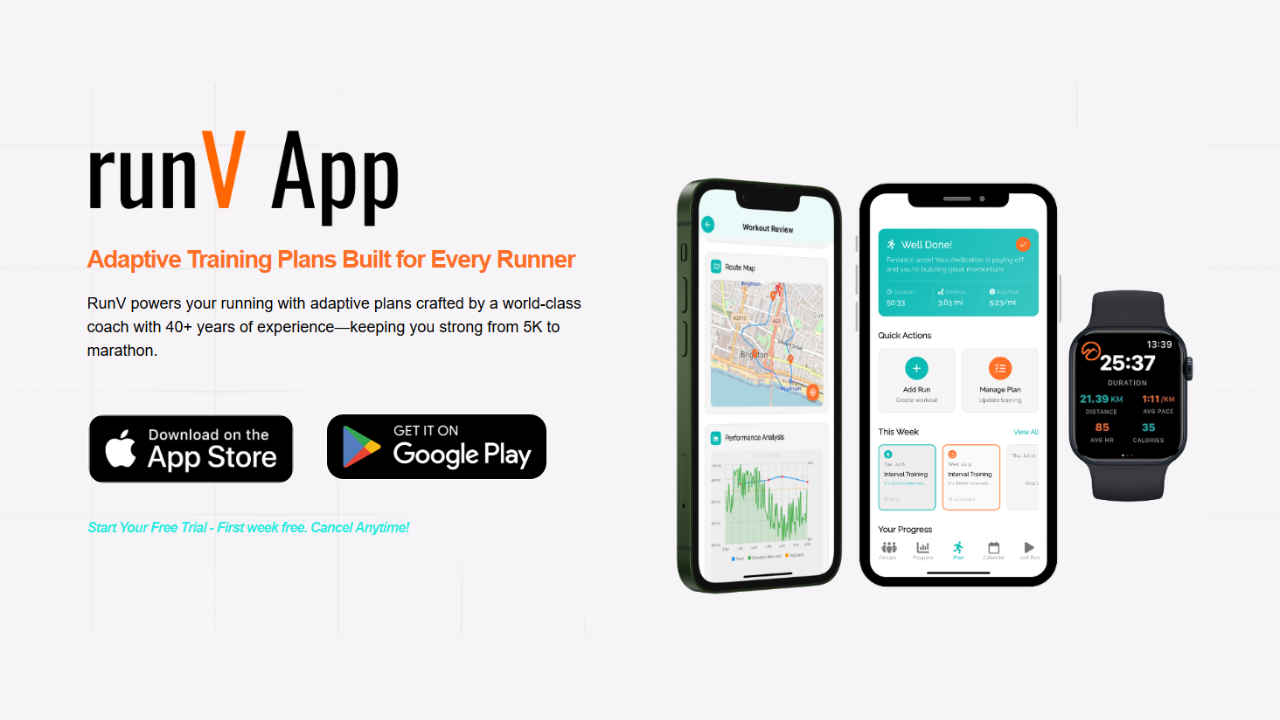
A tool like an AI Dynamic Plan can be particularly useful during comebacks because it responds quickly to your actual training data, not just a fixed calendar.
GPS, heart rate, and perceived effort
Use a three-way feedback loop:
– GPS: Track distance and general pace trends, but don’t chase old PRs yet.
– Heart rate: Monitor overall intensity; use it to keep easy runs easy.
– RPE (perceived effort): The most portable, reliable tool—use a 1–10 scale.
If heart rate or RPE is climbing for the same routes and paces, that’s a red flag for fatigue, even if your watch says “productive.”
—
Sample 8-Week Running Comeback Plan That Delivers
Below is a generic framework showing how Running Comeback Plans Deliver structured progression. Adapt based on your history, injury status, and medical advice.
Assumptions:
– You were previously running 20–30 miles/week.
– You took ~2–3 months off without major injury.
– You’re cleared to run.
Weeks 1–2: Rebuild rhythm (all easy)
Goals: Consistency, no pain, find a routine.
– 3 runs per week
– 20–30 minutes each, easy effort
– Optional: 1 walk–run session if needed (e.g., 3 min run / 2 min walk x 6–8)
– 2 x 15–20 min strength sessions (bodyweight focus)
Key checks:
– No pain that worsens during or after runs
– Energy stable over the week
Weeks 3–4: Extend duration, introduce strides
Goals: Slight volume increase, gentle neuromuscular speed work.
– 4 runs per week
– 2 x 25–35 min easy
– 1 x 35–40 min easy “long run”
– 1 x 20–25 min easy + 4–6 strides of 15–20 seconds
– 2 x 20–25 min strength (add light weights)
Total: 15–25% mileage increase from week 1 (not per week).
Weeks 5–6: Maintain volume, add one quality session
Goals: Introduce controlled intensity while keeping total load stable.
– 4–5 runs per week
– 2–3 x 30–40 min easy
– 1 x 40–45 min easy “long run”
– 1 quality day (alternate each week):
– Week 5: Fartlek 8 x 1 min hard / 2 min easy
– Week 6: Tempo 2 x 8 min “steady” / 3 min easy
– 2 x 25–30 min strength
Volume stays roughly similar to week 4; only intensity changes.
Week 7: Absorb, then nudge
Goals: Slight volume bump, maintain intensity.
– 4–5 runs
– 3 easy runs (30–45 min)
– 1 long run 45–55 min
– 1 quality run (your favorite of fartlek or tempo)
– Strength: 2 sessions, lighter loads if fatigue builds
This is where you often feel “like a runner again.”
Week 8: Recovery and assessment
Goals: Deload, evaluate, plan next phase.
– 3–4 runs
– Drop total volume by ~20–30%
– Keep one light quality session (reduced reps or duration)
– 1–2 easy strength sessions (15–20 minutes, mobility and form)
Ask:
– Am I pain-free most days?
– How does my easy pace compare to week 1?
– Am I excited, neutral, or dreading runs?
Your answers guide whether you’re ready to transition to full race-focused training.
—
Troubleshooting: When Your Comeback Isn’t Going to Plan
Problem: Persistent pain
If you have:
– Pain that worsens as you run
– Pain that’s present at rest or at night
– Limping or needing to alter form
Actions:
– Stop running for several days and substitute low-impact cross-training.
– Reintroduce with walk–run and lower volume.
– If it persists, see a sports med professional or physical therapist.
Problem: Constant fatigue and flat workouts
Likely causes:
– Too-fast pace on “easy” runs
– Insufficient sleep or fueling
– Life stress + training stress exceeding your current capacity
Fixes:
– Slow your easy runs until conversation is genuinely comfortable.
– Add a rest day or swap a run day for cross-training.
– Prioritize sleep and basic nutrition (carbs and protein around runs).
Problem: Motivation crashes in week 3–4
Common because initial excitement wears off before visible performance gains.
Strategies:
– Add one “fun” run weekly (new route, trail, running partner).
– Shift focus from times to streaks: “Run 3 days per week for 4 weeks.”
– Adjust goals to be closer and more attainable.
If you like learning from other runners’ experiences, periodic reading from a resource library like a dedicated running Blog can keep you inspired and informed during this fragile stage.
—
Printable Checklist: Does Your Comeback Plan Actually Deliver?
Use this quick checklist to evaluate your current plan. Effective Running Comeback Plans Deliver “yes” answers to most of these.
Volume & progression
– [ ] I know my starting mileage/time and it feels manageable.
– [ ] Weekly increases are generally under 10–20%.
– [ ] I have a reduced “recovery week” every 3–4 weeks.
Intensity
– [ ] At least 70% of my running is genuinely easy.
– [ ] I added speed only after 3–4 consistent weeks.
– [ ] I do no more than 1 quality session per week in early comeback.
Strength & mobility
– [ ] I strength train at least 2 times per week.
– [ ] I include glute, calf, and core work regularly.
– [ ] I do some dynamic warm-up before runs.
Recovery
– [ ] I sleep at least 7 hours most nights.
– [ ] I feel mostly refreshed, not wrecked, after runs.
– [ ] Any soreness resolves or improves within 48 hours.
Mindset & goals
– [ ] I have clear process goals for the next 4–8 weeks.
– [ ] I track progress through more than just pace.
– [ ] I feel generally positive or neutral about upcoming runs.
If you’re ticking many “no” boxes, adjust now rather than pushing through. The earlier you correct, the more your comeback will compound.
—
Final Thoughts
The most effective Running Comeback Plans Deliver more than mileage—they deliver momentum. They give you structure without rigidity, ambition without recklessness, and progress you can feel in your lungs, legs, and mindset.
If you prioritize:
– Pain-free, repeatable mileage
– Aerobic base before big intensity
– Just enough quality work
– Strength and mobility
– Clear, layered goals
you dramatically increase the odds of not only returning to your old level, but eventually surpassing it.
Your next step: sketch your own 6–8 week comeback framework using the principles above, or refine what you already have. Revisit the checklist weekly, and don’t be afraid to adjust in real time. That adaptability is exactly how true Running Comeback Plans Deliver the five powerful results you’re looking for—without sending you back to square one.