

Why Adaptive Plans Protect: 7 Essential, Proven Runner Benefits
If you’ve ever tried to follow a rigid training plan while juggling work, family, weather, and the occasional niggle, you already know the truth: real life doesn’t care about your spreadsheet. That’s why Adaptive Plans Protect: Essential, not optional, benefits for modern runners. Instead of forcing your body to match a plan, adaptive plans force the plan to match your body, schedule, and recovery—in real time.
This article breaks down exactly how that protection works, why it matters for both performance and health, and how technology is finally catching up to what coaches have known for decades.
Outline / Table of Contents
- What Are Adaptive Running Plans?
- Why Adaptive Plans Protect: Essential Principles Behind Them
- Benefit 1 – Lower Injury Risk and Better Long-Term Health
- Benefit 2 – Smarter Performance Gains with Less Wasted Effort
- Benefit 3 – Consistency Through Real-Life Chaos
- Benefit 4 – Mental Protection: Less Stress, More Confidence
- Benefit 5 – How Tech and Data Supercharge Adaptation
- Benefit 6 – Protecting You Across Seasons, Surfaces, and Gear Changes
- Benefit 7 – Race-Day Protection: Pacing, Taper, and Energy Management
- Who Needs Adaptive Plans Most?
- How to Start Using Adaptive Plans Right Now
- Final Thoughts: Protect First, Then Get Fast
What Are Adaptive Running Plans?
An adaptive running plan is a training program that changes as you do. Instead of a fixed, printed schedule telling you exactly what to do weeks ahead regardless of how you feel, it adjusts based on:
- Your recent training load and fatigue
- Your sleep and recovery
- How hard sessions actually felt (RPE)
- Heart rate, pace, and even power output
- Life events: missed runs, illness, travel, bad weather
In other words, it’s a living blueprint. The core structure—like building to a 10k, half marathon, or marathon—remains, but the details flex. This is the essence of how Adaptive Plans Protect: Essential performance zones, joints, and joints from chronic overload.
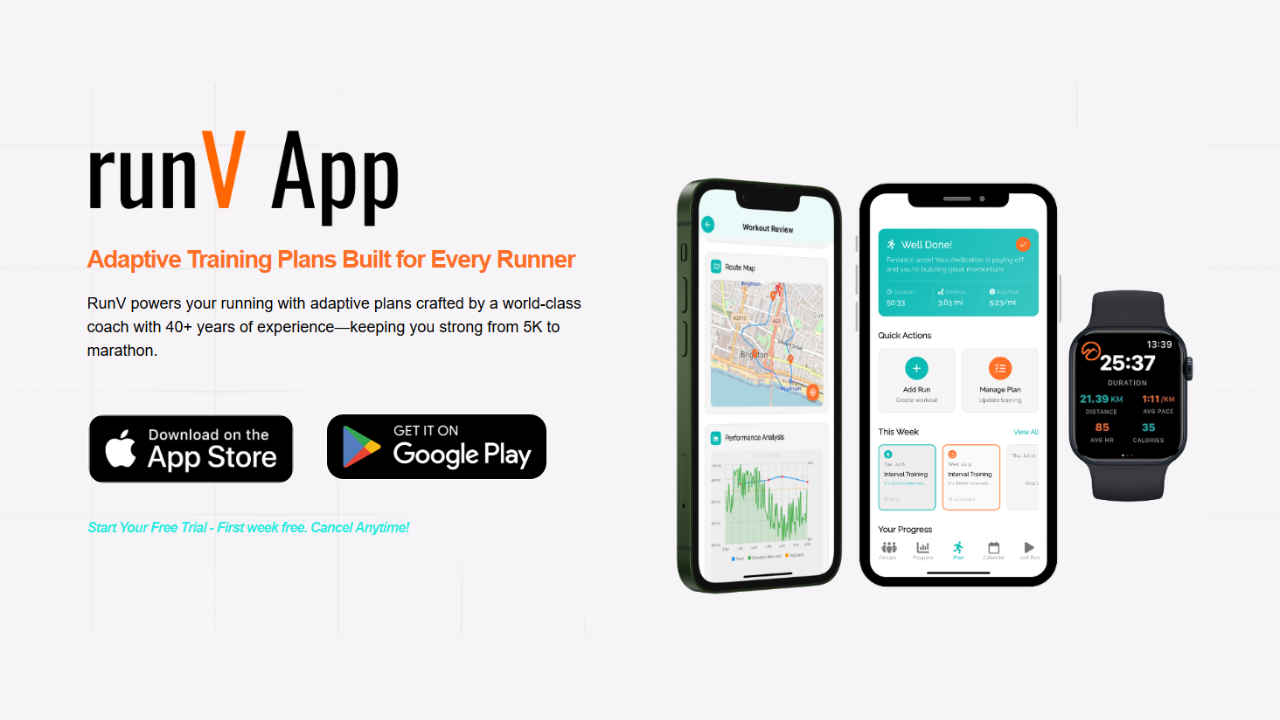
In the past, only elite athletes with dedicated Coaches got this level of daily adjustment. Today, smart training apps and AI-driven platforms are bringing the same logic to everyday runners of every level.
Why Adaptive Plans Protect: Essential Principles Behind Them
To understand why Adaptive Plans Protect: Essential benefits, you need to understand one idea: your body doesn’t adapt on a schedule; it adapts to stress. Training stress that’s too high, too frequent, or badly timed leads to injury, burnout, or stagnation. Training stress that’s well-dosed and well-timed leads to gains.
Traditional plans assume you’ll respond like an “average” runner. But no one is average. You have your own history, biomechanics, recovery capacity, and life load. Adaptive plans protect you by constantly asking one question: “Given how you responded recently, what’s the next smartest step?”
That protection shows up in at least seven proven ways: less injury risk, more sustainable gains, better consistency, mental relief, smarter use of tech, safer transitions across seasons and gear, and more reliable race-day performances.
Benefit 1 – Adaptive Plans Protect: Essential Injury Risk Reduction
Most running injuries share the same root: too much, too soon, too often. Classic PDFs and generic plans don’t know if you:
- Slept 4 hours last night
- Just came off a stressful work week
- Switched from soft trails to hard pavement
- Ran your last workout much harder than prescribed
They just tell you, “Do 8 x 800m at 5k pace.” Adaptive plans, by contrast, respond to what you actually did—not what you were supposed to do. If yesterday’s run was more tiring than expected, today’s intensity or volume gets trimmed. If you unexpectedly skipped two days, your mileage build is softened instead of blindly resuming where you left off.
This is crucial for the most common overuse injuries: shin splints, IT band syndrome, plantar fasciitis, and stress reactions. By managing week-to-week load changes within safer ranges, Adaptive Plans Protect: Essential structures like bones, tendons, and fascia that need gradual progression.
They also help you respond early to warning signs. If you flag pain or high perceived effort, the system can swap speedwork for easy running, or even suggest a rest day—before a niggle becomes a full-blown layoff.
Benefit 2 – Adaptive Plans Protect: Essential Performance Gains with Less Wasted Effort
Most runners think performance is about “training harder.” In reality, it’s “training smarter”—applying the right sessions at the right time, when your body can actually absorb them. That’s where adaptive plans shine.
When you nail a workout and bounce back quickly, an adaptive system can:
- Progress paces slightly faster next week
- Extend intervals or tempo segments modestly
- Reduce junk miles and keep quality high
But when you struggle—heart rate elevated, pace lagging, RPE high—it can hold you steady or even step you back. This protects your nervous system from constant red-lining and shields your motivation by avoiding repeated “failure” workouts.
Instead of rigidly forcing VO2max sessions when you’re under-recovered, it might swap in a tempo or steady state run, preserving stimulus but reducing stress. Over months, this means more quality sessions completed well, less burnout, and better adaptation. In short, Adaptive Plans Protect: Essential building blocks of fitness so you can peak higher, not just grind harder.
For goal races—whether a fast 5k, 10k, half, or full marathon—this approach turns training from guesswork into feedback-driven progression.
Benefit 3 – Consistency Through Real-Life Chaos
The best plan isn’t the one that looks perfect on paper. It’s the one you can actually follow for weeks and months. Life throws:
- Business trips
- Family emergencies
- Bad sleep stretches
- Illness and minor colds
- Extreme weather
Static plans respond badly to disruption. Miss three key workouts and the calendar doesn’t care; it keeps marching. You’re left either cramming in missed sessions or skipping entire chunks of progression. Adaptive systems handle this very differently.
They re-flow your schedule based on what’s realistic. If you miss a long run, the next one might be shortened and the build restarted more gently. If a week explodes with work, your plan might automatically focus on shorter, flexible sessions that maintain your base without pushing intensity.
This is where Adaptive Plans Protect: Essential consistency, which is the real driver of long-term improvement. They keep you “in the game” instead of falling into the all-or-nothing mentality that derails so many runners.
Benefit 4 – Mental Protection: Less Stress, More Confidence
The mental side of training is often overlooked. Rigid plans produce mental stress in at least three ways: (Adaptive training plan)
- Guilt when you miss or alter workouts
- Anxiety about whether you’re “on track”
- Self-doubt when a session feels too hard
Adaptive plans flip that script. When the plan itself updates based on your reality, suddenly missing a run isn’t a failure; it’s just information the system uses to recalculate. Instead of thinking, “I blew it,” you think, “The plan adjusted. I’m still on track.”
That psychological safety is not fluff; it keeps you training when motivation dips. Knowing that Adaptive Plans Protect: Essential mental bandwidth as well as your body means you’re more likely to stick with a long build for a half marathon or marathon instead of bailing halfway through.
Adaptive plans also reduce decision fatigue. On any given day, you don’t have to ask, “Should I move this session? Should I push? Should I cut it?” The system has baked those decisions into its logic, letting you focus on executing today’s run as well as you can.
Benefit 5 – Are Your Wearables Finally Smart Enough to Help Adaptive Plans Protect: Essential Gains?
Wearables used to be glorified stopwatches. Now they can track heart rate variability, sleep, resting heart rate, training load, and even muscle oxygen saturation. But data alone doesn’t guarantee smarter training; it’s what you do with it.
Modern adaptive systems plug directly into your watch or phone, using those metrics to nudge your plan up or down. If your resting heart rate is elevated and HRV is down, intensity might be dialed back. If your last block showed improved pace at lower heart rate, your thresholds might be updated.
This is where Are Your Wearables Finally Smart Enough to Run Your Health? becomes a practical question. As sensors improve, adaptive engines can respond faster to subtle fatigue and fitness signals—long before you consciously feel them.
Instead of staring at confusing charts, you just see tomorrow’s workout appear slightly lighter or heavier based on those inputs. The complexity is hidden; the protection is real. Adaptive Plans Protect: Essential energy reserves and nervous system resilience by letting your data actually inform training decisions.
Benefit 6 – Adaptive Plans Protect: Essential Safety Across Seasons, Surfaces, and Gear
Your body doesn’t experience “mileage” in a vacuum. Ten kilometers in 5°C drizzle on trail is very different from 10 kilometers in 32°C heat on concrete. Same for running in worn-out shoes versus a fresh, responsive pair. Adaptive plans can help moderate these shifts.
In summer heat, if your paces slow but heart rate skyrockets, a smart system will see that today was effectively harder than it looked on paper. It might interpret your “easy run” as moderate, and adjust upcoming intensity accordingly.
Similarly, when you change footwear—say, after reading about The Best Hoka Running Shoes in 2025 and upgrading your rotation—your biomechanics may subtly shift. A good adaptive setup will respond to any resultant change in pace, heart rate, or impact patterns by smoothing your progression rather than assuming nothing changed.
Seasonal shifts matter too. Moving from treadmill to outdoor routes, from winter layers to light summer kits, or from flat roads to hilly trails all alter stress. Adaptive Plans Protect: Essential tendons, muscles, and joints by factoring in how those real-world conditions affect training load, not just distance covered.
Benefit 7 – Race-Day Protection: Pacing, Taper, and Energy Management
A great training block can be compromised by a poor taper or an over-ambitious race plan. Adaptive systems don’t stop protecting you when you hit race week; they shift from building fitness to preserving it.
During the taper, if you feel sluggish or edgy, the system can adjust volume and intensity to maintain “sharpness” without overshooting fatigue. If you’ve been run down or had minor illness late in the cycle, the adaptive taper might be more conservative, preserving health over ego.
Articles like How to Adjust Taper: 5 Proven, Powerful Peak Gains Tips show how small changes in taper structure can make or break race outcomes. Adaptive plans can apply those principles automatically, based on your training data.
Race-day pacing also benefits. When your plan knows your recent tempo speeds, interval paces, and long-run responses, its suggested race pace is rooted in actual performance, not wishful thinking. Adaptive Plans Protect: Essential race outcomes by anchoring your goals to realistic metrics, reducing blow-ups and late-race walks.
Who Needs Adaptive Plans Most?
Every runner can benefit from adaptation, but some groups gain particularly strong protection:
Busy Professionals and Parents
If your schedule shifts weekly, a fixed plan is almost guaranteed to fall apart. Adaptive planning lets you maintain meaningful structure while flexing around meetings, childcare, and last-minute commitments. (Stryd adaptive training FAQ)
Masters Runners (40+)
Recovery rates change with age. You might need more days between hard sessions or slightly slower progressions. Adaptive systems notice when you’re not bouncing back and adjust, so you can keep training hard enough to improve without flirting with constant niggles.
Injury-Prone or Returning-From-Injury Runners
If you’ve battled recurring problems—or you’re coming back from a layoff—adaptive plans are a safety net. Instead of manually trial-and-erroring your way back, the plan keeps a tight leash on weekly increases and reacts immediately to red flags.
Tech-Comfortable Data Users
If you’re already tracking every run, heart rate, and shoe mileage, adaptive planning is the logical next step. It’s the difference between just collecting data and letting that data actually make decisions that protect you.
How to Start Using Adaptive Plans Right Now
You don’t have to go fully AI-driven to benefit from adaptive thinking. There’s a spectrum, from “manual adaptation” to fully automated systems. What matters most is that something in your process listens and responds to feedback.
Step 1 – Choose a Base Structure
Start with a goal and rough plan: a 5k, 10k, half marathon, or marathon. The macro-sequence—base, build, sharpen, taper—is still useful. You might use a traditional plan as your template or explore tools that build a AI Dynamic Plan around your target distance and date.
Step 2 – Track Basic Feedback
Each day, note at least:
- Perceived effort (RPE)
- Any pain or niggles
- Sleep quality and stress (even roughly)
This doesn’t have to be complex. A 1–10 rating and a one-line note is often enough to inform simple adjustments.
Step 3 – Build Simple Adaptation Rules
If you’re self-managing, apply a few rules:
- If you miss more than two days in a week, repeat that week instead of moving on.
- If a workout is more than 1–2 RPE points harder than expected, keep intensities steady the next week.
- If you feel pain above a mild level, swap the next hard session for easy running or cross-training.
Even these basic rules embody the philosophy that Adaptive Plans Protect: Essential systems by responding to reality, not clinging to the calendar.
Step 4 – Consider Tech-Driven Adaptive Platforms
If you prefer automation, look for platforms that integrate with your watch, read your training responses, and adjust your week in real time. Many offer trials and tiers so you can test how deeply you want your data to drive decisions. Before committing, skim their feature sets (things like dynamic workouts, fatigue monitoring, and goal-based scheduling) similar to how you’d evaluate any training service’s Pricing and features page.
Whether you go manual, semi-automated, or fully AI, the principle is the same: the plan should listen as much as it talks.
Final Thoughts: Protect First, Then Get Fast
Most runners approach training backward: they chase aggressive paces, ambitious mileage, and bold race goals first—and only think about protection after something hurts. Adaptive planning inverts that: protect first, then build.
When you embrace the idea that Adaptive Plans Protect: Essential pillars—health, consistency, confidence, and energy—you create the conditions for your best performances to emerge almost as a side effect. Fewer injuries, fewer panic weeks, fewer “what was I thinking?” races.
The future of running isn’t just more data; it’s smarter response. Whether you use a coach, an AI engine, or your own well-designed rules, the question to keep asking is simple:
“Is my plan adapting to me—or am I breaking myself to fit my plan?”
Answer that wisely, and you’ll not only run faster—you’ll run longer, healthier, and with a lot more joy.

2 Responses