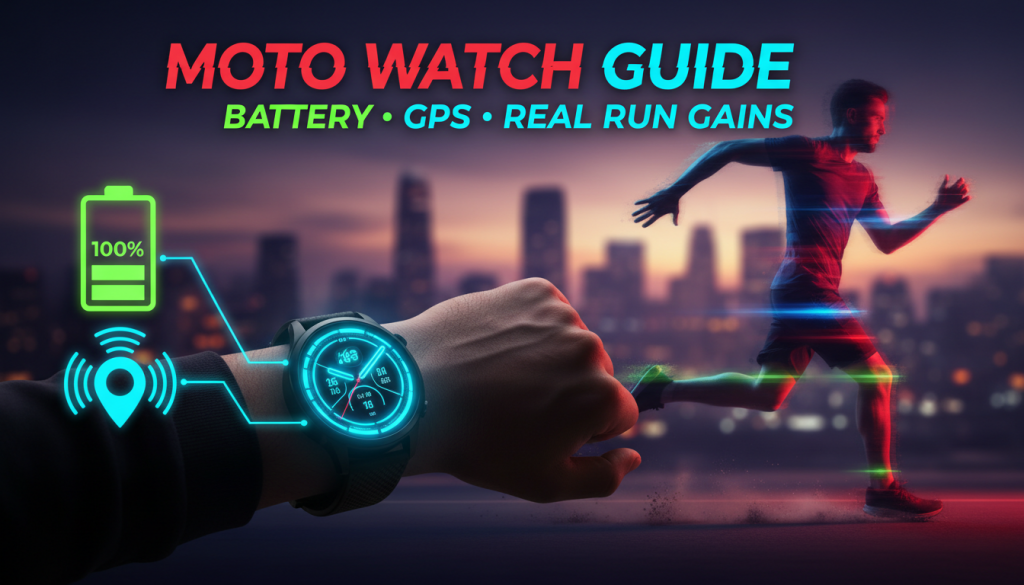
If you’re trying to Pick Moto Watch: Battery, GPS accuracy, or training insights as your top priority, the latest wave of wearables news gives you more options—and more confusion—than ever. Motorola’s return to serious running watches, Garmin’s new subscription features, and even U.S. regulations are reshaping what ends up on your wrist and how it powers your training.
This running news blog breaks down the week’s biggest stories and turns them into practical guidance—so when you pick your next watch, you know exactly what you’re trading off.
Table of Contents
- Moto Returns: Why This Watch Matters for Runners
- How to Pick Moto Watch: Battery, GPS and Real-World Use
- Polar Partnership: High-End Metrics Without the Price?
- Garmin’s New Nutrition Tracking: Worth Another Subscription?
- Garmin Health Status Upgrade: Long-Term Readiness, Not Just Last Night
- FDA’s New Rules: Faster, Smarter Running Features Ahead
- RunV Tips: Turning Data Into Faster 5K–Marathon Results
- Conclusion & Next Steps
Moto Returns: Why This Watch Matters for Runners
The headline: 13 days of battery, dual-frequency GPS, Polar inside
Motorola is back in the performance wearable game with the new Moto Watch, unveiled at CES 2026. For anyone trying to Pick Moto Watch: Battery, GPS or smart features as the deciding factor, the spec sheet looks unusually runner-focused:
- Up to 13 days of battery life in standard mode
- ~7 days with always-on OLED
- Dual-frequency GPS for better accuracy in cities, forests, and mountains
- Polar-powered health and training metrics
- Open-source OS instead of Wear OS, aiming for efficiency over heavy apps
This isn’t a casual lifestyle smartwatch with a couple of sports modes bolted on. It’s clearly aimed at people who run a lot, train long, and care about data quality. If you usually choose between Garmin, Polar, or Coros, you suddenly have another serious contender.
Open-source OS vs Wear OS: Why runners should care
Most Android users automatically assume a Wear OS watch will be the best fit. But when you go to Pick Moto Watch: Battery as a priority, that assumption flips. Wear OS is powerful, but it’s battery hungry.
By going with an open-source, lighter system, Motorola is following the same path as pure sports brands: fewer distractions, far better endurance. For runners, that means:
- Less frequent charging, even with daily GPS runs
- Lower risk of your watch dying mid-long run or race
- More consistent performance during multi-day events or run camps
If you already worry that your current GPS watch is holding back your training, it’s worth reading, for contrast, Is Your GPS Watch Quietly Sabotaging Your Training? before you decide how to upgrade.
How to Pick Moto Watch: Battery, GPS and Real-World Use
Battery life: Numbers that matter for actual training
When you Pick Moto Watch: Battery as your main filter, it helps to translate the marketing promises into sessions:
- 13 days standard use = daily runs, a couple of long sessions, plus notifications and HR tracking with no stress.
- ~7 days with always-on OLED = ideal if you love a readable watch face all day but still want a full training week away from a charger.
For most runners, that means you can get through a full marathon training week—tempo, intervals, long run included—without thinking about battery. Ultra and trail runners who do back-to-back long days will especially benefit.
Dual-frequency GPS: The next big baseline feature
Dual-frequency (L1 + L5, or similar) GPS uses more than one signal band to reduce common errors from tall buildings, dense trees, or steep terrain. For daily use this means:
- Cleaner pace data when you run downtown or under tree cover
- More accurate distance for laps, hill repeats, and trail segments
- Better reliability for structured workouts where pace targets matter
Many premium Garmins and Polars already offer dual-frequency tracking—but Motorola bringing it into a new line suggests this will become the baseline expectation. If you’re about to Pick Moto Watch: Battery vs GPS, the good news is that you no longer have to trade one for the other; this watch is promising both.
Polar algorithms: Why Motorola’s partnership is a big deal
The Moto Watch doesn’t reinvent training science; it borrows from one of the best. Polar’s algorithms power features such as:
- Nightly Recharge – overnight recovery and readiness insight
- Smart Calories – calorie burn that accounts for HR, weight, age, fitness
- Activity Score – deeper look at daily movement, not just steps
For runners, the upside is immediate: when you Pick Moto Watch: Battery and analytics, you’re basically getting a Polar engine in a Motorola chassis. That means more trustworthy training load, better energy expenditure estimates, and recovery guidance you can actually use.
Polar Partnership: High-End Metrics Without the Price?
What the Android Central report adds
The Android Central coverage zooms in on the hardware and Polar integration details:
- 47 mm aluminum case – sizable, but still relatively light
- IP68 rating – dustproof and water resistant for most run conditions
- Gorilla Glass 3 – decent scratch resistance
- Built-in mic and speaker – for calls, voice commands, or audio prompts
- Deep connection with a revamped Polar Flow app
The standout promise for runners is getting “Vantage V3-level” metrics in a device that may be more affordable and better on battery. If you usually cross-shop Garmin and Polar, this Moto–Polar combo might sit in the middle—serious training partner, plus mainstream smartwatch functions.
Will Moto really match Polar’s running analysis?
On paper, yes: Polar says the Moto Watch will offer similar biomarker analytics and training insight to its high-end Vantage line. That should mean:
- Running performance estimates and VO2max-style metrics
- Training Load Pro-style views of strain over time
- Detailed HR-based guidance for easy vs hard days
In practice, the open questions are:
- How fast will Motorola deliver firmware updates compared with Polar’s own watches?
- Will Polar Flow features be identical, or slightly pared back?
- How smooth will syncing and data export be for long-time Polar users?
Still, if you want long life and serious metrics, and you’re about to Pick Moto Watch: Battery vs pure Polar hardware, this hybrid might hit your sweet spot.
Who the Moto Watch is best suited for
Based on what we know so far, the Moto Watch is most appealing to: (Moto Watch 100 battery)
- Road marathoners and half-marathoners needing precise pacing and strong battery.
- Trail and ultra runners who want resilience, dual-frequency GPS, and multi-day life.
- Data-driven runners who like Polar’s training philosophy but want a fresher hardware option.
Pair it with a durable, cushioned shoe—if you’re browsing options, see resources like The Best Hoka Running Shoes in 2025—and you’ve got a foundation for long, consistent training blocks.
Garmin’s New Nutrition Tracking: Worth Another Subscription?
The feature: Nutrition meets Connect+
Garmin has launched a new nutrition tracking module inside Garmin Connect, available only via its Connect+ subscription at $7/month or $70/year. It offers:
- Food logging by manual entry, barcode scanning, or photo recognition
- Calorie and macro (carbs, protein, fat) targets aligned to personal goals
- Plans for AI-powered “Active Intelligence” that links diet, workload, sleep, and more
TechRadar emphasizes that these AI insights may use real-time context like workout type, hydration, and weather conditions—so your post-long-run fueling guidance could someday account for heat, humidity, and recent strain.
Why this matters to runners
Nutrition is often the missing piece between “I’m training hard” and “I’m actually getting faster.” Integrating food with run data brings benefits like:
- Better matching pre-run carbs to session intensity
- Smarter race-week and race-day fueling for long events
- More precise recovery strategies after hard intervals or back-to-back long runs
If you’re using Garmin and already paying close attention to macros, this may consolidate apps and give you training-specific insight that MyFitnessPal or generic trackers can’t provide.
Is it worth paying for another subscription?
That depends on how you train:
- Causal 5K or 10K runners: A dedicated nutrition subscription is optional. You may get most of what you need from basic logging and good habits.
- Half or full marathoners chasing PRs: Aligning carbs, protein, and timing with your peak weeks can unlock noticeable gains.
- High-volume or performance-focused athletes: Connect+ could be cost-effective if it replaces multiple separate apps and adds training-aware advice.
Whatever you choose, the real power is in execution—pair sound nutrition with structured training plans that adapt to your load. Tools like an AI Dynamic Plan can help translate recovery and fueling data into day-to-day workouts that fit your current state.
Garmin Health Status Upgrade: Long-Term Readiness, Not Just Last Night
The rumored upgrade
T3 reports that code in Garmin Connect version 5.20 points to upcoming upgrades for the Health Status feature. Today it mostly emphasizes overnight data; the new changes appear to add:
- Multi-day summaries of HRV, sleep, respiration, and more
- Visual trend charts over days or weeks
- Historical data access via a new API endpoint
While not officially released, this feels like a natural next step: move from “How did you sleep last night?” to “What’s been happening over the last 7–30 days?”
Why multi-day trends beat single-night scores
Single-night HRV or sleep scores are noisy. Travel, stress, a late meal, or one bad night can skew results. For runners, looking at 7–14 day trends is more reliable for:
- Spotting creeping overtraining or under-recovery
- Timing down weeks or tapers
- Judging whether a sudden fatigue day is a blip or a pattern
If Garmin executes this well, it will strengthen its already popular “body battery” and readiness features. When you Pick Moto Watch: Battery vs a Garmin ecosystem, this type of long-term insight is what you’re comparing against.
How runners can use Health Status trends
When the update lands, consider a few practical habits:
- Check trends, not just today: Before hard workouts, ask: “How has my HRV and sleep looked over 7 days?”
- Adjust training load: If HRV is trending down and sleep quality drops, cut volume or intensity for 3–4 days.
- Pair with subjective cues: Log how you feel on easy days—energy, mood, soreness—to validate the numbers.
To make the most of good recovery data, also refine your actual recovery practices. For practical ideas, see resources like How to Recover Faster: 7 Proven Powerful Session Secrets and connect what you do off the road with what your watch is telling you.
FDA’s New Rules: Faster, Smarter Running Features Ahead
What the FDA is changing
Reuters reports that the FDA will now exempt most low-risk wellness wearables from stringent regulation, even when they use AI—provided they don’t claim to diagnose or treat diseases. That covers devices offering: (Moto Watch 40 battery)
- General fitness metrics like VO2max estimates and training load
- Wellness-style HRV, sleep, or stress scores
- AI-based coaching that gives “guidance,” not prescriptions
Any device that starts diagnosing arrhythmias or prescribing treatment steps still enters medical-device territory—but pure training and wellness tools have a clearer, easier path.
Why runners should care about regulation
This regulatory clarity affects you more than it might seem. It should:
- Speed up feature launches like new running readiness scores or coaching algorithms.
- Encourage more experimentation with AI-driven pace plans, fueling advice, and recovery tips.
- Lower development costs for running-focused features, possibly improving value for money.
So when you Pick Moto Watch: Battery and features today, remember the software will keep evolving. Garmin, Motorola–Polar, and others can now ship more frequent, fitness-focused updates with less fear of triggering medical oversight.
Limits of AI wearables: Guidance, not gospel
Even under looser rules, remember what these devices are—and aren’t:
- They are great at spotting patterns in your training, sleep, and HR.
- They struggle with full context: life stress, illness, and personal history.
- They’re best used as an input into decisions, not the only voice you follow.
For a deeper dive into where wearables might be heading next and how they fit into your broader health picture, see Are Your Wearables Finally Smart Enough to Run Your Health?—especially if you’re considering an upgrade based on AI promises.
RunV Tips: Turning Data Into Faster 5K–Marathon Results
Step 1: Decide your priority—battery, data, or ecosystem
Start by ranking your priorities before you Pick Moto Watch: Battery versus everything else:
- If long battery is #1: Moto Watch, Coros, and select Garmin models with multi-day life are your top tier.
- If deep analytics is #1: Garmin and Polar ecosystems still lead, with Moto–Polar now joining.
- If convenience is #1: Check how well the watch integrates with your phone, music, and favorite apps.
Remember: the best watch for you is the one that matches your training style and actually gets used, not the one with the most bullet points.
Step 2: Match features to your race distance and goals
Different features matter more at different distances:
- 5K & 10K: Pace accuracy, workout modes, and recovery cues matter more than 60-hour battery.
- Half marathon: Fueling guidance, tempo control, and sleep tracking start to add value.
- Marathon & ultra: Battery, navigation, and load management become critical.
Use your target distance as a lens when you Pick Moto Watch: Battery versus analytics or smartwatch extras. A city marathoner may prioritize GPS precision and fueling prompts; an ultra runner might pick battery and navigation first.
Step 3: Use the data to adjust—not obsess
Once you’ve chosen your watch, get disciplined about how you interact with the numbers:
- After each week: Review training load and recovery—not just pace and distance.
- Before hard sessions: Check readiness or recovery scores but use them alongside how you feel.
- Before races: Use historical data to set realistic pace bands and fueling intervals.
Your watch helps most when you let it nudge your decisions, not dominate them. The goal is to turn numbers into smarter choices, not paralysis by analysis.
Conclusion & Call to Action
Between Motorola’s Moto Watch launch, Garmin’s new subscriptions, upcoming Health Status upgrades, and a friendlier regulatory environment, this has been a pivotal week for runners watching the wearables market. If you’re about to Pick Moto Watch: Battery, GPS accuracy, or AI insights as the deciding criteria, the trend is clear: more power, more data, and faster innovation are coming to your wrist.
But the watch is just a tool. What matters most is how you deploy that tool across your training year—from base building to taper to race day. Pair your device with intelligent, adaptive coaching, solid recovery habits, and appropriate footwear, and those specs turn into actual PRs.
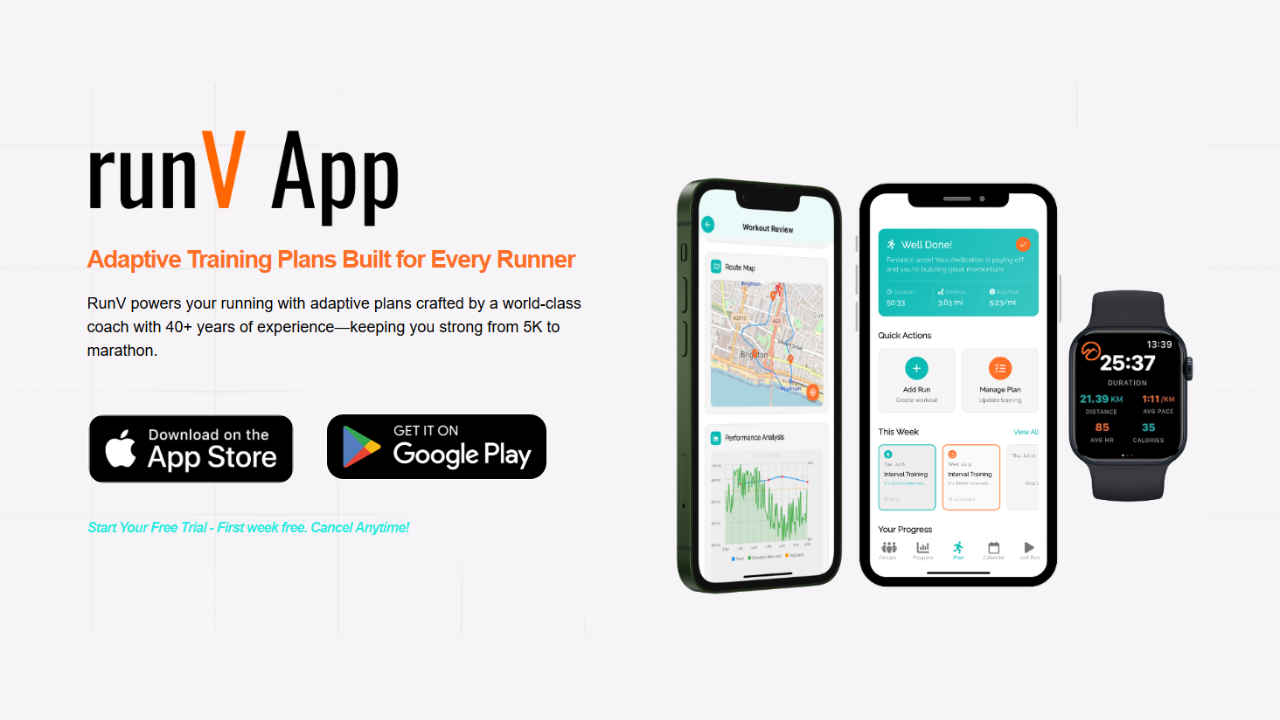
If you’re ready to turn all this new tech—from Polar-powered analytics to Garmin’s nutrition tracking—into real performance, now is the time to connect your watch to a structured, responsive plan. Explore options that integrate seamlessly with modern wearables and adjust to your data and life schedule using an AI Dynamic Plan so your next watch purchase doesn’t just look good on paper—it pays off on the road.