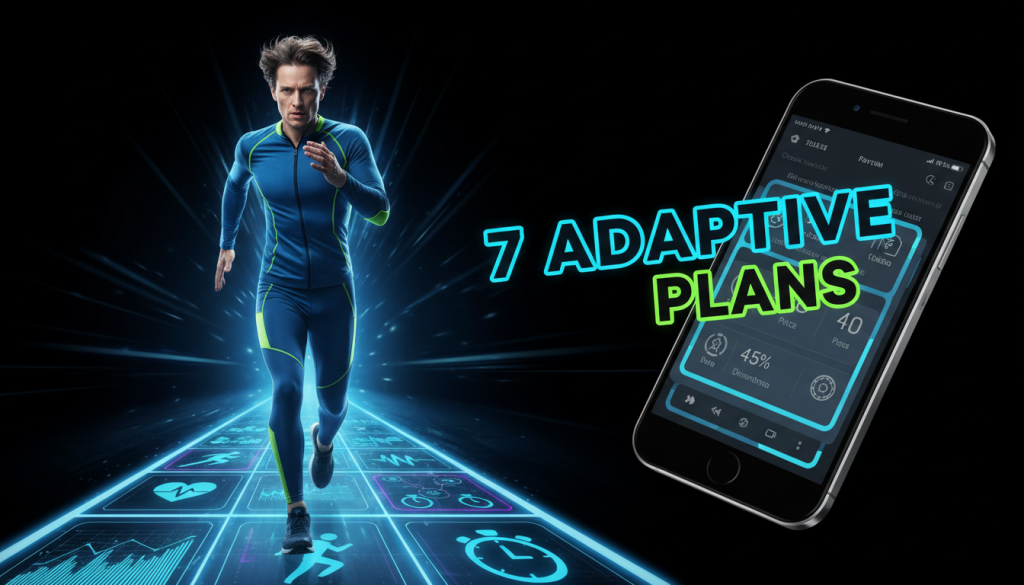
If you care about getting faster, staying healthy, and actually enjoying your training, the Best Running Apps Powerful enough to build adaptive training plans can completely change the way you run. Instead of guessing paces or copying generic schedules from the internet, modern apps now read your data, respond to your fatigue, and reshape your weekly plan in real time. In this guide, we’ll break down the best adaptive apps and walk through seven powerful training plan types they can deliver—whether you’re chasing your first 5K or eyeing a major marathon.
Table of Contents
- Why Adaptive Training Apps Matter Now
- What Makes an App Truly “Adaptive”?
- How We Chose the Best Running Apps Powerful Enough to Adapt
- 7 Best Running Apps Powerful Adaptive Options
- 1. RunV – Adaptive Plans Built Around Real Life
- 2. Garmin Coach – Smart Plans for Watch Users
- 3. Nike Run Club – Friendly Guidance and Audio Coaching
- 4. Strava – Social Motivation With Adaptive Elements
- 5. Runkeeper – Goal-Based Programs for All Levels
- 6. TrainingPeaks – Data-Heavy Adaptive Coaching
- 7. PUMATRAC and Other Niche Adaptive Apps
- 7 Powerful Adaptive Training Plan Types You Should Know
- How to Choose the Right Adaptive App for Your Goals
- Gear, Data, and Tech: Getting the Most from Your App
- Common Mistakes Runners Make With Adaptive Apps
- Putting It All Together: Build Your Adaptive Training Ecosystem
Why Adaptive Training Apps Matter Now
For years, most runners used static plans: printouts taped to a fridge, spreadsheets, or generic app schedules. They worked—until life didn’t cooperate. You got sick, missed workouts, or suddenly felt exhausted, and the plan just kept marching on.
Adaptive apps change that. They respond to your reality: sleep, stress, pace, heart rate, and actual performance. When used well, the Best Running Apps Powerful adaptive engines can keep you progressing while reducing injury risk and burnout.
If you’re juggling work, family, and training, an app that adjusts after a missed tempo or an unexpectedly hard long run is less of a luxury and more of a safeguard.
What Makes an App Truly “Adaptive”?
Brands love the word “adaptive,” but not every app earns it. To count as genuinely adaptive—not just “flexible”—an app should do more than remind you to run or let you move workouts.
Look for these traits:
- Data-driven adjustments: The app changes future sessions based on recent runs, not just your original goal.
- Responsive to missed days: If you skip a key workout, it should reshuffle intelligently, not just delete it.
- Load management: The app should monitor your overall training stress and back off when you’re overreaching.
- Goal-specific progressions: 5K speed and marathon endurance should look very different in your plan.
- Feedback loop: It should ask how you felt or infer fatigue from metrics like heart rate or pace variability.
The Best Running Apps Powerful adaptive features quietly shift your training when signals say, “Too much,” or, “You can handle more.”
How We Chose the Best Running Apps Powerful Enough to Adapt
To build this list, we focused on apps that:
- Offer adaptive training plans, not just static schedules.
- Use data from GPS, heart rate, or wearables to change future workouts.
- Cover multiple goals: 5K, 10K, half marathon, marathon, and base building.
- Provide clear structure but stay flexible when life happens.
- Are reliable, well-supported, and actively updated.
We’ll walk through each, then zoom out to seven powerful adaptive plan types and how to use them.
7 Best Running Apps Powerful Adaptive Options
1. RunV – Adaptive Plans Built Around Real Life
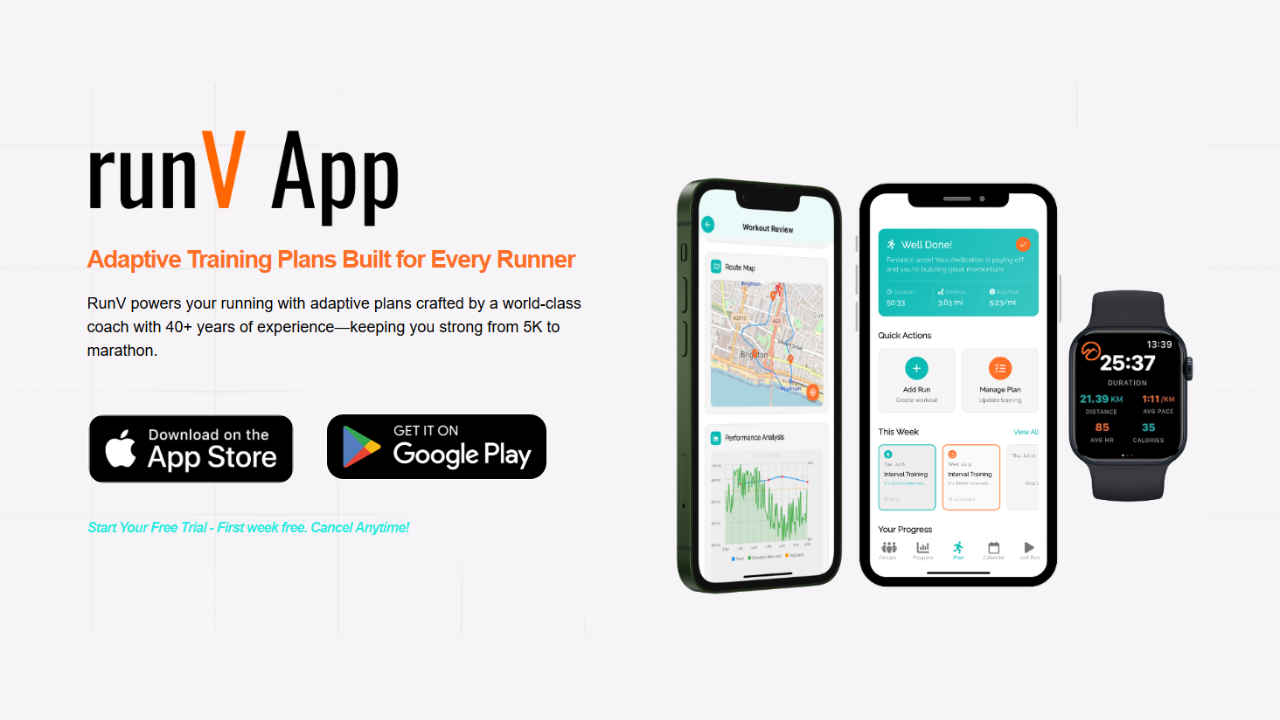
RunV is a newer platform focused specifically on adaptive training plans rather than just logging miles. Its core idea: plans should change when your life does. Instead of punishing you for missed runs, it rebuilds your week and nudges your target where necessary.
RunV offers pre-built templates plus structured plans across common race distances, and its adaptive engine aims to balance workout difficulty with your actual readiness. It also leans into recovery and life stress, recognizing that high training stress plus high life stress is a recipe for injury.
What makes it stand out among the Best Running Apps Powerful enough to adapt is that “adjustment” is the default behavior, not a premium add-on.
2. Garmin Coach – Smart Plans for Watch Users
If you already run with a Garmin watch, Garmin Coach is a logical way to step into adaptive training. Inside the Garmin Connect app, you choose a race distance and timeframe, answer a few questions about weekly mileage and current pace, and the system builds a plan.
Each run is synced to your watch with target heart rate or pace ranges. After each session, it evaluates your performance and tweaks upcoming workouts. If you’re consistently nailing paces, it gradually increases demands. If you’re struggling or missing sessions, it dials things back.
For many runners, Garmin Coach is their first experience with a truly adaptive program embedded into a wearable ecosystem.
3. Nike Run Club – Friendly Guidance and Audio Coaching
Nike Run Club started as a tracking and community app but has grown more sophisticated with its “Coach” programs. While not as mathematically intense as some platforms, it adapts based on your input, adjusting weekly mileage and long-run durations.
The app leans heavily on audio-guided runs, which can turn intimidating speed sessions into something more approachable. You tell the app your goal (e.g., finish a 10K or run a faster half), and it shapes a flexible program with check-ins along the way.
If you prefer encouragement and simplicity over deep data analytics, NRC can still sit among the Best Running Apps Powerful enough for practical adaptive training.
4. Strava – Social Motivation With Adaptive Elements
Strava isn’t primarily a training plan engine; it’s a social platform for athletes. But with its training features, segments, and third-party integrations, you can build a semi-adaptive setup. Strava Premium includes training load measures and fitness/fatigue charts that reveal how your stress is trending.
While Strava’s own plans aren’t deeply adaptive, pairing it with apps that write workouts to your calendar can create an adaptive system powered by Strava’s data. You get the benefit of seeing your weekly load and dialing back when trends show overreaching.
It’s not the most autonomous option, but for experienced runners who like owning their process, it can be part of a Best Running Apps Powerful hybrid approach.
5. Runkeeper – Goal-Based Programs for All Levels
Runkeeper’s strength lies in its goal-based training programs that ask what you want—finish, improve, or set a PR—then tailor weekly plans to your experience and schedule. It adapts by rebalancing sessions around your real-world progress and missed runs.
You’ll see a clear mix of easy days, workouts, and long runs, with notifications if you’re falling behind your projected readiness. The app nudges you toward consistency instead of over-aggressive catch-up attempts that often cause injuries.
It’s particularly useful for newer runners who want structure without drowning in performance metrics.
6. TrainingPeaks – Data-Heavy Adaptive Coaching
TrainingPeaks is often used by serious age-groupers and coaches. On its own, it’s more of a powerful training log and planning tool than a plug-and-play adaptive app. However, with compatible plans or connected coach-driven algorithms, it can become extremely adaptive.
Its strengths include tracking Training Stress Score (TSS), chronic load, and acute fatigue. You can see at a glance whether you’re building, maintaining, or overreaching. Many “smart” coaching systems integrate with TrainingPeaks to adjust workouts based on actual data rather than hopes and guesses.
For data-loving runners, this belongs in any discussion of Best Running Apps Powerful adaptive ecosystems, even if it’s less beginner-friendly.
7. PUMATRAC and Other Niche Adaptive Apps
PUMATRAC and several smaller platforms experiment with adaptive elements like tailoring runs around your schedule, weather, or personal preferences. They may not offer the same depth as Garmin Coach or RunV, but they prove how fast the space is evolving.
Many of these apps focus on motivation—music, social features, or gamified challenges—layered on top of adaptive plans. For runners who get bored easily or thrive on novelty, they can be surprisingly effective.
As the category matures, expect more niche tools to join the ranks of Best Running Apps Powerful adaptive options for specific runner types, from urban night runners to trail obsessives.
7 Powerful Adaptive Training Plan Types You Should Know
The app you choose matters, but the kind of plan it builds for you matters just as much. The best platforms don’t just offer one rigid path; they support different adaptive strategies depending on your goal and life context. (Healthline best running apps)
Here are seven powerful plan types you’ll see across the Best Running Apps Powerful enough to truly guide your training.
1. Adaptive Base-Building Plans
Base-building is about gradually increasing your ability to handle more running, mainly through easy mileage. Adaptive base plans adjust weekly volume and run frequency based on your actual completion rate and how you respond.
If your heart rate is spiking on easy days or you’re skipping runs from fatigue, a good adaptive system reduces load or inserts more recovery. Conversely, if you’re handling everything comfortably, it nudges your volume up within safe bounds.
Done well, this period sets the stage for strong race-specific training later—without you feeling like you’re in race season all year long.
2. Adaptive 5K and 10K Speed Programs
Speed-focused plans are where many runners first notice the magic of adaptive training. When you’re chasing a 5K or 10K PB, small adjustments in pace and session length can decide whether you thrive or burn out.
An adaptive program will reevaluate your target paces after tune-up efforts or time trials, revising intervals accordingly. If a “threshold” workout feels more like a sprint, your threshold might be set too high and the app needs to recalibrate.
If 5K speed is your current focus, pair your app with a strong strategy like the one in How To Train For A 5K To Hit Your PB | 5k Training Plans so your workouts, paces, and race-day tactics all align.
3. Adaptive Half Marathon and Marathon Plans
The longer the distance, the more life can derail your schedule: illnesses, work projects, family travel. That’s why half and full marathon plans benefit enormously from adaptive behavior.
Instead of punishing you for a missed long run, a good app might reduce your peak weekly mileage slightly, adjust future long-run lengths, or move key sessions to preserve your taper. It understands that cramming everything in is often worse than skipping strategically.
Because fatigue can build silently over weeks of marathon prep, adaptive systems that track cumulative load are worth their weight in gold.
4. Adaptive Comeback and Return-to-Run Plans
Coming back from injury, illness, or a long break is where adaptive plans can literally save your season. Static comeback schedules assume you’ll feel good on a fixed timeline, but real bodies rarely follow a script.
Well-designed adaptive comeback plans adjust run-walk ratios, pace expectations, and weekly frequency based on your feedback and performance. If a given step up in volume triggers pain or extreme fatigue, they back off and repeat a level.
Systems like the ones described in Running Comeback Plans That Deliver 5 Proven, Powerful Results show how nuanced progression and adaptation can rebuild fitness without reigniting old injuries.
5. Adaptive Taper and Peak-Performance Plans
The final two to three weeks before a goal race are crucial. Taper too hard and you feel flat; taper too little and you’re tired on the start line. Adaptive taper plans analyze your training load, recent performance, and recovery markers, then cut volume while preserving sharpness.
If your training block was especially demanding, the app might reduce mileage more aggressively. If you undertrained or missed several weeks, it may keep a bit more volume but lower intensity to protect you from last-minute overreaching.
Used properly, adaptive tapering can help you time that “perfectly rested but ready to attack” feeling on race day.
6. Adaptive Stress-Week and Life-First Plans
Not every week is about pushing fitness. High-stress periods at work, family demands, or travel weeks can sink a training block if you try to ignore them. Adaptive “stress-week” plans are built to flex around these realities.
They shift your emphasis toward maintenance, shorter sessions, or even pre-planned lower-volume “down” weeks. Instead of feeling guilty for not hammering workouts during chaos, you lean into a deliberate, smart strategy to hold your fitness.
This approach pairs naturally with tactics like those in How to Maintain Fitness: 5 Proven, Powerful Stress Week Tactics, where intelligent adaptation can turn a potential derailment into a well-timed mini-recovery phase.
7. Adaptive Recovery and Injury-Risk Management Plans
Recovery isn’t just rest days; it’s how your plan responds to signs that you’re nearing your limit. The Best Running Apps Powerful recovery logic watches for pace drop-offs, elevated heart rate, poor sleep, or repeated “fatigue” ratings.
When warning signs appear, adaptive apps add more easy days, reduce long-run length, or remove secondary workouts temporarily. Over time, this pattern protects your tendons, muscles, and motivation.
Combining adaptive planning with guidance like Why Recovery Is a Powerful Training Tool: 5 Essential Facts helps you see rest and reduced load not as weakness but as active tools to get faster and stay healthy. (Verywell Fit running apps)
How to Choose the Right Adaptive App for Your Goals
With so many options, start by clarifying what you actually need from an adaptive system. Ask yourself:
- What’s my main goal? Finish, improve, or race for a specific time?
- How much data do I enjoy? Do I want charts and load metrics or simple prompts like “run easy”?
- How variable is my schedule? Do I need heavy adaptation every week or just occasional adjustments?
- Do I want cross-training support? Some apps integrate cycling, strength, or swimming better than others.
- What devices do I already use? Watch and phone compatibility matters for convenience.
Then look at each platform’s strengths:
- Garmin Coach: Best if you live in Garmin’s ecosystem.
- Nike Run Club: Great for beginners who love audio motivation.
- TrainingPeaks: Ideal for data nerds and coached athletes.
- Runkeeper / Strava hybrids: Good for social runners and intermediate athletes.
- RunV and similar: Designed from the ground up around adaptive plans.
Ultimately, the Best Running Apps Powerful enough to be truly helpful are the ones you’ll actually use consistently. Fancy features don’t matter if the interface frustrates you or the coaching tone doesn’t click.
Gear, Data, and Tech: Getting the Most from Your App
An adaptive app is only as smart as the data it sees. To unlock its potential, tighten up three pillars: your watch or phone tracking, your footwear, and your overall training environment.
1. Accurate GPS and Heart Rate Data
GPS errors and flaky wrist heart rate can mislead adaptive algorithms. If your pace jumps around wildly due to poor signal, the app might think you’re surging and fading, not just running under trees or near tall buildings.
Consider improving your setup with better device settings, a chest-strap heart rate monitor, or a watch known for stable GPS. Articles like Wear OS GPS Accuracy: 7 Proven Tips for Amazing Runs outline practical ways to clean up your data so your app reacts to real performance, not noise.
2. Shoes and Surfaces
Your app can’t feel your knees or Achilles, but your shoe rotation and running surfaces influence how your body tolerates the plan. If the adaptive system keeps adding volume and intensity while you hammer every session in one worn-out shoe on concrete, you’re asking for trouble.
Rotate at least two pairs of shoes, and consider matchups between your training load and the footwear you use for workouts, long runs, and recovery days. Matching your daily trainer to your needs—see resources like “How to Choose 2026’s Fastest Daily Trainer Now” if you’re unsure—can make adaptive plans feel smoother and safer.
3. Honest Feedback and Logging
When your app asks how hard a session felt or how well you slept, take it seriously. These subjective metrics help fill in gaps wearables can’t fully see, like mental fatigue or local soreness.
If you constantly mark “felt great” when you’re wiped, the system may keep turning up the pressure. If you’re honest, it will learn where your limits are and protect you from yourself.
Common Mistakes Runners Make With Adaptive Apps
Even with a smart app, runners still find ways to get in their own way. Avoid these frequent missteps:
1. Ignoring Easy Days
Adaptive apps usually protect key workouts by scheduling true easy days around them. If you turn those into hidden tempo runs, you break the logic of the plan. Over time, this confuses the system and raises your injury risk.
Trust that easy really means easy—conversational pace, relaxed form, and no ego.
2. Overriding Every Adjustment
If your app cuts a run short or removes intensity after a bad night’s sleep, it’s not “soft”—it’s preserving your long-term progress. Constantly overriding those changes teaches the system the wrong lessons and can turn a smart plan into a glorified calendar.
Follow the adjustments most of the time, and only override when you have a clear reason and context.
3. Expecting Perfection from Algorithms
No app can see everything: your job stress, a minor niggle, or that your shoes are on their last legs. Algorithms are powerful, but not omniscient. If something feels off, communicate it via the app’s feedback tools or manually reduce load.
The Best Running Apps Powerful adaptive engines still need a human in the loop—that’s you.
4. Chasing Too Many Goals at Once
Adaptive systems work best with a clear main goal: a 5K PB, a comfortable half marathon, or a base-building phase. If you’re simultaneously trying to crush every local segment, lift heavy, and run long every weekend, no app can perfectly reconcile those competing demands.
Pick a primary target and let the app steer your running around it. You can still cross-train, but don’t ask one plan to serve five masters.
Putting It All Together: Build Your Adaptive Training Ecosystem
Adaptive apps are most powerful when you treat them as part of an ecosystem, not a magic wand. To get the best from the Best Running Apps Powerful adaptive features, combine:
- A clear goal: Race distance, target time, or specific fitness milestone.
- A compatible device: Stable GPS and heart rate for clean data.
- Realistic availability: Honest weekly time budget for training.
- Recovery habits: Sleep, nutrition, and scheduled down weeks.
- Feedback: Regularly update how you feel and obey most system adjustments.
Then choose the app whose tone, interface, and level of complexity make you excited to open it daily. Whether that’s an advanced coaching environment like TrainingPeaks, a watch-integrated setup like Garmin Coach, or a more life-flexible system like RunV, commit to it for at least one full cycle.
Over months, you’ll see the real promise of adaptive tech: not just plans that look smart on paper, but training that bends around your life while still nudging you steadily toward stronger, faster, more enjoyable running.