If you’re a runner who loves data, you’ve probably asked some version of: “RunV vs Strava – RunV Strava Which Proven tools and features actually help me avoid injuries, not just log miles?” Most apps are great at counting distance and pace. Far fewer are genuinely built around protecting your body over months and years of training.
This article breaks down how both RunV and Strava can support (or sometimes overlook) injury prevention – and identifies 5 proven ways technology can keep you healthier for the long run.
—
Table of Contents
1. Why Injury Prevention Matters More Than a New PR
2. RunV vs Strava: Which Proven Features Actually Protect Runners?
3. Way #1 – Smarter Load Management and Adaptive Planning
4. Way #2 – Recovery Monitoring and Rest-Day Intelligence
5. Way #3 – Biomechanics, Form, and Effort Tracking
6. Way #4 – Long-Term Pattern Detection and Overuse Red Flags
7. Way #5 – Education, Coaching, and Smart Decision Support
8. RunV Strava Which Proven Combo: How to Use Both Together
9. Practical Setup: How to Build an Injury-Resistant System
10. FAQ and Final Thoughts
—
Why Injury Prevention Matters More Than a New PR
Most runners don’t quit because they lose motivation. They quit because something hurts. Shin splints, Achilles tendon pain, IT band syndrome, plantar fasciitis – almost all of these are overuse injuries that build quietly, then explode just as your training is going well.
Consistently avoiding injuries usually beats “training harder” when it comes to long-term performance. A runner who trains at 80–90% of their max without major breaks will outperform the runner who crushes 8 weeks, gets hurt, then restarts from scratch.
That’s where tech matters. The central question behind “RunV vs Strava – RunV Strava Which Proven approach really keeps me healthy?” isn’t about dashboards or social feeds. It’s about which tools help you make better training decisions, every week, without needing a coach on speed dial.
—
RunV vs Strava: RunV Strava Which Proven Features Actually Protect Runners?
Strava started as a social training log. Its strengths are community, visualizing your runs, and connecting devices. Injury prevention is not its primary design goal. It gives you metrics; what you do with them is mostly up to you.
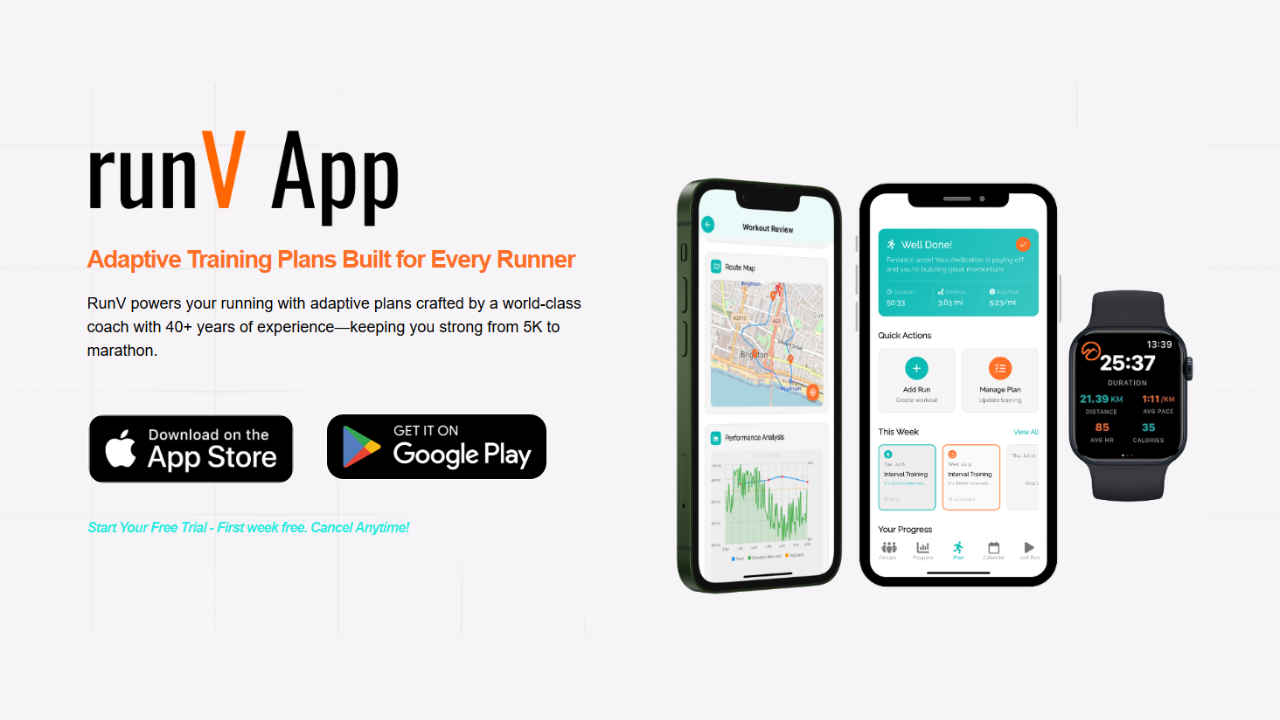
RunV is built around adaptive training and injury risk thinking. It uses your inputs and session history to recommend what to do next, how hard, and when to back off. It’s not just “where did you run?” but “what should you run tomorrow so you stay healthy and progress?”
To unpack RunV Strava Which Proven methods truly reduce your injury risk, we’ll look at 5 areas where tech can help or hurt:
1. Load management and adaptive planning
2. Recovery monitoring and rest
3. Biomechanics and effort tracking
4. Long-term patterns and overuse warning signs
5. Education and decision support
—
Way #1 – Smarter Load Management and Adaptive Planning
Why Load Management Is the Foundation of Injury Prevention
Most running injuries boil down to one simple pattern: “too much, too soon, too often.” Your body can adapt to almost anything if the load rises gradually. It breaks when that curve spikes.
Load management is more than weekly mileage; it’s about:
– Sudden jumps in volume
– Spikes in intensity
– Accumulated fatigue from life stress
– Terrain and surface changes
Any honest RunV vs Strava injury-prevention comparison must start here, because this is where many runners go wrong.
Strava’s Approach to Load Management
Strava offers useful building blocks:
– Weekly and monthly mileage graphs
– Pace and elevation trends
– Fitness/Fatigue/Form scores (for subscribers)
– Training load metrics based on heart rate or power
However, Strava’s structure is mainly descriptive. It shows what you did, but rarely translates that into clear “do this / don’t do this” advice tailored to your current state.
Common issues:
– It’s easy to chase weekly totals or segments, ignoring gradual build-up.
– “Fitness” scores can tempt you to always push higher.
– There’s no strong, built-in “red flag” if you jump from 30 km to 50 km in a week while also adding hills and speed.
Strava is a powerful mirror. But a mirror doesn’t tell you when to stop.
RunV’s Adaptive-Plan Philosophy
RunV focuses on what you should do next, not just what you did. It’s built to adjust sessions based on:
– Recent training load
– How your body is responding
– Your goals and timelines
Adaptive planning is particularly valuable for injury prevention. Instead of rigid 16-week printout plans, RunV can dial sessions up or down depending on performance and feedback.
If you want a deeper dive into how adaptive structures reduce injury risk, Why Adaptive Plans Protect: 7 Essential, Proven Runner Benefits explains how planning around your body, not the calendar, is one of the most powerful “invisible” forms of protection.
RunV Strava Which Proven Load Strategy Wins?
– Strava is excellent for tracking and reviewing your load after the fact.
– RunV is stronger for actively managing that load day by day.
For injury prevention, the more your plan can react to your real-world fatigue and constraints, the safer you’ll be. The ideal setup is often: use RunV to decide sessions and progress, and Strava to log and socialize them.
—
Way #2 – Recovery Monitoring and Rest-Day Intelligence
Why Recovery Is a Non-Negotiable Training Tool
Your body doesn’t grow stronger during the run; it improves during recovery from the run. Poor recovery means:
– Micro-damage accumulates
– Tendons, fascia, and muscles stiffen
– Form degrades, increasing impact and strain
– Your risk of classic overuse injuries skyrockets
Runners often treat rest days as optional. Smart systems treat recovery as a central part of training, not a gap in it. For a focused look at this mindset, see Why Recovery Is a Powerful Training Tool: 5 Essential Facts.
Strava and Recovery: Helpful, but Indirect
Strava offers:
– Relative effort metrics
– Training stress balance (for some device integrations)
– Visibility of hard sessions stacked together
But its interface tends to celebrate consistency and volume, not deliberate rest. The culture reinforces:
– Run streaks
– Monthly distance challenges
– Segment chasing even when tired
Strava does not explicitly ask “Should you rest today?” It assumes you’re logging what you already decided to do.
RunV’s Focus on Recovery and Session Selection
RunV’s value in this area is its ability to:
– Propose easier sessions or cross-training when you’re carrying fatigue
– Balance hard and easy days based on your history
– Adapt long runs, intervals, and recovery runs dynamically
This kind of “session intelligence” matters. Many injuries happen not in the hardest session, but in the slightly-too-hard workout you do while already tired. A plan that reduces the chance of that exact scenario is inherently protective.
RunV Strava Which Proven Recovery Tools Matter Most?
From an injury prevention lens:
– Strava is better as a historical record of how well you balanced hard and easy.
– RunV is better as a real-time guide to ensure that balance happens in the first place.
To get the best of both:
– Use RunV to structure hard/easy rhythms.
– Check Strava after 4–6 weeks to confirm your easy days are truly easier and that intensity hasn’t quietly crept up.
—
Way #3 – Biomechanics, Form, and Effort Tracking
Why Mechanics and Effort Matter for Injury Risk
You can have a perfect plan on paper and still get hurt if:
– Your form breaks down as you fatigue
– You run your “easy” days too hard
– Downhills or uneven surfaces load your joints excessively
Biomechanics data (cadence, ground contact time, asymmetry) and effort metrics (heart rate, RPE, power) give clues about when stress becomes dangerous.
Strava: Data Hub, But Limited Coaching Context
Strava collects and displays:
– Pace and splits
– Elevation and route
– Cadence (if provided)
– Heart rate and power (from your devices)
While it’s a great unified hub, most of the interpretation is manual. You have to:
– Notice if cadence falls off at the end of runs
– Spot if “easy” runs stay too close to tempo pace
– Detect asymmetry by looking at third-party metrics, not in Strava itself
There’s no built-in engine saying, “Your last three long runs show rising pace but dropping cadence and higher heart rate – this combination suggests creeping fatigue and higher injury risk.”
RunV: Using Effort and Session Type to Reduce Risk
RunV’s main injury-prevention advantage here is not being a raw-data warehouse, but using data within session design:
– Prescribing intensity ranges
– Encouraging truly easy paces on recovery days
– Flagging effort that’s out of line with the intended goal of the session
This protects you from “death by medium-hard pace” – one of the most common injury patterns. When every run turns into a borderline tempo, tissue stress never fully drops, and small weaknesses never get the chance to heal.
RunV Strava Which Proven Approach Helps Your Form More?
– Strava: Fantastic for reviewing whether your metrics are improving over months, but it won’t coach you in-session.
– RunV: Helps structure when and how often you stress your body, indirectly keeping form sharper by avoiding constant over-fatigue.
A powerful combo is:
– Use Strava’s detailed metrics to watch for patterns (e.g., cadence falling late in runs).
– Let RunV adjust future training loads or long-run intensity when signs of fatigue-driven mechanics appear.
—
Way #4 – Long-Term Pattern Detection and Overuse Red Flags
How Overuse Injuries Actually Develop
Very few runners wake up with a major injury out of nowhere. Instead, you’ll often see weeks of warning signs:
– Slight tightness becomes a persistent niggle
– Niggle appears earlier in each run
– Pace or power drops at the same effort
– Sleep or mood declines as fatigue rises
Overuse injuries thrive in long-term patterns. Good systems help you see these patterns early.
Strava and Pattern Visibility
Strava is excellent for:
– Multi-month mileage comparisons
– Visualizing when hill or interval work increased
– Spotting correlation between volume spikes and bad races
This is hugely helpful if you regularly review trends. But that’s the catch: you must be proactive. The app itself doesn’t step in and say:
– “You’ve increased long-run distance plus hills plus intervals all in the same fortnight – high risk.”
– “Your easy-run pace is creeping faster but your perceived effort posts suggest you’re not more comfortable.”
It’s a library of patterns, not a pattern detector.
RunV’s Risk-Aware Adaptive Adjustments
RunV’s adaptive approach allows it to react in near real time to hints of overload. You see this through:
– Adjusted session volumes or intensities
– More frequent lighter days when needed
– Individual tailoring after travel, illness, or poor sleep
Strava can show that you mishandled a stressful week after the fact. RunV is better at absorbing that stress into the plan before it becomes an injury.
If you want a structured look at how these overuse patterns form, Understanding Overuse Injuries in 7 Powerful, Proven Ways breaks down how load, tissue tolerance, and fatigue interact over time.
RunV Strava Which Proven Pattern Support Protects You Most?
– Strava is a superb archive of your training history – perfect for post-mortems when something has already gone wrong.
– RunV is a forward-looking tool, constantly trying to prevent “something going wrong” by adjusting the next steps.
For injury prevention, forward-looking beats post-mortem every time.
—
Way #5 – Education, Coaching, and Smart Decision Support
Why Information Alone Isn’t Enough
Modern runners drown in numbers: pace, HR, VO₂ max estimates, recovery scores. Many still get injured because:
– They don’t know which numbers matter most.
– They lack context for how to change their plan when life intervenes.
– They lean on willpower instead of strategy when tired or stressed.
You don’t just need data; you need guidance and guardrails.
Strava’s Education and Coaching Landscape
Strava offers:
– Basic training plans (in some tiers)
– Articles and posts in its content ecosystem
– Community wisdom in comments and clubs
Its strength is community, not structured, individualized coaching. Advice in comments can be helpful, but also conflicting or inappropriate for your injury history or life stress.
RunV’s Coaching-Oriented Model
RunV’s entire architecture is closer to a coach:
– Translating your goal (e.g., first 5k or next marathon) into actionable week-by-week steps
– Accepting feedback about your body and using it to adapt the plan
– Emphasizing sustainable progress instead of only short-term PR chasing
RunV effectively answers “What should I do today, given my last 2–4 weeks and how I feel?” That’s the question a human coach would answer – and the one that keeps you injury-free.
RunV Strava Which Proven Guidance Wins in Real Life?
For injury prevention:
– Strava: Great for support and motivation from fellow runners, but advice isn’t fitted to your physiology or schedule.
– RunV: More focused on science-based, adaptive structure that inherently limits common injury patterns.
The best approach is to treat Strava as your training “social club” and RunV as your “coach.” One supports your motivation; the other shapes your decisions.
—
RunV Strava Which Proven Combo: How to Use Both Together
The most productive way to think about “RunV vs Strava” might be “RunV AND Strava.” Their strengths are different, and together they create a more complete, injury-resistant system.
RunV as Brain, Strava as Memory and Community
– RunV = planning brain
– Decides how hard, how long, and how often
– Adjusts based on fatigue signs and performance
– Strava = memory + community
– Stores your past runs in rich detail
– Keeps you socially engaged and motivated
– Lets you analyze long-term performance trends
Using them together means you get:
– A plan that protects your body
– A record that keeps you honest and inspired
RunV Strava Which Proven Use Cases Shine?
1. Building up from zero or comeback:
– RunV’s adaptive plan protects you from rapid mileage jumps.
– Strava documents that comeback and reminds you of progress.
– For structured comeback strategies, see Running Comeback Plans That Deliver 5 Proven, Powerful Results.
2. Training for a race with a tight schedule:
– RunV helps prioritize key sessions when life gets messy.
– Strava logs what actually happened so you can refine goals.
3. History of overuse injuries:
– RunV downshifts earlier when signs of trouble appear.
– Strava lets you compare current training with the build-up that preceded previous injuries.
—
Practical Setup: How to Build an Injury-Resistant System
Step 1 – Clarify Your Injury Risk Profile
Before picking tools, define your risk:
– Have you had recurring injuries (e.g., Achilles, IT band, shin splints)?
– Do you tend to ramp up fast when motivated?
– Is your life stress high (job, family, sleep)?
The higher your risk, the more you benefit from adaptive, coach-like planning (RunV) rather than only logging (Strava).
Step 2 – Use RunV to Drive Weekly Structure
Let RunV:
– Set overall volume trends
– Decide hard/easy session distribution
– Adapt to fatigue, illness, or schedule shifts
Follow the plan as a default, only overriding when you have a very clear reason.
Step 3 – Sync and Log Everything in Strava
Use Strava to:
– Collect all device data in one place
– Visualize routes, splits, cadence, and HR
– Keep your consistency visible over months
Every 2–4 weeks, review:
– Did easy runs stay truly easy?
– Did weekly mileage grow gradually?
– Did long-run and intensity volume see controlled increases?
Step 4 – Watch for Red Flags on Both Platforms
On Strava, watch for:
– Sudden volume spikes
– Long runs getting faster when they’re supposed to be easy
– Consistently high heart rate at paces that used to be moderate
On RunV, pay attention to:
– Changes in session prescriptions
– Recommendations for lighter days
– Signals that your plan is dialing back load
Don’t override those protective adjustments unless you genuinely feel under-stimulated and have several weeks of smooth training behind you.
Step 5 – Keep Learning About Injuries and Recovery
Even with great tools, your understanding matters. Read, ask questions, and stay curious about:
– Load vs capacity
– Early warning signs of overuse
– The role of sleep, nutrition, and strength training
Your tech can nudge you, but you’re the one listening to your body each day.
—
FAQ: RunV Strava Which Proven Path Is Right for You?
Is Strava enough for injury prevention on its own?
Strava is excellent for logging and reviewing training, but it doesn’t actively manage load or adapt plans in response to your fatigue or life. You can stay healthy using Strava if you already have strong training knowledge and discipline. However, many runners benefit from a more guided system like RunV that bakes injury prevention into the plan itself.
Can I use RunV without Strava?
Yes. RunV can operate as your standalone training planner and tracker. However, many runners like the community, route features, and long-term data visualization that Strava offers. The combination is particularly powerful for both motivation and injury prevention.
Does using both apps increase my injury risk by encouraging me to do more?
Only if you treat every tool as a challenge rather than a guide. The healthiest approach is:
– Let RunV’s adaptive structure set your training ceiling.
– Use Strava’s features for motivation and analysis, not to override sensible limits.
If a Strava challenge tempts you to ignore fatigue or pain, remember: missing one month’s badge is better than missing three months from injury.
How do I know if my plan is actually injury-preventive?
Look for:
– Gradual mileage increases (10–20% steps, not 40–50%)
– Alternating hard and easy days
– At least one true rest or cross-training day each week
– Long runs that aren’t all-out efforts
– Flexibility when you’re unusually stressed or sleep-deprived
RunV is built to enforce many of these automatically. Strava helps you confirm you’re sticking to them.
Where can I read more about specific injuries and training tactics?
RunV’s blog has in-depth pieces on overuse injuries, recovery, and structured training. A good starting point for pattern-based injuries is Understanding Overuse Injuries in 7 Powerful, Proven Ways and for comeback planning you can check Running Comeback Plans That Deliver 5 Proven, Powerful Results. For recovery as part of training, Why Recovery Is a Powerful Training Tool: 5 Essential Facts is especially relevant.
—
Final Thoughts: RunV Strava Which Proven Choice Keeps You Running Long-Term?
If your priority is injury prevention, the most important shift is mental: from “How hard can I push?” to “How long can I keep progressing?” Your tech should support that shift, not sabotage it.
In the RunV vs Strava equation:
– Strava shines as a tracking, social, and analysis platform.
– RunV shines as an adaptive, risk-aware planning and coaching engine.
For most runners, the true answer to “RunV Strava Which Proven system is best for injury prevention?” is:
– Use RunV to decide what to do.
– Use Strava to record what you did and stay motivated.
Train with a plan that expects you to be human – with busy weeks, bad sleep, and off days – and you’ll spend more time running, less time rehabbing, and many more years chasing goals on your own terms.