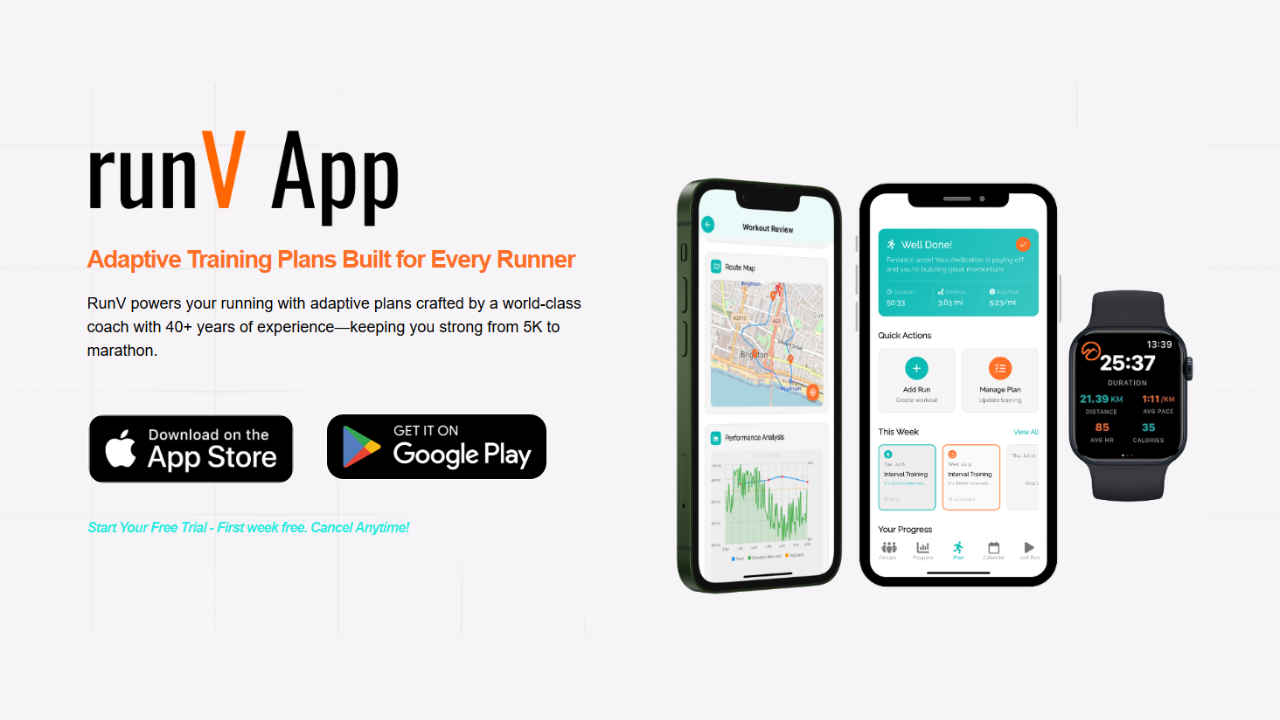

If you want to Train Powerful, Proven First marathons instead of just “trying to survive 26.2,” you need more than a generic plan. You need structure, smart pacing, modern tools, and a realistic strategy that fits your life, body, and tech. This guide breaks down how to design and execute first-marathon training you can actually sustain—then repeat or improve 10 times over.
—
Table of Contents
1. Mindset Shift: From One-Off Marathon to Powerful, Proven First Ten
2. Baseline Assessment: Are You Ready to Start?
3. Macro Planning: How Long to Train Powerful, Proven First Marathons?
4. The 5 Training Pillars for Powerful, Proven First Marathons
5. How to Structure a Week to Train Powerful, Proven First Marathons
6. Long Runs: The Engine of 10 Powerful, Proven First Marathons
7. Gear, Shoes, and Tech: Turning Data Into Better Training
8. Strength, Mobility, and Injury-Proofing
9. Fueling, Hydration, and Race-Day Nutrition Strategy
10. Tapering Smartly Before Each Marathon
11. Adjusting on the Fly: Illness, Missed Runs, and Life
12. Sample 16-Week Plan to Train Powerful, Proven First Marathon
13. Scaling to 10 Marathons Without Burning Out
14. Key FAQs for First-Marathon Runners
—
1. Mindset Shift: From One-Off Marathon to Powerful, Proven First Ten
Most first-time marathoners obsess over just finishing. That’s fine—but if you want to Train Powerful, Proven First marathons that set you up for a decade of strong racing, your mindset has to be different.
Think of your “first marathon” not as one race, but as the first iteration of a long experiment. The goal becomes:
– Learn how your body responds to weekly mileage
– Discover your preferred fueling and gear
– Build habits that make your next nine marathons easier to prepare for
You’re not trying to nail everything perfectly; you’re building a repeatable system that you can refine.
—
2. Baseline Assessment: Are You Ready to Start?
Before any long plan, you need honest baseline data. Training to Train Powerful, Proven First marathons doesn’t mean jumping from couch to 26.2; it means starting from a stable platform.
2.1 Minimum Fitness to Start a Marathon Plan
For a standard 16–20 week plan, you should ideally be able to:
– Run 3 times per week
– Handle 15–20 km (9–12 miles) total weekly
– Complete a 60-minute easy run without extreme fatigue
If you’re not there yet, spend 6–8 weeks building up with walk-run intervals or a structured 5k or 10k program before diving into full marathon prep.
2.2 Know Your Risk Factors
Ask yourself:
– Have you had recent injuries (last 12 months)?
– Are you often exhausted from work, parenting, or stress?
– Do you sleep less than 7 hours regularly?
These don’t disqualify you, but they mean your plan must be conservative, especially with mileage and speed work.
—
3. Macro Planning: How Long to Train Powerful, Proven First Marathons?
You can Train Powerful, Proven First marathons in different timelines, but the quality of the preparation matters more than the exact length.
3.1 Choosing Your Training Block Length
Typical options:
– 12 weeks: For runners with a strong base and some race history
– 16 weeks: Ideal for most first-marathoners
– 20 weeks: Best if you’re newer or higher risk for injury
Longer doesn’t mean “more aggressive.” It means more time to progress gradually, adding recovery weeks and learning to adapt.
3.2 Periodization: The Big Picture
Your macro plan should follow a simple structure:
– Base phase (4–8 weeks): Build easy mileage, minimal intensity
– Build phase (6–8 weeks): Add structured workouts and long-run distance
– Peak phase (3–4 weeks): Longest long runs, specific marathon-pace work
– Taper (2–3 weeks): Reduce volume, keep legs sharp
Think in cycles, not just linear mileage increases. A well-designed plan might step up three weeks, then cut back one.
—
4. The 5 Training Pillars for Powerful, Proven First Marathons
To Train Powerful, Proven First marathons that you can replicate and refine, base your approach on these five pillars.
4.1 Pillar 1: Easy Volume (The Aerobic Base)
Most of your running—about 70–85%—should be at an easy effort where you can talk in full sentences. Easy runs:
– Build your cardiovascular system
– Strengthen tendons and ligaments gradually
– Allow you to handle bigger long runs later
If every run feels “hard,” you’re sabotaging long-term progress.
4.2 Pillar 2: Long Run Progression
The long run is your weekly dress rehearsal for marathon endurance. You don’t need to run 42.2 km in training, but you do need to build up safely to 28–35 km (17–22 miles) depending on your background.
We’ll detail long run strategy later, but for now: one long run per week, rarely two.
4.3 Pillar 3: Quality Workouts (But Not Too Many)
To Train Powerful, Proven First marathons, add 1–2 harder sessions per week:
– Tempo / threshold runs for sustained effort
– Marathon-pace segments to “lock in” your target pace
– Short intervals to build efficiency and running economy
The mistake: stacking too many hard days. Most first-time marathoners do better with just one key workout plus a long run.
4.4 Pillar 4: Strength and Mobility
Running is repetitive. Weaknesses become injuries over thousands of steps. Two short strength sessions per week focused on hips, glutes, and core are non-negotiable if you want to be healthy through multiple first marathons over several seasons.
4.5 Pillar 5: Recovery and Adaptation
Training doesn’t make you stronger; recovery does. That includes:
– Sleep
– Easy days and rest days
– Nutrition and hydration
– Stress management
Understanding why recovery is essential—and how it actually drives fitness—will unlock more progress than another weekly interval session. For a deeper dive, read Why Recovery Is a Powerful Training Tool: 5 Essential Facts.
—
5. How to Structure a Week to Train Powerful, Proven First Marathons
Now we turn the pillars into a practical weekly rhythm. This example assumes 4–5 runs per week.
5.1 Example 5-Day Running Week
– Monday: Rest or strength + light mobility
– Tuesday: Quality workout (tempo, intervals, or marathon pace)
– Wednesday: Easy run
– Thursday: Easy run + short strides, or strength
– Friday: Rest or easy run (short)
– Saturday: Long run
– Sunday: Recovery day (walk, yoga, cycling optional)
If you run 4 days, drop either Wednesday or Friday and keep Tuesday + Saturday as your key days.
5.2 Rules for Weekly Structure
– Separate hard days with easy or rest days
– Never stack a long run and intense workout back-to-back
– The closer you are to race day, the more marathon-specific your workouts should become
To Train Powerful, Proven First marathons, think “sustainable pattern” rather than “hero week.” The best week is one you can repeat.
—
6. Long Runs: The Engine of 10 Powerful, Proven First Marathons
Your long run is the single most important workout of marathon prep. Managing it well is how you Train Powerful, Proven First marathons and avoid the common “mile 32 in a 42 km race” feeling, where every step is a battle.
6.1 How Far Should Your Long Run Go?
For most first-timers:
– Peak long run: 30–32 km (18–20 miles)
– Some may safely reach 34–35 km, but it’s not mandatory
You’ll gradually build up from 12–16 km (7–10 miles) in early weeks to your peak distance about 3 weeks pre-race.
6.2 Long Run Pace
Aim for:
– 45–90 seconds per km slower than goal marathon pace
– Or 1–2 minutes per mile slower
The goal isn’t to prove your race pace in training; it’s to extend your endurance while keeping fatigue manageable. In later cycles, you can include segments at marathon pace, but go conservative in your first block.
6.3 Long Run Frequency and Cutback Weeks
You’ll usually do a long run every week, but with periodic reductions:
– 3 weeks building distance
– 1 week cutback (reduce long run by 20–30%)
Cutbacks allow your body to consolidate gains, making your training “proven” instead of random.
—
7. Gear, Shoes, and Tech: Turning Data Into Better Training
Runners today have tools that simply didn’t exist when the classic “20-mile long run, hope for the best” approach ruled. To Train Powerful, Proven First marathons, learn how to use gear intelligently—not obsessively.
7.1 Daily Trainers vs. Race Shoes
You don’t need carbon plates for your first marathon, but you do need:
– A comfortable, cushioned daily trainer that matches your stride
– Potentially a lighter “workout” or race shoe for key sessions
Rotate at least two pairs if budget allows; it reduces injury risk and extends shoe life.
7.2 Core Tech: Watch, App, and Heart Rate Zones
At minimum, use:
– A GPS watch or phone app for pace and distance
– Heart rate tracking to guide easy vs. hard days
If you train with heart-rate-based efforts, set your zones properly and avoid guessing. For detailed setup, see How to Set Up 5 Powerful Apple Watch Heart Rate Zones, which applies conceptually to most running watches.
7.3 Features That Actually Matter
Look for training platforms with:
– Adaptive scheduling if you miss runs
– Clear breakdown of easy vs. quality days
– Integration with your watch and heart rate
If you’re exploring app-based coaching, check the Features that truly support long-term, repeatable marathon preparation rather than one rigid static PDF plan.
7.4 Data Without Obsession
Use your metrics to:
– Confirm that easy days are easy
– Track weekly mileage trends
– Watch your resting heart rate during heavy phases
Don’t chase “perfect numbers” daily. Focus on trends across weeks.
—
8. Strength, Mobility, and Injury-Proofing
You can’t Train Powerful, Proven First marathons if you’re constantly sidelined.
8.1 Why Strength Matters for Marathoners
Strong hips and glutes:
– Reduce knee and IT-band pain
– Improve late-race form
– Help you handle hills and uneven surfaces
Aim for two 20–30 minute sessions per week. If you’re short on time, do one full session and sprinkle 5–10 minute “micro-sessions” after easy runs.
8.2 Key Movements to Prioritize
Build a foundation with:
– Squats and split squats
– Glute bridges and hip thrusts
– Deadlifts or hip hinges
– Planks and side planks
– Calf raises
Mobility: 5–10 minutes of targeted work on ankles, hips, and hamstrings a few times a week will keep you moving freely over longer distances.
—
9. Fueling, Hydration, and Race-Day Nutrition Strategy
Your muscles are only as effective as the fuel you provide. To Train Powerful, Proven First marathons, dial in nutrition during long runs, not just on race week.
9.1 Daily Nutrition for Marathon Training
Focus on:
– Enough total calories to support training
– Carbohydrates as your primary fuel (50–60% of intake)
– Adequate protein (1.6–2.2 g per kg of body weight) for recovery
– Healthy fats for hormones and satiety
Underfueling is the stealth killer of first-marathon plans: fatigue, illness, and recurring injuries often trace back to chronic energy deficit.
9.2 Long Run and Race Fueling
For runs longer than 75–90 minutes:
– Take 30–60 g of carbs per hour (gels, chews, drink mix)
– Start early: first gel around 30–40 minutes into the run
– Practice the exact brands and timing you’ll use on race day
Hydration:
– Sip regularly, don’t chug
– Include electrolytes, especially if you’re a salty sweater or racing in heat
You want your gut to be as trained as your legs by race day.
—
10. Tapering Smartly Before Each Marathon
The taper is where many first-timers panic. You cut volume, feel weird, and start second-guessing everything. But if you want to Train Powerful, Proven First marathons—plural—you must learn to taper effectively.
10.1 Basic Taper Structure
For a 16-week plan:
– 3 weeks out: Peak long run
– 2 weeks out: Reduce weekly volume by ~20–30%
– Race week: Reduce by another 30–50%, keep 2–3 short, light workouts
Maintain a little intensity (strides, short pickups) so your legs stay snappy. Don’t cram any “make-up” training.
10.2 Common Taper Mistakes
Avoid:
– Suddenly changing shoes, diet, or gear
– Adding “just one more long run” when you’re supposed to cut back
– Dramatically cutting calories despite lower mileage
Tapering is both art and science. For deeper insight into what to avoid, see Marathon Taper Mistakes That Ruin 7 Essential Race Results.
—
11. Adjusting on the Fly: Illness, Missed Runs, and Life
Even the best plan gets punched in the face by reality. To Train Powerful, Proven First marathons over multiple cycles, you must master adjustment, not perfection.
11.1 When You Miss One Run
If you miss a single easy run:
– Don’t move workouts around
– Don’t add extra mileage to “make up”
– Just resume the plan as written
One missed run out of hundreds is noise, not disaster.
11.2 When You Miss Several Runs
If you miss 3–5 days from illness or life:
– Skip the hardest workout closest to your return
– Shorten the next few runs and build back gradually
– Pay attention to how you feel, not just the schedule
What matters for your first ten marathons is that you keep the big picture intact. One slightly undertrained race beats an overtrained, injured DNS every time.
—
12. Sample 16-Week Plan to Train Powerful, Proven First Marathon
This is a high-level example, not a personalized prescription. Distances assume you’re starting from ~20 km (12 miles) per week.
12.1 Weeks 1–4: Base Building
Goals:
– Establish 4–5 runs per week
– Focus on easy effort
– Start strength twice weekly
Weekly structure:
– 3–4 easy runs, 1 long run
– Long run progresses from 10–16 km
– Optional: light strides (6 x 15 seconds) once a week
No heavy intervals yet. You’re building the foundation so later training is truly “proven,” not rushed.
12.2 Weeks 5–8: Introduce Quality
Add 1 weekly workout, such as:
– Week 5: 3 x 6 minutes at comfortably hard (tempo) with easy jog recoveries
– Week 6: 4 x 5 minutes tempo
– Week 7–8: 20–25 minutes continuous tempo
Long run: 18–22 km by week 8, mostly easy pace. Maintain strength work.
12.3 Weeks 9–12: Peak Build and Marathon Pace
You’re now truly beginning to Train Powerful, Proven First marathons.
Workouts may include:
– 2 x 5 km at marathon pace
– 3 x 3 km at marathon pace with short jog recoveries
– Tempo blocks followed by marathon-pace segments
Long runs reach 24–30 km by week 12, with optional short stretches at goal pace during the final 25–30 minutes.
12.4 Weeks 13–14: Peak Long Runs
Long run peaks at:
– 30–32 km (18–20 miles)
– Occasionally 34–35 km if your body tolerates it
Workouts stay specific, e.g.:
– 16–18 km with middle 8–10 km at marathon pace
Keep strength but reduce load slightly and prioritize sleep and fueling.
12.5 Weeks 15–16: Taper and Race
Volume drops:
– Week 15: 60–70% of peak
– Week 16: 40–50% of peak
Keep:
– 1 light workout per week (e.g., 4 x 5 minutes at marathon pace)
– Short strides and easy running
Race week: hydrate, stay calm, and avoid last-minute changes.
—
13. Scaling to 10 Marathons Without Burning Out
If your goal is not just one but 10 powerful, proven first marathons over several years, think seasonally.
13.1 Spacing Your Marathons
Healthy spacing options:
– 2 per year, spring and fall
– 1 per year if your life is very busy or injury-prone
Between marathons, focus on:
– Shorter races for speed (5K–10K)
– Strengthening weak links
– Mental refresh rather than constant peak training
13.2 Learning From Each Race
After each marathon, review:
– Where did you slow down?
– Did your fueling work or cause GI issues?
– Were there recurring niggles or pains?
Adjust your next training block to address these findings. Over 10 marathons, this cycle of reflection and refinement is what makes them truly “proven.”
13.3 Off-Season and Transition Blocks
After a marathon:
– Take 7–14 days very easy (or off running if needed)
– Rebuild with shorter easy runs
– Reintroduce workouts gradually
These transitions allow you to Train Powerful, Proven First marathons repeatedly without burning out physically or mentally.
—
14. Key FAQs for First-Marathon Runners
14.1 How Many Days Per Week Should I Run?
Most first-time marathoners thrive on 4–5 days per week. Three days can work with cross-training if you’re injury-prone, but progress will be slower. Six days suits experienced runners with a strong base.
14.2 Can I Walk During My First Marathon?
Yes. Many powerful, proven first marathons include walk breaks. Planned short walks at aid stations or on hills can help you maintain an even effort and finish stronger.
14.3 Do I Really Need Speed Work for a First Marathon?
You need some structured work above easy pace to:
– Improve running economy
– Increase lactate threshold
– Prepare your legs for race effort
But you don’t need track-style sprinting. Controlled tempos and marathon-pace runs are usually enough.
14.4 How Do I Pick a Realistic Goal Time?
Base it on:
– Recent 5K, 10K, or half-marathon results
– Online calculators that predict marathon time from shorter races
– Your training pace on long runs and workouts
In your first cycle, consider a conservative time goal or even a “finish strong” strategy rather than a specific pace per kilometer.
14.5 What If I’m Coming Back From a Break or Injury?
If your gap from consistent running exceeds 8–12 weeks, treat your current marathon as a comeback project. You might also benefit from lower-key distance targets or a dedicated comeback plan between big marathon cycles, similar to the approach described in many “running comeback” frameworks.
—
Putting It All Together
To Train Powerful, Proven First marathons—not just one but a series—you need:
– A realistic starting point and training block length
– Weekly structure centered on easy volume, one key workout, and one long run
– Thoughtful long run progression and strategic tapers
– Strength, recovery, and smart tech usage
– A mindset of learning and iteration, race after race
Marathon training is demanding, but it’s also deeply learnable. Treat your “first” as the start of a longer experiment, and each subsequent race becomes another step toward mastering your own system for powerful, proven results.