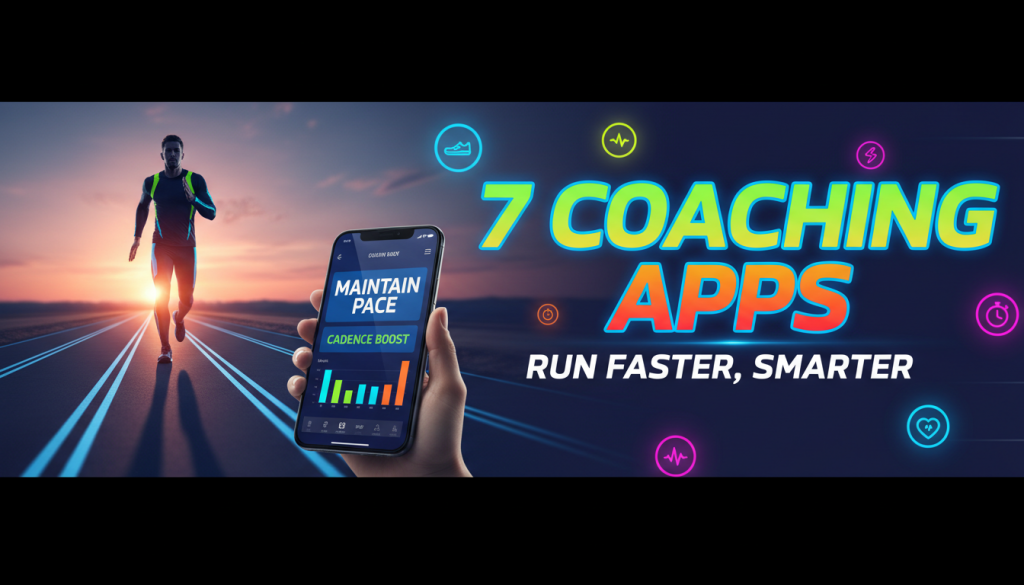
Finding the Best Running Apps Based on coaching features isn’t just about shiny interfaces or social feeds. The right app can feel like having a knowledgeable coach in your pocket—guiding your workouts, preventing injury, and helping you peak on race day. With so many choices, it’s easy to get stuck comparing GPS maps instead of what really matters: how well the app actually coaches you.
This guide breaks down 7 proven essentials that define truly coaching-centered running apps, then reviews specific apps through that lens so you can choose the one that fits your goals, tech, and training style.
Outline
- Why Coaching-Based Apps Matter More Than Basic Trackers
- 7 Essentials the Best Coaching-Focused Running Apps Share
- Best Running Apps Based on Coaching: 7 Proven Essentials in Action
- How to Choose the Best Coaching-Based Running App for You
- Making the Most of Your Coaching App
- Common Mistakes When Using Coaching Apps (and How to Avoid Them)
- Who Should Use Which App? Quick Recommendations
- Final Thoughts
Why Coaching-Based Apps Matter More Than Basic Trackers
Basic tracking—distance, pace, route—has become a commodity. Almost any app can draw a map and spit out splits. But improvement in running doesn’t come from knowing what you did; it comes from knowing what to do next and how hard to do it.
That’s where the Best Running Apps Based on coaching stand out. They do more than log miles. They:
- Turn broad goals (“run a half marathon,” “get faster”) into structured plans.
- Guide effort, not just pace, so you don’t overreach every workout.
- Adapt based on your feedback, heart rate, or missed sessions.
- Teach concepts like recovery, aerobic base, and race-specific work.
Injuries and plateaus often come from unstructured training. A solid coaching app can help you build a smarter, safer progression. For a deeper dive into why structure matters so much, see How Proper Training Structure Cuts Injury Risk: 5 Proven Tips.
7 Essentials the Best Coaching-Focused Running Apps Share
Before reviewing specific apps, it helps to have a clear framework. The Best Running Apps Based on coaching consistently nail seven key areas.
1. Truly Structured, Progressive Plans
Good coaching apps don’t hand you a bunch of random workouts. They build a logical sequence that:
- Starts where you are right now (not where you wish you were).
- Increases volume and intensity progressively.
- Includes cutback/recovery weeks.
- Peaks you for a target race date or performance goal.
Look for: plans that specify weekly mileage ranges, how many days per week you’ll run, and how workouts differ by day (easy, long, speed, tempo).
2. Clear Coaching Cues for Effort and Technique
Many runners know their pace but not their effort. Coaching-centric apps describe intensity in terms you can feel: “you should be able to talk in full sentences,” “last few minutes feel challenging but controlled,” or “only a few words at a time.”
Some apps explain form cues (posture, cadence, relaxed shoulders), but many skip this entirely. Apps that coach your body awareness often keep you healthier and more efficient long-term.
3. Adaptation to Real Life
A plan that looks perfect on paper but ignores your actual life schedule is useless. The best apps:
- Let you shift workouts when your week changes.
- Adapt to missed runs without starting you over.
- Adjust difficulty if your recent workouts are too hard or too easy.
Some use algorithms and performance metrics (pace trends, heart rate, RPE) to adjust future sessions. Others rely on manual input but still offer smart rescheduling.
4. Smart Use of Heart Rate and Zones
Heart rate can be powerful—but only if zones are set correctly. Quality coaching apps configure or help you refine personalized zones instead of relying only on “220 – age” formulas.
That matters if you’re focusing on aerobic development, fat oxidation, or learning to pace long races. If you’re an Apple Watch user, it’s worth learning how to fine-tune those zones; see How to Set Up 5 Powerful Apple Watch Heart Rate Zones.
5. Evidence-Based Training Principles
Behind the interface, you want real training science:
- Balance of easy vs. hard days.
- Phase-based structure (base, build, specific, taper).
- Recovery emphasis and rest days.
- Reasonable weekly mileage progression.
The Best Running Apps Based on coaching usually reference pace domains or effort levels that align with proven systems of aerobic and anaerobic training, not just “run harder today.” Apps that teach you why you’re doing each workout are especially valuable.
6. Feedback, Logging, and Reflection
Improvement isn’t just about doing the workout; it’s also about noticing patterns:
- How did that tempo feel compared to last month?
- Do you always feel flat after two hard days in a row?
- Are you sleeping or recovering poorly when volume exceeds a certain threshold?
Top apps let you tag mood, perceived effort, surface, shoe, and more. Over time, you and the algorithm can see what works for you.
7. Motivation, Consistency, and Habit Support
Even the most beautifully periodized plan fails if you don’t show up. The Best Running Apps Based on coaching recognize that consistency drives results, so they include:
- Progress streaks or habit tracking.
- Reminders that sync with your calendar or watch.
- Audio encouragement or coach voiceovers.
- Community or friend features.
If you struggle to stay on track, pair your coaching app with behavior strategies. For ideas, check out How to Stay Consistent: 7 Powerful, Proven Running Habits.
Best Running Apps Based on Coaching: 7 Proven Essentials in Action
Below, we’ll look at popular apps and how they line up against those seven essentials. The goal isn’t to crown a single “winner” but to help you see which app fits your preferences and tech ecosystem.
1. Runkeeper (ASICS)
What It Is
Runkeeper has evolved from a pure GPS tracker into a coaching-focused app with training plans, audio guidance, and integration with ASICS shoe recommendations.
Coaching Strengths
- Structured Plans: Plans for 5K, 10K, half marathon, and marathon, often with different experience levels and target paces.
- Audio Coaching: Voice prompts provide pace, distance, and progress cues during workouts.
- Effort-Based Guidance: Many workouts ask you to run by effort rather than strict pace, which is critical for varying terrain or weather.
- Shoe Mileage Tracking: Helps you correlate fatigue or injury with worn-out shoes.
Limitations
- Adaptation to missed workouts is basic; you often need to manually shift sessions.
- Training science is solid but not deeply explanatory; you get the “what,” less of the “why.”
- Heart-rate specific programming isn’t as advanced as some competitors.
Best For
Runners who want straightforward, plan-based guidance with good audio support and an easy learning curve. Great for beginners to intermediate athletes training for common race distances.
2. Nike Run Club (NRC)
What It Is
NRC is one of the most polished, widely used free running apps, known for its charismatic guided runs, celebrity guest coaches, and strong community feel.
Coaching Strengths
- Guided Runs with Coaches: Audio sessions walk you through easy days, long runs, speed, and even recovery runs.
- Motivational Focus: The coaching tone is friendly, relatable, and highly motivating, helping you get out the door.
- Programs: Includes “Get Started” and race-focused plans that blend guided sessions with flexible workouts.
- Integration: Works seamlessly with Apple Watch and other wearables.
Limitations
- Plans are less adaptive; if you miss a week, you might have to manually realign.
- Less depth around training theory; excellent at “feel” and habit, lighter on detailed physiology.
- Customization options (like precise volume control) are more limited than premium coaching platforms.
Best For
Newer runners or those who thrive on community and motivational messaging. Also great as a supplemental tool for experienced athletes on easy or recovery days. (Best running apps)
3. Garmin Coach (Garmin Connect)
What It Is
Garmin Coach lives inside Garmin Connect and pushes structured workouts to your Garmin watch. It’s built around well-known coaches and adaptive training plans.
Coaching Strengths
- Adaptive Plans: The app adjusts plan difficulty based on how you perform in workouts and tests.
- Watch Integration: Workouts appear on your watch with step-by-step prompts (intervals, recoveries, etc.).
- Evidence-Based: Plans use thresholds, zones, and known training structures.
- Feedback Loops: The system reacts to missed or underperformed workouts.
Limitations
- Primarily optimized for Garmin devices; if you don’t have a Garmin watch, this isn’t for you.
- Coaching explanation can be minimal; you’re guided, but not always deeply educated.
- Customization is constrained; you choose targets, but can’t rewrite the whole structure.
Best For
Runners with Garmin watches who want integrated, adaptive plans without needing a separate subscription. Ideal for performance-oriented beginners to intermediates targeting 5K–half marathon.
4. Strava with Training Add‑Ons
What It Is
Strava is famous for its social features, segments, and leaderboards. On its own, it’s more of a tracker plus social network than a full coaching app. But with Training Packs or third-party integrations, it can approximate coaching functionality.
Coaching Strengths
- Workout Library: Paid subscriptions unlock more training data analysis and suggested workouts.
- Third-Party Plans: You can import structured workouts from external platforms into connected devices.
- Motivation: Social accountability, kudos, and clubs can help maintain consistency.
Limitations
- Out of the box, Strava is not a true coaching tool; it’s mainly tracking and social.
- Structured plans and adaptation require external services or self-programming.
- Can encourage “always hard” behavior because of competitive segments.
Best For
Runners who already have a separate coaching plan (from a coach or another app) but want rich social features and analysis. Works well as a logging and motivation layer rather than a primary coach.
5. Runcoach
What It Is
Runcoach is designed specifically as a coaching platform: you input your race goals, experience, and schedule, and it generates and continually adjusts a training plan.
Coaching Strengths
- Dynamic Adjustment: Plans adapt based on completed workouts and missed days.
- Individualization: Uses your current fitness, goal time, and training history to set appropriate volumes and paces.
- Education: Offers explanations and tips for workouts and race strategy.
- Race-Tailored: Strong for common road race distances with specific time goals.
Limitations
- Interface can feel less slick than big-brand apps.
- Some features are behind a paywall, including deeper customization and live support.
- Strength and mobility guidance is more limited compared to specialized cross-training apps.
Best For
Goal-driven runners who want an adaptive, time-targeted training plan and are comfortable focusing on performance metrics.
6. TrainingPeaks
What It Is
TrainingPeaks is a serious training and coaching platform, widely used by endurance coaches and competitive athletes. It’s device-agnostic and offers deep analytics.
Coaching Strengths
- Training Plans: Large marketplace of plans from different coaches for every distance and specialty.
- Custom Workouts: Build or modify highly detailed, structured workouts (pace, power, HR).
- Metrics: Tracks training stress, form, and fatigue using advanced metrics like TSS, CTL, ATL.
- Coach Integration: Easily work with a human coach inside the platform.
Limitations
- Steep learning curve if you’re new to training concepts.
- Less “hand-holding” or motivational content than apps like NRC.
- Adaptation is only as good as the plan/coach you use; the app itself doesn’t fully auto-adapt in a consumer-friendly way.
Best For
Serious runners, triathletes, and data lovers who either work with a coach or enjoy crafting their own scientifically grounded plans.
7. AI Coaching Apps and Dynamic Plans
A new wave of platforms is using AI to provide personalized, constantly adapting training plans. While specific products evolve quickly, the idea is consistent: the app ingests your performance data, feedback, and schedule, then adjusts your training in near real time.
Coaching Strengths
- Continuous Adaptation: Missed run? Faster-than-expected workout? The plan updates automatically.
- Context-Aware: Some can incorporate sleep, stress, or subjective fatigue scores.
- Highly Individual: Over time, the app “learns” how you respond to volume and intensity.
Limitations
- Quality varies widely; not all AI plans are grounded in solid training science.
- Can feel opaque: you may not always understand why the plan changed.
- Still emerging; feature sets can shift frequently.
Best For
Tech-comfortable runners who want maximum personalization and flexibility, especially those with variable schedules or a history of overdoing fixed plans.
How to Choose the Best Coaching-Based Running App for You
With so many choices, instead of asking “What’s the single best app?” ask “What’s the best fit for my situation?” Consider these factors.
1. Your Primary Goal
- Build a habit / start running: Look for strong guided audio, motivation, and beginner plans (Nike Run Club, Runkeeper).
- Race a 5K–marathon with a target time: Prioritize structured, progressive, race-specific plans (Runcoach, Garmin Coach, TrainingPeaks plans).
- Get faster safely over months and years: Focus on apps that balance easy and hard work and emphasize aerobic development.
2. Your Experience Level
- Beginner: Choose intuitive interfaces, simple language, and clear effort cues. Apps that explain pacing via “talk test” or simple RPE scales help a lot.
- Intermediate: You may want more customization (weekly mileage caps, race dates, specific workout types).
- Advanced: Consider platforms like TrainingPeaks, or AI-driven systems that let you tailor every aspect while still providing feedback.
3. Device Ecosystem
- Garmin users: Garmin Coach + TrainingPeaks integration is powerful.
- Apple Watch users: Apps that integrate well with watchOS and heart rate zones are ideal.
- Android / mixed devices: Check compatibility for your phone and wearable before committing.
4. Preference: Hand-Holding vs. Control
Some runners want a coach to say “do this today” and not think beyond that. Others want full control over plan design. The Best Running Apps Based on coaching span this spectrum:
- More hand-holding: Nike Run Club, Garmin Coach.
- Balanced guidance + autonomy: Runcoach, AI dynamic plans.
- Maximum control: TrainingPeaks, combined with your own knowledge or a coach.
5. Budget
- Free or low-cost: NRC, basic Runkeeper, Garmin Coach (with device purchase).
- Premium subscriptions: Runcoach premium, TrainingPeaks, advanced AI coaching apps.
- Value question: Ask if the extra cost truly adds better adaptation, education, or features that you’ll use.
Making the Most of the Best Running Apps Based on Coaching
Once you’ve chosen an app, how you use it matters as much as which one you picked.
1. Start from Your Real Baseline, Not Your Aspirational One
Be honest about:
- Current weekly mileage.
- Longest recent run.
- Recent injuries or layoffs.
- Available days per week for training.
The Best Running Apps Based on coaching will use this information to avoid too-steep jumps. Overstating your fitness just means the first few weeks will be too hard, which can trigger fatigue or injury.
2. Learn How Your App Talks About Effort
Every coaching app has its own vocabulary: “easy,” “steady,” “tempo,” “threshold,” “VO2 max,” “interval.” Spend a few minutes reading their definitions so you match your effort to the intended zone.
If your app doesn’t explain effort levels well, supplement with resources like Why Beginners Should Learn 5 Essential, Proven Effort Levels. The better you understand effort, the more effective your plan becomes.
3. Use Heart Rate Zones Thoughtfully
If your app supports heart rate–based training: (Top fitness apps)
- Confirm your max HR or threshold isn’t just age-based; use field tests when you’re ready.
- Remember that HR lags behind effort, especially in intervals and heat.
- On hot or hilly days, trust effort and HR more than pace.
The Best Running Apps Based on coaching will allow some flexibility: they may prescribe an effort zone plus a HR range, giving you room to adapt to conditions.
4. Respect Recovery Days and Easy Runs
A common mistake is turning every run into a mini race. Great coaching apps often assign 60–80% of training at easy effort. That’s not a bug; it’s how endurance improves without constant burnout.
Trust the process and keep easy days truly easy, even if your app doesn’t yell at you for going too fast. You’ll see bigger gains on quality days as a result.
5. Log Subjective Feedback, Not Just Numbers
Even if an app doesn’t explicitly ask, track:
- Sleep quality.
- Stress levels.
- Perceived effort vs. prescribed effort.
- Any niggles or pain.
Over time, this gives context to your training load and can guide smarter adaptations—by you or the algorithm.
Common Mistakes When Using Coaching Apps (and How to Avoid Them)
1. Blindly Following the Plan
Even the Best Running Apps Based on coaching are working from limited data. They don’t feel your sore calf or know how hard your workday was. If you’re unusually exhausted, it’s okay—often wise—to modify or skip a session.
Use the app as a guide, not an unbreakable rulebook.
2. Ignoring Warning Signs of Fatigue
Apps can’t always tell the difference between normal training tiredness and early overtraining. Watch for:
- Persistent soreness that doesn’t improve with rest.
- Elevated resting heart rate over several mornings.
- Loss of motivation, irritability, or poor sleep.
- Sudden drop in performance at usual efforts.
When in doubt, cut back. Safer training almost always yields better long-term gains. For why, see Why Safer Training Produces 5 Proven, Powerful Running Gains.
3. Constantly Changing Goals or Plans
Stability matters. If you keep hopping between 5K speed, marathon base, and random challenges, your body never adapts properly. Choose a goal window—8 to 16 weeks for most race plans—and stick with it unless there’s a serious reason to change.
4. Racing Every Workout Because of Social Features
Strava segments and similar features are fun but can tempt you into overdoing intensity. Pick 1–2 days per week for harder efforts; ensure the rest are deliberately easy, even if your weekly feed looks “slower.”
5. Ignoring Strength and Mobility
Most coaching apps focus primarily on runs. Many only lightly address strength, mobility, and stability, even though these significantly reduce injury risk and boost performance.
Supplement your app’s plan with 2–3 short strength sessions per week, especially for hips, glutes, and core. Even 15–20 minutes twice weekly can make a huge difference.
Who Should Use Which App? Quick Recommendations
Here’s a simplified matching guide based on typical runner profiles and how the Best Running Apps Based on coaching line up.
For Brand-New Runners (Couch to 5K and Beyond)
- Best matches: Nike Run Club, Runkeeper.
- Why: Friendly guided runs, simple language, strong motivation, gentle progressions.
- What to prioritize: Habit-building, basic effort understanding, and avoiding injury.
For Busy Professionals Juggling Family and Work
- Best matches: AI dynamic coaching apps, Runcoach, Garmin Coach (if you have a Garmin).
- Why: Adaptable schedules, rescheduling support, and personalized progressions.
- What to prioritize: Flexibility and realistic weekly volume.
For Performance-Oriented Runners Targeting a PR
- Best matches: Runcoach (for road races), TrainingPeaks (with a good plan or coach), Garmin Coach.
- Why: Access to specific workouts (tempo, threshold, VO2), sophisticated metrics, race-focused structure.
- What to prioritize: Plan quality and how well it aligns with your goal pace, current fitness, and race timeline.
For Data Geeks and Multi-Sport Athletes
- Best matches: TrainingPeaks, plus your watch ecosystem (Garmin, Coros, etc.).
- Why: Deep analysis, cross-sport support, coach integration.
- What to prioritize: Learn the basics of training load, form/fatigue indicators, and race-specific periodization.
For Socially Motivated Runners
- Best matches: Strava (paired with a coaching app), Nike Run Club (community events).
- Why: Clubs, group challenges, social feed, and shared workouts.
- What to prioritize: Consistency and fun, while still protecting easy days.
Final Thoughts: Coaching Apps as Long-Term Partners
The Best Running Apps Based on coaching don’t just get you through your next race. They help you understand your body, efforts, and training cycles so you can keep progressing for years without burning out.
When evaluating any app, ask:
- Does it provide a structured, progressive plan that makes sense?
- Does it teach me how hard to run—and why?
- Does it adapt to my real life and current fitness?
- Does it help me stay consistent week after week?
If the answer to all four is yes, you’re likely looking at one of the Best Running Apps Based on coaching for your needs. Combine that digital guidance with attention to recovery, strength, and gradual progression, and you’ll be setting PRs—and staying healthy—for a long time to come.