
For modern runners, the Best Running Apps Essential are no longer just GPS trackers. They’re full coaching systems offering race‑ready plans, data‑driven insights, and smart adjustments on the fly. Whether you’re targeting your first 5K or chasing a marathon PR, the right app can be the difference between winging it and showing up on race day truly prepared.
Below is a complete guide to the best types of race plans you can get from running apps, and how to choose the app that delivers what you actually need—not just what looks fancy in the app store.
—
Table of Contents
- Why Running Apps Matter More Than Ever
- What Makes the Best Running Apps Essential for Race Plans?
- The 7 Essential, Proven Race Plans Every App Should Offer
- 1. 5K Beginner: From Zero to Confident Finisher
- 2. 5K Performance: Sharpening Speed and Form
- 3. 10K Builder: Extending Endurance Safely
- 4. Half Marathon: Balancing Volume and Recovery
- 5. Marathon First‑Timer: Crossing the Big One Off Your List
- 6. Marathon Performance: PR‑Focused Plans
- 7. Maintenance & Off‑Season Plans
- Features to Compare in the Best Running Apps Essential
- Matching Your Race Goal to the Right App
- Building Your Training Tech Stack
- How to Use Any Running App More Effectively
- Final Thoughts
—
Why Running Apps Matter More Than Ever
Running used to be simple: lace up, head out the door, and hope you’re doing the right training. Now, the Best Running Apps Essential combine GPS, heart rate, adaptive plans, and feedback that used to be available only to coached athletes.
Apps are more than maps and pace charts. They:
– Calculate safe weekly mileage increases
– Balance hard sessions with recovery
– Suggest paces based on your current fitness
– Track trends in fatigue, speed, and consistency
For busy runners juggling work, family, and training, apps act as a virtual coach, planner, and accountability partner in one place.
—
What Makes the Best Running Apps Essential for Race Plans?
When you look for the Best Running Apps Essential for race preparation, don’t focus only on social feeds or pretty graphs. Instead, evaluate the quality and structure of the training plans inside the app.
The best apps share a few critical traits:
- Evidence‑based training structure: Plans that apply proven principles like progressive overload, periodization, and recovery cycles.
- Customization: Ability to adjust for your schedule, fitness level, and past injuries.
- Adaptation: Workouts that respond when you’re tired, sick, or crushing your sessions.
- Clarity: Every run has a clear purpose, not just a random mileage target.
- Race‑specific focus: 5K speed work feels very different from marathon long runs—and your app should reflect that.
An app that checks these boxes is far more valuable than one packed with features you rarely use.
—
The 7 Essential, Proven Race Plans Every App Should Offer
The Best Running Apps Essential are built around versatile training plans you can plug into any season. Below are the seven types of race plans you should expect to see—and how to evaluate them.
—
1. 5K Beginner: From Zero to Confident Finisher
For many runners, the 5K is the gateway race. A strong 5K beginner plan inside your app should aim at consistency and enjoyment, not punishment.
What a solid 5K beginner plan includes:
- Duration: 6–10 weeks, depending on starting fitness.
- 3–4 days per week: Enough stimulus, with room for recovery.
- Run‑walk intervals: Especially in the first weeks for true beginners.
- Gradual volume increases: Typically 5–10% weekly mileage growth.
- Optional cross‑training: Low‑impact choices like cycling or brisk walking.
If your goal race is a 5K and you’re newer to running, look for an app that teaches pacing, encourages walk breaks, and gives clear cues. Plans built around proven run‑walk methods can be incredibly effective. A detailed example of this style is outlined in the 5K Training Plan With 7 Proven Powerful Run Walk Secrets, which mirrors how the better beginner 5K plans inside apps should feel.
—
2. 5K Performance: Sharpening Speed and Form
Once you’ve completed a 5K, many apps offer “intermediate” or “performance” plans. Here, the focus shifts from simply finishing to running faster.
Key features of a 5K performance plan:
- Speed sessions: Intervals such as 8 × 400 m or short hill reps.
- Threshold work: Controlled efforts around “comfortably hard” pace.
- Technique focus: Drills and strides to refine mechanics.
- Race‑specific tuning: A taper that leaves your legs fresh, not flat.
The Best Running Apps Essential will adjust these workouts based on your recent race times or fitness tests. Instead of generic “fast” and “easy,” you should see target paces or heart‑rate zones personalized to you.
Some apps also sync with wearables to gauge your recovery status. If your heart‑rate variability or resting heart rate suggests fatigue, the app may recommend trimming a session, which can be the difference between breakthrough fitness and overtraining.
—
3. 10K Builder: Extending Endurance Safely
A 10K sits right between speed and endurance. It’s long enough to challenge your stamina, but short enough that pace still matters. Quality 10K plans inside the Best Running Apps Essential build cleverly on 5K success.
What to look for in a 10K plan:
- Long runs growing to 8–10 miles (13–16 km) for advanced runners, shorter for newer athletes.
- Tempo runs at or slightly slower than 10K pace.
- Varied interval work from 400 m reps to 1–2 km repeats.
- Back‑to‑back easy days after hard sessions for recovery.
If your app also supports race‑distance‑specific plans like a dedicated 10K schedule or integrated build‑ups from 5K to 10K, that’s a strong sign of thoughtful design.
Apps that are serious about 10K racing will not just double your 5K mileage. They’ll introduce controlled fatigue with carefully planned workouts while monitoring your week‑to‑week workload.
—
4. Half Marathon: Balancing Volume and Recovery
The half marathon is one of the most popular distances—and one where poor planning shows up fast. You can “wing” a 5K, and maybe survive a 10K, but a half marathon punishes underprepared runners.
Within the Best Running Apps Essential, robust half marathon plans share common pillars:
- Plan length: 10–16 weeks, depending on experience.
- Structured phases: Base, build, peak, and taper.
- Progressive long runs: Gradually increasing to 10–14 miles (16–23 km).
- Race‑pace segments in long runs to simulate late‑race fatigue.
- Fueling prompts: Reminders to practice gels, fluids, and timing.
Advanced apps offer different half marathon programs for distinct goals—first‑timer, sub‑2:00, or aggressive PR goals. Some platforms even maintain specific half marathon collections, similar to how a dedicated Half Marathon hub organizes multiple levels, paces, and plan styles.
For half marathons, make sure your app’s plan clearly states the purpose of each run. Without that clarity, you risk doing too many “medium‑hard” efforts, which is a common pathway to overuse injuries.
—
5. Marathon First‑Timer: Crossing the Big One Off Your List
A marathon plan is where the gap between average and elite running apps becomes obvious. For a first‑time marathoner, training is less about hitting a specific pace and more about arriving healthy on the start line.
Within the Best Running Apps Essential, great first‑time marathon plans include:
- 16–20 weeks of structured training.
- 3–5 runs per week, plus optional cross‑training.
- Gradual long‑run progression up to 18–20 miles (29–32 km).
- Cut‑back weeks every 3–4 weeks to absorb training.
- Explicit walk options in early long runs or late‑race simulations.
Apps that genuinely care about long‑term health will also emphasize strength training, sleep, and recovery metrics. Some integrate with your wearable to catch signs of overreaching and offer alternatives on the fly.
First‑time marathoners benefit enormously from in‑app education: short articles, audio tips, or notifications explaining why today’s run is easy, or why this week backs off. A good app teaches as it trains.
—
6. Marathon Performance: PR‑Focused Plans
A performance‑oriented marathon plan turns your app into a digital coach. These plans are where you see the highest payoff from choosing truly Best Running Apps Essential for your race goals.
Core components of a marathon performance plan:
- Advanced long runs: Long runs with tempo sections, surges, or race‑pace blocks.
- Threshold and VO2 max sessions: 5–10 minute intervals at controlled hard efforts.
- Detailed taper: 2–3 weeks of smart mileage reduction without losing sharpness.
- Course‑specific prep: Hill sessions for hilly races, long descents for downhill courses.
Apps at this level often leverage heart‑rate or power‑based training. You’ll see target zones rather than simple pace suggestions, which is critical in heat, wind, or uneven terrain. If the app can dynamically adjust your next workouts based on recent performance trends, that’s a major advantage.
You’ll also want injury‑risk awareness built into the plan. Apps inspired by research on training load and fatigue—like concepts highlighted in articles on how fatigue changes running mechanics—tend to be more conservative with spikes in volume and intensity.
—
7. Maintenance & Off‑Season Plans
The seventh plan type is overlooked yet crucial: maintenance. You can’t live in race‑specific training year‑round without breaking down. The Best Running Apps Essential include off‑season or “fitness maintenance” plans to help you reset.
What a strong maintenance plan should provide:
- Lower mileage than peak race prep.
- 2–4 runs per week with flexible scheduling.
- More variety: Trails, fartlek runs, fun runs without pace pressure.
- Emphasis on strength and mobility to address weak links.
The purpose is to keep you fit enough to start your next race build without going back to square one. Apps that only offer “race‑to‑race” schedules ignore this crucial transition phase.
—
Features to Compare in the Best Running Apps Essential
Once you know the race plan types you need, it’s time to compare actual apps. The Best Running Apps Essential share several key features—beyond just having plans in a menu.
—
Plan Library and Flexibility
Check if your app gives you:
- Multiple levels per distance (beginner, intermediate, advanced).
- Different plan lengths for the same race (e.g., 8 vs 12 weeks).
- Specialized plans (trail, hilly races, negative‑split strategies).
A rich plan library, similar in spirit to an organized All Plans overview, suggests the platform has put real thought into progression and variety.
Flexibility also matters. Can you:
- Shift your “long run day” from Sunday to Saturday?
- Pause a plan for travel or illness?
- Swap sessions when life gets messy?
Apps that lock you into rigid schedules often fail in the real world where schedules change.
—
Adaptation and Personalization
The hallmark of the Best Running Apps Essential is some form of adaptation. Look for:
- Performance‑based adjustments: Paces updated after races or key workouts.
- Fatigue‑sensitive changes: Easier days recommended after poor sleep or elevated heart rate.
- Goal updates: Ability to shift from sub‑4:00 marathon to “just finish” without starting over.
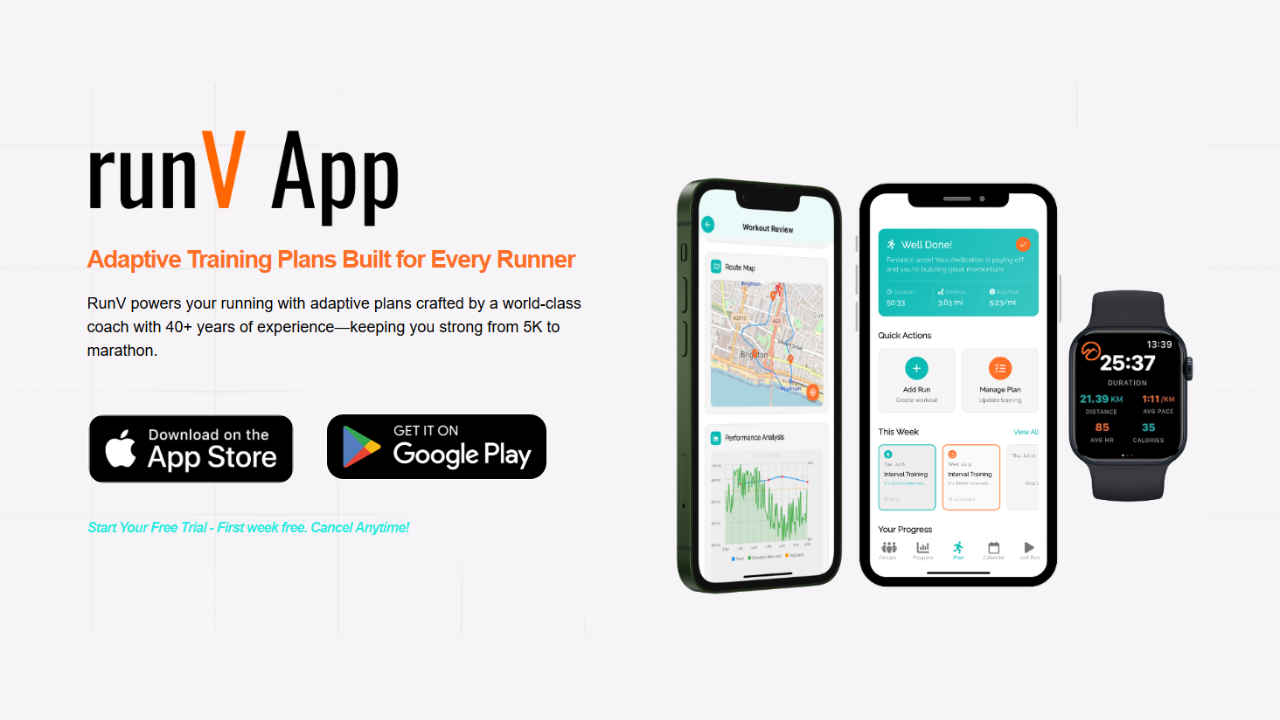
Some platforms market themselves as adaptive training apps. They may promote distinct benefits—reduced workload spikes, personalized load management, and smarter progressions—similar to what you’d see discussed in resources on how adaptive training systems prevent big training spikes.
This kind of intelligence is especially valuable if you tend to do too much too soon.
—
Metrics, Wearables, and Data Depth
Running apps range from simple distance trackers to full analytics platforms. Ask:
- Does the app integrate with your favorite GPS watch or heart‑rate strap?
- Can it analyze cadence, vertical oscillation, or ground‑contact time if your device records them?
- Are the metrics visualized clearly, or are you buried in numbers?
Pairing a quality training app with a good GPS watch can be game‑changing. If you’re not sure which watch to buy for seamless integration, resources like How to Pick the Right GPS Watch for Your Next Big Goal can help you align hardware with your training style.
Remember: more data is not always better. The best apps translate data into actions—clear next steps—not just charts.
—
Coaching, Education, and Community
Data and plans are only part of the picture. The Best Running Apps Essential often excel at:
- Brief educational content explaining key workouts and concepts.
- Form cues and warm‑up routines before hard sessions.
- Community features such as clubs, leaderboards, or virtual races.
If you’re motivated by social support, look for an app that connects to local or virtual groups. Articles on how to join or adjust running club training highlight how crucial social connection can be for motivation and adherence, and many apps now incorporate that insight directly into their design.
Some apps also offer access to live or async coaches for plan tweaks and questions. If you’re chasing ambitious PRs, that hybrid model can be worth the investment.
—
Matching Your Race Goal to the Right App
Even the Best Running Apps Essential are not one‑size‑fits‑all. Different goals call for different strengths.
—
For Your First 5K or 10K
Prioritize:
- Clear, supportive run‑walk intervals.
- Friendly explanations instead of technical jargon.
- Flexible scheduling options.
Your app should gently build the habit of showing up, not overwhelm you with metrics. Audio cues that guide when to run vs walk are particularly useful here.
—
For a Half Marathon or Marathon Finish
Look for:
- Structured long‑run progression with occasional cut‑back weeks.
- In‑app guidance about fueling, hydration, and pacing strategy.
- Integration with your GPS watch for steady pacing.
Apps aimed at endurance goals should also include tools for monitoring fatigue. That helps you avoid injuries by catching issues early and modifying the plan.
—
For Performance and PR Chasing
You’ll want the most capable version of the Best Running Apps Essential:
- Adaptive paces that evolve with your fitness.
- Race‑specific workouts tuned to your strengths and weaknesses.
- Detailed analytics around training load, intensity, and recovery.
If you respond well to structure and data, choose platforms that give you granular feedback yet still emphasize consistency and injury prevention, not just harder workouts.
—
Building Your Training Tech Stack
No single app has to do everything. Many serious runners build a simple “tech stack” that supports training from multiple angles.
Common components include:
- Primary training app with race plans and adaptive features.
- GPS watch for all outdoor sessions.
- Secondary tracking platform (if you like social feeds or additional analytics).
- Strength or mobility app for complementary work.
Key point: ensure your main training plan lives in one place. Use other tools to supplement, not conflict with, your core schedule.
The Best Running Apps Essential will sync well with your devices and make it easy to see the big picture—weekly mileage, key workouts, trends—at a glance.
—
How to Use Any Running App More Effectively
Choosing among the Best Running Apps Essential is only half the job. The other half is using the app wisely. A few practical strategies:
—
1. Start From Where You Are, Not Where You Wish You Were
When the app asks for your current weekly mileage or recent race times, be honest. Overstating your fitness can lead to an aggressive plan that spikes your workload and increases injury risk.
If in doubt, select a slightly easier plan level and progress later. Apps that allow you to level up mid‑cycle are ideal for this.
—
2. Respect Easy Days and Recovery Weeks
Most high‑quality plans include easy days and lighter weeks. Don’t override them just because you “feel good.” Recovery is when adaptations happen.
If your app flags fatigue, take that seriously. Adjusting workouts to protect your health is a feature, not a flaw.
—
3. Use Notes and Tags
Many apps let you tag runs (e.g., “felt heavy,” “great sleep,” “new shoes”). Use these features. Over months, you’ll see patterns—perhaps that certain paces after late nights always feel harder.
This helps you fine‑tune your routine beyond what any algorithm can do alone.
—
4. Periodically Reassess Your Plan
Every 4–6 weeks, step back and evaluate:
- Is your fitness improving—paces, heart‑rate, perceived effort?
- Are you recovering well between key sessions?
- Do you still like the training style?
The Best Running Apps Essential make this easy with progress charts and periodic assessments. If your situation changes—new job, injury, travel—don’t hesitate to adjust or restart with a more suitable plan.
—
Final Thoughts
The Best Running Apps Essential elevate your training from guesswork to a structured, flexible, and adaptive system. They offer seven core types of race plans—from first 5K to performance marathons and off‑season maintenance—and wrap them in data, education, and intelligent feedback.
When evaluating apps, look beyond flashy features and ask:
– Does this app offer plans that match my current goal and level?
– Are the race plans structured around proven training principles?
– Will it adapt when real life—and real fatigue—shows up?
Combine a thoughtful app, a reliable GPS watch, and your own self‑awareness, and you have a powerful, coach‑like setup in your pocket. With that, each race build becomes less of a gamble and more of a purposeful, enjoyable journey to the start line.