
If you’re just getting into running apps, you’ve probably heard passionate arguments about RunV vs Strava and which is better for beginners. But the real story is this: used the right way, the combination of RunV Strava Powerful, Proven tools can give new runners surprising, fast wins without burning them out. This guide breaks down how both platforms work, where each shines, and how to put them to work for seven specific beginner advantages.
Table of Contents
- RunV vs Strava: Quick Overview for New Runners
- Why Beginners Struggle (and How Apps Actually Help)
- Win #1 – Clarity: Turn Confusing Data into Simple Daily Decisions
- Win #2 – Motivation: Use Social Energy Without Burning Out
- Win #3 – Consistency: Build a 4–8 Week Streak That Sticks
- Win #4 – Smarter Effort: Run Easier (and Get Faster Anyway)
- Win #5 – Injury Risk Control: Let the Apps Warn You Early
- Win #6 – Gear & Tech: Use Data to Choose Better Shoes and Devices
- Win #7 – Long‑Game Planning: From First 5K to Half Marathon
- RunV Strava Powerful, Proven Combo: Who Should Use What?
- 30-Day Action Plan: Exactly How to Start Using RunV & Strava
- FAQ: Common Beginner Questions About RunV vs Strava
RunV vs Strava: Quick Overview for New Runners
Before we dive into the seven beginner wins, it helps to know what these apps actually do and what kind of runner each one is built for.
What Strava Does Best
Strava is the global social network for athletes. Its strengths are:
- GPS tracking and maps of your runs, rides, and other sports.
- Segments and leaderboards where you can compare your times.
- Clubs and challenges for extra motivation and social accountability.
- Cross‑sport logging for cycling, swimming, hiking, and gym work.
For beginners, Strava is fantastic for tracking every run, seeing progress over time, and feeling part of a global running community. But it’s not designed as a deep, AI‑driven coach.
What RunV Does Best
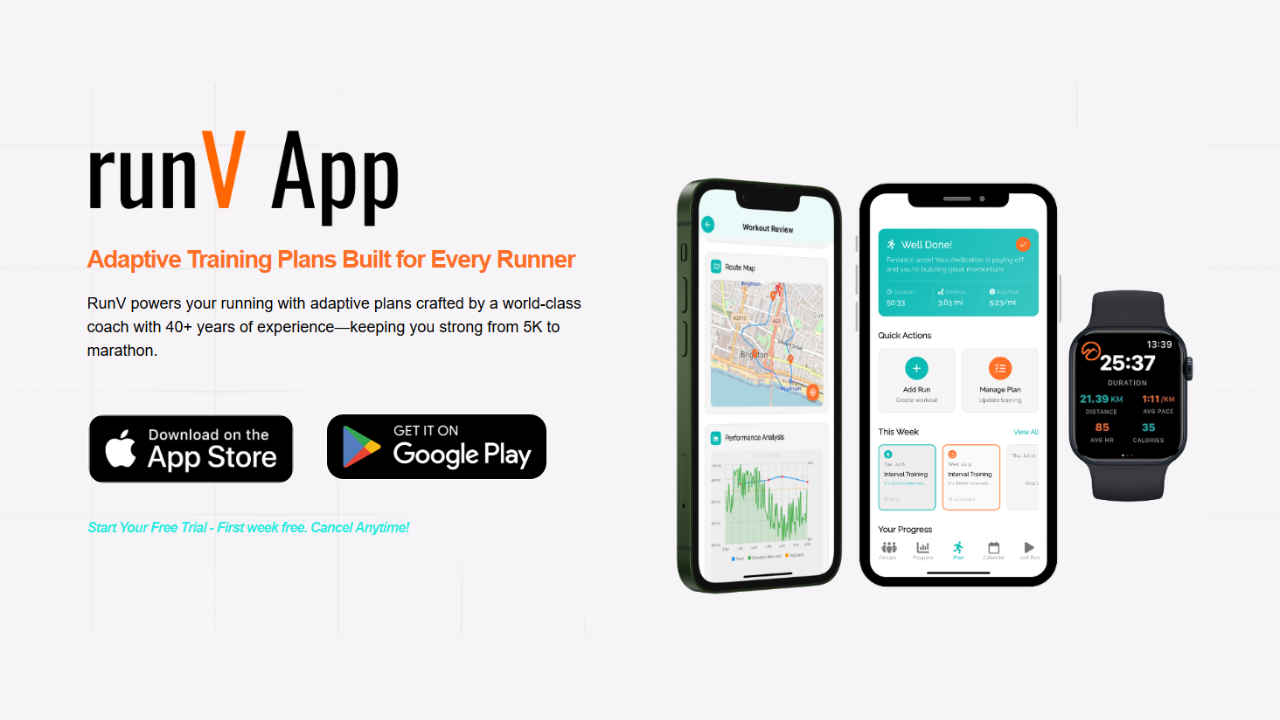
RunV is built around adaptive training and coaching logic, not just tracking. Its strengths typically include:
- Structured, adaptive training plans that respond to your fitness and fatigue.
- Effort‑based guidance so you know how hard to run, not just how far.
- Beginner‑friendly explanations of what each session is doing for you.
- Integration with devices and apps (including Strava) for seamless logging.
Instead of more data, RunV tries to give you better decisions: when to run, how far, how fast, and when to rest.
RunV Strava Powerful, Proven: Why the Combo Matters
For new runners, the argument isn’t really RunV or Strava. It’s how to use the RunV Strava Powerful, Proven combination to get both coaching and community, guidance and fun, structure and freedom. Strava keeps you engaged and proud of your progress; RunV keeps your training aligned with real science and your actual life.
Why Beginners Struggle (and How Apps Actually Help)
Most new runners don’t quit because they “hate running.” They stop because of three predictable patterns:
- Confusion – not knowing what to do today or how to improve.
- Overdoing it – going too hard, too often, and ending up injured.
- Inconsistency – life gets busy; motivation dips; there’s no plan.
A smart setup with RunV vs Strava helps in different ways:
- Strava gives you visible progress (pace, distance, streaks, kudos).
- RunV tells you what to run (and not run) to keep improving safely.
The seven wins below are built around solving those exact problems with tools you can set up in a weekend.
Win #1 – Clarity: Turn Confusing Data into Simple Daily Decisions
RunV Strava Powerful, Proven Clarity for “What Should I Run Today?”
Beginner overwhelm usually starts in the app: paces, heart rate, VO2, training load, segments, maps. All you really need is a clear answer to one question: “What should I do today?” That’s where RunV and Strava split roles beautifully.
Use RunV for the Plan, Strava for the Log
A simple, effective setup:
- Let RunV create and adapt your plan based on your current fitness, schedule, and goals.
- Connect RunV with your watch or phone so your runs are automatically logged.
- Sync or share runs to Strava so every workout appears in your social feed.
Daily flow becomes:
- Open RunV → see “40–50 easy minutes” or “Run‑walk 20 minutes.”
- Follow the guidance → your device records the run.
- Strava shows the route, pace, and progress history.
No more guessing distances or random YouTube plans. Just one daily decision delivered clearly.
Turning Metrics into Meaning
Strava shows you time, distance, pace, elevation, and splits. RunV can help turn those numbers into coaching cues: whether you’re recovering well, progressing too fast, or ready to add more volume. For a deeper look at how coaching‑first apps compare, check out Best Running Apps Based on Coaching: 7 Proven Essentials, which explains why structured guidance beats chasing random metrics.
Win #2 – Motivation: Use Social Energy Without Burning Out
RunV Strava Powerful, Proven Social Motivation Strategy
Strava is a motivation machine. Kudos, comments, and segment PRs feel great. For beginners, that social boost can be the difference between skipping and showing up. But there’s a catch: the same features that motivate can also tempt you to run too hard, too often.
How to Enjoy Strava Without Sabotaging Your Training
Use Strava intentionally:
- Enable auto‑upload from your watch or phone so every run counts.
- Join 1–2 clubs that match your level, not elite squads.
- Turn off segment notifications if you feel pressured to chase times.
- Celebrate consistency (streaks, total time) more than PRs.
Meanwhile, RunV plays “guardian angel” on the training side, making sure your week has enough easy running to support all that public progress. The apps work as a check and balance.
Using Clubs and Groups the Smart Way
Local and virtual clubs on Strava can give you pacing partners, race ideas, and a sense of belonging. If you’re also training with a club offline, aligning club workouts with your plan matters. A helpful starting point is How to Combine Club: 7 Essential, Proven Running Secrets, which shows how to blend group energy with individual training needs.
Win #3 – Consistency: Build a 4–8 Week Streak That Sticks
Make Consistency Your Main “PR”
As a beginner, consistency beats everything: speed, distance, tech, even perfect shoes. The biggest early win from the RunV vs Strava combination is a repeatable weekly rhythm that survives bad weather, busy weeks, and low‑motivation days.
How RunV Builds a Sustainable Rhythm
RunV helps you:
- Set realistic frequency (3–4 days/week is plenty at first).
- Balance run and walk segments to keep things manageable.
- Adjust volume up or down if you miss days or feel tired.
Instead of “I failed my schedule,” you get “My plan updated, and I’m still on track.” That psychological shift keeps you in the game for months, not days.
How Strava Makes Consistency Visible
On the Strava side, consistency shows up as:
- Weekly and monthly total time running.
- Activity streaks (how many weeks in a row you’ve logged runs).
- Progress graphs that reveal your trend even when daily runs feel slow.
Your long‑term growth depends far more on these charts than on any single session. Articles like How to Stay Consistent: 7 Powerful, Proven Running Habits are worth a read if you struggle to stick with any routine for more than a month.
Win #4 – Smarter Effort: Run Easier (and Get Faster Anyway)
RunV Strava Powerful, Proven Effort Control for Beginners
New runners almost always go too hard. Every outing feels like a test. You see paces and PRs on Strava, and suddenly today’s easy run turns into a race against last week’s self. Over time, that leads to plateaus and fatigue. (RunV running app)
Let RunV Define Your Easy and Hard Days
RunV can structure your week so that:
- Most runs are easy effort – you could hold a conversation.
- 1–2 sessions add light intensity – strides, short intervals, or hills.
- Hard days and easy days alternate to allow adaptation.
Instead of trying to “beat” your last pace, you’re aiming to hit the correct effort for the day. Over time, your easy pace naturally gets faster without extra strain.
Using Strava Data Without Falling Into the Pace Trap
On Strava:
- Tag most runs as “easy” or “recovery” in your notes.
- Compare average heart rate at similar paces over weeks, not days.
- Avoid obsessing over minor pace differences in hot, hilly, or windy conditions.
If heart‑rate training interests you, Training by Heart Rate: 5 Proven Benefits for Beginner Runners explains how to use effort zones to stop over‑pushing, even when Strava’s paces tempt you.
Win #5 – Injury Risk Control: Let the Apps Warn You Early
RunV Strava Powerful, Proven Protection Against Doing Too Much
The dark side of motivation is overuse injuries. Shin splints, runner’s knee, plantar fasciitis, and hip pain usually creep in when volume or intensity spikes too quickly. Your body whispers long before it screams; the right app combo helps you hear those whispers.
How RunV Manages Load and Fatigue
RunV can:
- Track your weekly mileage progression and prevent huge jumps.
- Insert cutback weeks where you run a bit less to recover.
- Downgrade or shorten workouts if you miss sleep, feel sore, or report pain.
This is where adaptive training plans shine: they respond to your reality instead of a fixed calendar. If you’re curious how that works in detail, see How Adaptive Running Plans Deliver 7 Proven, Powerful Gains for a deeper dive into dynamic planning.
Using Strava History to Spot Red Flags
Strava’s history view is powerful for injury prevention:
- Check your weekly distance; big jumps of 30–50% are a risk sign.
- Notice if you’re doing hard efforts (fast intervals, races) more than twice a week.
- Watch for a run‑streak that’s getting long without rest days.
If your body feels worse while the charts show aggressive jumps, that’s a signal to back off. Combine both apps with honest self‑reporting and you’ll avoid the classic “I got excited and then I got hurt” pattern.
Win #6 – Gear & Tech: Use Data to Choose Better Shoes and Devices
Make Your Data Work for Your Feet
New runners are bombarded with shoe marketing and tech hype. Strava and RunV can quietly help you make smarter gear decisions, especially with shoes and wearables.
Using Strava to Track Shoe Mileage
On Strava you can:
- Add shoes to your gear list and assign them to runs.
- Monitor total mileage per shoe to know when cushioning is worn.
- Compare comfort and injury niggles against different shoe models.
This helps you avoid running in dead shoes, a common factor in overuse issues. You can also see whether you actually use those fancy racing shoes enough to justify them.
RunV and Performance‑Focused Tech Choices
RunV’s coaching angle can highlight:
- Whether a heart‑rate chest strap would improve zone accuracy.
- If a GPS watch would help you follow structured sessions more easily.
- How specific shoes affect your pace and recovery at the same effort.
And when you’re ready to dive into the latest gear trends, pieces like Garmin, Amazfit and the New Race for Your Running Wrist can help you decide which ecosystem fits your budget and needs.
Super‑Shoes vs Daily Trainers: What Your Apps Reveal
Looking at your run logs:
- Are your long runs consistently in cushioned daily trainers?
- Do you save carbon super‑shoes for workouts and races?
- Does your easy pace change dramatically between shoe types?
These patterns matter more than marketing claims. Over time, the combination of RunV’s effort guidance and Strava’s shoe mileage can show you exactly what works for your body, not just what’s trending.
Win #7 – Long‑Game Planning: From First 5K to Half Marathon
RunV Strava Powerful, Proven Path from “New Runner” to “Real Runner”
The most exciting part of combining RunV vs Strava is how it supports your evolution over 6–24 months. What starts as couch‑to‑5K can become a 10K, a half marathon, or even a marathon, if that appeals to you. The key is planning your seasons instead of bouncing between random races.
RunV as Your Season Architect
RunV can structure phases such as: (RunV proven habits)
- Base building – mostly easy runs, building weekly time on feet.
- Specific prep – targeted workouts for 5K, 10K, or longer races.
- Taper and recovery – reduced volume before and after key events.
As you update your goals, the plan can shift from “run 20–30 minutes 3x/week” to “target a 5K in 10 weeks” or eventually “prepare for a half marathon in the fall.” For goal‑specific advice, the article Half Marathon outlines key considerations when you’re ready to make that jump.
Strava as Your Running Biography
Over time, Strava becomes your personal archive:
- First 1 km without stopping.
- First 5K race completion.
- First 10K, first half marathon, first trail race.
Seeing years of progress is powerfully motivating and provides honest context: a slow patch after illness, a break during a busy life season, a comeback after injury. All of it’s there, which helps you make saner decisions about the next big challenge.
RunV Strava Powerful, Proven Combo: Who Should Use What?
Both tools are strong, but they serve different personalities and situations. Here’s how to think about it as a beginner.
When You Might Lean Heavily on RunV
You’ll benefit most from RunV‑driven training if you:
- Feel overwhelmed by data and just want clear daily instructions.
- Have a specific race or time goal in mind (first 5K, first 10K, etc.).
- Tend to push too hard and need guardrails against overtraining.
- Have limited time weekly and need to maximize each run’s purpose.
RunV is effectively the “brains” of your operation, making the plan match your current capacity and adjusting when life gets messy.
When You Might Lean Heavily on Strava
You’ll lean more into Strava if you:
- Care deeply about community, kudos, and social accountability.
- Love maps, segments, and visualizing new routes.
- Enjoy seeing detailed stats and charts as you improve.
- Do multiple sports and want one hub for them all.
In that case, Strava is your “diary and cheering section,” while RunV quietly guides the training logic in the background.
The Sweet Spot: Using Both Together
The most effective setup for most beginners:
- RunV: sets training load, intensity distribution, and progression.
- Strava: documents efforts, provides social support, and shows trends.
This RunV Strava Powerful, Proven pairing protects you from common beginner mistakes while keeping your running life fun and connected.
30-Day Action Plan: Exactly How to Start Using RunV & Strava
If you’re new to both apps, here’s a simple, four‑week blueprint to get real results without overwhelm.
Week 1: Setup and Baseline
- Install Strava and create your profile.
- Install and set up RunV with your current fitness, time availability, and goals.
- Connect devices (watch, phone) so all runs auto‑sync.
- Run 2–3 times following RunV’s easy guidance; don’t worry about speed yet.
- Explore Strava clubs lightly, but resist the urge to race segments.
Week 2: Stabilize Frequency
- Target 3 runs per week, even if some are short run‑walks.
- Use RunV to define easy days vs slightly harder days.
- On Strava, label your runs clearly (Easy, Workout, Long).
- Note how you feel after each run in both apps; energy, soreness, mood.
Week 3: Add a Gentle Challenge
- Let RunV introduce a light workout (e.g., short intervals or hills).
- Join a small Strava challenge (time‑based, not race‑pace focused).
- Compare your week‑to‑week distance on Strava to ensure progression is modest.
- Listen for early niggles: if something hurts more than 2–3 days, tell RunV and downshift.
Week 4: Review and Decide Your Next Goal
- Use Strava to review your month: total runs, distance, and time.
- Check RunV’s assessment of your current level and fatigue.
- Choose a specific next goal: run 30 minutes continuously, complete a 5K, or just extend your streak.
- Update RunV with that goal so your plan shifts accordingly.
- Share your progress on Strava; seeing your own transformation is powerful.
FAQ: Common Beginner Questions About RunV vs Strava
Do I really need both RunV and Strava as a beginner?
You don’t need both, but together they cover almost everything: RunV provides structure and safety; Strava provides community and visibility. If you already have Strava, adding a coaching‑oriented tool like RunV is an efficient upgrade. If you’re overwhelmed by apps, start with one, then add the other once your routine feels stable.
Is Strava enough on its own to train for a race?
You can absolutely train for a race using only Strava, especially if you follow a plan you import or design yourself. The limitation is that Strava doesn’t automatically adapt that plan based on your fatigue, missed sessions, or changing goals. That’s where an adaptive planner like RunV adds value, especially if you’ve never trained for a specific distance before.
How do I avoid turning every run into a race on Strava?
A few strategies:
- Turn off live segment notifications.
- Post honest descriptions like “super easy recovery, legs tired” to normalize going slow.
- Celebrate total weekly time or streaks more than PRs.
- Remind yourself that today’s easy run is fuel for your next hard run.
Let RunV dictate when to push; let Strava record and celebrate that push, not define it.
How do RunV and Strava handle privacy?
Strava offers privacy zones, private activities, and follower controls so you can choose who sees your routes and data. RunV focuses more on training logic than social sharing, but you should still review settings so your information is handled the way you want. Always check each app’s specific Privacy Policy to understand how your data is stored and used.
How long before I’ll see real progress?
Most beginners feel noticeably better in 3–4 weeks if they run 3–4 times per week, keep most runs easy, and respect rest days. Visible pace improvements usually show up in 6–8 weeks. The critical piece is not perfection; it’s continuing to show up, even when a week goes sideways. That’s exactly what the RunV Strava Powerful, Proven setup is designed to support: enough structure to improve, enough fun to keep going.
Used thoughtfully, RunV vs Strava is not a rivalry; it’s a partnership. Let RunV handle the training brainwork, let Strava be your scrapbook and support crew, and give yourself the space to evolve from “I guess I’ll try running” to “I’m a runner now” over the next few months.