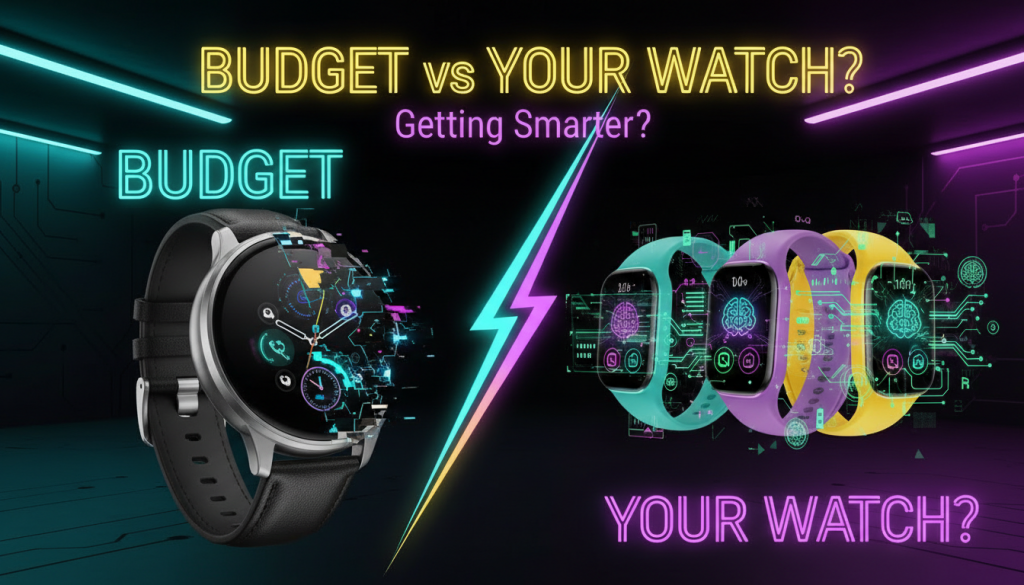
Budget Wearables Quietly Getting more powerful used to sound like clickbait. Yet over the past few weeks, a wave of updates and product leaks suggests something real is happening: the most interesting innovation in running tech may no longer live on the $500-plus flagship watches, but in cheaper, lighter, and even screenless devices.
From Amazfit’s new lactate threshold metric to rumored screen‑free bands from Google/Fitbit and Garmin, plus Huawei’s GPS‑obsessed Watch GT Runner 2 and Coros’ new hill‑intelligence features, the running‑wearable landscape is tilting fast. If you’re wondering whether to upgrade—or whether your “big” watch is about to feel strangely old—this week’s news matters.
Table of Contents
- The New Trend: Budget Wearables Quietly Getting Seriously Smart
- Amazfit Active Max: Lactate Threshold for the Masses
- Google’s Screenless Fitbit: A Minimalist, Whoop‑Style Future
- Garmin’s Rumored “Cirqa”: A Subscription‑Free Whoop Rival
- Huawei Watch GT Runner 2: GPS Accuracy and Marathon Mode
- Coros Hill Progress: Smarter Elevation, Better Race Strategy
- How to Choose: Watch, Band, or Budget Hybrid?
- RunV‑Relevant Tips: Making Your Tech Actually Make You Faster
- Conclusion: Should You Replace Your Watch Yet?
The New Trend: Budget Wearables Quietly Getting Seriously Smart
The most striking theme in this week’s news is Budget Wearables Quietly Getting features once reserved for top‑tier devices: lactate threshold analysis, hill‑aware pacing tools, advanced GPS antennas, and race‑day fueling guidance. At the same time, Google/Fitbit and Garmin are pushing in the opposite direction—less screen, more data, more “always‑on” recovery tracking.
For runners, this means three big shifts:
- Advanced performance metrics are becoming cheaper and more accessible.
- Screenless bands are challenging the idea that a “watch” has to be the center of your training.
- Race‑specific tools (like hill alerts and marathon guidance) are moving from coaching plans into your wrist—or even your wristband.
If you’ve been waiting for new running tech that might finally replace your old watch, this may be the moment to pay attention—even if you’re not ready to hit “buy” yet.
Amazfit Active Max: Lactate Threshold for the Masses
Garmin‑Style Metrics on an Affordable Watch
Amazfit’s latest firmware update (v3.7.0.1) for the Active Max is a headline example of Budget Wearables Quietly Getting genuinely high‑end capabilities. The standout: a built‑in lactate threshold running metric, something usually associated with more expensive Garmin models.
Lactate threshold (LT) is a performance tipping point—roughly the pace or heart rate you can sustain for 45–60 minutes. Think “solid 10K / aggressive half‑marathon effort” rather than “all‑out 5K.” It’s arguably a more useful training anchor than VO₂ max for everyday runners.
Why Lactate Threshold Matters for Real‑World Training
Here’s why this LT feature matters, even on a budget device:
- Smarter pacing zones: LT‑based zones give more personalized thresholds than generic HR formulas (like 220 – age).
- Better tempo workouts: You can lock in “comfortably hard” efforts without overcooking sessions.
- Clear progression: Watching LT pace or HR improve over months is a powerful performance marker.
For runners following structured plans or using coaching‑style apps, this syncs well with targeted sessions—e.g., threshold intervals, cruise reps, or marathon “just under LT” efforts. Pairing such data with a smart training app (see Best Running Apps Based on Coaching: 7 Proven Essentials) can turn an inexpensive watch into a much more serious training platform.
Improved Sleep Stages: Recovery Meets Performance
The same update improves sleep‑stage tracking accuracy—another sign of Budget Wearables Quietly Getting stronger on the recovery side, not just pure performance metrics. While sleep tracking is still an estimate, better algorithms can help:
- Spot cumulative sleep debt before it impacts workouts.
- Correlate bad sessions with poor sleep, rather than “bad fitness.”
- Decide when to swap an intense workout for an easy day.
For many runners, the weak link is not mileage but recovery discipline. Having both LT and improved sleep insight in a cheaper wearable starts to undermine the assumption that you must buy into a top‑tier ecosystem for serious data.
Google’s Screenless Fitbit: A Minimalist, Whoop‑Style Future
Steph Curry’s Tease: A Fabric Band, No Screen
Google, under the Fitbit brand, is reportedly developing a screenless, Whoop‑style fitness tracker—confirmed visually by Steph Curry’s recent video showing a simple fabric band, no display, and the tagline “new relationship with your health.”
This is a sharp pivot away from fighting Garmin and Apple on smartwatch features. Instead, it doubles down on continuous biometric monitoring: heart rate, HRV, possibly temperature, and overall strain/recovery.
Why Screenless Might Be Better for Runners
At first glance, losing the screen feels like a downgrade. But for runners, there are real upsides:
- Zero in‑run distraction: No split‑checking every 30 seconds. You simply run.
- Better wear compliance: Light, comfortable bands are easier to wear 24/7, boosting data quality.
- Focus on readiness: You start thinking, “Should I push today?” instead of “Did I close my ring?”
The trade‑off: you likely need to carry your phone for live pace/distance, or pair the band with another device. That could be a deal‑breaker for purists, but compelling for runners who already listen to audio or run with a phone for safety.
Will It Be Subscription‑Heavy?
The open question is pricing and business model. Whoop’s entire proposition is subscription‑based insights. Google could follow that pattern, bundling recovery scores, training readiness, and AI‑based coaching behind a paywall.
If subscription cost approaches the price of a solid budget watch, some runners will reasonably ask: why not pay once and own the hardware‑plus‑metrics outright? That’s where Garmin’s rumored answer gets interesting.
Garmin’s Rumored “Cirqa”: A Subscription‑Free Whoop Rival
A Screenless Band—But the Garmin Way
Tom’s Guide reports that Garmin may be close to launching a screenless fitness band, possibly named “Cirqa,” coming in roughly four to five months. It appears to target the same “always‑on biometrics, no screen” niche as Whoop and Google’s upcoming Fitbit band.
The twist? Early hints suggest it may be a subscription‑free product, fitting Garmin’s long‑standing model of charging more up front but minimizing ongoing fees.
(Best budget fitness trackers)
What This Means for Garmin Runners
For runners already in the Garmin ecosystem, this could play out in a few useful ways:
- 24/7 tracking band + race watch: Use Cirqa for daily life, then your Forerunner/Fenix/Epix for key workouts and races.
- Better HRV and stress baselines: A comfortable, always‑on band may yield cleaner background data than a heavy sports watch.
- Integrated readiness scores: If Cirqa feeds into Garmin Connect, your training load and recovery insights could get more accurate.
This would be Budget Wearables Quietly Getting more powerful through ecosystem synergy: a cheaper band that meaningfully upgrades the value of your existing watch by improving the quality and continuity of your data.
Who Is This For?
A subscription‑free screenless Garmin band seems aimed at:
- Runners who care about recovery but hate monthly fees.
- Athletes who don’t want a watch on 24/7.
- Data‑driven runners who want richer HRV/sleep/stress data feeding their coaching plans.
If Garmin ties this more tightly into training load and readiness (see existing Garmin load features, and broader concepts explored in Garmin, Amazfit and the New Race for Your Running Wrist), it could shift a lot of “Whoop curious” runners back toward one‑time‑purchase solutions.
Huawei Watch GT Runner 2: GPS Accuracy and Marathon Mode
Lightweight, Bright, and GPS‑Obsessed
At MWC 2026, Huawei revealed the Watch GT Runner 2—a return to the performance‑running space with a clear technical focus. Key specs include:
- Lightweight titanium chassis for comfort over long runs.
- Ultra‑bright 3,000‑nit display for easy outdoor readability.
- A 3D‑floating antenna promising improved GPS accuracy.
While not a “budget” device in the strictest sense, it fits the narrative of Budget Wearables Quietly Getting more specialized. Instead of piling on general smartwatch features, Huawei is leaning into GPS reliability and race‑oriented features.
Why GPS and Display Still Matter
Even in an era obsessed with recovery metrics, accurate GPS and a clear screen remain non‑negotiables for many runners:
- Accurate pacing: Better GPS reduces wild pace swings and helps you trust your tempo runs.
- Cleaner tracking of complex routes: Great for trail runs or dense city environments.
- Readability under stress: A 3,000‑nit display means you can glance down late in a race and still see target pace, HR, or fueling cues.
For racers, these practical factors often matter more than one extra sensor. This is a watch that clearly wants to be on your wrist on race day.
Marathon Mode: Live Pacing and Fueling Guidance
The Watch GT Runner 2 introduces “Marathon Mode”—an AI‑like feature offering live pacing and fueling recommendations during a race. This tool aims to:
- Keep you from going out too fast in the early kilometers.
- Prompt you to take gels or carbs before you “feel” the crash.
- Adjust pacing suggestions based on real‑time performance.
Used well, this resembles having a minimalist race‑day coach on your wrist. Still, no algorithm can fully replace individualized strategy, course knowledge, and experience. Runners targeting big races (like the London Marathon, see Why the New London Marathon Changes How You Should Train) will get the most benefit if they align their watch’s recommendations with a well‑structured marathon build.
Coros Hill Progress: Smarter Elevation, Better Race Strategy
Beta Now, Strategic Tool Later
Coros’ March 2026 beta update added a new hill progress feature: watches now detect major uphill and downhill sections on your running routes, warn you as you approach them, and provide a dedicated Hill Progress page showing your ascent/descent status.
This is another great illustration of Budget Wearables Quietly Getting genuinely strategic tools, not just more graphs. Coros has built a reputation for strong value and long battery life; this feature further enhances its standing among performance‑focused but price‑conscious runners.
How Hill Progress Changes Your Runs
Hill‑aware guidance helps in several ways:
- Pacing control: Knowing a big climb is 400 m away stops you from hammering the flat leading into it.
- Effort management: You can keep power/HR steady instead of chasing arbitrary pace up steep grades.
- Race strategy: On hilly courses, you know when to hold back—and when to press once you crest.
Think of it as a tactical overlay to whatever training plan you follow. Runners training for undulating half marathons or marathons will especially appreciate the ability to stay composed across rolling terrain.
(Xiaomi Smart Band 7 Pro review)
Practical Use Cases
- Trail training: See how much of a climb is left when fatigue hits mid‑hill.
- Race simulations: Load a route similar to your goal race and practice hill‑by‑hill execution.
- Tempo on rolling routes: Keep tempo “effort” rather than tempo “pace” when hills intervene.
Features like this are where Budget Wearables Quietly Getting smarter really matters. It’s not just new data for the sake of it; it’s actionable support in real race situations.
How to Choose: Watch, Band, or Budget Hybrid?
Step 1: Decide What You Actually Need to See While Running
First, ask: what must be visible mid‑run?
- If you rely on live pace, lap times, or structured workout cues, a watch with a display (Amazfit, Huawei, Coros, Garmin, etc.) still makes sense.
- If you mostly run by feel and only review data afterward, a screenless band (Google’s upcoming Fitbit, Garmin Cirqa) could be enough.
Budget Wearables Quietly Getting more capable means you can now pick form factor based on preference, not just capability. The “cheaper” band may actually give superior recovery insights if you wear it more consistently.
Step 2: How Much Are You Willing to Pay Over Time?
Consider not only upfront price but long‑term cost:
- Subscription model: Lower device price, ongoing monthly cost for advanced metrics and coaching.
- One‑time purchase: Higher device price, but little or no recurring fees.
If you’re already investing in structured training support—like coaching‑style apps or dynamic plans—spending more on pure hardware subscription may deliver diminishing returns. A better route might be a capable budget watch or band plus an external plan or platform focused on workouts and periodization.
Step 3: Match the Device to Your Race Goals
Ask where you’re headed over the next 12–18 months:
- Chasing PRs in 5K–half marathon: LT metrics (Amazfit) and hill tools (Coros) are huge assets for threshold, tempo, and race‑simulation work.
- First marathon or new distance: Marathon Mode (Huawei) and strong recovery tracking (Google/Whoop‑style, Garmin Cirqa) help guard against overtraining and pacing errors.
- Trail and mountain events: Hill Progress, GPS accuracy, and battery life matter more than smartphone‑style extras.
From there, you can plug into an adaptive training system tailored to your goal races and device capabilities, such as an AI Dynamic Plan that uses your data, not just your wishful thinking, to steer your training.
RunV‑Relevant Tips: Making Your Tech Actually Make You Faster
Turn Metrics into Decisions
The real power of Budget Wearables Quietly Getting more advanced isn’t the extra number on your wrist—it’s how you change behavior:
- Use lactate threshold to define tempo and threshold workouts instead of guessing effort.
- Use sleep and HRV to adjust hard days when recovery flags, preventing injury and burnout.
- Use hill alerts to practice holding effort, not pace, across climbs and descents.
Pair your device with a training framework that interprets these signals. You don’t need to be an exercise scientist; you just need a plan that responds to reality, not just a static calendar.
Align Device Features with Your Training Structure
Whatever you buy—Amazfit, Huawei, Coros, Garmin, or a Fitbit band—align it with:
- How often you train.
- What races you care about.
- How much cognitive load you actually want (simple prompts vs. complex graphs).
Budget Wearables Quietly Getting sophisticated doesn’t force you into complexity. Many runners do best with a simple loop: daily readiness check → today’s session choice → post‑run reflection and minor adjustments. Tools and content that respect this loop will always beat raw sensor horsepower.
Practical Product Direction by Runner Type
- Beginner to early‑intermediate runner: A budget watch with LT and decent GPS (like the updated Amazfit Active Max) plus a coaching‑style app is often enough to get you to major milestones.
- Time‑crunched, data‑curious runner: Consider a screenless band for 24/7 recovery insights and pair it with a lightweight racing watch or your phone only for key workouts.
- Performance‑oriented racer: A race‑ready watch with strong GPS, hill tools, and support for structured workouts, plus an adaptive plan aimed at your target 5K, 10K, half, or marathon.
Conclusion: Should You Replace Your Watch Yet?
The latest wave of news shows Budget Wearables Quietly Getting uncomfortably close to (and sometimes beyond) what premium devices offer:
- Amazfit is bringing lactate threshold and better sleep tracking to affordable wrists.
- Google/Fitbit and Garmin are poised to redefine “tracker” with screenless, recovery‑centric bands.
- Huawei is doubling down on GPS and marathon intelligence.
- Coros is making hills a tactical advantage instead of a surprise.
You don’t need to rush out and replace your current watch tomorrow. But the days when “budget” meant “basic” are over. From here on, the better question is: what combination of watch, band, and training guidance gives you the best chance to train consistently, stay healthy, and race well?
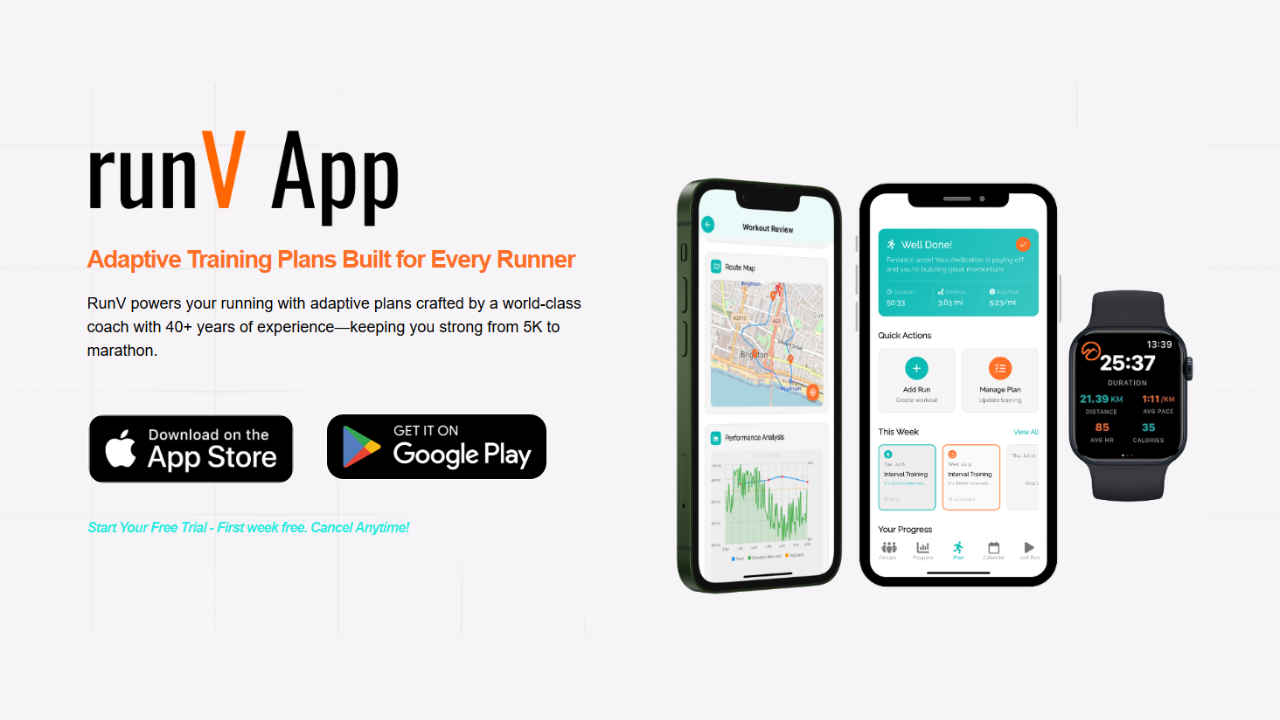
If you’re thinking about how to plug these new devices into smarter training, explore structured, adaptive guidance that can actually make use of your metrics and race goals. Start by browsing the broader ecosystem of running insights and planning tools on the RunV Blog—and then decide whether your next upgrade should be a watch, a band, or the plan behind them.