

If you’ve ever followed a Half Marathon Training Plan: you already know the story rarely runs in a straight line. Illness, overtraining, niggling injuries, bad races, work stress, or plain burnout can derail even the most disciplined runner. The difference between stagnation and long‑term progress isn’t avoiding setbacks—it’s how you bounce back from them.
This guide breaks down seven proven strategies to recover smarter, rebuild fitness, and come back stronger, using modern gear and technology to your advantage while still respecting the fundamentals of training.
—
Table of Contents
- Why “Bounce Back” Matters in Every Half Marathon Training Plan:
- 1. Reset and Rebuild Your Half Marathon Training Plan: The Smart Way
- 2. Prioritize Recovery Like a Pro (So You Can Train Like One)
- 3. Fix Form, Reduce Stress: Technical Tweaks That Protect Your Comeback
- 4. Strength & Mobility: The Engine Behind a Resilient Half Marathon Body
- 5. Use Data, Wearables & Apps to Guide Your Bounce Back
- 6. Mindset, Motivation & Goal‑Setting for the Second Half of Your Journey
- 7. Gear, Shoes & Tech: Upgrades That Help You Return Smarter
- Sample 4‑Week Bounce‑Back Half Marathon Training Plan:
- Common Pitfalls When Restarting a Plan (and How to Avoid Them)
- Final Tips: Turning a Setback into a Breakthrough Season
—
Why “Bounce Back” Matters in Every Half Marathon Training Plan:
Every Half Marathon Training Plan: beginner to advanced, is designed on paper as a neat progression. Real life never matches that perfect curve. The body adapts in waves—improving, plateauing, sometimes regressing before moving forward again.
Learning to bounce back is essential because:
– Progress is rarely linear; expecting perfection leads to frustration.
– The risk of injury and burnout spikes when you “panic‑train” to catch up.
– Smart comebacks build durability, not just short‑term fitness.
Runners who consistently return from setbacks with structure and patience often outperform more “talented” athletes who react emotionally and overdo it.
—
1. Reset and Rebuild Your Half Marathon Training Plan: The Smart Way
Accept That You’re Not Starting From Zero
Even if you’ve been off for weeks, your muscles, connective tissues, and neuromuscular patterns retain training history. This “residual fitness” means you’ll regain form faster than a brand‑new runner.
However, you can’t pretend that nothing happened. The key is to respect your current capacity while leveraging your past training.
Assess What Kind of Setback You Had
Before re‑entering your Half Marathon Training Plan: identify what interrupted it:
– Short layoff (up to 7 days) – mild illness, travel, small niggle.
– Moderate layoff (8–21 days) – flu, injury rest, busy life.
– Extended layoff (3+ weeks) – serious injury, surgery, burnout.
Your bounce‑back strategy depends on this timeline:
– Short layoff: resume at ~90% volume, remove one hardest workout the first week.
– Moderate layoff: cut volume 30–40%, reduce intensity, rebuild for 2–3 weeks.
– Extended layoff: treat the first 4–6 weeks like a “base phase reboot.”
Rebuild the Plan Backward From Race Day
Instead of jumping into “Week 7” of your original schedule, count weeks backwards from race day:
1. Mark race day on a calendar.
2. Pinpoint when your long run should peak (typically 2–3 weeks out).
3. Work back to your current week, adjusting mileage and workouts to progress gradually.
If you’re less than 6–8 weeks from race day and your fitness is far behind, consider:
– Treating this race as a supported long run.
– Moving your “A‑race” to a later event.
That single decision often prevents chronic injuries and burnout.
Focus the First Two Weeks on Consistency, Not Brilliance
When restarting a Half Marathon Training Plan: your first goal is rhythm—stacking runs, not smashing workouts.
For 1–2 weeks:
– Run mostly easy, conversational pace.
– Cap long runs at 60–75 minutes if you’ve had a moderate or long layoff.
– Avoid VO2max intervals and hill sprints until your body feels reliable again.
Consistency re‑primes your aerobic system and connective tissues, preparing you to handle intensity safely.
—
2. Prioritize Recovery Like a Pro (So You Can Train Like One)
Why Recovery Matters Even More After a Setback
When you bounce back into a Half Marathon Training Plan: you’re adding new stress to a body that just handled illness, injury, or overload. Your recovery capacity may be temporarily reduced.
Think of training as the “stimulus” and recovery as the “amplifier.” Post‑setback, your amplifier is fragile. Push too hard, and the signal distorts into fatigue and injury.
Recovery Pillar 1: Sleep
Sleep is your most powerful performance enhancer:
– Aim for 7.5–9 hours per night.
– Keep a stable bedtime and wake time, even on weekends.
– Dim screens 60 minutes before bed; use night‑mode filters.
Trackers can help, but don’t obsess over scores. Instead, focus on patterns—are late nights correlating with sluggish runs and higher resting HR?
Recovery Pillar 2: Nutrition & Hydration
After any layoff, refueling properly speeds your return:
– Prioritize protein (1.6–2.0 g/kg bodyweight/day) for muscle repair.
– Focus on complex carbs around key runs to support glycogen.
– Don’t fear healthy fats (nuts, seeds, olive oil, avocado) for hormones and joint health.
– Hydrate with electrolytes during longer or hotter runs to reduce cardiovascular strain.
Short, frequent snacks often work better than huge meals when appetite or GI comfort is off after illness.
Recovery Pillar 3: Micro‑Recovery Habits
Small habits compound:
– 5–10 minutes of light mobility or foam rolling most days.
– Short walks after hard runs to flush legs.
– Elevate legs or use compression socks if you’re standing all day.
These don’t replace sleep or proper nutrition, but they improve how you feel between sessions—especially important when returning to structured training.
—
3. Fix Form, Reduce Stress: Technical Tweaks That Protect Your Comeback
Why Form Matters More After a Break
When you resume a Half Marathon Training Plan: tissues are less tolerant of sloppy mechanics. Bad habits that were just “inefficient” before can now be painful. A small tweak can dramatically reduce impact on knees, hips, and lower back.
Start With Video and Simple Cues
Ask a friend to record you from the side and rear at easy pace:
– Check posture: tall, slight forward lean from the ankles, not the waist.
– Notice foot strike: under your center of mass, not excessively ahead.
– Look for excessive bounce or side‑to‑side torso rotation.
To dive deeper into specific issues like overstriding, hip drop, or crossover gait, this article is an excellent practical reference: Common Running Form Mistakes: 7 Essential, Proven Fixes.
Form Drills 1–2 Times per Week
Light, short drills after an easy run sharpen coordination without adding big stress:
– High knees (short distance, focus on rhythm).
– Butt kicks (heel quickly up, knee pointing down).
– A‑skips and B‑skips.
– Strides (4–6 × 15–20 seconds at controlled fast pace, with full recovery).
During a comeback, keep total drill volume low but regular. The goal is “reminding” your neuromuscular system how to move efficiently.
Cadence: A Simple Metric With Big Impact
Most distance runners sit between 160–180 steps per minute at easy pace. You don’t need to hit a specific number, but:
– Very low cadence (4. Strength & Mobility: The Engine Behind a Resilient Half Marathon Body
Why Strength is Critical After a Setback
Runners often lose not just cardio fitness but also connective tissue robustness during breaks. Restarting a Half Marathon Training Plan: without addressing strength is like adding more horsepower to a car with weak suspension.
Key Areas to Target
Focus on compound, runner‑specific patterns:
– Glutes & hips: squats, hip thrusts, step‑ups, lateral band walks.
– Hamstrings: Romanian deadlifts, hamstring bridges, Nordic curls (if advanced).
– Calves & feet: calf raises (straight and bent knee), towel scrunches, single‑leg balance drills.
– Core: planks, side planks, dead bugs, Pallof press.
Aim for 2 sessions per week, 20–40 minutes each. In the first 2–3 weeks of your comeback, keep weights moderate and reps controlled to avoid crippling soreness that might disrupt your runs.
Joint Protection and Long‑Term Durability
Structured strength work doesn’t just make you stronger; it helps joints handle the repetitive strain of half marathon mileage. For an in‑depth look at how lifting supports joint health and long‑term running, see How Strength Training Protects: 7 Powerful Proven Joint Benefits.
Don’t Forget Mobility
Tightness often increases after layoffs, especially if you sat more while injured or sick. Target:
– Hip flexors (lunging stretches, couch stretch).
– Glutes and piriformis (figure‑four stretch).
– Ankles and calves (wall ankle mobilizations, calf stretches).
Just 5–10 minutes after runs or before bed can prevent compensations that sideline your comeback.
—
5. Use Data, Wearables & Apps to Guide Your Bounce Back
Why Technology Shines During a Comeback
When re‑building a Half Marathon Training Plan: the hardest part is knowing how much is “enough” and how much is “too much.” Wearables, adaptive training apps, and simple metrics can help keep your ego in check while giving you confidence that you’re progressing.
Heart Rate, Pace, and Perceived Effort
Use all three together:
– Heart Rate (HR) – Watch for unusual spikes at normal paces, or slower recovery after intervals.
– Pace – Accept that post‑layoff paces will temporarily be slower at the same effort. That’s normal.
– RPE (Rate of Perceived Exertion) – A 1–10 scale (where 3–4 is easy, 7–8 is threshold) keeps you honest even when GPS or HR are off.
If you see HR and RPE rising while pace is falling over several sessions, that’s a clear sign to reduce load.
Training Load and Adaptive Guidance
Modern platforms track training load and estimate whether you’re under‑, over‑, or optimally training. For example, learning how platforms calculate and respond to load can be a powerful tool during a comeback phase—this is explored in detail in Garmin Training Load Explained: 7 Essential Proven Tips.
Even if you’re not in the Garmin ecosystem, the principles carry over:
– Watch trends, not single days.
– Err on the side of slightly under‑doing it for the first 2–3 weeks back.
– Use rest or easy days when fatigue metrics and how you feel agree that you’re run‑down.
Adaptive and AI‑Driven Training Plans
Static PDF plans assume perfect adherence. Real life doesn’t work like that, especially after a setback. AI‑driven and adaptive plans can:
– Recalculate upcoming workouts when you miss days.
– Adjust pace targets as your fitness returns.
– Balance intensity to reduce overtraining risk.
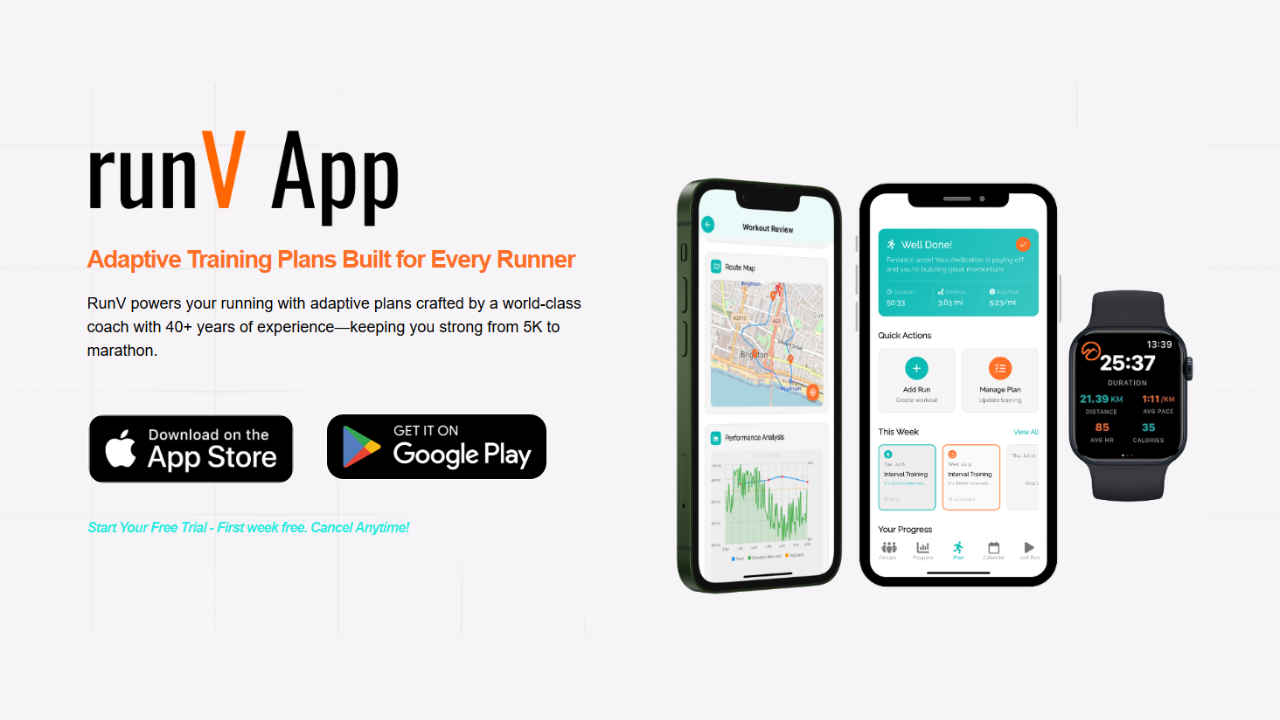
If you’re ready to move past one‑size‑fits‑all schedules, explore an AI Dynamic Plan that evolves with your current fitness, recovery, and goals. This kind of responsiveness can be a difference‑maker when bouncing back.
Wearables and Running Watches
A good running watch or tracker turns guesses into data:
– Monitor HR, cadence, pace, and sleep.
– Get alerts when you push beyond set HR or pace zones.
– Review trends across weeks to see if your comeback is on track.
The competition among devices—like Garmin and Amazfit—has driven a surge in features tailored to runners. If you’re comparing options, you may find context in this overview: Garmin, Amazfit and the New Race for Your Running Wrist.
—
6. Mindset, Motivation & Goal‑Setting for the Second Half of Your Journey
Detach Identity From a Single Race
It’s easy to equate your worth as a runner with one performance or one plan. But bouncing back in a Half Marathon Training Plan: requires seeing your running life as a long arc, not a single event.
Ask yourself:
– Where do I want to be 6–12 months from now, not just on race day?
– What habits do I want to build around training, sleep, and strength?
This perspective helps you make wiser short‑term choices.
Set Layered Goals
After a setback, make your goals multi‑layered:
– Outcome goal: e.g., finish under 2:00, or simply complete the race healthy.
– Process goals: run 4x/week, strength train 2x/week, sleep 7.5+ hours.
– Behavior goals: lay out gear the night before, log runs, do 5 minutes of mobility daily.
Process and behavior goals are within your control—even if illness, weather, or life derail the outcome goal.
Use Small Wins to Rebuild Confidence
Post‑setback, confidence often lags behind fitness. Design workouts to “win”:
– Moderate tempo runs you know you can finish.
– Long runs that build by 1–2 miles, not giant jumps.
– Occasional park runs or informal time trials to feel progress without race‑level pressure.
Record these wins in a training log. On tough days, reread them to see how far you’ve come.
Channel Patience, Not Frustration
It’s normal to feel annoyed that your perfectly crafted Half Marathon Training Plan: went off the rails. But frustration often shows up as:
– Running easy days too fast.
– Trying to “make up” missed long runs.
– Adding extra miles to “prove” you’re still fit.
Remind yourself: the goal is not to prove your old fitness; it’s to build your new fitness efficiently and safely.
—
7. Gear, Shoes & Tech: Upgrades That Help You Return Smarter
Shoes: Evaluate, Don’t Just Replace
Coming back after time off is a perfect moment to reassess shoes:
– Check mileage (most trainers last ~300–500 miles).
– Inspect midsole compression and outsole wear.
– Look for uneven wear patterns that might signal form issues.
You may not need super shoes for every run, but rotating between a cushioned daily trainer and a slightly lighter, snappier shoe for workouts can reduce repetitive strain and keep your legs fresher.
Socks, Apparel & Comfort
Blisters, chafing, and overheating are distractions you don’t need during a comeback:
– Invest in moisture‑wicking socks; avoid cotton.
– Use anti‑chafe balms on hotspots.
– Choose layers that match your climate so you’re not overdressed and dehydrated.
Small comfort upgrades reduce friction—literally and psychologically—making it easier to stick to your revised Half Marathon Training Plan:.
Tech Upgrades That Actually Matter
Consider gear that directly supports smarter training:
– Heart rate strap for more accurate HR during intervals.
– Foot pod for consistent pace on trails or in GPS‑challenged areas.
– Bone conduction headphones if you like music but want situational awareness.
Don’t chase features for their own sake. Ask: “Will this help me train more consistently, recover better, or avoid injury?”
—
Sample 4‑Week Bounce‑Back Half Marathon Training Plan:
This sample assumes:
– You previously could run 8–10 miles comfortably.
– You had a 2–3 week break due to minor illness or life events.
– You’re about 8–10 weeks out from race day now.
Adjust days to fit your schedule; maintain at least one rest day weekly.
Week 1 – Re‑Establish Rhythm
– Mon: Rest or 20–30 min easy cross‑training (bike/elliptical).
– Tue: 35 min easy run + 4 × 15 sec relaxed strides.
– Wed: 30–40 min easy + light core (10–15 min).
– Thu: 40 min easy; keep it conversational.
– Fri: Rest or yoga/mobility.
– Sat: 60 min easy long run (no pace goals).
– Sun: 25–35 min easy recovery jog or brisk walk.
Focus: zero workouts at high intensity; just re‑introduce volume gently.
Week 2 – Introduce Controlled Effort
– Mon: Rest.
– Tue: 10 min easy + 4 × 3 min at steady effort (around marathon pace) with 2 min easy jog + 10 min cool down.
– Wed: 35–40 min easy + short strength session (20–25 min).
– Thu: 40–45 min easy run.
– Fri: Rest or 20–30 min cross‑training.
– Sat: 75 min long run, primarily easy; last 10–15 min slightly stronger if feeling good.
– Sun: 30 min very easy + light mobility.
Focus: low‑risk tempo taste, continued emphasis on easy paces.
Week 3 – Build Endurance and Threshold
– Mon: Rest.
– Tue: 10–15 min easy + 3 × 7 min at comfortably hard (near threshold) with 3 min jog recoveries + 10 min cool down.
– Wed: 40 min easy + strength (25–30 min).
– Thu: 45 min easy with 4 × 20 sec strides.
– Fri: Rest or 20–25 min easy cross‑training.
– Sat: 85–90 min long run, mostly easy.
– Sun: 30–35 min easy recovery jog.
Focus: one “quality” session, one long run; monitor fatigue closely.
Week 4 – Consolidate and Slightly Sharpen
– Mon: Rest.
– Tue: 15 min easy + 6 × 3 min at between 10K and half marathon effort with 2 min easy jog + cool down.
– Wed: 40–45 min easy + strength (20–25 min).
– Thu: 45–50 min easy.
– Fri: Rest or gentle cycling.
– Sat: 95–100 min long run (test fueling strategy).
– Sun: 30 min very easy + stretching.
Focus: You’re now nearly back to full training mode. From here, you can transition into a regular half marathon build with further long run progression and more specific pace work.
—
Common Pitfalls When Restarting a Half Marathon Training Plan:
1. “Making Up” Missed Long Runs
Stacking two long runs close together or stretching a planned 90‑minute run to 2+ hours “because I missed last week” often leads to injury. Your body doesn’t care what’s on your calendar; it cares about total stress.
Stick to your current week’s plan, not last month’s.
2. Jumping Straight Back to Peak Volume
If your highest week before the setback was 40 miles, and you’ve been on the couch for 3 weeks, don’t leap back to 40. Target ~60–70% of peak volume in week one, then add 10–15% weekly if you’re tolerating it.
3. Treating Every Run as a Fitness Test
If you constantly check your watch, ask, “Am I as fit as before?” and push faster to prove it, you’ll sabotage your aerobic rebuild. Some comeback weeks will feel clunky; that doesn’t mean you’re not improving.
Design specific “check‑in” sessions every 2–3 weeks instead of testing yourself on every run.
4. Ignoring Non‑Running Stress
Work deadlines, family stress, and poor sleep all add to your overall load. During a comeback, be extra cautious:
– If life stress spikes, scale back sessions that week.
– Use easy runs as de‑stress tools, not extra workouts to win.
Balance is a performance tool, not a soft luxury.
5. Underestimating the Power of Easy Days
The temptation to hammer every run is strong when you feel “behind.” In reality, easy days are where you accumulate most of your aerobic gains—and where your body repairs itself.
Think of your Half Marathon Training Plan: as a rhythm of stress and relief. Without genuine easy days, there is no adaptation—just breakdown.
—
Final Tips: Turning a Setback into a Breakthrough Season
Bouncing back isn’t about heroics; it’s about designing a Half Marathon Training Plan: that reflects who you are right now—fitness level, life demands, and recovery capacity—not who you were before the setback.
To recap the 7 proven ways to bounce back:
1. Reset and rebuild your plan from where you are, not where you wish you were.
2. Prioritize recovery—sleep, nutrition, micro‑habits—to amplify every session.
3. Refine your form with simple drills and video feedback to reduce strain.
4. Invest in strength and mobility to protect joints and boost durability.
5. Leverage data, apps, and wearables to guide effort and avoid guesswork.
6. Rebuild your mindset around layered goals and small, consistent wins.
7. Dial in gear and tech that support your training instead of distracting from it.
When you treat setbacks as feedback rather than failure, each comeback becomes a chance to refine how you train. Over months and years, that skill—knowing how to step back, reset, and progress again—creates the kind of runner who not only finishes half marathons, but keeps improving long after others burn out.
Your next PR might not come despite this interruption, but because you learned how to bounce back from it the right way.