

How Adaptive Training Helps 5 Proven Safe Mileage Gains
Smart runners know that getting faster is not just about working harder; it’s about progressing smarter. This is where Adaptive Training Helps Proven approaches really shine. Instead of guessing how much to run each week, adaptive systems use your real‑time data, recovery, and schedule to guide safe, steady mileage growth—so you improve without flirting with injury.
In this guide, we’ll break down exactly how adaptive training works, why it’s different from a static training plan, and how you can use it to increase your weekly mileage safely and sustainably.
Outline / Table of Contents
- What Is Adaptive Training?
- Why Mileage Matters—and Why It’s So Risky
- 5 Core Principles: How Adaptive Training Helps Proven Safe Mileage Gains
- How Adaptive Training Adjusts Your Mileage in Real Time
- 5 Proven Safe Mileage Gains: What Adaptive Training Protects You From
- Gear & Tech: Tools That Make Adaptive Training Easier
- Sample Weeks: Static Plan vs Adaptive Plan
- Who Benefits Most from Adaptive Training?
- How to Implement Adaptive Training in Your Own Running
- Adaptive Training Helps Proven FAQ
- Final Thoughts: Train Smarter, Not Just More
What Is Adaptive Training?
Adaptive training is a coaching method where your plan changes dynamically based on how you actually respond to workouts. Instead of following a rigid, pre‑printed schedule, your weekly mileage and workouts shift according to your performance, fatigue, sleep, and even life stress.
A traditional plan says, “Run 6 miles on Wednesday no matter what.” An adaptive plan says, “You slept badly, yesterday’s tempo was harder than expected, and your heart rate stayed high—let’s dial back to 4 easy miles or add rest.”
That responsiveness is the core reason Adaptive Training Helps Proven safe mileage gains. It respects the difference between what’s written on paper and what your body can handle today.
Static Plan vs Adaptive Plan: The Key Difference
A static plan is built once and never changes. It assumes:
- Your life is predictable.
- Your recovery is perfect.
- You never get sick or injured.
Adaptive training assumes the opposite: that life is messy, and a safe mileage build must flex with reality. It preserves the long‑term structure (like a 12‑week half marathon build) but constantly optimizes the details:
- Day‑to‑day mileage.
- Intensity (pace, heart rate, RPE).
- Recovery days and deload weeks.
Why Mileage Matters—and Why It’s So Risky
Running volume is one of the biggest drivers of long‑term performance. More well‑managed weekly mileage generally means:
- Better aerobic capacity and VO₂max.
- Stronger connective tissues and muscles.
- Improved running economy and efficiency.
That’s why advanced runners build carefully toward higher volume; it’s a foundation for speed. You can see this logic in club‑level coaching secrets described in the Advanced Runners Guide to 7 Powerful Club Training Secrets, where mileage is used strategically to peak at the right time.
But more is only better up to the point where your tissues can handle it. Beyond that, extra miles just deepen fatigue and sharpen injury risk.
The Classic Problem: “Too Much, Too Soon”
Most running injuries aren’t from one unlucky step; they’re from chronic overload—gradually asking more of your body than it has adapted to handle. Typical red flags include:
- Suddenly doubling your long run.
- Jumping from 20 to 40 miles per week in a month.
- Stacking intervals, tempo, and a long run with little rest.
Many runners know they “should” increase by about 10% per week, but real life rarely follows neat percentages. That’s where adaptive training comes in, providing a structured, responsive way to keep your mileage growth safe.
5 Core Principles: How Adaptive Training Helps Proven Safe Mileage Gains
Let’s break down the five core principles behind how adaptive training safely increases your mileage. Each principle is something a good coach already does—but now it can be scaled and automated with data and smart algorithms.
1. Personalized Starting Point
A safe mileage build always starts from where you are now, not where you wish you were. Adaptive systems typically consider:
- Recent average weekly mileage (last 4–6 weeks).
- Peak past mileage you’ve handled without injury.
- Current health, injury history, and time availability.
This baseline prevents the common mistake of jumping directly into a generic “intermediate” plan that assumes too much. For example, if you’ve averaged 15 miles per week, an adaptive plan won’t start you at 30. It might lock you initially around 15–18 and progress cautiously from there.
2. Intelligent Progression Rules
Instead of slavishly following a 10% rule, adaptive training uses a blend of rules and feedback. Basic rules might say:
- Increase total weekly mileage by 3–8%, not 15–20%.
- Increase long run distance no more than 1–2 miles at a time.
- No more than one “big jump” week in any 3‑week block.
But these rules are only the starting template. Adaptive systems overlay this with real feedback. If you show signs of robust adaptation (low resting HR, low perceived exertion, strong splits), it may lean toward the upper range. If not, it pulls back—even if the rule would allow more.
3. Load Management Based on Response
One of the clearest ways Adaptive Training Helps Proven safe mileage gains is its focus on response, not just volume. It watches for markers of excessive load:
- Rising resting heart rate or heart rate variability changes.
- Workouts feeling harder than planned (RPE creep).
- Slower paces at the same effort.
- Persistent soreness or niggles.
When these appear, the system adjusts your upcoming mileage downwards or makes key days easier. That might mean trimming 2–3 miles from the week, swapping a tempo for an easy run, or inserting an extra rest day.
4. Built‑In Recovery and Deload Weeks
Instead of a constant upward climb, safe mileage builds use wave‑like patterns. Adaptive training usually includes:
- 2–3 progressive load weeks.
- Followed by a lighter deload week (10–25% reduction).
What makes adaptive training unique is that it can move or deepen these deloads based on your current condition. If you handle three big weeks easily, it may keep the deload modest. If you show clear fatigue after two weeks, it may shorten the block and deload earlier.
5. Dynamic Long‑Run and Easy‑Run Balance
Mileage gains should be driven mostly by adding easy volume, not by cramming in extra hard workouts. Adaptive systems typically grow your weekly mileage by:
- Slightly extending easy base runs.
- Gradually building the long run.
- Keeping hard days controlled and purposeful.
This ensures your body adapts to more time on your feet without frying your nervous system. It also minimizes the burnout that often comes with stacking too many stressful sessions together, a topic explored in Running Consistency Mistakes That Cause 7 Shocking Burnouts.
How Adaptive Training Adjusts Your Mileage in Real Time
To see how Adaptive Training Helps Proven mileage gains in practice, it’s useful to understand how these systems actually make decisions behind the scenes. While every platform is different, the general ideas are similar.
Inputs: What the System Listens To
Adaptive training usually monitors a combination of:
- Volume metrics: weekly mileage, duration, long‑run length.
- Intensity metrics: pace, heart rate, power, cadence.
- Subjective feedback: perceived effort, soreness, mood.
- Lifestyle data: sleep duration, shift work, travel, illness.
Some systems also factor in your race goals and time available to train each week. Combined, these inputs tell the algorithm whether you’re thriving, tolerating, or struggling with your current load.
Adjustment Types: What It Can Change
Once your status is assessed, an adaptive plan can change multiple levers to keep you safely progressing:
- Total weekly mileage: slight up or down shifts.
- Distribution: which days get more or fewer miles.
- Intensity: swapping a workout for an easy run or rest.
- Long‑run distance: small changes based on recent response.
For example, if your last three workouts were “easy” at the planned pace and you report feeling fresh, the system might increase your weekly mileage by 5% the following week and add 1 mile to your long run. If, instead, those workouts felt “hard” and your paces drifted slower, it might keep mileage flat or even trim it.
Short‑Term vs Long‑Term Safety
Adaptive training balances short‑term decisions with long‑term goals. It may:
- Protect today by cutting a workout if you’re clearly exhausted.
- Protect the season by capping total mileage if you hit a danger threshold.
Your safe mileage ceiling depends on your background. A lifelong runner can increase safely to volumes that would break a newer runner. Adaptive systems are powerful because they can individualize that ceiling and adjust it as you become more robust over time.
5 Proven Safe Mileage Gains: What Adaptive Training Protects You From
Let’s make this concrete. Here are five specific problem areas where Adaptive Training Helps Proven safe mileage gains by managing risk that static plans often ignore.
1. Dangerous Weekly Mileage Jumps
Static plans sometimes unknowingly create large jumps when life forces you to skip sessions. You miss two midweek runs due to work, still do the long run, and then try to “catch up” next week. Suddenly, you’ve leaped from 20 miles to 32.
Adaptive training tracks what you actually ran, not what was scheduled. If your real mileage dropped, it won’t jump up aggressively the next week. It will smooth the progression so your tissues adapt instead of being shocked.
2. Overgrown Long Runs
Many injuries stem from pushing the long run too far, too fast, especially when weekly mileage is still low. A 16‑mile long run off 25 miles per week is far riskier than 16 off 40.
Adaptive training usually: (Adaptive vs. traditional training)
- Caps long run distance as a percentage of weekly mileage.
- Slows long‑run progression if you show fatigue or soreness.
This helps you get the endurance benefits of long runs without turning every weekend into a survivorship test.
3. Cumulative Fatigue from Hidden Stress
Life stress, bad sleep, or extra cross‑training all count as load, even if they aren’t in your training plan. They reduce how much running stress you can safely handle.
Adaptive systems pick this up through elevated heart rate, sluggish paces, or your own feedback about fatigue. Instead of blindly advancing mileage, they hold or reduce volume until your overall stress picture improves.
To understand how much sleep debt can impact training tolerance, you can also look at research summarized in articles like What Happens to Your Sleep Debt: 5 Shocking Proven Effects.
4. Stacking Too Many Hard Days
Hard workouts are powerful but risky. Back‑to‑back intense days magnify tissue stress. If you then add higher mileage on top, the injury risk spikes.
An adaptive plan monitors both intensity and volume. If your previous session ran hotter than expected (higher heart rate, faster paces, or higher effort), it may:
- Convert the next planned workout into an easy run.
- Trim mileage on the following day.
- Extend your easy run block before the next key session.
This keeps the balance between stress and rest, even when your effort drifts upward on a day that was meant to be moderate.
5. Plateauing from Over‑Caution
Interestingly, Adaptive Training Helps Proven mileage gains not only by preventing overload but also by preventing under‑loading. Some runners are overly cautious, sticking to the same mileage for years and stalling progress.
Adaptive systems quantify your recovery and performance. If you consistently:
- Finish runs with gas in the tank.
- Hit paces easily at low RPE.
- Maintain strong sleep and low soreness.
The plan nudges your mileage upward in small, sustainable increments. It lets more conservative runners safely explore higher volume while still monitoring for signs of strain.
Gear & Tech: Tools That Make Adaptive Training Easier
While you can practice adaptive principles manually, technology makes it vastly easier and more precise. Modern running tech now does far more than just log distance; it can inform intelligent adjustments day by day.
Key Devices That Support Adaptive Training
Useful gear includes:
- GPS watches for reliable distance, pace, and heart rate.
- Heart rate straps or optical sensors for intensity tracking.
- Footpods or power sensors for advanced metrics like running power.
Choosing the right watch or wearable can significantly affect how accurate and actionable your data is. For in‑depth guidance, see How to Choose the Right Next‑Gen GPS Watch for Your Runs, which explores features that matter for adaptive and data‑driven training.
Apps and Platforms with Adaptive Features
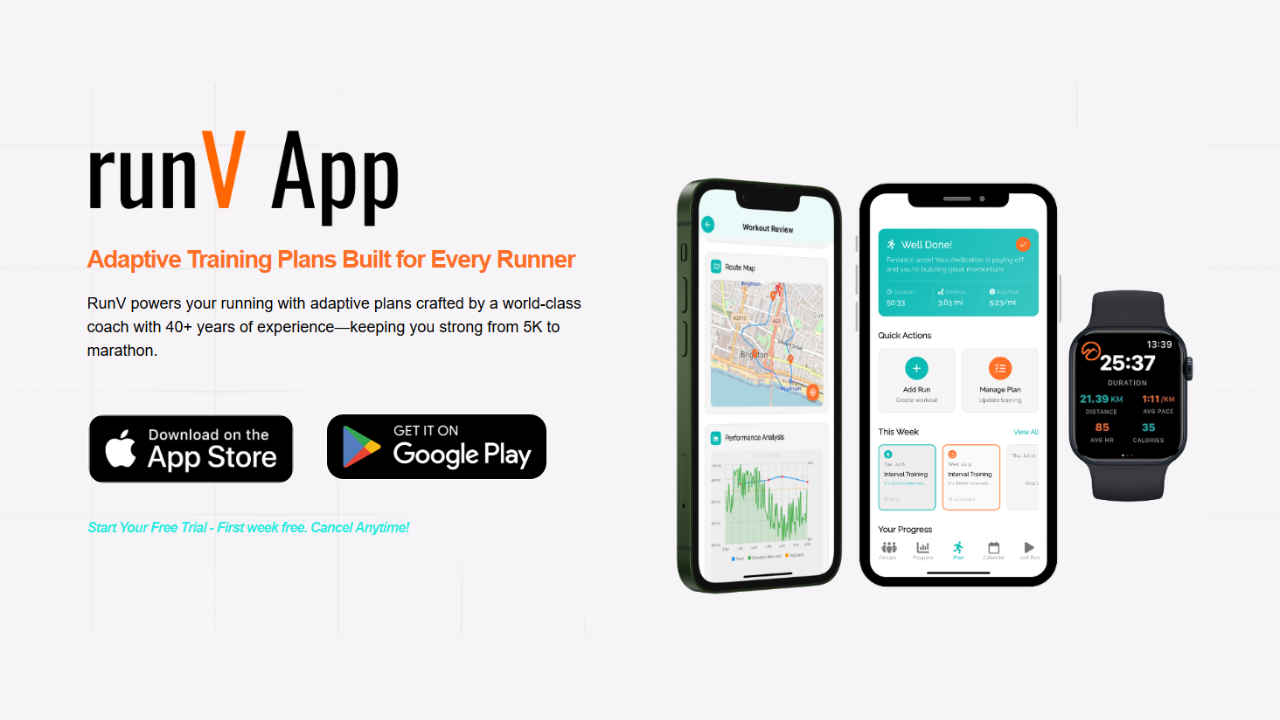
Many training apps now use algorithms or AI to adapt training plans. They often include:
- Automatic plan updates after each workout.
- Integration with wearables for live data.
- Recovery scores and readiness insights.
When evaluating these tools, consider:
- How well they use your actual data, not just generic rules.
- Whether they adjust both mileage and intensity.
- If they allow you to override or customize recommendations.
Sample Weeks: Static Plan vs Adaptive Plan
To see how Adaptive Training Helps Proven mileage gains in real life, let’s compare a static and adaptive week for a runner aiming for a half marathon.
Scenario: Intermediate Runner at 30 Miles/Week
This runner is targeting 40 miles per week over the next 8 weeks. They currently handle 30 miles comfortably.
Static Plan – Week 3
- Mon: Rest
- Tue: 6 miles easy
- Wed: 7 miles with 3 at tempo
- Thu: 5 miles easy
- Fri: 5 miles easy
- Sat: 11‑mile long run
- Sun: 3 miles recovery
Total: 37 miles
If the runner has a bad night’s sleep, sore calves, or is recovering from a minor cold, the plan doesn’t care. The expectation remains 37 miles regardless of readiness.
Adaptive Plan – Week 3 (Intended)
The adaptive plan might initially target a similar structure:
- Mon: Rest or 3 miles very easy (based on prior week fatigue).
- Tue: 6 miles easy.
- Wed: 6–7 miles with 2–3 at tempo, depending on how warm‑up feels.
- Thu: 4–5 miles easy.
- Fri: 4–5 miles easy.
- Sat: 10–11‑mile long run.
- Sun: 3–4 miles very easy.
Total: 34–37 miles, but flexible.
What Happens After a Harder‑Than‑Planned Tempo?
Imagine Wednesday’s tempo feels unexpectedly brutal. Heart rate runs high, RPE is 8/10, and the runner reports “very tired” afterward.
The adaptive system might respond by:
- Reducing Thursday to 4 easy miles.
- Keeping Friday short (4 miles) and very easy.
- Capping the long run at 10 instead of 11.
Total: 33 miles instead of 37. That’s a deliberate slight reduction to ensure the runner adapts instead of accumulating unmanageable fatigue. The following week’s target then shifts accordingly, keeping the long‑term progression intact but safer.
Who Benefits Most from Adaptive Training?
Almost any runner can benefit from adaptive principles, but some groups benefit disproportionately.
1. Injury‑Prone Runners
If you have a history of stress fractures, tendon issues, or recurring niggles, you’re likely sensitive to rapid mileage jumps. Adaptive training helps by: (Adaptive training trial)
- Capping your weekly increases.
- Responding immediately to signs of overload.
- Prioritizing consistency over aggressive jumps.
This creates a safer environment to finally inch toward higher mileage without repeating the same injury cycle.
2. Busy Athletes with Unpredictable Schedules
If you juggle work, family, and travel, your stress levels and training windows change weekly. A rigid plan doesn’t account for that. Adaptive training:
- Adjusts volume down during hectic weeks.
- Uses quieter weeks to gently nudge mileage upward.
- Minimizes guilt and “catch‑up” attempts that spike injury risk.
3. Newer Runners Seeking Sustainable Progress
New runners are eager to improve but often lack the experience to judge safe increases. Instead of guessing how quickly to ramp up, they can lean on adaptive guidance that respects their current capacity and recovery.
For complementary guidance on frequency and rest days, see articles like How Many Days Per Week Beginners Should Run: 5 Proven Essential Tips, which can easily be layered into an adaptive framework.
4. Ambitious, Data‑Driven Runners
If you thrive on metrics, wear a GPS watch everywhere, and love fine‑tuning your plan, adaptive training is a natural match. It converts your obsessive tracking into actionable insights—transforming data into smarter mileage decisions, not just prettier graphs.
How to Implement Adaptive Training in Your Own Running
You don’t need complex software to apply adaptive principles, though tech can help. Here’s how to bring this approach into your training, step by step.
Step 1: Establish a Realistic Baseline
Look back over the last 4–6 weeks and calculate:
- Average weekly mileage.
- Longest run in that period.
- Number of running days per week.
Use those numbers as your starting point. Do not base your plan on what you did a year ago, or on your dream mileage. You’re designing for your current body, not your past or future self.
Step 2: Set a Conservative Target
Decide where you’d like to be in 8–12 weeks. Good ranges might be:
- New runners: 15 → 25 miles per week.
- Intermediate: 25 → 35–40 miles per week.
- Advanced: 40 → 50–60 miles per week (if injury history allows).
Now check: is this roughly a 3–8% average increase per week? If not, extend the time horizon. Adaptive training is most powerful when your destination is ambitious but realistically spaced out.
Step 3: Plan the Skeleton, Not the Details
Sketch your training in broad strokes:
- Number of running days per week.
- Approximate structure (e.g., 1 long run, 1 workout, 3–4 easy days).
- General mileage trend (slowly upward, with lighter weeks every 3–4 weeks).
This “skeleton” creates direction but leaves room for adaptation based on how you feel and respond.
Step 4: Add Feedback Loops
After each run, quickly log:
- Perceived effort (1–10).
- Any soreness or pain.
- Sleep quality the night before.
Once or twice per week, review these notes. If three runs in a row felt much harder than expected, or soreness is creeping in, that’s your signal to reduce mileage or intensity.
Step 5: Make Rules for Adjustments
To mimic a smart adaptive system, set your own rules in advance. For example:
- If RPE is 8+ on two easy runs in a row, cut the next run’s mileage by 20–30%.
- If a niggle persists for three days, remove intensity until it resolves.
- If you’ve had four solid weeks with good energy, allow a 5–8% mileage bump.
These pre‑decided rules protect you from emotional decision‑making mid‑week when you’re tired or focused only on hitting numbers.
Step 6: Consider a Structured Adaptive Plan
If you prefer automation and expert‑designed logic, you can use platforms that provide adaptive plans out of the box. Many of these services offer an All Plans overview, where you can pick race distances or goals and let the system adjust your mileage week by week.
The key is still to listen to your body, but a well‑built adaptive engine does a lot of the heavy lifting—calculating safe progress, adjusting for missed runs, and managing long‑run growth intelligently.
Adaptive Training Helps Proven FAQ
Does adaptive training mean I’ll never get injured?
No system can guarantee zero injuries. But adaptive approaches dramatically reduce the most common causes: rapid mileage jumps, ignored fatigue, and over‑stacked intensity. You’re still human, and external factors—like poor sleep or sudden life stress—can tip the balance. The goal is risk reduction, not absolute prevention.
Is adaptive training only for advanced runners?
Not at all. In many ways, beginners and returning runners benefit the most because they have less experience judging safe mileage increases. Adaptive frameworks provide guardrails while you learn what your body can handle.
Can I still follow a race plan with adaptive training?
Yes. Adaptive training sits inside a race plan. You still have a target race date and distance. The difference is in how your weekly path is adjusted along the way—how much you run each day, how far the long run goes, and when recovery weeks are inserted.
What data do I need for adaptive training to work?
At minimum, you need accurate distance and a sense of perceived effort. Heart rate is very helpful but not required. Advanced metrics (power, HRV, etc.) enhance the system but aren’t mandatory to get value from adaptive concepts.
Do I lose control if the app keeps changing my plan?
You shouldn’t. A good adaptive system explains its changes and allows you to override them. Think of it as a coach making suggestions, not a dictator. You always have the final say based on how you actually feel.
Final Thoughts: Train Smarter, Not Just More
Safe mileage growth is the backbone of long‑term running success. More miles, done wisely, build a deeper aerobic engine, tougher tissues, and better efficiency. But chasing mileage without respecting your body’s feedback is a fast track to burnout and injury.
This is precisely where Adaptive Training Helps Proven methods stand out. They take the best of coaching wisdom—individualization, gradual progression, and responsive adjustments—and apply it consistently using your real‑world data.
Whether you use a sophisticated app, a coach, or your own rule‑based system, the message is the same: let your plan listen to your body. That’s how you run more, run longer, and keep improving season after season.