
Adaptive Running Plans Powerful, is if you’ve ever followed a static training plan and felt it didn’t “get” you—your schedule, your recovery, your data—you’re exactly the kind of runner who can benefit from modern adaptive training. Today’s Adaptive Running Plans Powerful enough to respond to your body in real time use data, flexibility, and smarter feedback loops to keep you improving while avoiding injury and burnout.
This article breaks down how adaptive plans work under the hood, why they beat traditional PDFs, and the three most powerful tweaks they use to keep you on track.
Table of Contents
- Why Adaptive Running Plans Matter in 2026
- What Are Adaptive Running Plans Powerful Enough to Change Your Season?
- The 3 Powerful, Proven Tweaks Behind Adaptive Plans
- Tweak #1: Dynamic Load Management
- Tweak #2: Personalized Intensity Control
- Tweak #3: Feedback-Driven Micro Adjustments
- How Tech and Gear Supercharge Adaptive Running Plans Powerful Enough to Stay Accurate
- Real-World Use Cases: How Different Runners Benefit
- Common Mistakes When Using Adaptive Plans (and How to Avoid Them)
- Building Your Adaptive Running Stack: Apps, Watches, and Data
- Who Should Use Adaptive Running Plans Powerful Enough to Replace Static PDFs?
- Getting Started: A 4-Week Onboarding Blueprint
- Final Thoughts
Why Adaptive Running Plans Matter in 2026
The traditional running plan assumes you’re a robot: fixed schedule, predictable life, perfect recovery, and linear progress. Real runners live in the opposite world—work deadlines, kids’ schedules, bad sleep, surprise niggles, and weather mood swings.
That mismatch leads to three outcomes: inconsistency, overtraining, or undertraining. Runners often stack too many hard days after a stressful week, or skip too many key sessions because life intervened.
Adaptive plans exist to bridge that gap. They listen to your body and your life through data and feedback, then rewrite the week, not just the workout. As a result, you get closer to the ideal: enough stress to improve, enough recovery to absorb it, and enough flexibility to survive real life.
What Are Adaptive Running Plans Powerful Enough to Change Your Season?
At a simple level, an adaptive running plan is any training plan that automatically changes based on your recent training, recovery, and performance instead of following a fixed calendar no matter what.
But Adaptive Running Plans Powerful enough to make a huge difference tend to share five core features:
- They constantly monitor training load over days and weeks.
- They adjust volume and intensity based on your actual completed runs.
- They incorporate recovery signals like sleep, heart rate, and perceived effort.
- They change the future plan when you skip, cut short, or exceed a session.
- They refocus on your goal date, not just today’s workout.
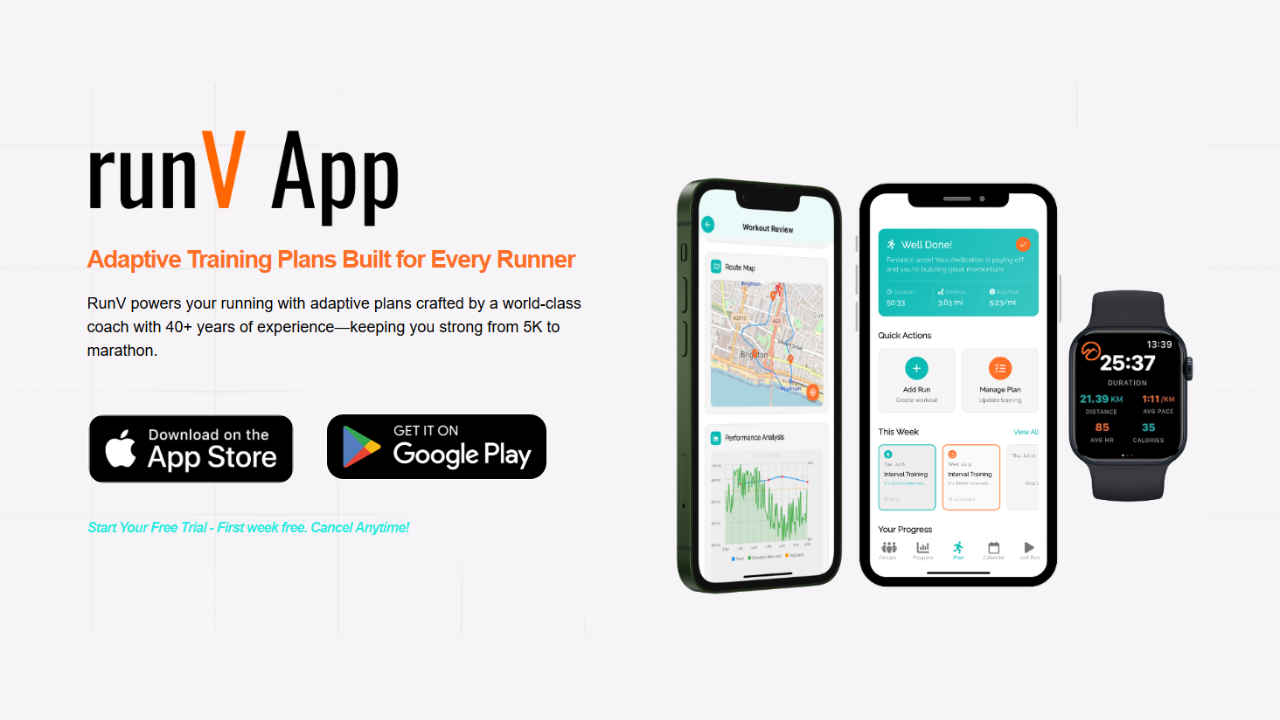
These systems are particularly potent when combined with modern wearables and GPS watches. Platforms like an AI Dynamic Plan can react to every run, every missed session, and every overachieved interval, instead of pushing you mindlessly forward.
The 3 Powerful, Proven Tweaks Behind Adaptive Plans
Nice dashboards and graphs are cool, but what actually makes Adaptive Running Plans Powerful and effective are three specific adjustment levers:
- Tweak #1: Dynamic Load Management – smarter control of total volume and stress.
- Tweak #2: Personalized Intensity Control – calibrating pace and effort to your current fitness, not last year’s PR.
- Tweak #3: Feedback-Driven Micro Adjustments – small, frequent course corrections instead of dramatic panic changes.
When these three are done well, you avoid common pitfalls like overreaching, inconsistent training, and endlessly running the wrong paces.
Tweak #1: Dynamic Load Management
Why Load Management Matters More Than Mileage
Many runners obsess over weekly mileage: 20, 40, 60 miles. But what truly stresses your system is training load—a mix of volume, intensity, terrain, and even heat.
Two runners can both hit 40 miles, but the one running hills, workouts, and heat will accumulate far more load than the runner jogging flat easy miles. Adaptive plans look past the simple mileage number to manage overall stress.
How Adaptive Running Plans Powerful Enough to Protect You Track Load
Strong adaptive systems track your training load with multiple inputs:
- Distance and time (classic volume).
- Pace vs. your current fitness level.
- Heart rate response (cardiovascular strain).
- Terrain, elevation gain, and surface.
- Recent hard workouts and long runs.
They then create rolling averages (often 7- and 28-day windows) to measure your acute vs. chronic load. If this ratio spikes too fast—e.g., jump from 20 to 35 miles in one week—the plan flags risk and adjusts downward.
The “Brake and Gas Pedal” Effect
Adaptive systems use your recent load as a “context” before assigning your next run. They essentially ask two questions:
- Have you had enough stimulus to keep improving?
- Have you accumulated too much to handle another hard session safely?
When done right, Adaptive Running Plans Powerful enough to regulate both gas and brakes will:
- Cut back a long run by 10–20% if you’ve had an overloaded week.
- Swap a threshold workout for a steady aerobic run after travel and bad sleep.
- Extend easy phases after illness instead of resuming where you left off.
Instead of seeing your plan as a fixed prescription, think of it as a steering wheel—gently turning left or right each day to keep you centered in the “adaptation zone.”
Example: An Overloaded Week Fix
Imagine you planned 35 miles with two workouts. Work runs late, so you shove them together, effectively stacking stress. A static plan says: “Good job catching up.”
An adaptive system notices:
- Three moderate-to-hard days have clustered together.
- Acute training load is now much higher than last week.
- Your average resting heart rate has nudged upward.
It responds by turning your next intended quality run into an easy one, slightly reducing long-run distance, and bringing your weekly load back into a safer progression curve.
Tweak #2: Personalized Intensity Control
Why “Run 8:00 Pace” No Longer Makes Sense
Old-school plans assign paces based on a recent race—for example, “Run intervals at 10K pace.” That can work, but it locks you to a snapshot of your fitness from one day, under specific conditions, months ago.
Fitness, fatigue, weight changes, sleep, and heat all modify how that pace feels. A static plan doesn’t care; it keeps prescribing the same numbers. Adaptive Running Plans Powerful enough to stay accurate constantly recalibrate intensity.
Adaptive Intensity: From Static Zones to Living Zones
Instead of rigid paces, adaptive systems often use a blend of:
- Heart rate zones (adjusted as fitness changes).
- Power (for those with running power meters).
- Perceived effort (RPE), via your own feedback.
- Recent performance in workouts (how easily you hit paces).
Your “threshold” might start at, say, 7:45 per mile. After a solid 4-week block, you nail that same workout at 7:30 with a lower heart rate. The system can now tighten your threshold range to 7:25–7:35, so you avoid undertraining.
How Adaptive Running Plans Powerful Enough to Adjust Intensity Actually Do It
Here are some typical adjustments:
- Down-adjust: If your heart rate is consistently high for easy runs, or RPE is too hard, it slows your target paces for recovery runs.
- Up-adjust: If you’re easily hitting workout paces with low RPE and stable heart rate, it nudges paces faster or adds a rep.
- Environment-aware: On hot, humid days, intensity is kept in check even if pace is slower; the plan cares about internal load, not brag-worthy numbers.
This matters because so many runners accidentally run too hard on easy days and too easy on hard days, a pattern that often leads to stagnation or burnout. A more adaptive approach helps correct that drift automatically.
Tech Tie-In: Watches and Smart Settings
Wearables amplify this intensity control by giving your plan richer data. If you use an Apple Watch, the right configuration can dramatically improve the accuracy of your zones and metrics. Dialing in things like auto-pause, display fields, and GPS settings lets your adaptive system work from clean data rather than noise. For a detailed breakdown, see Apple Watch Running Settings: 7 Essential, Proven Tweaks.
Well-tuned hardware plus adaptive software equals less guesswork, fewer junk miles, and better targeted workouts.
Tweak #3: Feedback-Driven Micro Adjustments
Why Daily Feedback Matters More Than Monthly Analysis
Many runners do a race or benchmark test every few months and then adjust training. That’s better than nothing, but between tests, your circumstances can change dramatically—injury flare-ups, life stress, seasonal allergies. (Athletica adaptive AI running plans)
Adaptive Running Plans Powerful enough to help you week-to-week rely on frequent feedback loops. Instead of waiting for a race result, they listen to your daily reports and subtle biometrics.
What Kind of Feedback Fuels Micro Adjustments?
Good adaptive systems blend objective and subjective signals, such as:
- How you rated yesterday’s run (easy, moderate, brutal).
- Sleep duration and quality (sometimes via wearables).
- Resting heart rate or HRV changes from baseline.
- Muscle soreness reports and niggle locations.
- Mood, stress level, and motivation to train.
This feedback isn’t just logged; it’s used to nudge tomorrow’s and next week’s plan.
Examples of Micro Adjustments in Action
Here’s how an adaptive system might react to everyday situations:
- Case 1: Bad Sleep + High Stress
You report 4 hours of poor sleep and rate your stress as high. The system reduces the next workout’s intensity, keeps the duration similar for habit maintenance, and flags an early bedtime goal. - Case 2: Persistent Soreness
You mark quad soreness three days in a row. The plan switches a planned tempo run to a flat easy session and postpones your next hill workout by several days. - Case 3: Feeling Stronger Than Expected
You log several days of low RPE at prescribed paces with stable heart rate. The algorithm adds an extra rep to your next interval session or slightly increases tempo duration.
These micro shifts add up. Instead of swinging between “ignore fatigue” and “panic rest,” you ride a smoother adaptation curve.
Why Your Honesty Matters
Micro adjustments are only as good as your feedback. If you constantly underreport fatigue to “protect” your ego, you’ll get more aggressive prescriptions than your body can handle.
A key mindset shift with Adaptive Running Plans Powerful enough to truly help you is seeing them as a collaboration, not a boss. Your job: honest feedback. The plan’s job: objective adjustment.
How Tech and Gear Supercharge Adaptive Running Plans Powerful Enough to Stay Accurate
Watches, Sensors, and Data Streams
Adaptive systems become far more accurate when fed rich, reliable data. The most common gear inputs include:
- GPS watches for pace, distance, and route.
- Heart rate sensors (chest strap or optical) for internal load tracking.
- Foot pods or power meters for running power and cadence.
- Smartphone apps for RPE, mood, and soreness logging.
The more consistent the data, the better your plan’s adjustments. You don’t need everything on day one, but having at least GPS and heart rate gives a solid foundation.
Running Shoe Tech and Training Response
Modern shoe technology also interacts with your training. Super-foams, carbon plates, and rocker geometry can slightly reduce impact and improve running economy, often letting you handle a bit more speed or distance at the same perceived effort.
However, that extra “free speed” can tempt you to race every workout. With Adaptive Running Plans Powerful enough to monitor load, your system can note if your pace jumps dramatically without corresponding heart rate spike. It may then refine your zones based on more efficient form in your new shoes.
To stay informed about how evolving footwear tech can change your training feel and performance, explore New Shoe Tech That Could Change Your Next Long Run.
App Features That Make a Real Difference
Not all adaptive apps are equal. Useful features often include:
- Automatic rescheduling after missed or shortened workouts.
- Clear priority labels (key, optional, recovery).
- In-run guidance on pace or heart rate zones.
- Post-run surveys for RPE and soreness.
- Progress dashboards focused on trends, not just daily numbers.
Platforms that integrate these with goal-based planning (5K, half, marathon, general fitness) create a full ecosystem rather than random adjustments.
Real-World Use Cases: How Different Runners Benefit
Busy Professionals
Work schedules change, meetings pop up, and travel wrecks sleep. For busy runners, the biggest enemy is not a lack of willpower—it’s inconsistency and misaligned intensity.
Adaptive plans can automatically prioritize key workouts in more predictable parts of your week. When emergencies arise, they re-balance the schedule without letting every missed run spiral into “I blew my plan.”
Beginners and Returners
If you’re newer to running or returning after a long break, you’re more sensitive to rapid load increases. Static “couch to X” plans often jump too quickly for some and too slowly for others.
Adaptive Running Plans Powerful enough to read your responses will slow down progression if you report pain or struggle with current volume, or gently accelerate if you’re cruising easily. That can mean the difference between building a habit and joining the injury cycle.
Experienced Racers Chasing PRs
Advanced runners need precision: the right tempo, intervals, long run structure, and taper. But they also push the red line more often, making small mistakes costly.
An adaptive approach can optimize taper based on how fatigued you are two to three weeks before race day, modifying volume drops and sharpening workouts. For deeper strategies around peaking at the right moment, see the Marathon Taper Guide for 7 Proven Ways to an Amazing PR.
Masters Athletes
As you age, recovery often takes longer, but your smartness about training can increase. Adaptive plans recognize when the same stimulus that used to require one day of recovery now needs two, and they shift structure accordingly.
Instead of endlessly beating yourself up for “needing more rest,” you get proactive scheduling that matches your physiology, not your ego. (TechRadar on AI running plans)
Common Mistakes When Using Adaptive Plans (and How to Avoid Them)
1. Treating Suggestions as Optional Hints, Not a System
If you ignore every adjustment your plan makes, you effectively turn it back into a static template. The power lies in respecting the system, especially when it recommends backing off.
2. Chasing Every Metric
Adaptive platforms can surface lots of numbers: load, HRV, VO2max estimates, pace charts. Trying to “game” all of them at once leads to confusion. Focus on a few key signals: weekly load trend, how workouts feel, and whether key sessions are improving.
3. Inconsistent Device Use
Wearing your watch for some runs but not others, or constantly changing data recording habits, makes your plan’s job harder. Try to log at least duration, distance, and RPE for every run, even treadmill sessions.
4. Refusing to Adjust Goals
Sometimes life throws a major curveball—illness, injury, or huge work projects. If your adaptive plan repeatedly suggests scaling back race expectations, that’s not “quitting”; it’s pivoting to a realistic target so you can still build fitness safely.
5. Overloading With Non-Running Stress
High volumes of strength work, cycling, or intense sports add load on the body. If your plan only sees running data, it may underestimate your total stress. Try to log major cross-training and heavy lifting sessions so the system has a fuller picture.
Building Your Adaptive Running Stack: Apps, Watches, and Data
Choosing an Adaptive Platform
When evaluating adaptive options, look for:
- Goal-based planning (5K, 10K, half, marathon, general fitness).
- Automatic adjustment after missed or partial runs.
- Integration with your primary wearable or app ecosystem.
- Clear feedback prompts after workouts (RPE, soreness, mood).
- Transparency about how adjustments are made.
Systems like an AI Dynamic Plan often emphasize this responsiveness, tailoring day-to-day work while keeping your long-term target in sight.
Setting Up Your Watch for Adaptive Success
Whatever watch you use, set up:
- Accurate personal details (age, weight, max heart rate if known).
- Consistent GPS mode for outdoor runs.
- Heart rate pairing with a strap if wrist readings are unreliable.
- Automatic syncing with your adaptive app.
Once these basics are dialed in, your plan gets reliable inputs to work from—and your adjustments become more trustworthy.
Defining Your Non-Negotiables
Adaptive doesn’t mean chaotic. Decide ahead of time:
- Which days you can realistically do a hard workout.
- The minimum number of days per week you can commit to running.
- Preferred long run windows.
Give your system these “hard constraints” so it can adapt within a realistic schedule, not a fantasy calendar.
Who Should Use Adaptive Running Plans Powerful Enough to Replace Static PDFs?
While nearly any runner can benefit, some profiles get outsized gains:
- Inconsistent runners who often miss or move workouts.
- Injury-prone athletes who struggle with traditional mileage jumps.
- Time-crunched runners who need every session to count.
- Data-minded athletes who enjoy leveraging wearables and metrics.
- Masters runners whose recovery needs are changing.
If you enjoy structure but hate rigidity, Adaptive Running Plans Powerful enough to flex with your life are almost tailor-made for you. They keep a spine of discipline while inserting sanity where life requires it.
Getting Started: A 4-Week Onboarding Blueprint
Week 1: Baseline and Honesty
- Set a realistic primary goal (race distance, time, or consistency streak).
- Log every run with distance, time, and RPE.
- Provide honest feedback about sleep, stress, and soreness.
- Let the plan stay conservative while it “learns” you.
Think of this as a calibration phase, not a race to big workouts.
Week 2: Embrace the First Adjustments
- Notice when your plan slightly changes a workout or weekly structure.
- Resist the urge to override smart reductions out of ego.
- Pay attention to how you feel during back-to-back days.
- Refine your schedule constraints if certain days keep failing.
This is when trust starts to build—if you let it.
Week 3: Dial In Intensity
- Focus on truly easy easy days at the prescribed effort.
- Attack key workouts with intent, but stop when the plan stops.
- Notice whether you finish sessions feeling more “in control” than before.
- Review trend charts weekly, not obsessively daily.
Your goal here is to internalize what the different zones feel like, not just hit external numbers.
Week 4: Review and Refine
- Look at 4-week trends in volume and intensity.
- Assess your niggle levels and general fatigue.
- Adjust your long-term goal if necessary (date, distance, time).
- Commit to another 4–8 weeks to really see compounding benefits.
By the end of this first month, you should feel less anxious about missing a single run and more confident about the direction of your training.
Final Thoughts
Adaptive Running Plans Powerful enough to matter aren’t magic. They don’t turn you into an Olympian overnight, and they can’t override basic principles like gradual progression and adequate sleep.
What they can do, better than any static PDF or one-size-fits-all schedule, is keep you hovering in that sweet spot where progress is steady, injuries are rare, and training fits into your life instead of fighting it.
If you’ve been derailed by inconsistency, overuse aches, or life chaos, it’s worth experimenting with an adaptive approach and giving it a fair trial window. And if you want to go deeper into how smart training habits support long-term progress beyond any single season, you might also explore Why Long Term Running Needs 7 Essential Proven Habits.
In the end, the right plan isn’t just one that looks good on paper. It’s one that responds—intelligently, consistently, and personally—to the runner you are today, not the one you wish you could be in an imaginary perfect week.