
Runners everywhere are discovering that static training schedules are holding them back. Instead of rigid plans that ignore fatigue, stress, and real life, more athletes are turning to data‑driven, adaptive approaches that adjust on the fly. That’s where Adaptive Running Plans Proven to respond to your body come in—marrying science, wearable tech, and smart coaching so you can break plateaus without breaking down.
In this article, we’ll break down what adaptive training actually is, why it works, how to build or choose a smart plan, and seven proven strategies to unlock incredible progress—no matter if you’re chasing a 5K PR or a marathon finish line.
Outline
- What Are Adaptive Running Plans?
- Why Adaptive Training Beats Static Plans
- The Adaptive Running Plans Proven Framework
- 7 Proven Ways to Unlock Incredible Progress
- How to Choose an Adaptive Training Platform
- Building Your Own Adaptive Structure
- Common Mistakes with Adaptive Running Plans
- Sample 4‑Week Adaptive Training Block
- Final Thoughts
What Are Adaptive Running Plans?
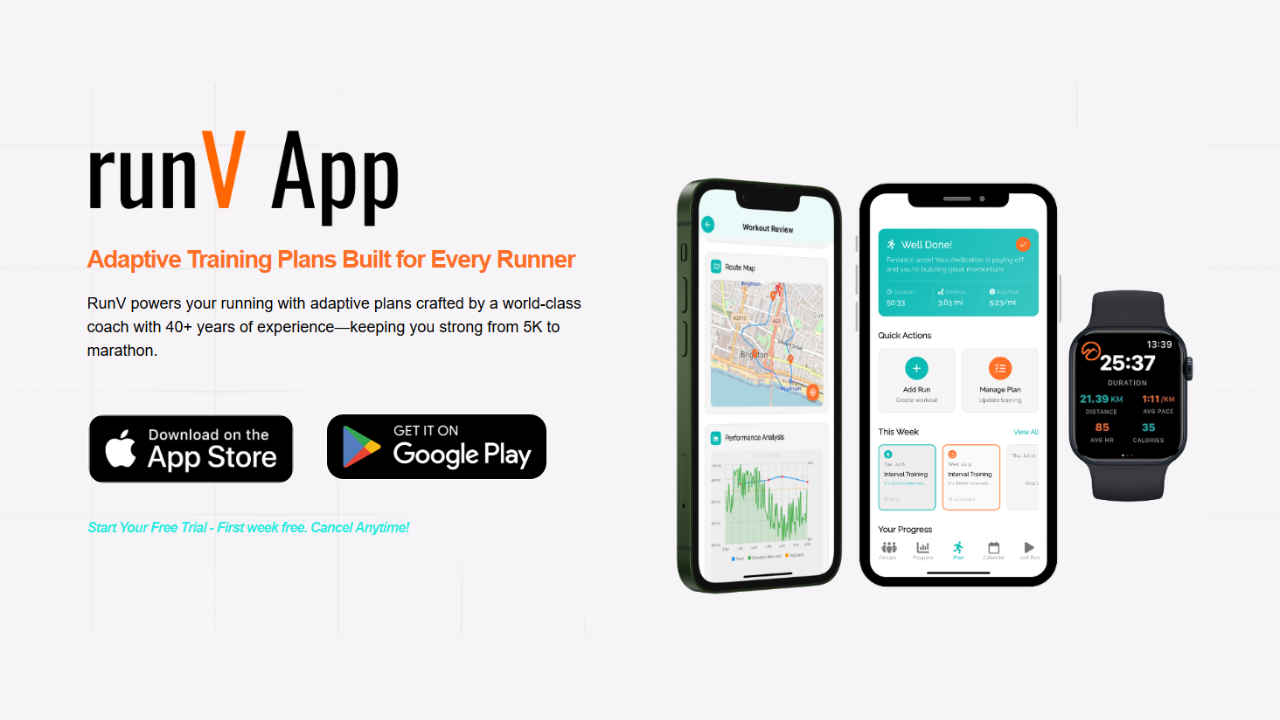
Traditional plans lock you into a fixed calendar: Week 1 tempo, Week 2 intervals, long run every Sunday—no matter how you feel. Adaptive plans work differently. They continuously adjust your workouts based on performance, recovery, sleep, stress, and even your schedule.
When coaches and apps talk about Adaptive Running Plans Proven to work, they usually mean a system that changes one or more of the following in real time:
- Workout intensity (pace, heart rate, power)
- Workout duration or distance
- Weekly mileage and long run length
- Distribution of hard vs. easy days
- Race‑specific session timing
Think of it as a dynamic blueprint instead of a rigid checklist. You still follow structure, but the plan listens and responds like a good coach would.
Why Adaptive Training Beats Static Plans
The human body doesn’t adapt linearly. Stress at work, poor sleep, travel, or a minor niggle can change how you respond to a session. Static plans ignore this. Adaptive systems embrace it.
Key advantages:
- Lower injury risk: the plan backs off when your data screams “too much.”
- More effective hard days: you hit quality sessions when you’re actually ready.
- Better use of tech: data from GPS watches and wearables feeds smarter decisions.
- Higher consistency: the plan flexes around life instead of forcing you to choose between perfection and quitting.
For runners who love gadgets and metrics, adaptive approaches turn all that data into actionable guidance instead of noise.
The Adaptive Running Plans Proven Framework
Let’s define a practical framework you can recognize in any good system, whether it’s a coach, an app, or your own spreadsheet. Truly Adaptive Running Plans Proven to help you progress usually have these core components:
- Baseline assessment: recent race, time trial, or fitness test.
- Clear goal: distance, timeline, performance target.
- Structured microcycles: weekly patterns of stress and rest.
- Feedback loop: objective metrics plus subjective feel.
- Adjustment rules: pre‑defined logic for changing workouts.
You don’t need a PhD in exercise science. But you do need a repeatable way to ask: “How did I respond?” and “What should I change next?” That’s the heart of every Adaptive Running Plans Proven system.
Adaptive Running Plans Proven: 7 Proven Ways to Unlock Incredible Progress
1. Precision Goal Setting
Vague goals produce vague adaptations. Adaptive plans work best when your objective is specific. Instead of “get fitter,” think:
- “Run under 50 minutes for a 10K in 16 weeks.”
- “Finish my first half marathon without walking.”
- “Return from injury to 30 km per week pain‑free.”
With a precise goal, the plan can calculate needed training load, key workouts, and timelines. The adaptive magic then fine‑tunes pace and volume based on how you actually respond, but the destination remains fixed.
This blend—clear goal, flexible path—is what makes many Adaptive Running Plans Proven to deliver sustainable breakthroughs.
2. Smart Structure with Flexible Weeks
Even adaptive systems rely on structure. You still need a rhythm to your training: hard days, easy days, long runs, and rest. The difference is that the details flex.
A common pattern in Adaptive Running Plans Proven effective looks like this:
- 2–3 quality sessions weekly: tempo, intervals, hills, or race‑pace work.
- 1 long run: gradually extended, sometimes with segments at faster efforts.
- All other days easy: recovery runs or full rest.
An adaptive plan might shift a workout from Tuesday to Wednesday if you’re clearly not recovered, or reduce a long run from 24 km to 18 km if your fatigue markers spike. The week keeps its shape, but the contents change.
3. Live Feedback from Wearables and Apps
Modern runners carry small sports labs on their wrists. GPS watch, chest strap, foot pod, or smart ring—each generates a stream of useful data if you know how to harness it.
Adaptive Running Plans Proven to excel will typically tap into:
- Heart rate and HRV: to gauge internal load and recovery status.
- Pace and distance: for performance trends and progression.
- Sleep and stress scores: to identify when non‑training stress is high.
- Cadence and power (if available): for biomechanical and efficiency cues.
However, tech is only as useful as its accuracy. If your GPS is erratic, you’ll get misleading training feedback. It’s worth learning how to dial in your watch setup—resources like Wear OS GPS Accuracy: 7 Proven Tips for Amazing Runs can help ensure the data feeding your adaptive plan is trustworthy.
4. Fatigue and Recovery Management
Most plateaus and injuries come from a simple mismatch: too much stress, not enough recovery. Adaptive plans monitor this equation in real time and make micro‑corrections.
Ways this shows up in Adaptive Running Plans Proven successful:
- Automatic downgrade from VO2 max intervals to tempo or easy running after multiple red‑flag days.
- Insertion of extra rest days or cutback weeks if your 7‑day load spikes too quickly.
- Shortened long runs when your resting heart rate jumps or sleep tanks.
The best systems blend metrics with how you feel. If you’re exhausted but your data looks fine, a smart plan still eases up. Your subjective input is a crucial part of the feedback loop.
5. Tech‑Aware Workouts and Gear Choices
Your plan and your gear should work together. With so many advanced shoes, sensors, and training apps, Adaptive Running Plans Proven to drive progress acknowledge that equipment affects load.
Examples:
- Super shoes: Racing in high‑stack, plated shoes can reduce muscle damage per pace—allowing slightly bolder race‑pace segments during specific phases.
- Daily trainers: Rotating cushioned models can distribute stress across tissues and reduce overuse risk.
- Wearable data: Running power or advanced running dynamics can reveal inefficiencies that the plan can target with drills or strides.
If you’re upgrading your shoe rotation, guides like The Best Hoka Running Shoes in 2025 can help you choose models that match your training style and surfaces—information an adaptive system can use to better estimate your loading.
6. Progressive Load and Micro‑Adjustments
Adaptation follows progressive overload: stress, recover, repeat, with each cycle nudging the ceiling slightly higher. Adaptive plans fine‑tune this process.
Instead of blindly following the 10% rule, Adaptive Running Plans Proven effective will vary jumps based on your response:
- Good response: small bumps in weekly mileage or interval volume.
- Neutral response: maintain similar load while shifting workout types.
- Poor response: hold or reduce volume and intensity until signs improve.
These micro‑adjustments can be as small as trimming 5–10 minutes from a run, or as big as re‑sequencing key sessions in your training block. The goal is to stay just on the right side of challenging—often where long‑term gains hide.
7. Long‑Term Adaptation and Plateau‑Busting
The real test of Adaptive Running Plans Proven to deliver isn’t a one‑off PR; it’s consistent, repeatable progress over seasons. That means the plan must evolve as you improve. (Hal Higdon adaptive plans)
For example:
- Your “easy” pace slowly drifts faster at the same heart rate.
- Threshold intervals grow from 3×8 minutes to 4×10 minutes over blocks.
- Long runs add race‑pace segments as your durability builds.
Adaptive systems track these gains and raise your training targets accordingly instead of letting you stagnate at old paces. If you’re coming back from a setback, specialized frameworks like Running Comeback Plans That Deliver 5 Proven, Powerful Results show how adaptive logic can reboot consistency without overloading a vulnerable body.
How to Choose an Adaptive Training Platform
With so many apps and services claiming to be “smart” or “adaptive,” it’s worth asking hard questions before you commit.
Key Features to Look For
- True adaptivity: Does it actually change future workouts, or just show analytics?
- Integration with your devices: Can it pull data from your GPS watch and wearables reliably?
- Goal‑specific plans: Different logic for 5K, half marathon, and marathon goals.
- Control over constraints: Can you lock in days you can’t run or your maximum weekly distance?
- Transparency: Does it explain why it adjusts your plan, or is it a black box?
Red Flags
- Plans that always follow the same progression regardless of your feedback.
- Apps that overload you whenever you miss sessions, trying to “make up” lost miles.
- Zero emphasis on recovery or cutback weeks.
- No way to report pain, niggles, or fatigue beyond simple “completed/not completed.”
Many of the Best Running Apps With 7 Powerful Adaptive Training Plans highlight platforms that already implement these ideas and can be good starting points if you’re unsure where to begin.
Building Your Own Adaptive Structure
You don’t have to rely on software. You can implement the logic of Adaptive Running Plans Proven successful with a spreadsheet and discipline. Here’s a simple framework.
Step 1: Define Your Baseline and Goal
- Record a recent race or time trial (e.g., 5K time).
- Choose a realistic target: performance, distance, or consistency.
- Set a time horizon: 8, 12, or 16 weeks.
Step 2: Map Your Weekly Skeleton
Example week:
- Mon: Rest or easy 30–40 min
- Tue: Quality (tempo, intervals, or hills)
- Wed: Easy
- Thu: Secondary quality or moderate run
- Fri: Easy or rest
- Sat: Easy
- Sun: Long run
Step 3: Track Response Markers
Each day, record:
- Sleep quality (1–5)
- Perceived fatigue (1–5)
- Any pain or niggles (Y/N + details)
- Session RPE (effort 1–10)
Optionally, add resting heart rate, HRV, or wearable recovery scores.
Step 4: Define Simple Adjustment Rules
Examples of easy rules used in Adaptive Running Plans Proven by coaches:
- Two days in a row of high fatigue (4–5): downgrade the next hard session to easy.
- Any sharp pain: skip intensity for 3 days and cut volume by 30%.
- Three weeks of rising fitness with no red flags: increase weekly mileage by 5–8%.
Consistency in applying these rules is what turns your schedule into a truly adaptive plan.
Common Mistakes With Adaptive Running Plans
Relying 100% on the Algorithm
Even the best Adaptive Running Plans Proven robust can’t feel your body. Algorithms extrapolate from data, but they don’t know about that odd twinge in your calf or the argument that kept you up at night.
Use the plan as a powerful guide, not an unchallengeable authority. If something feels “off,” you’re allowed to override the recommendation.
Turning Every Easy Run into a Test
With constant feedback at your fingertips, it’s tempting to push easy runs just to see better numbers. That undermines the whole system. Easy days are data points too—specifically, how well you recover.
Protect them. Adaptive Running Plans Proven effective assume that easy runs stay easy.
Chasing Perfection Instead of Trajectory
Adaptive training thrives on trends, not single workouts. One bad day doesn’t derail your progress. What matters is the direction over weeks and months.
Missing a session or dialing back intensity is part of the process. The plan adjusts, and the overall curve still bends upward.
Sample 4‑Week Adaptive Training Block
Here’s a simplified example of how an Adaptive Running Plans Proven framework might play out over four weeks for a runner targeting a 10K.
Week 1 – Establish Baseline
- Key session: 3×6 minutes at “comfortably hard” with 3‑minute jog recoveries.
- Long run: 60–75 minutes easy.
- Other days: easy 30–40 minutes or rest.
The plan assesses how your heart rate, pace, and RPE line up with target zones. If the session feels too easy and metrics confirm, targets will inch faster in Week 2.
Week 2 – Load and Evaluate
- Key session: 5×4 minutes at faster than 10K effort.
- Secondary session: 20 minutes tempo at just slower than 10K effort.
- Long run: 75–85 minutes easy.
If you report high fatigue or see declining paces at the same effort, the system may hold or slightly reduce intensity while maintaining volume.
Week 3 – Push or Protect
Two paths depending on your response so far:
- If thriving: Slight mileage increase and extended intervals (e.g., 3×8 minutes).
- If struggling: Maintain or reduce mileage, shift to more tempo and steady running, fewer sharp intervals.
Both approaches keep you moving forward, but at the right stress level.
Week 4 – Adaptive Cutback
- Overall mileage reduced by 15–30%.
- One moderate quality session, no maximal efforts.
- Extra rest day if fatigue stayed elevated in Week 3.
This deload week consolidates gains. Adaptive Running Plans Proven long‑term always include deliberate downshifts like this, not just relentless ramp‑ups. (running.COACH dynamic plans)
How Adaptive Running Works for Different Goals
5K and 10K Speed
Shorter races often emphasize intervals and neuromuscular work. Adaptive systems here focus on:
- Balancing frequent quality with adequate recovery.
- Progressively sharpening race‑pace sessions.
- Adjusting volume to avoid burnout during heavy speed phases.
If you’re targeting your first or fastest 5K, structured guides like How To Train For A 5K To Hit Your PB | 5k Training Plans pair well with adaptive logic as you learn how you personally respond to different workout types.
Half Marathon and Marathon Endurance
For longer distances, Adaptive Running Plans Proven effective tend to:
- Track cumulative fatigue across long runs and high‑volume weeks.
- Adjust long run length and intensity segments based on durability.
- Carefully time peak long sessions and tapering for race day.
Because life stress can sabotage big‑mileage blocks, adaptivity is especially crucial here. A well‑timed down‑week can be the difference between toeing the start line healthy or not showing up at all.
Comebacks and Injury Management
Post‑injury or after long breaks, your tissues lag behind your cardiovascular system. You may “feel” ready to run hard, but your body disagrees. Adaptive plans:
- Limit rapid jumps in volume and intensity.
- Insert frequent mini‑assessments of pain and soreness.
- Back off quickly at the first hint of recurrence.
Adaptive Running Plans Proven helpful in this context always err on the conservative side, prioritizing durability over speed.
Making the Most of Your Tech
Since this article is aimed at runners who love gear and training technology, it’s worth outlining how to organize your tools so they meaningfully support your adaptive plan.
GPS Watches and Accuracy
Core tips:
- Use multi‑band or dual‑frequency GPS when available for better pacing data.
- Turn off unnecessary sensors to improve battery life and logging stability.
- Be cautious interpreting single‑run anomalies; look for multi‑run trends.
Accurate pace and distance data are foundational for any Adaptive Running Plans Proven system, particularly when setting tempo and interval targets.
Heart Rate and HRV
Heart rate monitors and HRV data can indicate when stress is accumulating faster than recovery. Use them as traffic lights, not dictators:
- Green: HR and HRV within normal range, sessions as planned.
- Yellow: Slight deviations plus moderate fatigue—consider dialing down intensity.
- Red: Persistent elevated HR, suppressed HRV, poor sleep—prioritize rest.
Training Apps and Platforms
When syncing your devices to an adaptive platform, check:
- If the app distinguishes between completed, modified, and skipped workouts.
- How it uses historical data to re‑estimate your fitness level.
- Whether you can manually label runs (e.g., “felt easy,” “legs dead,” “pain”).
The richer and more accurate the data, the more precisely your Adaptive Running Plans Proven engine can tune your sessions.
Mindset for Adaptive Success
Switching from a static to an adaptive mindset means rethinking what “success” looks like. It’s not about nailing every workout as written; it’s about getting the right workouts done at the right times.
Embrace Flexibility as a Skill
Following flexibility rules without ego takes discipline. It can feel counterintuitive to throttle back when you’re motivated. But being adaptable is a performance skill—just like pacing or fueling—that you can practice.
Focus on Process Over Perfection
Adaptive Running Plans Proven in real‑world conditions stress process:
- Did you follow the adjustment rules honestly?
- Did you protect your easy days?
- Did you communicate fatigue and pain clearly (to yourself or your coach/app)?
When you nail the process, progress almost always follows—sometimes faster than you’d expect.
Risk and Safety Considerations
While adaptive training lowers risk compared to rigid overreaching, it doesn’t make you invincible.
- Medical clearance: If you have cardiovascular, metabolic, or orthopedic concerns, talk to a professional before large training upgrades.
- Listen to pain: Adaptive plans respond to honest input. Don’t minimize or ignore persistent pain.
- Understand app policies: When you use training platforms, know how your data is stored and processed. Check their documentation and pages like Privacy Policy so you know what you’re agreeing to.
Safety isn’t a detour from progress. It’s the infrastructure that makes sustained progress possible.
Final Thoughts
Adaptive Running Plans Proven in the wild share a simple philosophy: your training should change as you change. You’re not the same runner week to week—your plan shouldn’t be either.
By combining clear goals, smart structure, wearable data, and honest self‑feedback, you can build or choose a system that:
- Reduces injury risk while still challenging you.
- Uses your watch and wearables for meaningful decisions, not just pretty graphs.
- Adjusts to tough weeks instead of punishing you for them.
- Delivers consistent, year‑over‑year improvement.
In an era where running tech and data are everywhere, the real edge comes from how intelligently you use them. Adaptive training is that intelligence—embedded into your daily schedule, adjusting step by step, run by run, toward the best version of your running self.