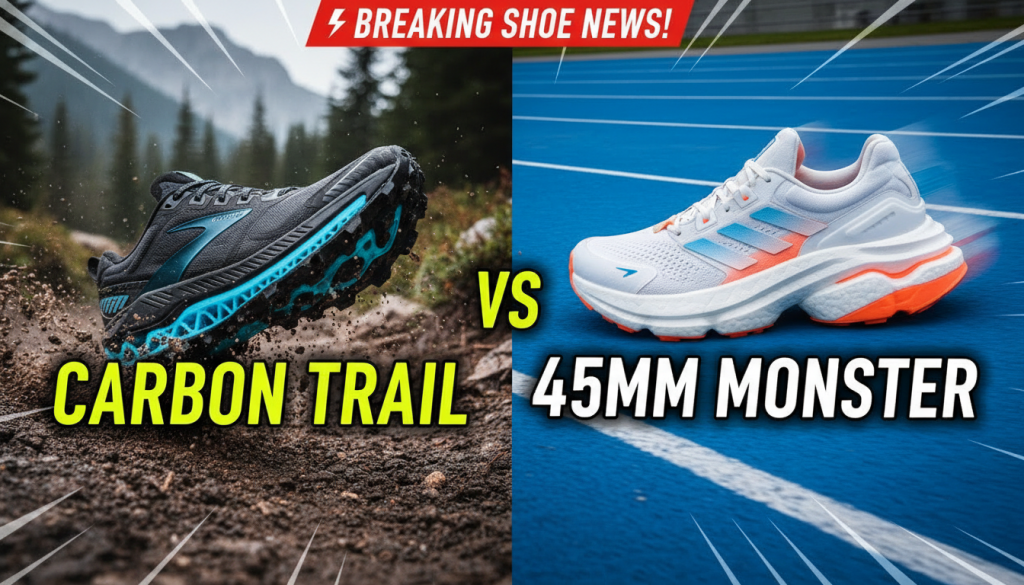
Breaking: Brooks Drops Carbon into the trail world, Adidas is pushing stack heights to new limits, and every major brand seems intent on redefining what “daily trainer” and “super‑shoe” even mean. If you care about running faster, farther, or simply more comfortably, the latest wave of shoe launches is worth your attention.
This running news blog pulls together the four most important new shoe announcements from the past couple of weeks and explains what they really mean for your training in 2026.
Table of Contents
- Brooks Cascadia Elite: Brooks Drops Carbon on the Trails
- Adidas Hyperboost Edge: 45 mm Super‑Trainer, No Plate
- Arc’teryx Sylan 2: Carbon Speed for Big Mountains
- New Balance Ellipse: Everyday Joy Over PR Chasing
- How to Choose the Right 2026 Shoe for Your Running
- Key Takeaways and Next Steps
Brooks Cascadia Elite: Brooks Drops Carbon on the Trails
Brooks finally joins the trail super‑shoe arms race
The headline news is simple and seismic for trail runners: Breaking: Brooks Drops Carbon into its trail lineup with the all‑new Cascadia Elite. For years, Brooks has dominated everyday road miles and comfortable trail plodders, but sat out the carbon‑plated arms race off‑road.
The Cascadia Elite changes that. This is Brooks’ first plated trail racer, purpose‑built for mountain racing and fast technical courses.
Tech breakdown: DNA Gold foam and SpeedVault+ plate
At the heart of this “Breaking: Brooks Drops Carbon” story is the midsole. Brooks is using DNA Gold, a 100% PEBA foam designed for big rebound and low weight. PEBA has become the go‑to material in super‑shoes because it compresses easily and snaps back with serious energy return.
Embedded in that foam is a carbon‑infused Pebax SpeedVault+ plate. On trails, the plate does double duty: it stiffens the shoe for propulsion and helps bridge rocks and roots so your foot doesn’t have to flex around every obstacle.
Why it matters for trail runners
Trail runners have watched road racers gain minutes from plated supershoes while off‑road innovation lagged behind. With the Cascadia Elite, Breaking: Brooks Drops Carbon into that gap, giving loyal Brooks fans a high‑performance option for:
- Mountain ultras where efficiency really adds up over hours
- Technical trail races where quick turnover and protection matter
- Fast training on mixed terrain for runners who like a snappy feel
The plate plus PEBA foam means less muscle damage on descents and more free speed on climbs. That’s a major shift from the softer, more protective feel of traditional Cascadia models.
Who should consider the Cascadia Elite?
You might be the target runner if you:
- Already race in carbon road shoes and want a similar feel on trails
- Do vertical K, sky races, or sub‑50k technical events
- Like a firmer, more responsive ride rather than a super‑plush trail cushion
Runners newer to trails may still prefer a more forgiving, stable shoe. To make the most of a plated trail racer, you’ll want solid mechanics, especially on descents. If you’re still dialing in technique, resources like Running Form Basics for 7 Essential, Proven Beginner Wins can help you get more out of shoes like the Cascadia Elite while reducing injury risk.
Adidas Hyperboost Edge: 45 mm Super‑Trainer, No Plate
Super‑trainer, not super‑shoe
On the road side, one of the biggest stories of the week is the Adidas Hyperboost Edge—a shoe redefining what everyday high‑stack trainers look like. With a 45 mm rearfoot stack of Hyperboost Pro foam and no carbon plate, it’s the latest proof that the next wave of innovation isn’t only about plates.
Where the Cascadia Elite is the “Breaking: Brooks Drops Carbon” answer for trails, the Hyperboost Edge is Adidas’ answer to runners who want super‑shoe comfort without the stiffness.
Hyperboost Pro foam and LIGHTTRAXION outsole
The Hyperboost Edge’s key technologies are:
- Hyperboost Pro foam: A new compound promising strong energy return with a soft, bouncy underfoot feel.
- 45 mm stack: Legal for training but towering for a non‑racing shoe, providing tons of protection for long miles.
- LIGHTTRAXION outsole: A lighter, race‑inspired rubber layout that aims to balance grip with low weight.
Crucially, there’s no plate. That means more natural flex, easier transitions, and less calf strain for runners who struggle with super‑stiff racers on easy days.
Why this 45 mm trainer matters
In many ways, the Hyperboost Edge embodies the same trend highlighted in pieces like Max-Stack, No Plate: The Next Super-Trainer Era Begins. Runners are discovering they don’t need a carbon plate for daily miles to feel fast and fun.
This shoe fills the sweet spot between:
- Soft daily trainers that feel great but lack snap
- Racing super‑shoes that can feel “too much” for recovery runs
For higher‑volume runners, the Hyperboost Edge could become a go‑to option for long runs and steady efforts where you want to save your legs without overtaxing stabilizer muscles.
Launch timing and pricing
The global launch is set for March 17, 2026 in a bold red colorway, with more colors following in May. With a price around $200 USD, Adidas is clearly positioning this as a premium daily workhorse that can double for tempo runs.
Is a shoe like Hyperboost Edge right for you?
Consider a max‑stack trainer if: (Hyperion Elite carbon review)
- You regularly run 40+ km / 25+ miles per week and feel beat up in lower‑stack shoes
- You want one shoe that can handle easy days, long runs, and some uptempo work
- You prefer a softer landing but still like a little rebound
However, a 45 mm stack isn’t for everyone. If you’ve had ankle instability or struggle with balance, you may want to build up carefully and pay attention to any warning signs of overload, much like those discussed in How to Spot Early Shocking Signs: 7 Proven Mileage Risks.
Arc’teryx Sylan 2: Carbon Speed for Big Mountains
Second‑generation speed on technical terrain
While Breaking: Brooks Drops Carbon grabs headlines, Arc’teryx is quietly advancing its own fast‑trail line with the new Sylan 2. This is an evolution rather than a revolution, but a meaningful one for serious mountain runners.
Where the original Sylan was a proof of concept, the Sylan 2 incorporates athlete feedback to refine weight, fit, and stability while keeping its energetic, plated midsole.
Supercritical foam plus carbon plate
The Sylan 2 uses a combination that will sound increasingly familiar in 2026:
- Supercritical foam for high energy return and low weight
- A carbon‑fiber plate to aid propulsion and protect on rough ground
- A redesigned upper for better lockdown on steep ascents and technical descents
The lighter construction matters particularly for sky races and long alpine efforts where every gram saved helps late‑race form and efficiency.
Stability upgrades for real‑world mountain use
Arc’teryx specifically notes improved stability in the Sylan 2. That’s critical, because a plated shoe with energetic foam can feel twitchy on uneven surfaces. The updates aim to:
- Provide a more predictable platform on off‑camber trails
- Reduce ankle‑roll risk when fatigue sets in
- Let you fully use the plate’s downhill benefits without feeling out of control
This is where smart design should complement good technique. If you’re moving into more technical terrain in shoes like the Sylan 2 or Cascadia Elite, small cues from guides like Simple Form Cues to 7 Proven Ways to Run Comfortably can help keep your body aligned over the shoe’s platform.
Sylan 2 versus Brooks Cascadia Elite
Both the Sylan 2 and Cascadia Elite represent the same fundamental shift: carbon‑plate tech is now standard in high‑end trail shoes. The differences come down to brand philosophy and fit:
- Cascadia Elite: Likely to appeal to runners already using Brooks and wanting faster trail options; may lean slightly more towards traditional ultra/trail fits.
- Sylan 2: Aimed squarely at mountain specialists who treat steep, technical terrain as their home turf and want Arc’teryx’s alpine DNA underfoot.
Either way, the message is clear: the “Breaking: Brooks Drops Carbon” moment isn’t isolated—brands from road to mountain are doubling down on plates plus advanced foams.
New Balance Ellipse: Everyday Joy Over PR Chasing
A softer counterpoint to the carbon craze
If the phrase Breaking: Brooks Drops Carbon makes you roll your eyes because you just want to enjoy your runs, New Balance has something different for you: the Ellipse.
Launched officially on March 5, 2026, the Ellipse isn’t trying to be a race‑day weapon. Its mission is comfort, flow, and fun, not shaving seconds off your 5k PB.
Fresh Foam X and rockered ride
The Ellipse is built around a reimagined Fresh Foam X midsole, paired with:
- A rockered profile to roll you gently from heel to toe
- Elevated cushioning for soft landings
- A breathable engineered‑mesh upper to keep things light and airy
Sizes clock in at around 9.6 oz (men) and 7.6 oz (women), which is competitive for a cushioned daily shoe.
Why this shoe matters
The Ellipse represents a growing movement to de‑pressurize running. Not every shoe needs to be a carbon rocket. Many runners are discovering that mental freshness, enjoyable movement, and consistent training matter more than a particular midsole chemistry. (Men’s Health carbon racer)
In that sense, the Ellipse might be the perfect complement to your race‑day super‑shoes: a pair you reach for when you want to move, not measure.
Ideal use cases for the Ellipse
You’ll likely get the most out of the Ellipse if you use it for:
- Recovery days when you want maximum comfort
- Easy conversational runs with friends or clubs
- Run‑walk sessions and return‑to‑running plans
For new runners especially, something like the Ellipse can be a smart first shoe—supportive, soft, and not overly aggressive. Pairing a calm shoe with a clear structure, such as an adaptive plan described in How Adaptive Running Plans Deliver 7 Proven, Powerful Gains, can make those first months of running more successful and less injury‑prone.
How to Choose the Right 2026 Shoe for Your Running
Step 1: Know your primary goal
Start by asking what job the shoe must do. The stories behind Breaking: Brooks Drops Carbon, Adidas’ max‑stack trainer, Arc’teryx’s mountain racer, and New Balance’s comfort cruiser show just how specialized shoes have become.
- Chasing PRs on trail? Look at the Brooks Cascadia Elite or Arc’teryx Sylan 2.
- High‑mileage road training with protection? Consider Adidas Hyperboost Edge.
- Enjoyable, low‑pressure runs? New Balance Ellipse should be on your radar.
Step 2: Match shoe aggressiveness to your training load
Carbon plates and superfoams magnify both your strengths and your flaws. If your weekly volume is low or inconsistent, you might be better served by forgiving trainers than by jumping straight into a plated shoe just because “Breaking: Brooks Drops Carbon” is trending.
If you’re building up volume, use more stable, cushioned trainers like the Ellipse or a similar model for most miles, and reserve plated or max‑stack shoes for specific workouts or long runs.
Step 3: Consider terrain and technique
Terrain should guide your choice as much as tech hype:
- Technical trails: Traction and stability matter as much as plates. Sylan 2 and Cascadia Elite promise both, but make sure you’re comfortable on uneven ground first.
- Road and light gravel: Hyperboost Edge’s 45 mm stack can shine where footing is predictable.
- Mixed use and beginner runs: The Ellipse or similar cushioned road shoes keep things simple and safe.
Step 4: Think about your rotation, not just one shoe
In 2026, many runners benefit from a small rotation instead of one do‑everything shoe:
- Comfort shoe (e.g., New Balance Ellipse) for recovery and easy runs
- Max‑stack trainer (e.g., Adidas Hyperboost Edge) for long runs and moderate workouts
- Plated race shoe (e.g., Cascadia Elite or Sylan 2, or a road racer) for key sessions and race day
This approach spreads load across different muscles and tissues, potentially reducing overuse issues while letting you tap into the unique strengths of each shoe.
Step 5: Remember the shoe is only one piece
Even as we cover headline stories like Breaking: Brooks Drops Carbon, it’s important to remember that shoes amplify good training—they don’t replace it. The best gains still come from consistent, intelligently structured work, recovery, and fundamentals like pacing and form.
If you’re upgrading your shoe game, consider upgrading your training structure at the same time, using tools and insights like those shared in How to Stay Consistent: 7 Powerful, Proven Training Secrets.
Key Takeaways and Next Steps
The 2026 equipment landscape in one glance
- Brooks Cascadia Elite: The headline “Breaking: Brooks Drops Carbon” captures a real shift—Brooks is now in the plated trail game, aiming at fast off‑road racers who want propulsion and protection on technical terrain.
- Adidas Hyperboost Edge: A 45 mm, non‑plated super‑trainer that prioritizes cushioning and energy return for daily and long‑run use, blurring the line between trainer and super‑shoe.
- Arc’teryx Sylan 2: A refined, carbon‑plated mountain shoe combining supercritical foam and improved stability for serious vertical and technical runners.
- New Balance Ellipse: A comfort‑first, rockered trainer that invites runners to enjoy the flow of running without obsessing over splits.
What you should do now
If you’re eyeing any of these new launches, take stock of your current rotation, goals, and terrain. Ask yourself:
- Where am I most limited—comfort, speed, or durability?
- Which shoe type would actually solve a problem I have today?
- How will a new shoe fit into my training plan over the next 3–6 months?
Then decide whether your next purchase should be a plated trail weapon, a cushioned super‑trainer, or a simple, joyful daily runner. As brands keep pushing new tech—whether it’s “Breaking: Brooks Drops Carbon” or Adidas stacking foams higher—the smartest move is to choose the shoe that best supports how you actually run, not just what’s trending.
Stay tuned, because 2026 shoe tech is evolving fast, and we’ll keep breaking down what matters and what’s just marketing as the next wave of launches lands.