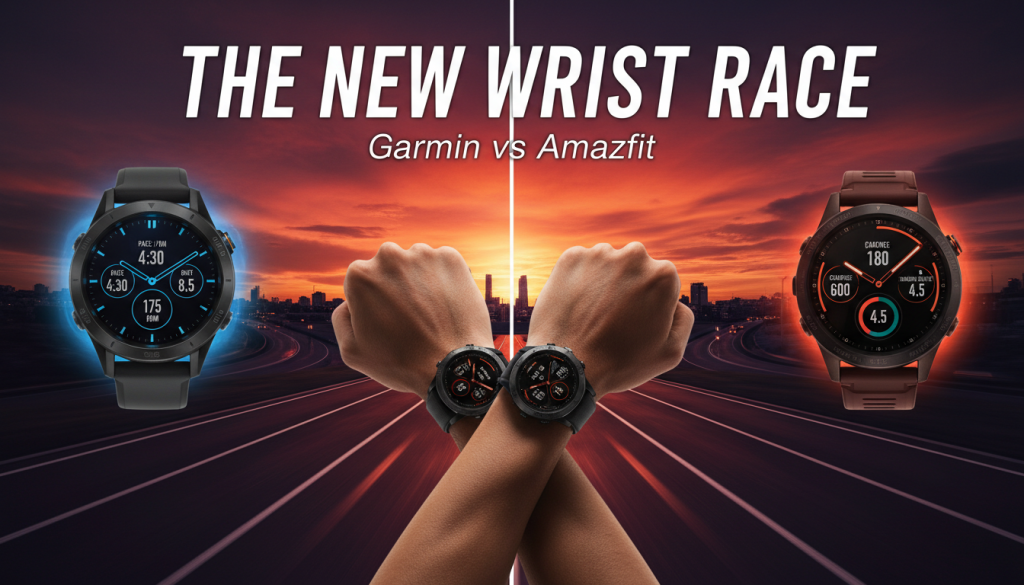
The battle for your wrist is no longer just Garmin vs Apple. With Amazfit charging into the premium space and Apple planting its flag on the London Marathon course, we’re watching a new phase in the Garmin, Amazfit Race Your running‑tech era. This isn’t only about GPS accuracy or battery life anymore—it’s about ecosystems, AI coaching, messaging, and how seamlessly your watch slots into real-world training.
This running news blog pulls together four of the week’s biggest stories and unpacks what they actually mean for your training, racing, and gear decisions.
Table of Contents
- Garmin’s New WhatsApp App: Smarter Wrists for Connected Runners
- Amazfit’s 2026 Push: Taking Direct Aim at Garmin
- Forerunner 970 Long-Term Review: Is Garmin’s Flagship Still Worth It?
- Apple & the London Marathon: Chasing Serious Runners
- The Bigger Picture: Garmin, Amazfit Race Your Routine
- RunV‑Relevant Tips: Matching Tech to Your Training
- Conclusion & Call to Action
Garmin’s New WhatsApp App: Smarter Wrists for Connected Runners
What Garmin Actually Shipped
Garmin just added an official WhatsApp app to its Connect IQ Store, and for many runners this might be the most practical update in months. Compatible Fenix, Forerunner, Venu, and Vivoactive watches can now read full WhatsApp messages and reply directly from the wrist with a built‑in keyboard, reactions, emojis, and quick responses.
In simple terms, Garmin just closed one of the biggest “smartwatch gaps” it had versus Apple Watch and Wear OS devices.
Why This Matters on the Run
For runners, this isn’t about doom‑scrolling mid‑tempo. It’s about control. If you pace long runs by feel, your phone is probably buried in a belt or vest. Previously, you’d see a truncated notification and either ignore it or fumble for your phone.
Now you can:
- Scan a long message on the watch screen without pulling out your phone
- Send a quick “Still running, call you in 20” reply
- React or send an emoji to confirm meet‑ups or logistics
This keeps your run flow intact while still being reachable—especially useful for early‑morning runs, family check‑ins, or safety situations.
Closing the Garmin vs Apple Gap
The strategic angle is clear: in the evolving Garmin, Amazfit Race Your attention, Garmin can’t just be the “serious runner’s watch” while Apple wins everyday usability. WhatsApp support pushes Garmin further into true smartwatch territory without diluting its training focus.
That matters because many runners want one device that can:
- Handle structured intervals and advanced metrics
- Show VO2‑related insights and recovery estimates
- Still feel like a modern connected device for daily life
If you’re choosing your next device, this makes Garmin’s mid‑range and flagship lines more competitive—even if you previously leaned Apple purely for messaging.
RunV Tip: Smart Features vs Training Focus
Don’t let messaging features overshadow training foundations. If you’re targeting a new 5K or 10K PR, pairing a Garmin with a smart plan is still where most gains come from. For short‑to‑mid distance goals, consider a structured plan like the 5K Training Plan With 7 Proven Powerful Run Walk Secrets and treat WhatsApp replies as a bonus, not the main event.
Amazfit’s 2026 Push: Taking Direct Aim at Garmin
Amazfit Steps Into the Premium Ring
Amazfit’s parent company, Zepp Health, used its recent investor update to signal something bold: 2026 won’t just be another year of budget watches. New products like the Active Max, Active 3 Premium, and T‑Rex Ultra 2 are moving into price brackets that, until now, have been Garmin territory—around the $550 mark.
These aren’t just cosmetic upgrades. Amazfit is positioning these models as performance and endurance tools, not just lifestyle wearables.
AI‑Driven Coaching and Recovery: Beyond Raw Metrics
The buzzwords here are AI‑led training tools, advanced recovery insights, and integrated ecosystems. Amazfit’s play is clear: join the Garmin, Amazfit Race Your training brain, not just your GPS chip.
Expected or hinted features include:
- AI‑generated training recommendations based on recent sessions and recovery
- Sleep and HRV‑driven readiness scores
- More detailed pace and effort analysis tailored to race goals
When paired with accessories like the Helio Ring and Helio Strap, Amazfit is building an always‑on picture of stress, recovery, and load that rivals or even exceeds what some Garmin and Apple setups offer—at least on paper.
What This Means for Runners Choosing a Watch
For runners, this is both good and complicated. The Garmin, Amazfit Race Your decision used to be straightforward: Garmin for performance, Amazfit for budget‑friendly basics. Now, if Amazfit delivers stable GPS, strong battery life, and solid training logic, a runner eyeing a Forerunner or Fenix will at least have to compare.
Key decision angles:
- Software maturity: Garmin has years of refinement in metrics like Training Load, Recovery Time, and VO2 Max estimates. Amazfit is catching up, but early AI features can be hit‑or‑miss.
- Battery and reliability: If you race ultras or marathon majors, stability matters as much as features.
- Ecosystem lock‑in: Moving from Garmin to Amazfit (or vice versa) can mean losing years of training history unless you export and manage files carefully.
Where RunV Fits Alongside AI Watches
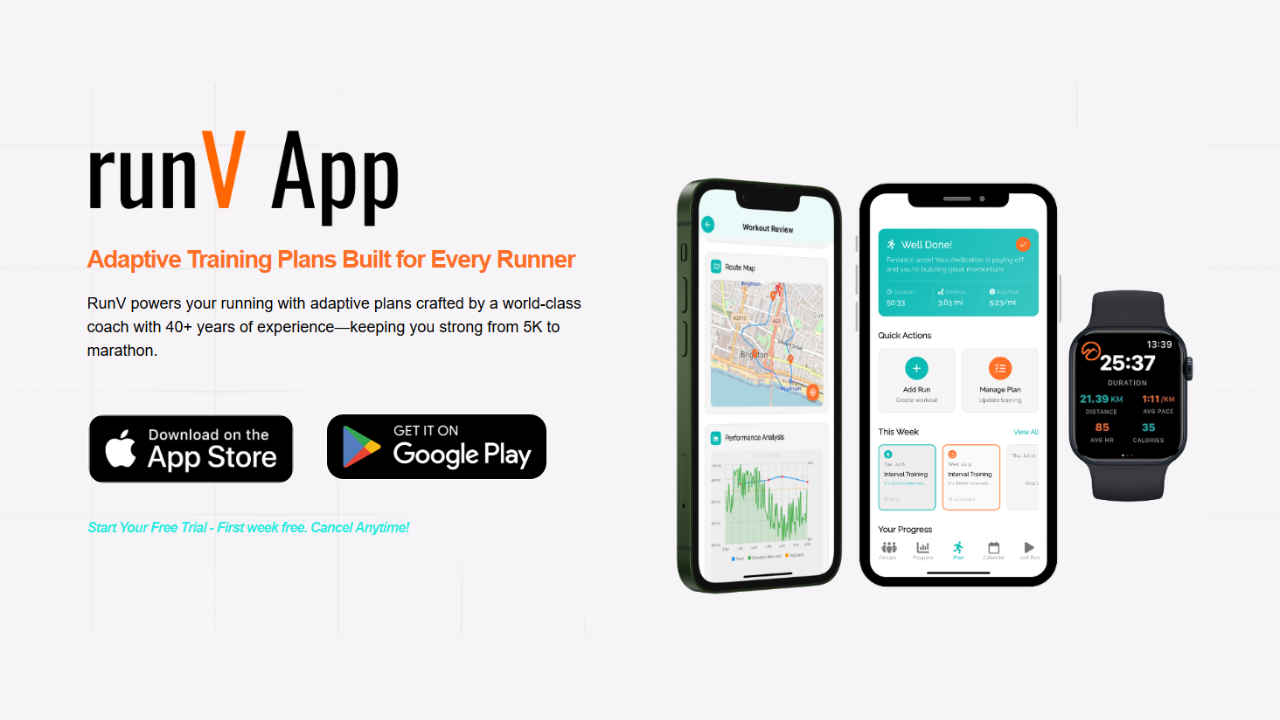
Remember that a watch’s AI suggestions are only one layer. Many runners get better results from pairing wearable data with app‑based adaptive plans that respond to real life: missed days, niggles, and changing goals. If you’re weighing new hardware, also think about your software stack. Tools like RunV and other adaptive frameworks (for example, approaches like those discussed in How Adaptive Running Plans Deliver 7 Proven, Powerful Gains) can often extract more from whatever watch you own today.
In other words, don’t let the Garmin, Amazfit Race Your upgrade cycle distract you from the planning layer that actually shapes performance.
Forerunner 970 Long-Term Review: Is Garmin’s Flagship Still Worth It?
Nine Months In: What TechRadar Found
TechRadar’s long‑term review of the Garmin Forerunner 970 is significant because it cuts through launch‑week hype. After nine months of heavy use, their verdict is that the 970 solidifies its position as a top‑tier running watch—with stronger battery, more refined running tools, and a chassis clearly designed for “serious runners.” (Amazfit vs Garmin running)
The trade‑off, of course, is price. The 970 sits at the high end of Garmin’s running line.
Battery, Durability, and Daily Reality
For marathoners and ultra runners, endurance is as much about your watch as your legs. The Forerunner 970 improves on the 965 with:
- Longer battery life in GPS and mixed modes
- A more robust build that tolerates daily training and adverse weather
- Refined GPS and heart‑rate tracking for complex run environments
Across a real training cycle—peak mileage, tune‑up races, race day—those small gains add up to fewer charging sessions and more trust in your device.
Is the Forerunner 970 Overkill for You?
This is where many runners get caught in the Garmin, Amazfit Race Your spec sheet trap. Ask yourself:
- Do you regularly train more than 5 days per week?
- Do you rely on detailed metrics like performance condition, stamina, or dual‑frequency GPS for city races?
- Are you running marathons, trail ultras, or technical terrain where navigation features matter?
If you answered yes to most, the Forerunner 970 can realistically enhance your training workflow. If you’re building toward your first 5K or 10K, though, a mid‑range Garmin (or even a solid Amazfit) plus a sound training plan will likely deliver 95% of the benefit at a lower price.
Training Impact: Beyond the Hardware Shell
What the TechRadar review indirectly reinforces is that Garmin’s real strength isn’t just build quality—it’s the training engine. Features around VO2 estimates, training load balance, and recovery suggestions can be genuinely helpful when used with context and not blindly followed.
To get full value from a 970, understand the physiology it’s modeling. A useful primer on this side of training is The Role of VO2: 7 Proven Ways to Boost Performance, which explains how VO2‑related concepts inform interval pacing and long‑term fitness gains.
Apple & the London Marathon: Chasing Serious Runners
Apple’s London Marathon Deal: Why It’s a Big Signal
Apple is now an official partner of the 2026 TCS London Marathon, and this isn’t just marketing fluff. The London Marathon is one of the world’s premier races and a key stop in the global majors circuit. When Apple ties the Apple Watch brand to that stage, it’s explicitly saying: “We’re here for serious runners, not just step counters.”
The Ultra 3 already leans this way with dual‑band GPS, a bigger battery, and a dedicated Action Button for laps and splits.
What Runners Can Expect Next
While Apple hasn’t detailed every feature this partnership will spawn, we can make educated guesses:
- Tighter race‑day integrations for tracking, splits, and course data
- Specialized London Marathon watch faces or complications
- Deeper connections between the Workout app and official event apps
This aligns Apple with both newcomers and experienced runners tackling one of the world’s most iconic marathons, placing it firmly in the Garmin, Amazfit Race Your consideration set for both training and racing.
Apple Watch vs Dedicated Running Watches
The obvious tension is still there. Apple Watch is unrivaled for overall smartwatch features and app support, but historically it has lagged behind Garmin in ultra‑distance battery life and granular training metrics.
The Ultra line narrows that gap, but you still need to assess:
- Will your longest race plus warm‑up and post‑race usage fit into the battery envelope?
- Do you care more about smartwatch versatility than multi‑day battery?
- Are you happy living inside the Apple ecosystem for health and training data?
If Apple continues to deepen integrations around majors like London, it will become much harder to dismiss it as a “casual” running watch.
RunV Tip: Apple Watch Setup for Better Training Data
If this news nudges you toward an Apple Watch—especially if you’re eyeing a future London entry—take time to configure training basics properly. Zone accuracy, in particular, is critical. Guides like How to Set Up 5 Powerful Apple Watch Heart Rate Zones can help ensure the data you collect actually informs smarter pacing and recovery decisions.
The Bigger Picture: Garmin, Amazfit Race Your Routine
Three Competing Visions of the Runner’s Wrist
This week’s news paints three distinct visions for your running wrist: (Amazfit vs Garmin value)
- Garmin: Performance‑first with growing smartwatch smarts (WhatsApp, better daily usability).
- Amazfit: Value and rapid innovation, now pushing up into true performance territory with AI‑driven coaching.
- Apple: Lifestyle and ecosystem‑first, now aggressively courting marathoners and structured training.
In short, the Garmin, Amazfit Race Your decision is no longer binary—and Apple has stepped squarely into that race.
Trends That Will Shape Your Next Upgrade
Across all three brands, a few shared trends stand out:
- AI coaching: Personalized workout suggestions based on your data, not generic plans.
- Deeper recovery metrics: HRV, sleep stages, and stress all feeding readiness scores.
- Ecosystem lock‑in: Headphones, rings, straps, and apps increasingly tied to specific brands.
- Communication on-wrist: From simple notifications to full WhatsApp replies, your watch is becoming a true hub.
For runners, these trends can be a blessing—if used with discipline. It’s easy to let constant readiness scores or AI prompts override common sense, or to chase upgrades instead of building consistent training habits.
How to Keep the Focus on Performance, Not Gadgets
Amid the noise of the Garmin, Amazfit Race Your feature wars, anchor your decisions in three questions:
- Does this watch support my next 6–12 months of goals?
- Will I actually use its advanced metrics regularly?
- Does the battery and reliability fit my longest planned events?
If the answer is yes across the board, that device is “good enough,” even if a competitor has one more AI metric or slightly better screen. Training discipline and smart plan design still matter far more than a marginally better VO2 estimate.
RunV‑Relevant Tips: Matching Tech to Your Training
Picking the Right GPS Watch for Your Next Big Goal
If you’re overwhelmed by the Garmin, Amazfit Race Your options, start from your goal, not from the spec sheet. Are you eyeing a first 5K, chasing a marathon PR, or dabbling in trail ultras? Each goal has different watch requirements for battery, navigation, and data depth.
For a clear, practical framework, take a look at How to Pick the Right GPS Watch for Your Next Big Goal. It walks through aligning training needs, event type, and budget with the right feature set—whether that leads you to a Forerunner, an Amazfit T‑Rex Ultra 2, or an Apple Watch Ultra.
Using Your Watch to Support Better Training Structure
Whichever brand wins your personal Garmin, Amazfit Race Your decision, the real gains come from how you use it. A few quick wins:
- Use structured workouts to nail pacing instead of ad‑hoc intervals.
- Review cadence, lap splits, and heart rate post‑run to identify trends.
- Keep an eye on training load, but don’t chase numbers at the expense of rest.
Combining wearables with proven training structure is one of the most reliable ways to avoid injury while improving performance. For guidance on that balance, resources like How Proper Training Structure Cuts Injury Risk: 5 Proven Tips can help you turn data into durable progress.
When (and How) to Upgrade
The news cycle can make it feel like you’re always one update behind in the Garmin, Amazfit Race Your tech chase. Consider upgrading only when:
- Your current watch can’t hold battery through your target race.
- You’re moving into trail or ultra distances that need navigation and mapping.
- You need better reliability in GPS and HR to support advanced training blocks.
Otherwise, focus on squeezing more from what you already own—better zone settings, smarter use of structured workouts, and integrating your watch data with adaptive training tools.
Conclusion & Call to Action
Garmin’s WhatsApp upgrade, Amazfit’s 2026 premium push, Apple’s London Marathon partnership, and the Forerunner 970’s long‑term verdict all point in the same direction: your wrist is becoming the command center of your running life. The Garmin, Amazfit Race Your choices now span deep AI, smart‑device convenience, and pro‑level metrics across multiple brands.
But hardware alone won’t carry you to your next PR. The real edge comes when you combine the right watch with smart, consistent training and tools that adapt to your real world.
If you’re planning a new race goal—whether that’s a first 5K or a major marathon—use this week’s news as a prompt. Audit your current watch, your training structure, and your goals. Then decide: do you need a new device, or a new approach to how you train with the one you already have?
Whichever route you choose, make your next step intentional. Explore structured plans, refine your data setup, and let your watch amplify your training—not distract from it.