
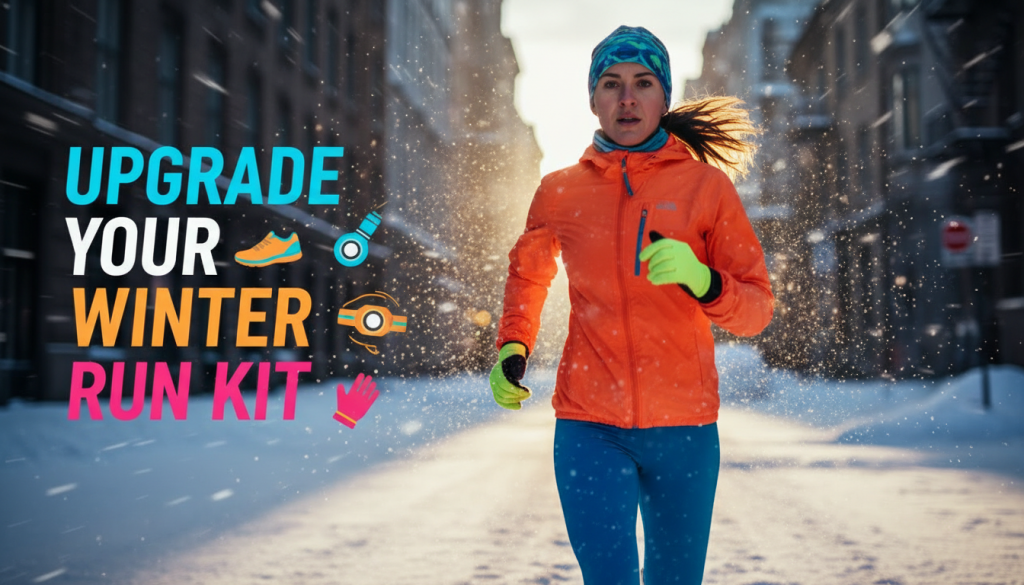
To truly Upgrade Your Winter Right, you don’t need another vague resolution. You need smart gear moves, guided by what’s actually new and on sale this week. From a carbon‑free “super shoe” to rare Hoka discounts and big‑name clearance deals, the last days of December are one of the best times all year to rebuild your winter run kit.
This running news roundup breaks down the five most important equipment stories from December 22–29, 2025—and turns them into practical actions you can take today.
Table of Contents
- Why Winter Is the Perfect Time to Upgrade
- 1. Diadora Atomo Star: Super-Shoe Feel, No Carbon Plate
- 2. Lululemon End-of-Year Sale: Affordable Winter Layers
- 3. Big Multi-Brand Shoe Sales: Asics, Hoka, Brooks & More
- 4. The Only Hoka Deals Worth Your Time
- 5. New Balance 237 “Grandpa Sneakers” for Off-Day Comfort
- How to Build a Smart Winter Shoe & Gear Rotation
- RunV Tips: Match Your Gear to Your Training Goals
- Conclusion: Upgrade Your Winter Right—Starting Today
Why Winter Is the Perfect Time to Upgrade
Winter can quietly sabotage your training: numb hands, soaked socks, slippery roads, and shoes that never fully dry between runs. Or it can be where you Upgrade Your Winter Right and lay the foundation for your best races of 2026.
Right now, brands are clearing inventory and dropping surprise releases. That means you can pair new tech—like Diadora’s carbon‑free “super shoe”—with deep discounts on staples from Asics, Hoka, Brooks, and Lululemon.
The key is to align these news stories with your real‑world needs: tempo days, long runs, recovery walks, and the everyday winter grind.
1. Diadora Atomo Star: Super-Shoe Feel, No Carbon Plate
What’s New
Diadora just launched the Atomo Star, a high‑performance trainer that promises “super‑shoe” energy with zero carbon plate. Instead, it relies on the brand’s DD Anima foam and clever geometry for propulsion.
According to Runner’s World (Dec 23, 2025), the shoe delivers a smooth, lightweight, stable ride, with a structured heel collar designed to support the Achilles and an Italian‑crafted breathable upper.
Why It Matters for Winter
Carbon plates can feel harsh on cold, stiff legs and unforgiving winter asphalt. The Atomo Star offers a way to Upgrade Your Winter Right with race‑adjacent efficiency without the rigidity that sometimes aggravates calves and Achilles.
That structured heel collar is especially relevant in winter, when tight calves and reduced warm‑up times raise Achilles injury risk. Extra support in that area is more than a comfort feature—it’s a durability play.
Who Should Consider the Diadora Atomo Star
- Marathon and half-marathon trainees who want a fast long‑run shoe that isn’t a delicate carbon racer.
- Injury‑prone runners wary of the stiffness and lower stability of many carbon supershoes.
- Daily trainers looking for one do‑it‑all winter shoe that can handle easy runs and uptempo segments.
If you’ve ever wondered whether you really need carbon to get a performance bump, this launch lands in the same conversation as RunV’s deep dive on plated shoes: Do You Really Need a Carbon Plate in Your Running Shoes?. The Atomo Star is a real‑time example of how foams and geometry alone can change the game.
Practical Use: Where This Fits Your Rotation
- Easy & aerobic runs: The cushioned, stable ride makes it a strong winter daily trainer.
- Progression runs & tempos: Lightweight foam and responsive feel give enough pop for faster work.
- Cold race days: If you dislike the twitchy feel of carbon in sub‑freezing temps, this can be your race choice.
To truly Upgrade Your Winter Right, consider pairing a shoe like the Atomo Star with a heavier, traction‑focused model for snowy days and a softer, max‑cushion option for recovery.
2. Lululemon End-of-Year Sale: Affordable Winter Layers
The Big Deals
Lululemon’s end‑of‑year sale, highlighted by Runner’s World on Dec 25, 2025, brings deep discounts on performance gear right when winter feels longest.
Key running picks include:
- Cross Chill Performance Jacket – $129
Weather‑resistant shell for cold, damp runs. - Blissfeel 2 Women’s Running Shoe – $59
Cushioned, supportive everyday road runner. - Reflective socks, joggers, and tights
Added visibility for early‑morning or after‑work miles.
Why This Sale Helps You Upgrade Your Winter Right
Winter comfort is less about one miracle jacket and more about a flexible system you can adapt day by day. Discounted technical gear lets you build that system without blowing your budget.
With prices like these, you can pick up:
- A wind‑blocking outer layer for sub‑freezing days.
- Mid‑weight tights or joggers that work across a broad range of temperatures.
- Highly visible accessories so dark commutes don’t cancel your runs.
How to Prioritize What to Buy
If you’re trying to Upgrade Your Winter Right on a limited budget, rank your must‑haves:
- Weather protection – A jacket like the Cross Chill can be used almost daily.
- Legwear that doesn’t sag or chafe – Tights/joggers with a good waistband and flat seams.
- Visibility – Reflective socks or details so you’re seen from multiple angles.
You can do more with one high‑quality outer layer plus smart base layers than with several mediocre pieces. Use this sale to elevate the one layer you wear most often.
RunV-Style Tip: Match Layers to Session Type
- Easy runs: Slightly warmer kit; you won’t overheat at slow pace.
- Intervals/tempos: Start slightly chilly. Strip a mid‑layer or open the jacket once you’re working.
- Long runs: Prioritize wind and moisture management; pack a light glove/hat in case conditions change.
Think of your winter gear as part of your training plan infrastructure, not a fashion afterthought.
3. Big Multi-Brand Shoe Sales: Asics, Hoka, Brooks & More
What’s On Sale
EatingWell (Dec 25, 2025) reports that major retailers are cutting prices by up to 44% on popular running and walking shoes. Standouts include:
- Asics Gel Kayano 30 – $90 (down from $160)
- Hoka Skyflow – $128
- Brooks Adrenaline GTS 24 – $110
- Various Skechers, New Balance, Reebok, and other daily trainers at budget prices
Why This Matters for Your Winter Rotation
To Upgrade Your Winter Right, you don’t only need high‑octane performance shoes. You need a rotation that protects your legs from cumulative winter fatigue:
- Stable daily trainer: For most of your weekly volume.
- Cushioned recovery shoe: For easy, tired‑leg days.
- More responsive option: For workouts and faster long‑run segments.
The Kayano 30 and Adrenaline GTS 24 both deliver proven stability for overpronators or runners whose form deteriorates when fatigued or layered in heavy winter clothing.
How to Choose Among These Deals
Use your current kit as a guide:
- If your long runs feel beat‑up: Consider a more cushioned stability shoe like Kayano 30.
- If your ankles collapse on snow/ice edges: A guidance shoe like Adrenaline GTS 24 may add support.
- If you lack a light trainer: Something like the Hoka Skyflow can bridge easy and moderate‑pace runs.
New runners building toward a first 5K or 10K can leverage these discounts to secure a reliable primary shoe. If you’re mapping out a structured plan, tools like RunV’s Custom Plan can help you allocate shoe use between easy runs, long runs, and races to extend each pair’s lifespan. (Best winter running gear)
Budget Strategy: One Shoe or Two?
If funds are limited, you can still Upgrade Your Winter Right with one good purchase:
- Single‑shoe solution: Choose a stable, cushioned daily trainer (Kayano, Adrenaline, or Skyflow‑type) that can handle 80–90% of your miles.
- Two‑shoe solution: Pair a sturdy stability model with a lighter, more nimble trainer for faster days.
Buying during these sales means your per‑mile cost plummets—which matters a lot when winter road salt and slush wear shoes faster.
4. The Only Hoka Deals Worth Your Time
Rare Discounts on a Cult-Favorite Brand
Hoka doesn’t often discount its flagship models. That’s why the current wave of deals, covered by Esquire on Dec 23, 2025, is drawing attention. Retailers like Nordstrom and Hoka’s official site are offering limited‑time markdowns on select cushioned trainers.
Inventory is already disappearing in popular sizes, and these deals are unlikely to linger through January.
Why Hoka Matters for Winter Running
Hoka’s trademark max cushioning can be a winter lifesaver. Extra foam dampens the sting of frozen pavement and reduces impact shock when you’re layered in heavy, wet kit.
If you run high mileage or are marathon‑focused, a well‑chosen Hoka can help you Upgrade Your Winter Right by absorbing the accumulation of daily miles when motivation is lowest.
How to Pick the Right Hoka
If you’re unsure where to start, RunV’s breakdown of the brand’s lineup, The Best Hoka Running Shoes in 2025, can help you match arch type, stride, and training needs to specific models.
In general:
- For all‑round daily training: Look for neutral cushioned options that can handle easy to moderate efforts.
- For stability needs: Choose a model with guidance elements if you overpronate or get knee pain late in long runs.
- For speed: Explore the lighter, more responsive shoes that still carry signature cushioning.
Maximizing the Value of a Hoka Deal
Because Hoka shoes are built for comfort and volume, they excel as your primary winter mileage workhorse:
- Use them for long runs, especially on cold, wind‑exposed roads.
- Rotate with a firmer shoe for workouts and strides to keep your legs snappy.
- Reserve older pairs for snowy/slushy days where salt will accelerate wear.
If you’re mapping out a big spring half or full marathon, pairing a cushioned Hoka with a faster trainer can help you Upgrade Your Winter Right by matching shoe feel to specific workouts.
5. New Balance 237 “Grandpa Sneakers” for Off-Day Comfort
The Deal
The New Balance 237—dubbed “grandpa sneakers” for their retro aesthetic—are 30% off on Amazon, according to New York Post coverage from Dec 22, 2025. They sport EVA midsoles, suede uppers, and a classic, easy‑to‑style vibe.
Reviewers highlight that they feel great right out of the box and appeal across age groups.
Why Lifestyle Sneakers Belong in a Runner’s Winter Kit
While not built for PR attempts, the NB 237s can still help you Upgrade Your Winter Right as part of your recovery and everyday rotation.
Winter often means more time on your feet in boots, heavy shoes, or worn‑out casual sneakers. That constant low‑grade stress can compound running fatigue and niggles.
A cushioned, supportive lifestyle shoe gives your feet a break outside of workouts:
- Recovery walks on non‑run days.
- Commuting to and from work or the gym.
- Standing for long periods on cold, hard floors.
How to Use NB 237s Smartly
Don’t treat them as your primary running shoe, but do use them strategically: (REI cold-weather kit)
- Swap worn‑out casual shoes for 237s to reduce plantar, shin, and knee strain.
- Use them for short, easy winter walk‑jogs when transitioning back from injury.
- Make them your default “errand” shoe, so your running shoes can fully dry and decompress.
This is one of the cheapest ways to Upgrade Your Winter Right—by improving the 10–12 waking hours when you’re not actually running.
How to Build a Smart Winter Shoe & Gear Rotation
The 3-Shoe Strategy
Combine the week’s news into a practical rotation to Upgrade Your Winter Right:
- Performance trainer (e.g., Diadora Atomo Star)
For tempos, long‑run segments at pace, and race‑specific workouts. - Max‑cushion or stability workhorse (e.g., Hoka or Kayano/Adrenaline deals)
For easy miles and long runs. - Lifestyle/recovery shoe (e.g., NB 237)
For walking, commuting, and non‑running time.
If your budget allows only two pairs, merge performance and workhorse into one shoe and still keep a distinct casual option for daily wear.
Layering Essentials for Winter Comfort
Alongside the Lululemon sale, remember the basic hierarchy to truly Upgrade Your Winter Right:
- Base layer: Moisture‑wicking, close‑fitting top to keep sweat off your skin.
- Mid layer: Light insulation (fleece or thermal) for very cold days.
- Outer shell: Wind‑ and water‑resistant jacket (like the Cross Chill).
- Bottoms: Tights or joggers with enough stretch and minimal seams.
- Accessories: Hat, gloves, and reflective elements.
Use sales to upgrade one layer in each category over time. Start where your current gear fails first—often gloves, socks, or jackets.
Safety & Visibility in Short Winter Days
Many of these sale items include reflective hits. To truly Upgrade Your Winter Right, think about visibility from multiple angles and distances:
- Front and back reflective elements.
- Flashes at the ankles and wrists, where movement draws driver attention.
- Optional clip‑on lights or headlamps for unlit routes.
Gear isn’t just about comfort; it’s your first line of defense in dark, wet, low‑contrast conditions.
RunV Tips: Match Your Gear to Your Training Goals
Aligning Purchases with Your 2026 Races
Buying what’s on sale is easy. Buying what serves your actual training is how you truly Upgrade Your Winter Right. Start with your race calendar:
- 5K/10K focus: Prioritize a responsive trainer (like the Atomo Star) plus a durable daily shoe.
- Half or full marathon: Emphasize cushioning and stability for long mileage, then add one faster shoe for workouts.
- General fitness: Choose a versatile, stable shoe and comfortable layers you’ll be excited to wear often.
If you’re structuring a serious build toward a 5K, 10K, half, or marathon, take a look at RunV’s All Plans to see how a periodized schedule can guide when to use each shoe—new trainers often feel best when introduced just before a base phase or early in a new cycle.
Use Data to Decide When to Replace Shoes
As you Upgrade Your Winter Right, don’t guess when your old shoes are done. Track:
- Mileage – Most trainers last 300–500 miles, depending on build and runner.
- Wear pattern – Uneven outsole wear, compressed foam, and new aches are red flags.
- Feel – If a run in that shoe suddenly feels flat and harsh compared with another pair, retirement may be close.
Pairing this with GPS and wearables data (like ground contact time or asymmetry metrics) can sharpen your decisions; RunV explores this in pieces such as “Is Your Next Big PR Hiding in Your Watch’s Battery Stats?” and related tech‑focused guides on its Blog.
Protect the Engine: Recovery Matters Too
No gear upgrade will matter if you’re constantly on the edge of injury. Once your shoes and winter kit are dialed in, think about recovery habits:
- Warm, dry clothes immediately after runs.
- Gentle mobility work for calves, hips, and lower back.
- Light, frequent walking in supportive casual shoes on non‑run days.
Combine those habits with the cushioning and stability upgrades highlighted in this week’s news, and you’ll do more than just survive winter—you’ll gain strength from it.
Conclusion: Upgrade Your Winter Right—Starting Today
The past week’s gear news isn’t just noise; it’s a blueprint to Upgrade Your Winter Right while saving money and reducing injury risk.
- Diadora Atomo Star shows you can get super‑shoe‑style energy without carbon.
- Lululemon’s sale lets you grab real winter‑proof layers and visibility gear at a discount.
- Multi‑brand deals on Asics, Hoka, and Brooks help you refresh your primary trainers affordably.
- Rare Hoka discounts make this an ideal moment to invest in max‑cushion comfort.
- NB 237 “grandpa sneakers” give your feet a break outside of run time.
Pick one weak link in your current setup—worn‑down shoes, a leaky jacket, no reflective gear—and upgrade it this week. Then plan how your next pair or layer will support the specific training you’re doing, not just the sales banner you’re seeing.
If you want those purchases to work in sync with a smart training structure, consider pairing your new winter kit with a tailored schedule via a RunV Custom Plan. Align your shoes, layers, and workouts, and you won’t just Upgrade Your Winter Right—you’ll turn it into the strongest starting block for your best year of running yet.