
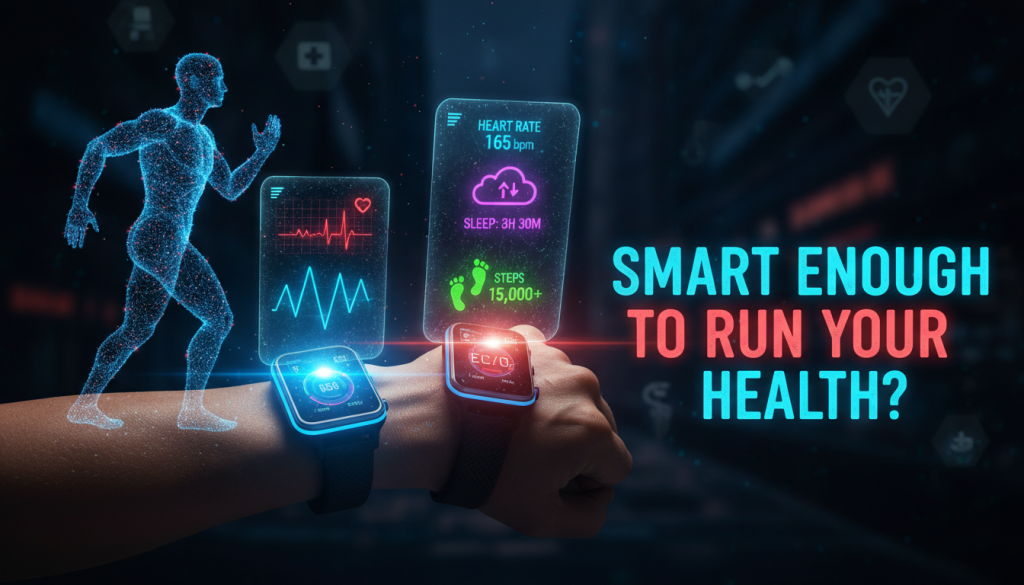
If you’ve ever finished a run and wondered, “Are Your Wearables Finally Smart enough to do more than just log miles?”, this week’s news suggests we’re getting very close. From blood-pressure clues on your wrist to GPS devices that explain exactly where your battery went, the latest crop of running wearables is inching toward being real health partners, not just step counters.
But can you actually trust them with something as serious as your heart, your blood pressure, or your marathon prep? Let’s dig into four big stories runners should care about right now.
Table of Contents
- The Bigger Picture: Are Your Wearables Finally Smart Health Tools?
- Apple Watch Series 11 and Hypertension Alerts
- Garmin Vivoactive 5: Battery Tracking Gets Real
- Garmin Vivoactive 6: Flagship Features at a Budget Price
- Apple Watch Ultra 2: Premium Endurance Watch at a Deep Discount
- How to Choose the Right Wearable for Your Running and Health
- Turning Data into Performance: Training Smarter with Your Watch
- Conclusion and Next Steps
The Bigger Picture: Are Your Wearables Finally Smart Health Tools?
Runners have always been early adopters. We were strapping GPS bricks to our wrists long before steps and sleep became mainstream. Now, though, we’re entering a different era—one where the question is not just, “Can my watch track my run?” but “Are Your Wearables Finally Smart enough to spot trouble before it starts?”
This week’s news shows exactly where the industry is heading:
- Apple pushing into hypertension detection and deeper sleep analytics.
- Garmin surfacing granular battery usage so you can trust your watch on race day.
- Premium-level features sliding into mid-range prices, making serious tools more accessible.
- Ultra-grade hardware getting big discounts as newer models launch.
The bottom line: the hardware is now powerful, but it’s only as “smart” as how you use it. To see if Your Wearables Finally Smart devices are ready to help run your health as well as your training, we’ll break down each story and what it means for your daily miles.
Apple Watch Series 11 and Hypertension Alerts
What’s New: Blood Pressure Clues from Your Wrist
Prevention’s review of the Apple Watch Series 11, published December 27, 2025, dives into Apple’s new hypertension detection feature. Instead of taking direct blood-pressure readings, the watch analyzes optical heart-rate patterns over about 30 days and uses machine learning to flag possible hypertension.
The feature is available not just on Series 11, but also Series 9 and 10, plus Ultra 2 and 3, as long as you’re on watchOS 26 or later.
How the Hypertension Feature Actually Works
This is not a cuff replacement. The watch:
- Collects heart-rate signals continuously during everyday life.
- Looks for patterns associated with elevated blood pressure.
- After enough data, may give you a notification suggesting possible hypertension.
According to Apple’s shared data, it detected about 40% of hypertensive cases overall, and over 50% of stage 2 hypertension. That’s meaningful, but far from perfect. Prevention’s reviewer, who had elevated readings, did not receive an alert—highlighting that Your Wearables Finally Smart watches still miss some real cases.
Why This Matters for Runners
Hypertension is notoriously silent. Many runners assume “I run, so I’m fine.” That’s not always true. For endurance athletes:
- Long-term high blood pressure can damage the heart, even if fitness is good.
- Uncontrolled hypertension can complicate high-intensity sessions or racing.
- Early patterns are hard to catch without frequent measurements.
A wrist-based system that picks up on hypertensive patterns—even if only some of the time—could be the nudge that pushes you to get a proper check-up. In that sense, Your Wearables Finally Smart devices are becoming “early-warning sensors” rather than diagnostic tools.
Limitations You Should Respect
It’s crucial to treat this as a screening hint, not a diagnosis:
- No alert doesn’t mean you’re in the clear. If you have risk factors, still get regular checks.
- An alert should trigger a clinic visit and proper cuff-based measurements.
- Readings can be influenced by irregular heart rhythms, wrist fit, and skin tone.
The takeaway: if you’re ramping up for a big training block—say a Half Marathon cycle—and you see repeated elevated BP readings at home or get an alert, involve your doctor before pushing into heavy intensity.
Sleep Score and Recovery for Runners
The Series 11 also launches a more refined sleep score and upgraded 24-hour battery life. For runners, this matters because:
- Good sleep tracking shows whether that early track session is actually supported by recovery.
- Sleep scores help you see the impact of late-night screens, alcohol, or pre-race nerves.
- Better battery means you can track a full day, a night of sleep, and a long run on one charge.
If you’re following a structured plan or an adaptive system like an AI Dynamic Plan, accurate sleep metrics help decide if you should hit intervals hard or dial them back. Here, Your Wearables Finally Smart algorithms start to act like real-time recovery coaches.
Garmin Vivoactive 5: Battery Tracking Gets Real
Beta Version 16.11: Seeing Where Your Battery Actually Goes
On December 23, 2025, T3 reported that Garmin’s Vivoactive 5 now has a Beta Version 16.11 firmware update. The headline feature is detailed battery usage tracking.
Instead of a vague “X days remaining” figure, you now see how specific functions chew through your battery:
- GPS workouts
- Always-on display
- Notifications
- Music playback
- Background health monitoring
This feature is in beta, so you need to opt into Garmin’s program, but it’s a strong hint of what will likely roll out more widely.
Why Battery Transparency Is a Big Deal for Runners
Anyone who has watched their watch die at mile 18 of a marathon knows that battery estimates can be fantasy. By surfacing granular breakdowns, Garmin is helping Your Wearables Finally Smart power management become something you can trust.
With this feature, you can:
- See exactly how much a one-hour GPS run with music costs you.
- Quantify how much always-on display drains vs raise-to-wake.
- Plan long runs or trail adventures around realistic battery budgets.
This is especially important if you’re moving from 5K/10K racing into longer events, where you might be out for 3–5 hours or more.
Practical Tips: Squeezing More Life from Your GPS Watch
With detailed usage breakdowns, you can create a “race mode” profile:
- Disable non-essential notifications on race day.
- Turn off always-on display for long training runs.
- Use downloaded playlists instead of streaming where possible.
- Keep wrist heart-rate on, but consider disabling continuous stress tracking if needed.
Think of it like dialing in your nutrition strategy: with Your Wearables Finally Smart battery tools, you’re planning power usage as carefully as your gels.
(Use your fitness tracker)
System Stability and Everyday Reliability
Garmin also mentions “system stability improvements.” While less glamorous, this matters. Fewer crashes and glitches mean fewer lost workouts and more consistent data for long-term training analysis.
Stable devices let you trust trends in your resting heart rate, VO2 max estimates, and training load—key metrics when you’re following a serious training block similar to those outlined in All Plans on RunV.
Garmin Vivoactive 6: Flagship Features at a Budget Price
Record-Low Price on a Feature-Packed Watch
Also on December 23, 2025, TechRadar reported that the Garmin Vivoactive 6 has dipped to a new low of $249.99 on Amazon, down from $299.99. This is a key moment if you’ve been on the fence about upgrading.
The Vivoactive 6 brings:
- Long battery life with built-in GPS.
- A bright AMOLED display.
- Extensive health tracking: “Body Battery,” stress, naps, and more.
- Solid running metrics and structured workouts.
At this price, Your Wearables Finally Smart aspirations become more realistic for budget-conscious runners.
Why Vivoactive 6 Is a Strong Runner’s Choice
The Vivoactive line has often been overshadowed by Garmin’s Forerunner and Fenix/Epix families, but for many runners it hits the sweet spot:
- Lightweight and comfortable for daily wear and sleep tracking.
- Enough sports profiles for road, trail, cross-training, and gym work.
- Readiness tools (like Body Battery) that help gauge recovery without overwhelming you.
This is particularly attractive if you’re progressing from casual running to structured training for your first 5K, 10K, or half marathon and want data that supports that jump.
Body Battery, Stress, and Naps: The Recovery Angle
Features like Body Battery analyze heart-rate variability, stress, and sleep to estimate your readiness level. Are Your Wearables Finally Smart enough to tell you when to push or back off? Not perfectly, but they’re getting better at signaling trends:
- Consistently low Body Battery suggests you’re under-recovering.
- High stress values, even on rest days, can reveal life factors affecting training.
- Nap detection can clarify why you feel okay for that evening tempo, even after a short night.
Used alongside a structured training plan and honest self-assessment, these tools can reduce overtraining risk and help you string together more consistent weeks.
Is Now the Time to Buy?
TechRadar notes this deal is unlikely to improve post-Christmas. If you’re currently using a basic tracker or an older GPS watch, this discount makes it much easier to step up to a device that can meaningfully help your training and health.
If you’re serious about hitting a PB in 2026 and following a well-designed program—such as those highlighted in Blog content and coaching resources—pairing that guidance with a mid-range device like the Vivoactive 6 gives you most of what you need without paying flagship prices.
Apple Watch Ultra 2: Premium Endurance Watch at a Deep Discount
Ultra 2 Drops to Its Lowest-Ever Price
On December 24, 2025, TechRadar reported a substantial discount on the Apple Watch Ultra 2—now $549, down from $799, on Amazon. Both the Blue/Black Trail Loop and Indigo Alpine Loop versions are included.
This price cut comes after the release of the Ultra 3, but the Ultra 2 remains a powerhouse for runners and endurance athletes.
Key Features for Runners and Trail Athletes
The Ultra 2 includes:
- Rugged titanium build, water and dust resistance.
- Longer battery life than standard Apple Watches.
- Advanced GPS, including dual-frequency for better accuracy in tough environments.
- Offline maps for navigation on trails and unfamiliar routes.
- Altitude and gradient tracking for hill and mountain training.
On the health side, it offers:
- Blood oxygen monitoring (SpO2).
- Sleep tracking with an improved Sleep Score.
- Sleep breathing analysis that can flag potential issues like apnea risk.
Stacked together, Your Wearables Finally Smart devices like the Ultra 2 can support complex training goals—from mountain ultras to long road marathons.
Ultra vs Series 11: Which Apple Watch Suits Runners Best?
If you’re primarily a road runner with some cross-training, the Series 11 will likely be enough. But consider the Ultra 2 if:
(Useful tracker metrics)
- You regularly run long (3+ hours) and need battery headroom.
- You hit mountains, trails, or cities with poor GPS visibility.
- You want a device that feels more like a dedicated sports watch than a general smartwatch.
The new price closes the gap between mainstream and “pro” devices, making it more realistic for serious runners to choose the tool that best matches their ambitions.
Offline Maps and Safety
Offline maps are a safety and confidence feature as much as a convenience. Getting lost on a long run can turn a great workout into a risky situation, especially on winter trails or in heat.
With offline maps, good battery life, and strong GPS, Your Wearables Finally Smart watches like the Ultra 2 can:
- Keep you on planned routes during key long runs.
- Help you find your way back quickly if you go off course.
- Support exploratory runs without forcing you to constantly check your phone.
How to Choose the Right Wearable for Your Running and Health
Start with Your Primary Goal
Before asking, “Are Your Wearables Finally Smart enough?”, ask what you actually need them to do:
- Health-first runners: Blood-pressure cues, sleep, HR, and stress matter most.
- Performance-first runners: GPS accuracy, training load, and battery top the list.
- Adventure/trail runners: Offline maps, toughness, and elevation features are critical.
Your best device is the one that aligns with your next 6–12 months of training, not just the coolest spec sheet.
Where Each Device Fits
- Apple Watch Series 11: Best for health-conscious runners who live inside the Apple ecosystem and want hypertension alerts plus strong sleep tracking.
- Garmin Vivoactive 5 (with Beta 16.11): Great for runners who want balanced features and care about understanding battery usage for longer efforts.
- Garmin Vivoactive 6: Sweet spot device—rich running and recovery tools at a widely accessible price.
- Apple Watch Ultra 2: Ideal for endurance and trail runners who want rugged hardware plus Apple’s ecosystem benefits at a sharp discount.
Questions to Ask Before You Buy
- How often do I run longer than 90 minutes?
- Do I plan to race marathons or ultras in the next year?
- Is sleep and health tracking as important to me as pace and distance?
- Am I okay charging nightly, or do I want multi-day battery life?
- Which ecosystem (Apple, Garmin) pairs best with the training apps and services I use?
Answering these honestly helps ensure Your Wearables Finally Smart investment pays off, rather than becoming an expensive step counter.
Turning Data into Performance: Training Smarter with Your Watch
Don’t Just Collect Data—Use It
The real turning point isn’t when Your Wearables Finally Smart watches add one more sensor; it’s when you consistently act on the data:
- Use sleep and stress data to adjust intensity, not to obsess.
- Let rest heart rate trends inform when you might be getting sick.
- Compare pace, heart rate, and perceived effort to spot overtraining.
Data is only useful if it changes decisions: moving a hard workout, adding an extra easy day, or scheduling a deload week.
Pair Your Wearable with a Plan
Even the smartest watch can’t replace a solid training structure. The biggest gains happen when:
- You follow a progressive plan built around your current fitness.
- You use wearable data to personalize that plan day-to-day.
- You stay consistent through weeks and months, not just days.
That’s where services that combine coaching logic with live data shine—bridging the gap between a static plan and a truly adaptive system.
Common Pitfalls: When “Smart” Backfires
As devices get smarter, new risks appear:
- Over-reliance on scores: Treat sleep or readiness scores as guidance, not gospel.
- Chasing numbers over feel: Pushing intervals just to hit VO2 max targets can lead to burnout.
- Alert fatigue: Too many notifications can make you tune out the ones that actually matter.
Balance hard science with your own body’s feedback. When in doubt, a simple, honest check-in—“How do I feel today?”—should still lead.
Conclusion and Next Steps
This week’s wave of updates and discounts shows one thing clearly: the era where Your Wearables Finally Smart devices truly influence both your health and your performance is here—if you use them wisely.
From Apple’s hypertension detection and richer sleep scoring to Garmin’s battery transparency and value-packed Vivoactive 6 pricing, plus the Ultra 2’s big discount, runners have more power on their wrists than ever before.
Your next step:
- Decide your top priority—health insight, performance data, or endurance features.
- Pick the wearable that fits that priority and your budget.
- Commit to a structured training plan and let your device refine, not dictate, your choices.
If you’re ready to turn your watch from a passive tracker into a true training partner, start by aligning it with a clear plan and consistent habits—then let today’s smarter tools help you run healthier, faster, and longer in 2026 and beyond.

One Response