
If you’re serious about elevating your training, the Best Running Apps 2025: list looks very different from what it did just a few years ago. AI coaching, real‑time fatigue tracking, adaptive training plans, and deeply social features are transforming how runners train, recover, and race. Whether you’re chasing your first 5K or a marathon PR, the right app can feel like having a coach, data scientist, and running buddy in your pocket.
This guide breaks down the 9 essential, proven running apps you should consider in 2025—and which one is right for your goals, personality, and budget.
—
Table of Contents
- Why Running Apps Matter More Than Ever in 2025
- How to Choose the Right Running App
- Best Running Apps 2025: 9 Essential, Proven Picks
- 1. RunV – AI‑Smart Coaching and Consistency First
- 2. Strava – Social Running Powerhouse
- 3. Garmin Connect – Data Nerd’s Dream
- 4. Nike Run Club – Beginner‑Friendly and Motivating
- 5. Runkeeper – Simple, Reliable, Goal‑Driven
- 6. COROS Training Hub – Performance and Durability Focus
- 7. MapMyRun – Route Discovery and Cross‑Training
- 8. Zombies, Run! – Gamified Running for Fun and Consistency
- 9. Intervals Pro (and Similar) – Interval Training Done Right
- Best Running Apps 2025: Match the App to Your Goal
- Key Features to Look for in 2025 Apps
- How to Combine Multiple Running Apps Without Chaos
- Common Mistakes Runners Make with Apps
- Final Thoughts: Build a System, Not Just a Screen
—
Why Running Apps Matter More Than Ever in 2025
Running apps used to be glorified stopwatches with GPS. In 2025, they’re full ecosystems: training planning, recovery guidance, social accountability, and deep performance analytics. Many now use AI to adapt your training based on sleep, heart rate, training load, and daily life stress.
Used correctly, the Best Running Apps 2025: can help you:
- Stay consistent week after week
- Progress training loads safely instead of guessing
- Get pacing support for races and key workouts
- Coordinate strength, mobility, and recovery days
- Connect with a community so you don’t train alone
The key is choosing an app that matches your goals and then actually following the plan.
—
How to Choose the Right Running App
Before jumping into the list, get clear on what you actually need. The “best” app is only best if it fits your situation. Ask yourself:
- Primary goal: First 5K? Half marathon PR? General fitness?
- Experience level: Total beginner, experienced, or advanced racer?
- Tech preference: Do you love data or prefer simple and clean?
- Budget: Free only, or happy to pay for real coaching value?
- Gear ecosystem: Garmin, COROS, Apple Watch, or phone‑only?
As we go through the Best Running Apps 2025: list, notice which apps line up with those answers.
—
Best Running Apps 2025: 9 Essential, Proven Picks
Below are 9 apps that stand out in 2025 for delivering real-world results for runners, not just shiny features.
—
1. RunV – AI‑Smart Coaching and Consistency First
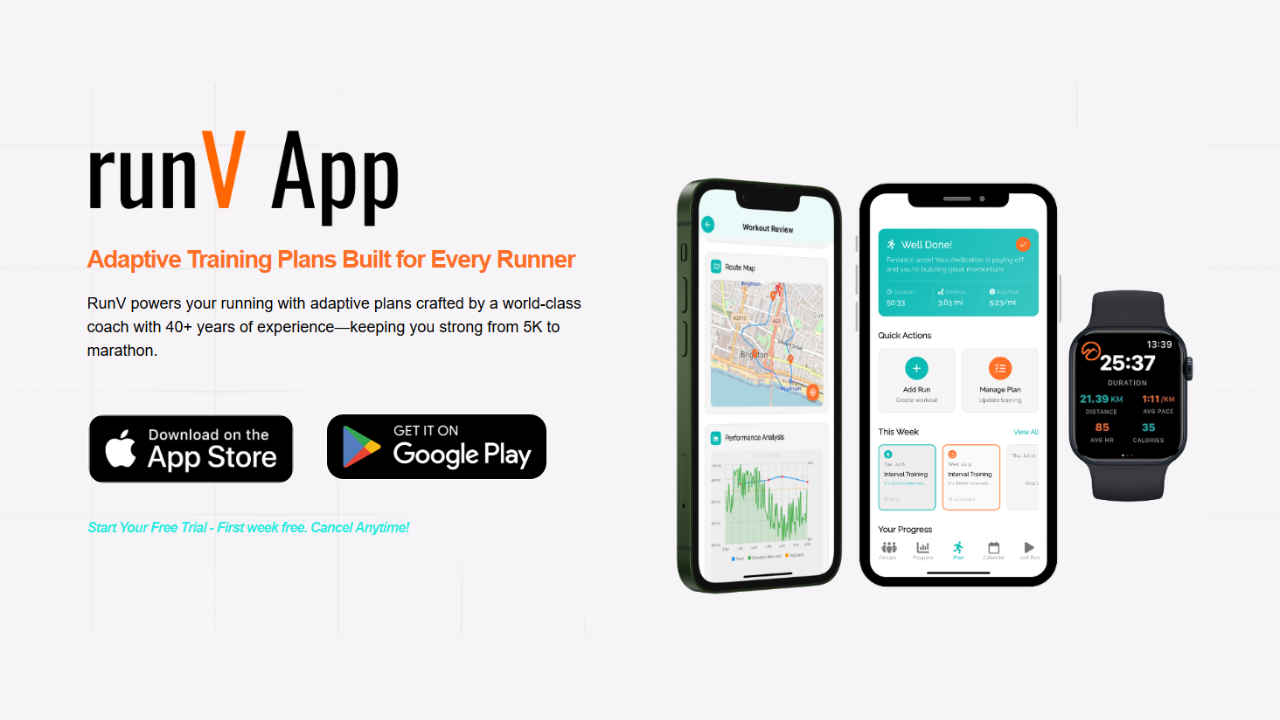
RunV is one of the most interesting entries among the Best Running Apps 2025: it doesn’t just track what you’ve done; it actively helps you decide what to do next. The emphasis is on consistency, smart progression, and protecting you from classic overtraining mistakes.
Best for: Busy runners who want an adaptive plan that fits life, beginners who want guardrails, and intermediate runners chasing steady PRs.
Standout features:
- AI‑driven training plans that adjust to your schedule and fatigue
- Consistent progression focus rather than “hero workouts”
- Integration with watches and phones for easy tracking
- Clear explanations of why each workout is prescribed
A lot of runners struggle not with motivation, but with training too hard, too fast. Apps like RunV shine by structuring the right mix of easy, steady, and hard days. Pairing this kind of system with proven consistency strategies can multiply your results; for a deeper dive, see Running Consistency Strategies for 7 Powerful, Proven Wins.
Who will love it:
- New racers preparing for a first 5K or half marathon
- Time‑crunched runners balancing work, family, and training
- Anyone who’s been burned by overuse injuries and wants structure
—
2. Strava – Social Running Powerhouse
Strava remains the king of social running. It’s less a training app and more a global hub for workouts, segments, and community. In 2025, Strava continues to refine its route building, group features, and training dashboards.
Best for: Runners who love community, competition, and sharing workouts.
Standout features:
- Segments, KOM/QOM, and local leaderboards
- Clubs and events to join real‑world and virtual communities
- Training dashboards showing weekly and monthly stats
- Route discovery based on popular local runs
Strava is great as a layer on top of other apps. For example, you might do your structured plan in a coaching app and still upload everything to Strava for social feedback and tracking.
It’s also useful to understand how different platforms compare for new runners; if you’re weighing options, check out comparisons like RunV vs Strava for 7 Powerful, Proven Beginner Wins to see where each shines.
—
3. Garmin Connect – Data Nerd’s Dream
For runners with a Garmin watch, Garmin Connect is the backbone of your training ecosystem. It seamlessly pulls in GPS, pace, HR, HRV, training load, and recovery metrics to give you a detailed training picture.
Best for: Data‑oriented runners and anyone who already owns a Garmin device.
Standout features:
- Training load and training status metrics
- Daily suggested workouts based on recovery and goals
- Sleep, stress, and HRV tracking to guide rest
- Custom workouts and training plans synced to your watch
Understanding training load is crucial to avoid injury and burnout. Garmin’s metrics can be powerful—but only if you know how to interpret them. If you’re leaning heavily on Garmin’s ecosystem, it’s worth reading Garmin Training Load Explained: 7 Essential Proven Tips so the numbers help instead of confuse you.
Who will love it:
- Intermediate and advanced runners chasing long-term progression
- Tech‑savvy runners who enjoy analysis and trend tracking
- Marathoners seeking insight into fatigue and readiness
—
4. Nike Run Club – Beginner‑Friendly and Motivating
Nike Run Club (NRC) keeps its place on the Best Running Apps 2025: list by combining high production value, approachable coaching, and a friendly interface. It’s especially strong for newer runners who want guidance and motivation without complexity.
Best for: New runners and casual runners who want motivation and simple structure.
Standout features:
- Guided audio runs with coaches and pro athletes
- Simple, clear training plans for various distances
- Badges, achievements, and streak tracking
- Good Apple Watch integration
NRC doesn’t overwhelm you with data. Instead, you get enough metrics to understand progress while focusing mainly on completing runs and building habits. If you’re just getting off the couch or returning after a long break, that simplicity can be a huge advantage.
—
5. Runkeeper – Simple, Reliable, Goal‑Driven
Runkeeper has quietly remained one of the most dependable running apps for over a decade. In 2025, it’s still an excellent option for runners who want goals, not gadgets.
Best for: Runners who want clean tracking and straightforward training plans.
Standout features:
- Goal‑based plans (distance, time, race goals)
- Clear audio cues and pace feedback during runs
- Simple interface with minimal clutter
- Route tracking and basic social features
Runkeeper is ideal if you want the structure of a plan without diving into advanced metrics or AI coaching. It’s also a strong choice if you prefer to carry just your phone rather than relying on a watch.
—
6. COROS Training Hub – Performance and Durability Focus
COROS is known for long‑battery, performance‑oriented watches. The COROS Training Hub app pulls all that data together into a clean, performance‑driven interface.
Best for: Trail and ultra runners, and performance‑focused road runners using COROS watches.
Standout features:
- Excellent battery‑friendly GPS integration with watches
- Clear breakdown of training load, fitness, and fatigue
- Structured workouts and strength training library
- Long‑term progression and race readiness indicators
If you often run long, off‑road, or in races where battery life is critical, COROS plus its app ecosystem is hard to beat. It’s less social than Strava, but more focused on the training science side.
—
7. MapMyRun – Route Discovery and Cross‑Training
MapMyRun, part of Under Armour’s suite, is still a useful tool in 2025 for runners who care about exploring routes and integrating cross‑training.
Best for: Runners who like discovering new routes and mixing activities.
Standout features:
- Extensive route library and route creation tools
- Integration with other Under Armour apps and wearables
- Workout logging across multiple sports
- Basic challenges and community features
MapMyRun is particularly handy if you travel often, run in new cities, or get bored with repeating the same loops. It’s weaker as a dedicated coaching app but strong for mapping and variety.
—
8. Zombies, Run! – Gamified Running for Fun and Consistency
Zombies, Run! earns a place on any honest Best Running Apps 2025: guide because fun keeps people consistent. It turns your runs into story‑driven missions where you collect supplies and escape zombies via audio drama.
Best for: Runners who struggle with motivation or get bored easily.
Standout features:
- Immersive story episodes that play between your music tracks
- GPS or treadmill modes so you can “play” anywhere
- Base‑building structure over multiple seasons
- Great for C25K and gradual habit building
While it doesn’t offer sophisticated training load metrics or AI, it massively boosts adherence for some people. If you’re someone who runs better with a narrative or game, this could be your secret weapon.
—
9. Intervals Pro (and Similar) – Interval Training Done Right
Intervals Pro and similar interval‑focused apps are unsung heroes. They don’t try to be full ecosystems, but they’re outstanding for structured speedwork, tempo runs, and race‑specific sessions.
Best for: Runners who already have a training plan and need precise interval execution.
Standout features:
- Highly customizable interval sets and repeats
- Voice and haptic cues so you can ignore your screen
- Works with GPS, treadmill, or track
- Integrates well with many watches and phones
If you’re training for a PR, you’ll eventually need focused interval work and race‑paced efforts. A dedicated interval app frees you from staring at your watch every few seconds, which can make these sessions smoother and more effective.
—
Best Running Apps 2025: Match the App to Your Goal
Now that you’ve seen the 9 essential apps, the next step is matching the right tool to your specific goal. Here’s a practical breakdown.
Goal: Start Running and Stick With It
You want habits, not PRs (yet). Focus on simplicity and motivation.
Top picks:
- RunV – for gentle, adaptive progression and consistency focus
- Nike Run Club – for friendly audio guidance and low friction
- Zombies, Run! – if fun and story will keep you coming back
Pairing a beginner‑friendly app with a clear pacing and effort strategy makes early runs less intimidating. Learning basic race pacing skills early can pay off later; for example, see how pacing is broken down in 5K Race Pacing Strategy: 7 Proven Tips for Powerful Starts and adapt those ideas to your training runs.
Goal: Run Your First 5K or 10K
You need structure, a ramp‑up in mileage, and some light speedwork near the end.
Top picks:
- RunV – for an AI‑guided plan that fits your schedule
- Runkeeper – for straightforward distance‑goal programs
- Nike Run Club – for free, well‑designed beginner plans
Supplement with an interval app if your main app’s workouts are too generic. Just be careful not to add too much intensity too quickly.
Goal: Half Marathon or Marathon
Longer races demand smarter progression, recovery planning, and respect for fatigue.
Top picks:
- RunV – to adapt long runs and weekly volume to your life stress
- Garmin Connect – for training load and readiness insights
- COROS Training Hub – if you’re in the COROS ecosystem
Choosing or customizing a half marathon plan is a distinct challenge. For guidance on building or adjusting a plan intelligently, see Half Marathon Training Plan: 7 Proven Ways to Bounce Back, which covers common pitfalls and smart adjustments.
Goal: PR at 5K, 10K, or Half Marathon
You need more than just “run more.” Here, high‑quality sessions and recovery management are crucial.
Top picks:
- Garmin Connect or COROS Hub – to monitor training load and recovery
- RunV – for adaptive workouts when life interferes with your plan
- Intervals Pro – to execute intervals and tempo runs precisely
If you race multiple times per year, consider using one app as your base planner and another for session execution. For example, plan via Garmin or RunV, then run intervals via Intervals Pro.
Goal: Trail, Ultra, or Adventure Running
Safety, battery life, elevation, and fatigue tracking matter more here.
Top picks:
- COROS Training Hub – for battery efficiency and trail‑friendly metrics
- Garmin Connect – especially if using trail or ultra‑focused devices
- MapMyRun – to discover new routes when traveling
In ultra training, managing fatigue across weeks is as important as any single workout. Choose an app that helps you monitor trends, not just single sessions.
—
Key Features to Look for in 2025 Apps
As you evaluate the Best Running Apps 2025:, focus less on flashy marketing and more on whether features support sustainable, effective training.
1. Adaptive or Dynamic Training Plans
Static plans ignore the reality of modern life. Look for apps that:
- Adjust when you miss days
- React to illness, fatigue, or surprise travel
- Shift workouts around your key long runs or races
This can be full AI adaptation (like in some coaching apps) or rule‑based adjustments. Either is better than rigid calendars that assume perfection.
2. Clear Recovery Guidance
More isn’t always better. Strong apps now help answer “Should I push today?” by using:
- Training load trends
- Sleep and HRV (when available)
- Self‑reported fatigue and soreness
Look for language that encourages rest and easy days when needed. Apps that constantly push intensity can be counterproductive.
3. Intuitive Data, Not Just More Data
Good apps translate data into actionable guidance. Examples:
- “You’re ramping up faster than usual—consider repeating this week.”
- “Your easy run pace is dropping at the same HR—fitness is improving.”
- “Back‑to‑back hard days detected—insert an easy day here.”
Walls of charts are useless if you don’t know what to do differently tomorrow.
4. Execution Support During Runs
Prettiest plans in the world won’t help if you can’t execute on the road. Helpful features include:
- Audio cues for pace, heart rate zone, and intervals
- Vibration alerts so you don’t stare at your watch
- Simplified displays for key workouts (e.g., lap pace, distance)
Apps that make workouts easier to follow tend to produce better, safer adaptations.
5. Community and Accountability
Not everyone needs a massive social feed, but most runners benefit from some accountability:
- Small groups or clubs
- Coach or peer comments on key workouts
- Friendly challenges or streaks
Choose the level of social engagement that motivates you without pressuring you into overdoing it.
—
How to Combine Multiple Running Apps Without Chaos
Many runners use more than one app. That’s fine—if you define clear roles.
Step 1: Pick One “Source of Truth”
Choose one app to be your primary planner. This is where your weekly structure and long‑term plan live. For example:
- RunV or Garmin Connect as your planner
- Strava as your social and logging platform
Avoid following conflicting plans from multiple apps at once.
Step 2: Assign Each App a Job
Some example roles:
- Planner: RunV or Garmin Connect
- Social: Strava
- Interval executor: Intervals Pro
- Route discovery: MapMyRun or Strava routes
When an app tries to “recommend” extra workouts beyond your main plan, ignore them unless you adjust the schedule intentionally.
Step 3: Reduce Double Notifications and Conflicts
Turn off non‑essential notifications in secondary apps. Give yourself one main place to check for “what do I run today?” That reduces stress and decision fatigue.
—
Common Mistakes Runners Make with Apps
Even with the Best Running Apps 2025:, it’s possible to sabotage your own progress. Watch for these traps.
1. Treating Every Recommendation as a Command
Apps don’t know everything about your life. If you:
- Slept terribly
- Are stressed or getting sick
- Have unusual soreness or pain
It’s okay to override the plan. The best “feature” you have is self‑awareness. Let apps inform your decisions, not dictate them blindly.
2. Chasing Data Instead of Progress
You can get addicted to:
- VO2max estimates
- Training load scores
- Leaderboards and segments
These are useful context but not the main goal. Your real metrics are consistent weeks, enjoyable runs, and sustainable progress without recurring injury.
3. Mismanaging Mileage Increases
Apps sometimes allow you to ramp up volume quickly. That doesn’t mean you should. Too‑fast mileage increases are behind many overuse injuries. Be conservative, especially after time off.
If you’re prone to doing “too much too soon,” it’s worth studying common pitfalls around mileage to protect yourself in advance, such as those highlighted in Running Mileage Progression Mistakes: 7 Shocking Proven Risks.
4. Using Race Paces in Every Training Run
Some apps overemphasize faster sessions. Remember:
- Most training should be easy or steady, not hard
- Easy days build your base and let you absorb workouts
- Race‑pace work is a small, strategic portion of your week
If your app’s plan feels too intense, don’t hesitate to slow easy runs or swap sessions.
5. Ignoring Strength and Recovery
Many running apps are run‑only. That’s a limitation, not a feature. You still need:
- 2–3 short strength sessions per week (especially core and hips)
- At least one real rest or very easy day each week
- Sleep and nutrition that support training
Even if your app doesn’t emphasize these, treat them as non‑negotiable.
—
Final Thoughts: Build a System, Not Just a Screen
The Best Running Apps 2025: aren’t magic. They’re tools—powerful ones, but still tools. What actually delivers results is the system you build around them:
- A realistic weekly schedule that fits your life
- Progressive training that respects rest and recovery
- Clear race or fitness goals
- Willingness to adjust when your body gives feedback
Choose one main app as your foundation—whether that’s an AI‑powered coach like RunV, a data hub like Garmin Connect, or a motivation‑first app like Nike Run Club. Then, selectively add supporting apps for intervals, routes, or social accountability.
Most importantly, keep coming back. Apps can nudge you, guide you, and sometimes save you from yourself—but consistency is still your superpower.