
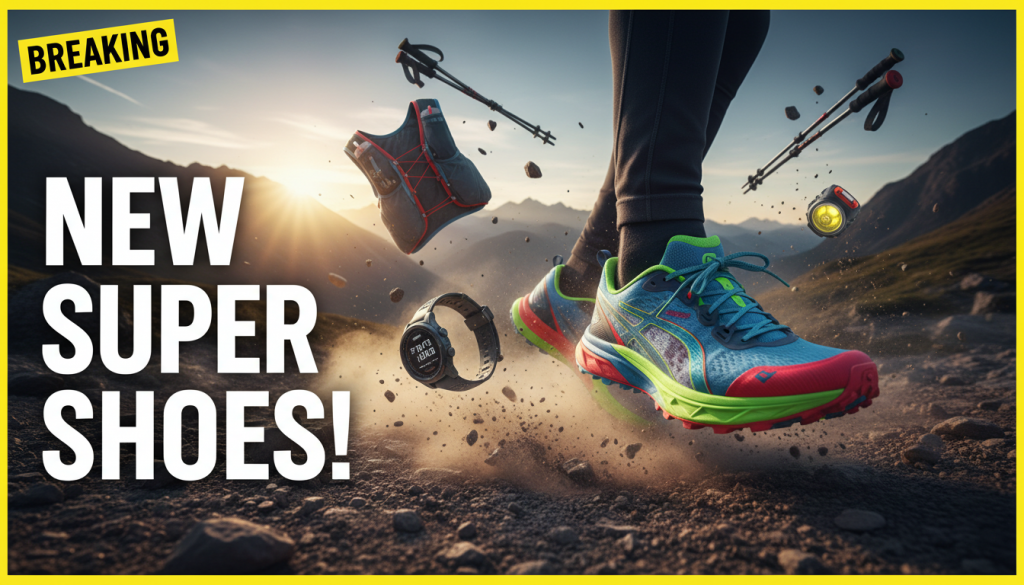
Breaking: Super Shoes Trail gear is reshaping how we train, race, and even dress between runs. In just a few days, brands have dropped heritage trail icons, futuristic race prototypes, inclusive performance models, and hot‑weather trail collabs—all while pushing foam tech and design in bold new directions.
This running news blog pulls together the five biggest equipment stories of the week and explains what they mean for your training, your race-day strategy, and your gear budget.
Table of Contents
- 1. Brooks Cascadia 1: The Godfather of Trail Goes Gorpcore
- 2. Nike’s Prototype Racers: A Glimpse into the Next Super Shoe Wave
- 3. ASICS SUPERBLAST 3: Daily-Training Super Shoe with FF LEAP™ Foam
- 4. Nomadix × Brooks Ghost Trail & Warm‑Weather Kit
- 5. Adidas “Adaptive”: Performance Running for Adaptive Athletes
- 6. How to Choose Between These New Options
- 7. Conclusion & Next Steps
1. Brooks Cascadia 1: The Godfather of Trail Goes Gorpcore
From 2004 trail workhorse to 2026 lifestyle weapon
The Brooks Cascadia name is iconic in trail running. The original Cascadia 1 launched in 2004, helping define what a true trail shoe should be: stable, protective, and tough enough to survive years of abuse.
In 2026, Brooks is riding the “Breaking: Super Shoes Trail” wave in a very different way. Instead of a carbon plate or space‑age stack height, they’re reviving the Cascadia 1 with a modern design spin aimed squarely at the gorpcore trend.
What’s new on the refreshed Cascadia 1
According to Gear Patrol’s May 4 coverage, the new Cascadia 1 is a lifestyle/trail hybrid. It keeps the essence of the OG model, but adds modern tech and styling upgrades that matter to today’s runners and outdoor walkers.
- Updated foam: A modernized midsole for a smoother ride and better underfoot comfort.
- Protective rock shield: True trail DNA—perfect for rocky singletrack, light scrambling, or gravel paths.
- Rugged outsole: Enough traction for real dirt, but not so aggressive that it feels overkill on pavement.
- Gorpcore aesthetics: Bold, outdoorsy color blocking that works as well with jeans as with a hydration vest.
Why this matters for trail runners and commuters
Most runners don’t live at the trailhead. You probably spend part of your week on city sidewalks or commuting, and only some days on dirt. A shoe like the revived Cascadia 1 bridges that gap.
It’s robust enough for weekend trail loops, but stylish and comfortable enough for daily wear. That can reduce the number of pairs you need, and makes it easier to sneak in “bonus” miles when you’re already out and about.
RunV tips: Who should consider the new Cascadia 1?
- Urban trail dabblers: If you mix city routes with park paths or mellow trails, one hybrid shoe simplifies your rotation.
- Run‑commuters: The rock shield protects your feet if your commute includes stairs, rough paths, or broken sidewalks.
- Fashion‑conscious runners: Fans of retro‑inspired trainers should also read Breaking: Retro-Style Running Shoes Are Dominating 2026 for broader context on this trend.
Think of the Cascadia 1 as your all‑terrain daily driver, not your max‑stack race rocket. It’s a different branch of the Breaking: Super Shoes Trail story—one where heritage and utility take the lead.
2. Nike’s Prototype Racers: A Glimpse into the Next Super Shoe Wave
Prototypes you can actually race in
Nike’s April 24 newsroom feature, updated April 27, teased the “future of race innovation” with World Athletics–approved prototype racing shoes. These aren’t hidden lab experiments; they’re on the feet of elites like Degitu Azimeraw and Jacob Kiplimo at major marathons.
For the Breaking: Super Shoes Trail narrative, this is the pure “super shoe” end of the spectrum—stacked foams, aggressive rockers, and plates aimed at shaving seconds off personal bests.
Key themes behind Nike’s next race models
Nike isn’t giving full spec sheets yet, but based on visuals and context, several themes are clear:
- Maxed‑out legal stack heights: Expect midsoles tuned right to the World Athletics limit for maximum energy return.
- Refined plate geometry: Likely tweaked carbon plates for smoother transitions and less calf fatigue over 42.2 km.
- Targeted stability hits: Subtle changes in midsole sidewalls and outsole rubber to keep high stacks feeling controlled.
- Broader testing pool: Not only elite pros, but “everyday racers” are being brought into prototype testing to capture more realistic data.
Why this matters to your racing plans
Next‑gen Nike prototypes help define what other brands will chase in 2027 and beyond. If you race marathons or half marathons, their direction hints at what you’ll soon see across the market:
- More specialized race shoes: Separate builds for 5K/10K vs. half/full marathon.
- Even lighter uppers: “Barely there” mesh to keep the focus on the midsole system.
- Data‑driven refinement: Feedback collected across thousands of runners to fine‑tune performance.
RunV tips: Training smart for super shoes
Super shoes can help, but they’re not magic. You still need a structured plan that manages fatigue and adapts to your training load. Resources like the AI Dynamic Plan concept show how adaptive scheduling can match your recovery and make the most of high‑performance gear.
If you’re targeting a big race in 2026–27:
- Use super shoes mainly for race‑pace workouts and race day.
- Do most daily mileage in stable trainers to reduce injury risk.
- Introduce new race models gradually to let your calves and feet adapt.
Nike’s prototypes don’t just signal faster times; they raise the bar for what the entire category of Breaking: Super Shoes Trail footwear must deliver.
3. ASICS SUPERBLAST 3: Daily-Training Super Shoe with FF LEAP™ Foam
A “super‑trainer” for everyday miles
While pure race shoes grab the headlines, the real revolution for many runners is happening in “super‑trainers”—high‑stack, highly cushioned shoes designed for daily use.
ASICS’ SUPERBLAST 3, officially launched globally from March 1, 2026 and announced February 13, fits squarely into this category. It’s designed to bring super‑shoe energy into your regular runs, not just race day.
What’s special about FF LEAP™ foam?
ASICS describes FF LEAP™ as its lightest, most energetic midsole foam yet. In practical terms, expect the following:
- Higher energy return: A pronounced “bounce” at toe‑off, especially noticeable at tempo pace.
- Reduced weight: Around 10 g lighter than the SUPERBLAST 2, trimming fatigue on long runs.
- Trampoline pod redesign: Underfoot geometry tuned for more dynamic rebound with each step.
Unlike some race‑only foams that feel twitchy, FF LEAP™ aims to balance responsiveness with enough stability for mixed‑pace sessions. (Super shoes on trails)
Where SUPERBLAST 3 fits in your rotation
The SUPERBLAST 3 is an excellent “bridge” model in the Breaking: Super Shoes Trail ecosystem, sitting between a traditional neutral trainer and a plated race shoe.
- Daily mileage: Its cushioning makes it a strong choice for easy runs and long runs.
- Steady‑state and tempo: The trampoline pod and light weight help you lock into moderate to fast paces.
- Non‑plated speed work: Ideal for athletes who find plates too aggressive but still want a fast feel.
RunV tips: Pairing SUPERBLAST 3 with your training goals
For runners building toward a half or full marathon, SUPERBLAST 3 can handle a huge chunk of your weekly volume. To get the most from it:
- Use it for back‑to‑back workout days where extra cushioning helps protect your legs.
- Alternate with a firmer shoe to maintain foot strength and proprioception.
- Watch your overall volume—comfy cushioning can tempt you to overdo mileage.
To round out your approach beyond the shoes themselves, combine gear choices with form and strength work. Guides on topics like Common Running Form Mistakes: 7 Essential, Proven Fixes can help you translate super‑shoe tech into real performance gains.
4. Nomadix × Brooks Ghost Trail & Warm‑Weather Kit
A trail‑ready Ghost built for heat
On April 6, 2026, Nomadix and Brooks launched a seven‑piece capsule centered around the Ghost Trail—a trail‑adapted version of Brooks’ best‑selling Ghost road shoe. Announced March 31 by the Outdoor Industry Association, this collab speaks directly to runners facing rising temperatures and longer summers.
The Ghost Trail is positioned as a softer, approachable option in the Breaking: Super Shoes Trail universe—less about insane foam and more about real‑world versatility.
Ghost Trail: What’s been changed for dirt
Built off the familiar Ghost platform, the Ghost Trail adds trail‑specific tweaks:
- Trail‑ready outsole: Beefed‑up lugs for dirt, gravel, and forest paths.
- Durable upper materials: Tougher overlays to handle abrasion from roots and rocks.
- Outdoor‑inspired palettes: Earthy, adventure‑oriented colorways that stand out from standard road shoes.
This isn’t a hardcore mountain racer. It’s a gateway trail shoe for road runners looking to branch out.
Nomadix accessories: Heat management and post‑run practicality
The capsule’s real innovation might be in the accessories. Designed specifically with hot‑weather runners in mind, it includes:
- Bandana towels: Lightweight, packable towels you can drape around your neck or tuck into a vest.
- Ice bandanas: Products meant to be soaked and chilled to lower skin temperature during long, hot efforts.
- Car‑seat cover towels: A simple but smart idea—protecting your car from sweat and trail dirt post‑run.
In an era of more frequent heat waves, these are not gimmicks. They speak directly to safety and comfort on the trail.
RunV tips: Running strong in the heat
For trail and outdoor runners, temperature management is as important as footwear. Consider:
- Starting long runs earlier and using ice bandanas on exposed routes.
- Carrying a bandana towel to wipe sweat and sunscreen from your eyes.
- Cutting pace by 5–15% in extreme heat to avoid overheating.
Pair smart gear with smart training choices. Resources like the How to Build Endurance: 7 Proven, Powerful Beginner Tips framework can help newer trail runners increase volume safely while accounting for weather stress.
5. Adidas “Adaptive”: Performance Running for Adaptive Athletes
A milestone in inclusive performance footwear
In its Q1 2026 financial report, Adidas quietly announced something with major implications: the launch of “Adaptive,” its first performance running shoe designed by and for adaptive athletes.
This isn’t simply a casual lifestyle shoe; it’s a performance‑oriented model that formally opens a new product category. For the broader Breaking: Super Shoes Trail story, it’s a crucial reminder that tech isn’t only about speed—it’s about who gets to participate.
What we know so far
Details remain limited in the report, but some key points stand out: (Best trail super shoes)
- Co‑designed with adaptive athletes: Inputs from the athletes who will actually use the shoe.
- Performance focus: Intended for sport, not just casual wear, marking a new benchmark for inclusivity.
- New category: Adidas is signaling a sustained commitment, not a one‑off special edition.
While we await specifics—closure systems, support features, compatibility with prosthetics—this is already one of the most important running gear stories of the year.
Why this matters to the entire running community
Adaptive athletes have long had to modify shoes, hack together solutions, or race in gear not built for their needs. A dedicated performance model signals a shift:
- Better fit and function: Footwear designed around the realities of adaptive movement patterns.
- Visibility and representation: Elite‑level gear acknowledges adaptive athletes as central to the sport, not peripheral.
- Trickle‑down innovation: Features developed here may benefit older runners, runners with injuries, and others with unique needs.
RunV tips: Customizing training around your body
Even as inclusive shoes like Adaptive arrive, no footwear can fully replace an individualized training approach. Articles like Why Adaptive Training Reduces 5 Shocking Guesswork Mistakes highlight how personalized plans—versus one‑size‑fits‑all templates—can help reduce injury and frustration for all athletes.
The spirit behind Adidas Adaptive is the same: meet runners where they are, with tools built for real bodies and real constraints.
6. How to Choose Between These New Options
Match the shoe to the run, not the hype
With so many Breaking: Super Shoes Trail releases arriving at once, it’s tempting to chase every headline. Instead, match each product to a clear role in your weekly training.
- Daily hybrid & lifestyle: Brooks Cascadia 1 (revived) for mixed city‑trail lives and gorpcore fans.
- Race‑day maximizer: Nike prototypes (and their eventual retail versions) for PB attempts on road courses.
- Super‑trainer: ASICS SUPERBLAST 3 for high‑volume training with a fast, protective ride.
- Heat‑ready trail: Nomadix × Brooks Ghost Trail and accessories for summer trail mileage.
- Inclusive performance: Adidas Adaptive for adaptive athletes seeking purpose‑built footwear.
Practical checklist before you buy
Before you add another pair to your rotation, ask:
- What surface do I run on most? Road, trail, treadmill, or a mix?
- What is my primary goal? Comfort, speed, injury prevention, or versatility?
- Where is my current rotation weak? No trail shoe? No race‑day option? Over‑reliance on one pair?
- Does this shoe replace or complement what I own? Avoid buying near‑duplicates.
If you’re unsure how to evaluate all the tech claims—stack height, foam names, plates—frameworks like the How to Choose Running Tech That Actually Makes You Faster approach can help you cut through marketing and focus on measurable benefits.
Don’t forget: Shoes are only one piece of performance
Breaking: Super Shoes Trail releases can absolutely move the needle on pace and comfort. But the biggest improvements still come from:
- Consistent, progressive training volume.
- Good sleep, fueling, and hydration.
- Strength work and mobility to support your joints and tendons.
- Realistic race selection and pacing strategies.
Use the shoe tech as a force multiplier—not a substitute—for the fundamentals.
7. Conclusion & Call‑to‑Action
The current wave of Breaking: Super Shoes Trail news shows how rapidly the running world is evolving. In a single week, we’ve seen:
- A heritage trail legend reborn as a gorpcore‑friendly hybrid (Brooks Cascadia 1).
- Prototype race shoes setting the template for future super‑shoe standards (Nike).
- A super‑trainer that brings elite foam to everyday mileage (ASICS SUPERBLAST 3).
- A trail collab geared for real‑world heat and post‑run life (Nomadix × Brooks).
- An inclusive performance category created for adaptive athletes (Adidas Adaptive).
The common thread isn’t just faster times—it’s more options. More ways to match your footwear to your terrain, climate, body, and goals.
As you plan your next training block or race season, use these releases as an opportunity to audit your gear: Where could better cushioning, heat management, or inclusivity make a tangible difference to your running experience?
Stay tuned to this running news blog for ongoing coverage of the Breaking: Super Shoes Trail landscape, from first‑run impressions to long‑term durability reports, as well as deeper dives into how to integrate new gear into smart training plans.
In the meantime, lace up what you already own, get out the door, and remember: the best shoe is the one that keeps you running consistently—week after week.