RunV vs Downloadable PDF: 5 Proven, Powerful Reasons Runners Are Switching
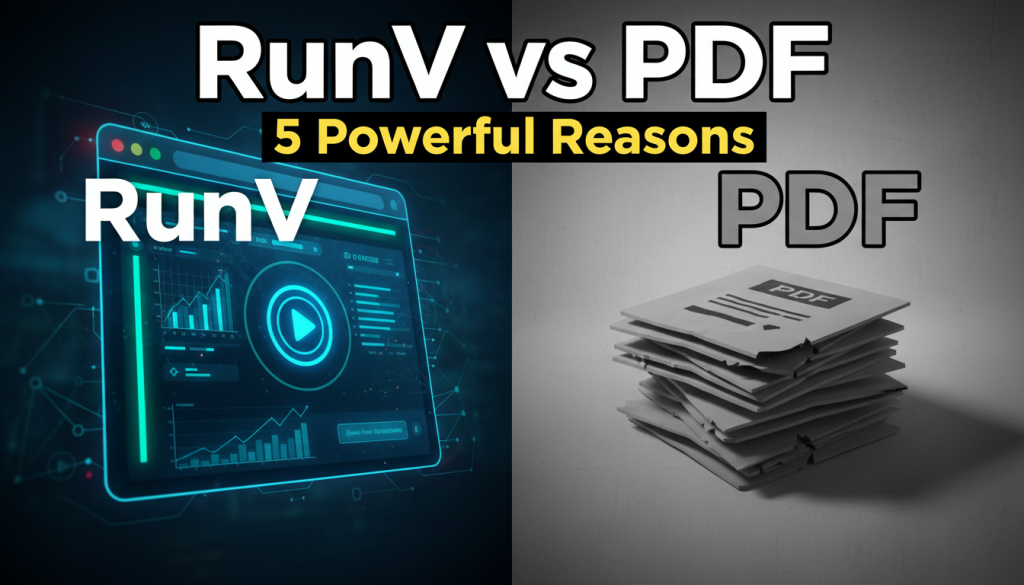
For years, most runners relied on static training plans: a basic spreadsheet or a simple downloadable PDF printed and taped to the fridge. But now adaptive, app‑based platforms like RunV are changing how we train, race, and recover. When you look closely at RunV Downloadable Proven, Powerful benefits compared with old‑school PDFs, the gap in performance, flexibility, and real‑world usefulness is enormous.
This article breaks down, in detail, why more runners and fitness enthusiasts are moving away from static files and toward dynamic tools that think, adjust, and grow with them.
Table of Contents
- Why the RunV vs Downloadable PDF Debate Matters
- Quick Overview: What Is RunV vs a Downloadable PDF Plan?
- Reason 1 – Adaptive Intelligence vs Static Guesswork
- Reason 2 – Personalization That Actually Follows Your Life
- Reason 3 – Feedback, Data, and Real‑Time Coaching
- Reason 4 – Motivation, Accountability, and Consistency
- Reason 5 – Future‑Proof: Gear, Tech, and Evolving Science
- When a Downloadable PDF Still Makes Sense
- How to Transition from PDF Plans to RunV Smoothly
- Final Thoughts: Which Option Should You Choose?
Why the RunV vs Downloadable PDF Debate Matters for Runners
Training is not just about miles; it’s about the structure behind those miles. Whether you are a 5K beginner, a half marathon chaser, or a seasoned marathoner, the tool you use to guide your training shapes your progress, injury risk, and long‑term enjoyment of running.
A PDF plan feels safe and familiar. It’s simple, printable, and clear. But it’s also blind: it does not know if you slept four hours, ran a surprise PB, or just started a demanding job. A dynamic system like RunV tries to adapt to those life changes and turn raw intention into smarter, more sustainable training.
Understanding the difference between the two isn’t a tech question; it’s a performance and health question.
Quick Overview: What Is RunV vs a Downloadable PDF Plan?
What Is a Downloadable Running PDF Plan?
A downloadable PDF plan is a static training schedule, usually mapped out day by day or week by week. You’ll see entries like “5 km easy,” “Tempo run,” or “Rest,” often over 8–20 weeks. You download it once, maybe print it, and follow it as written.
Advantages:
- Simple and easy to understand
- Works fully offline
- No apps or accounts required
- Often free or very cheap
Limitations:
- Cannot adapt to missed days or changing goals
- Ignores your current fitness, fatigue, or health
- Very broad, designed for “average” runners
- Requires manual tracking and discipline
What Is RunV?
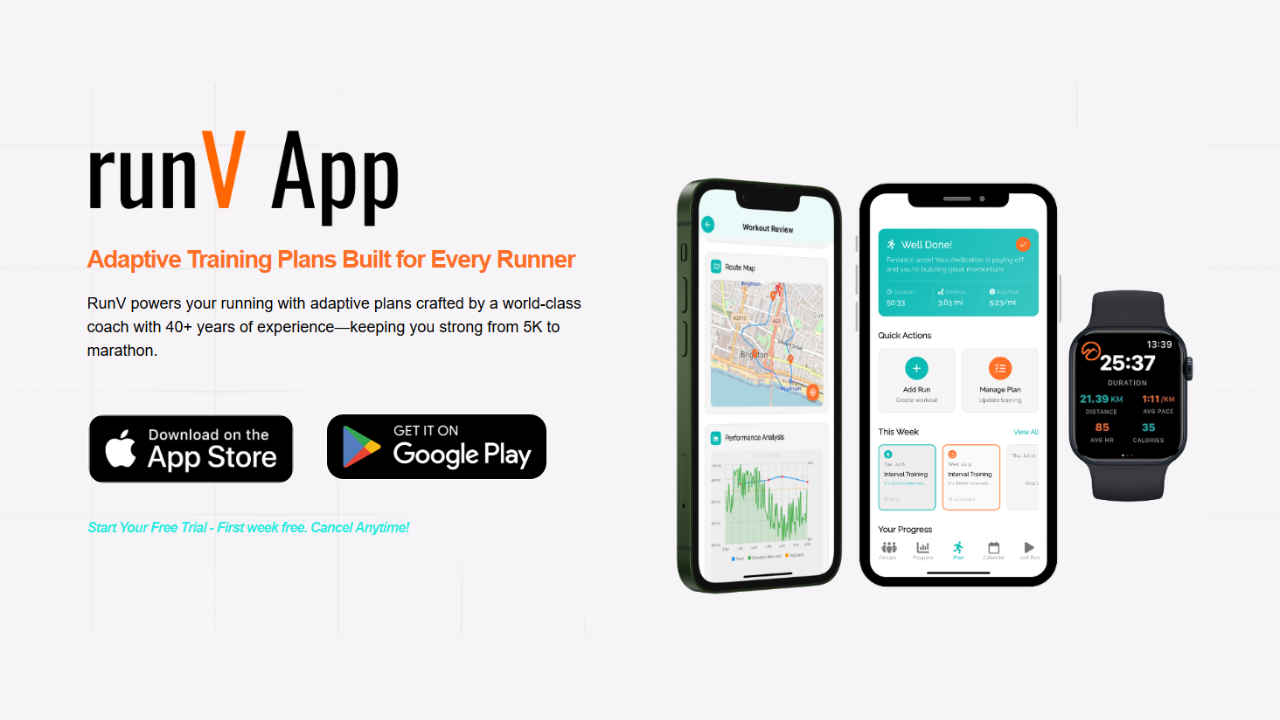
RunV is an adaptive training platform designed to build and continuously adjust your running plan based on your performance, schedule, feedback, and goals. The intent behind the RunV Downloadable Proven, Powerful approach is to keep the useful structure of a written plan but layer it with real‑time intelligence and personalization.
Instead of a one‑time file, RunV behaves more like a living coach. It reacts when you miss a workout, run faster than expected, or feel unexpectedly fatigued. It can also integrate seamlessly with different training distances and time budgets by drawing from a wide catalog of structured All Plans tuned to your level and goals.
Reason 1 – Adaptive Intelligence vs Static Guesswork
Why Static PDFs Often Lead to Overtraining or Plateaus
Static PDFs assume you are a theoretical runner with predictable progress. Real runners are not theoretical. You get sick. Work explodes. You travel. Heatwaves hit. Suddenly, that neat schedule is no longer aligned with reality.
What happens then? Many runners either:
- Try to “catch up,” stacking missed workouts and spiking injury risk
- Skip chunks of the plan and feel underprepared or guilty
- Keep following the schedule even while exhausted, flirting with burnout
The PDF gives you no guidance on how to adjust. You’re guessing, and each guess has consequences.
RunV Downloadable Proven, Powerful Adaptive Response
The core advantage of an adaptive tool like RunV is that it changes as you change. You miss a key workout? The following week reshuffles. You show sudden improvement? Paces and sessions evolve. This is the heart of the RunV Downloadable Proven, Powerful philosophy: training must move with you, not against you.
Adaptive logic can reduce common forms of training error—such as running key workouts when fatigued or building volume too fast—because the plan reacts to the signals you provide through your runs and feedback, not just the calendar date.
Adaptive Planning vs Static Guesswork in Everyday Scenarios
Consider three common situations:
- You miss three runs in a week. A PDF offers no guidance; many runners either abandon the plan or cram everything into a few days. An adaptive system shifts your load, protects your long‑term goal, and prioritizes essential sessions.
- You run a surprise 5K PB mid‑plan. A PDF doesn’t adjust future workouts. RunV can update target paces and workload around your demonstrated fitness.
- You’re under‑recovered or sick. A PDF still shows “Intervals.” RunV can suggest reduced intensity or volume and adjust subsequent days to stabilize your progression.
For more detail on why adaptive systems routinely outperform static ones, it’s worth exploring how Why Adaptive Training Reduces 5 Shocking Guesswork Mistakes frames this same problem across typical training cycles.
RunV Downloadable Proven, Powerful Risk Reduction
Static plans don’t know your history of injuries, your weekly stress, or your sleep quality. Adaptive tools at least approximate this through your training responses. That means smarter step‑downs, timely recovery blocks, and less pressure to heroically complete every session no matter how you feel.
This transition—from blind adherence to informed adjustment—is one of the most powerful shifts a modern runner can make.
Reason 2 – Personalization That Actually Follows Your Life
One‑Size‑Fits‑All PDFs vs Individual Reality
Most PDFs are built for broad categories: “Beginner 5K,” “Intermediate Half,” “Advanced Marathon.” You might fit roughly into those labels, but inside each category are wildly different runners—different ages, injury backgrounds, time budgets, and strengths.
The result:
- A true beginner might find a “Beginner” PDF too aggressive
- A returning runner might find it too easy
- Someone with four available training days might be forced into a five‑day plan
RunV Downloadable Proven, Powerful Personal Matching
RunV starts with your specific goal, your current fitness, and your realistic week. Instead of handing you a single generic file, it builds a tailored path. The RunV Downloadable Proven, Powerful difference here is not just custom wording; it’s structural personalization over time.
Examples of what can be personalized:
- Number of training days per week
- Long run distance progression
- Intensity distribution (how much easy vs hard)
- Race‑specific sharpening close to event day
If you’re new to running and wondering how often you should lace up, you might also want to read How Many Days Per Week Beginners Should Run: 5 Proven Essential Tips to see how frequency decisions affect both personalization and long‑term progress.
Life‑Proofing Your Training Plan
Personalization is not just about VO2max or thresholds. It’s also about asking: “What does your actual week look like?”
- Busy parents may need shorter but smarter weekday sessions and a single longer weekend run.
- Shift workers might need flexible scheduling around night shifts.
- Masters athletes often benefit from additional recovery days and careful load management.
A static PDF cannot re‑shape around these demands in real time. RunV can infer and adjust, which turns a plan from something you obey into something that works with you.
Beyond Distances: Matching Personality and Preference
Some runners thrive on speedwork; others prefer longer, steady efforts. Some love trails; others love track. While a PDF might throw in a generic mix of intervals, tempos, and long runs, a flexible system can emphasize the types of workouts that keep you engaged while still pushing the right physiological levers.
Over time, this level of personalization is what keeps runners consistent—because they actually like their training, not just endure it.
Reason 3 – Feedback, Data, and Real‑Time Coaching Beats Static Text
The PDF Problem: No Feedback Loop
A PDF plan is a one‑way document. It tells you what to do but never listens to how it went. Did you struggle to hit paces? Was your heart rate unusually high? Did you feel great and finish with fuel in the tank? The plan does not change or ask why.
That lack of feedback loop is the biggest technical limitation of static plans. Training becomes guessing: you adjust based on feel, which is useful but often inconsistent and emotional. (RunV vs Strava gains)
RunV Downloadable Proven, Powerful Feedback Integration
RunV uses your results to shape tomorrow’s load. That can mean adjusting:
- Target paces for future workouts
- Overall weekly volume
- Where to insert extra easy days
- When to sharpen vs when to consolidate gains
The RunV Downloadable Proven, Powerful approach treats every run like input, not just output. If you’re repeatedly struggling at a given pace zone, the system can react by altering both pace targets and session structure so you aren’t constantly “failing” your plan.
From Text on a Page to True Coaching Logic
Think about a human coach. After each workout, they ask:
- “How did that feel?”
- “Was the pace sustainable?”
- “Any niggles, pains, or odd fatigue?”
Then they update tomorrow. Static PDFs skip this step. Digital tools like RunV try to automate parts of this check‑in by leaning on performance data and patterns over time. While no algorithm fully replaces a great human coach, the gap between “no feedback” and “some feedback‑driven logic” is massive in practice.
Linking Data to Smarter Workouts
Modern wearables and phone sensors throw off a huge amount of data: GPS, heart rate, splits, elevation, cadence, and more. A PDF doesn’t know or care about any of it. Adaptive platforms can actually use this information to inform decisions.
That’s especially helpful for performance‑driven goals, such as optimizing your half marathon pace. If you’re interested in how detailed metrics and pacing recommendations can drive better race outcomes, check out How to Calculate Ideal Half Marathon Pace: 5 Proven Powerful Tips for pacing‑specific applications of this data‑driven approach.
Closing the Loop: Feeling + Data
The most powerful setup blends subjective feeling with objective data. How hard did a session feel, and what did your numbers say? An adaptive environment can place both into context and adjust training so that you progress without repeatedly running on the edge.
This is something a PDF cannot do. It simply waits for you to turn the page.
Reason 4 – Motivation, Accountability, and Consistency Over Time
Why Consistency Wins More Than “Perfect” Sessions
Most runners don’t fail because they lack a clever plan; they fail because they cannot follow any plan consistently. That’s often due to competing priorities, fatigue, and motivation dips—not a lack of knowledge about what intervals are.
Static PDFs demand self‑discipline but provide little support when that discipline wavers. They sit there quietly while your life gets complicated.
RunV Downloadable Proven, Powerful Consistency Framework
A system like RunV can nudge, remind, and re‑organize, turning small disruptions into manageable shifts instead of derailments. This is central to the RunV Downloadable Proven, Powerful framework: progress is less about hero days and more about stringing together sustainable, reasonably hard weeks without breaking down.
Key motivational advantages of adaptive tools:
- Clear daily instructions delivered where you live (your phone)
- Positive feedback when you hit targets
- Automatic resizing of the plan when life intervenes
- Reduced guilt from missed days, because the system recalculates
Psychology: Feeling Guided vs Feeling Alone
Training with a static PDF can feel lonely. You might question: “Is this still the right workout?” or “Does it matter if I adjust this tempo run?” Unsure, you either follow it blindly or abandon it entirely.
With an adaptive system providing updated recommendations, you feel supported. That mental shift—from being alone with a document to having a guided experience—often increases adherence, even among time‑crunched or easily discouraged runners.
Consistency as a Built‑In Design Principle
When a plan is built to adapt, it’s automatically built to preserve continuity. The goal is not to hit every session exactly but to maintain a trajectory. That makes it easier to recover from sick weeks, busy travel periods, or family emergencies without writing off the whole training cycle.
If you want to dive deeper into how structured consistency beats erratic “all‑out” efforts, it’s worth exploring the logic behind Consistency Based Training for 7 Powerful Proven Gains, which aligns closely with this RunV‑style philosophy.
Reason 5 – Future‑Proof: Gear, Tech, and Evolving Science
The Tech Explosion in Running
Running has changed. We have carbon‑plated shoes, blood oxygen tracking, AI‑driven insights, and wearables that update multiple times per year. Static PDFs don’t evolve after they are published; they represent a snapshot of knowledge from a particular moment.
But the way we think about tapering, periodization, recovery, and even shoe rotation is shifting regularly as new studies and gear appear.
RunV Downloadable Proven, Powerful Alignment with Current Science
A dynamic platform can be updated centrally as new research and best practices emerge. That means the underlying logic that powers your plan doesn’t stay frozen. The RunV Downloadable Proven, Powerful mindset is less “download this once” and more “train in an environment that upgrades with time.”
When new recovery approaches, warm‑up protocols, or intensity distribution philosophies gain traction, adaptive tools can incorporate them without you needing to find an updated PDF or a new e‑book to download.
Integrating Wearables and New Metrics
Many runners now rely on devices to track heart rate, VO2max estimates, HRV, sleep, and more. A static training plan cannot interpret or act on this information. An adaptive system at least has the potential to factor these signals into how it shapes your weekly load.
As tools for monitoring effort, fatigue, and recovery grow more sophisticated, having a training framework that can plug into that stream of data becomes more important than ever. (RunV adaptive plans)
Connecting Gear, Data, and Training Decisions
Your shoes, your watch, your band, your phone—they all influence how you train and how you feel. PDFs exist outside that ecosystem. RunV exists inside it, connecting what you do, what you wear, and how your body responds into a more integrated training picture.
This is what makes modern, adaptive training feel “alive” compared with traditional static documents. The plan becomes part of the same feedback system as your devices and your body, not a separate, unchanging script.
When a Downloadable PDF Still Makes Sense
If You’re Brand New and Just Exploring
If you’ve never followed any plan before, a simple downloadable PDF can be a gentle introduction to structured training. You’ll learn basic elements—easy runs, long runs, occasional speedwork—without feeling overwhelmed by features or settings.
In this context, a PDF’s simplicity is a feature, not a bug. For a true beginner, the main goal is to build the habit of lacing up regularly, not to optimize every micro‑adjustment.
If You Want Complete Offline Independence
Some runners prefer zero apps, zero accounts, and zero screens. If you love to disconnect and your training is relatively straightforward, a printed plan on the wall may be all you need. You write in pen, adjust manually, and enjoy the analog process.
For this group, the predictability and quiet of a PDF can be calming and satisfying, particularly if race performance is less important than the experience of the journey.
If You Already Have Strong Coaching Support
Runners who work closely with a human coach sometimes use PDFs as reference or structure while the real adjustments happen via conversation. In that setup, the static file is not expected to adapt; your coach does that part based on feedback and data.
When Minimalism Is the Main Goal
Some athletes deliberately strip their running life down to basics: a watch, a route, a plan. They value reducing decision fatigue above fine‑tuning and optimization. If that’s you, and you accept the trade‑offs, a well‑chosen PDF plan can absolutely support enjoyable, successful training.
How to Transition from PDF Plans to RunV Smoothly
Step 1 – Clarify Your Priority Goal
Before you migrate from a static PDF to an adaptive system, get clear on what you care about most:
- Finishing your first 5K strong?
- Cracking a sub‑2 half marathon?
- Qualifying for a major marathon?
Your primary goal will shape how you interact with RunV and which plan templates or customizations make sense for you.
Step 2 – Map Your Current Week Honestly
Next, list your true weekly constraints:
- How many days can you train without stress?
- When are your longest free time blocks?
- Which days are almost non‑negotiably busy?
Feeding realistic answers into an adaptive system is essential. Overestimating your availability is one of the main reasons runners “break” even dynamic plans.
Step 3 – Start with Familiar Structure
If you’re moving from a loved PDF plan, you don’t need to radically change your session types overnight. Instead, view RunV as a smarter version of the same overall arc—base building, peak weeks, taper—but now with the ability to respond to your day‑to‑day results.
In other words, you keep the story, but the paragraphs can re‑order themselves as needed.
Step 4 – Learn to Trust Adaptive Adjustments
The hardest part of leaving PDFs behind is psychological. You might initially resist when the system suggests easier days, extra recovery, or a reshuffled week.
Remind yourself that the point of an adaptive environment is to prevent you from doing too much on days when your body and schedule clearly push back. Over a full cycle, that tends to yield better results than stubbornly following a rigid script.
Step 5 – Use Data but Don’t Drown in It
One temptation with tech‑driven training is to obsess over every single metric. Use your watch and RunV’s feedback to stay broadly on track, but keep perspective. Running is still—at its core—about effort, enjoyment, and steady improvements, not perfection in every split.
Final Thoughts: RunV vs Downloadable PDF—Which Should You Choose?
Choosing between a static downloadable PDF plan and an adaptive system like RunV is ultimately about what you value most in your running life.
Choose a downloadable PDF if you:
- Want extreme simplicity and minimal tech
- Have relatively stable, predictable weeks
- Enjoy manually adjusting and tracking your own training
- Accept that the plan will not change unless you rewrite it yourself
Choose RunV if you:
- Want training that adapts when life changes
- Value continuous personalization over one‑time downloads
- Want your data and wearables to inform your training decisions
- Care about sustainable progression, reduced guesswork, and long‑term consistency
The RunV Downloadable Proven, Powerful approach is not about adding complexity for its own sake. It’s about making the complex reality of your life and body easier to manage by letting the plan do more of the thinking, while you do more of the running.
As running gear, wearables, and training science continue to evolve, the advantage will tilt even more toward systems that can grow and adapt with you. PDFs will always have a place as simple, accessible starting points. But for runners seeking lasting progress, fewer injuries, and smarter use of their time, an adaptive platform like RunV increasingly looks like the future of training.