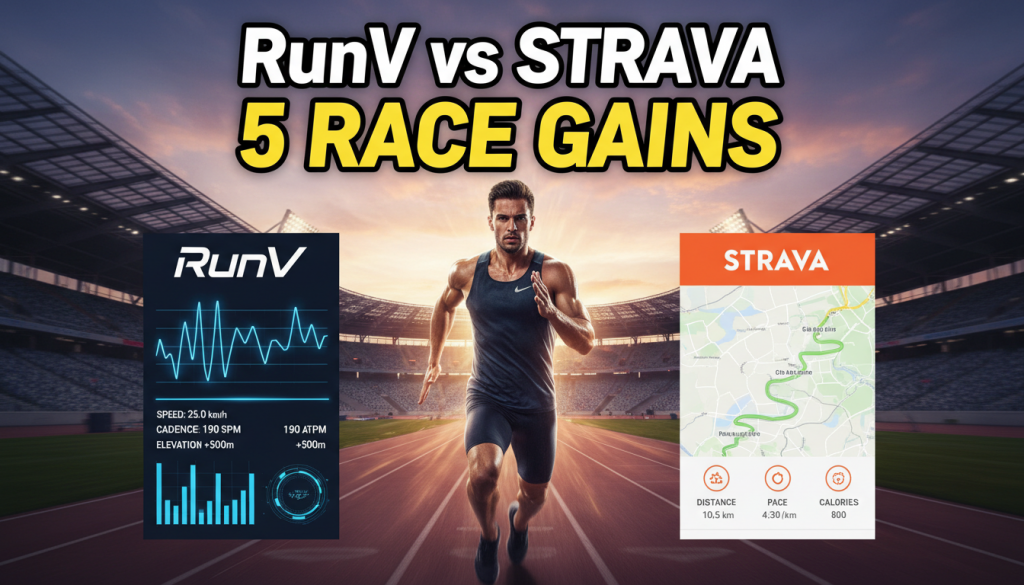
RunV vs Strava for 5 Proven, Powerful Race Gains
If you care about shaving real time off your next 5K, half marathon, or marathon, comparing RunV vs Strava isn’t just about which app looks better. It’s about which platform actually turns your data into speed. That’s where the combination of RunV Strava Proven, Powerful gains really matters: understanding exactly how Strava’s social tracking and RunV’s race-focused coaching can work together (or separately) to deliver measurable race improvements.
In this in‑depth guide, we’ll unpack how each platform affects your training, and how to use them for 5 specific, proven race gains you can feel on race day.
Table of Contents
- Why Comparing RunV and Strava Matters for Race Results
- Quick Overview: What RunV and Strava Actually Do
- RunV Strava Proven, Powerful: 5 Race Gains You Can Measure
- RunV vs Strava Feature Breakdown for Race Performance
- Which Runners Benefit Most from RunV?
- Which Runners Benefit Most from Strava?
- How to Use RunV and Strava Together for Maximum Gains
- Step-by-Step Setup for Your Next Race with RunV or Strava
- Common Mistakes When Using RunV or Strava for Race Training
- Final Thoughts: Turning Data into Race-Day Speed
Why Comparing RunV and Strava Matters for Race Results
For many runners, Strava is the default: track your run, upload, get kudos, chase segments. It’s fun and motivating. But fun doesn’t automatically equal faster.
RunV is part of a newer wave of coaching‑first running platforms that treat your training data as a planning tool rather than a social feed. When you look at RunV Strava Proven, Powerful differences, the key question is: which app helps you structure, adapt, and execute your training so race‑day performance actually improves?
That’s what this guide focuses on—using each platform for concrete, time‑based gains, not just prettier graphs.
Quick Overview: What RunV and Strava Actually Do
What Strava Is Best Known For
Strava started as a cycling and running tracker and evolved into a social network for endurance athletes. At its core, Strava:
- Records GPS activities (runs, rides, swims, and more)
- Shows pace, distance, elevation, heart rate (if available)
- Hosts segments and leaderboards so you can compare efforts
- Provides training logs, basic weekly summaries, and some route-building
- Offers premium analytics like Fitness & Freshness and relative effort
Strava is excellent for accountability, social motivation, and long‑term activity history. But it’s not built from the ground up as a race coaching engine.
What RunV Is Designed to Do
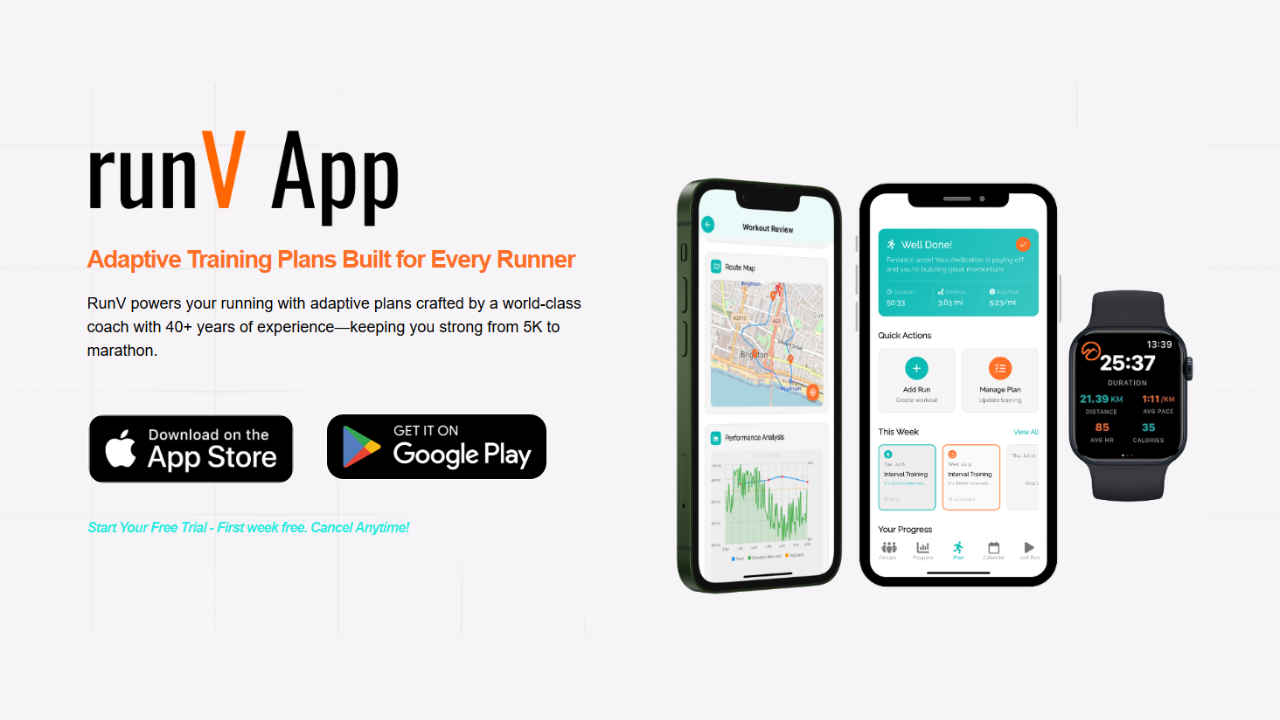
RunV is positioned more as an adaptive coaching and planning platform. Instead of asking, “What did you do?”, RunV primarily asks, “What are you training for, and how should today’s run change based on yesterday?”
Core ideas behind RunV include:
- Race‑focused training blocks (5K, 10K, half marathon, marathon, etc.)
- Adaptive plans that adjust to your actual workload and schedule
- Guided long runs, workouts, and recovery runs that link to a purpose
- Use of your data to inform the next week automatically
So when you compare RunV vs Strava, you’re really comparing a coaching brain (RunV) against a social and tracking brain (Strava). Both are powerful, but they produce very different benefits.
RunV Strava Proven, Powerful: 5 Race Gains You Can Measure
To keep this practical, we’ll focus on five specific, measurable race gains and how each platform contributes. This is where the phrase RunV Strava Proven, Powerful becomes real: tangible improvements, not vague “get fitter” promises.
Gain 1 – Training Structure That Matches Your Race Goal
Why Structure Is the First Proven Gain
Race performance is built on structured training: the right balance of easy runs, workouts, and long runs, layered over weeks and months. Without structure, you’re just collecting miles and hoping for the best.
A structured plan clarifies:
- What to run today (type, pace, and duration)
- How this run fits into the week and training block
- How the block leads logically toward race day
How Strava Handles Training Structure
Strava offers:
- Basic training plans for events (if available under premium)
- Workout creation and sync to some watches
- Training log views to see your overall volume and frequency
However, Strava’s plans tend to be relatively static and generic. They don’t significantly alter based on ongoing performance or schedule disruptions. They work best if you’re consistent, relatively experienced, and comfortable modifying them yourself.
How RunV Handles Training Structure
RunV focuses heavily on race‑targeted structure. You choose your distance, date, and current level, and you receive a coherent progression of weeks with:
- Purpose‑based sessions (tempo, intervals, long runs, recovery)
- Prescribed paces or intensity zones tied to your target
- Adjustments if you miss workouts or change days
If you’re choosing between apps specifically for planning your race build, RunV’s structure is more prescriptive and adaptive. For a deeper dive into planning, see the Complete Guide to Choosing 7 Proven Race Training Plans and notice how that logic mirrors what a structured app like RunV offers.
Practical Race Gain #1
Runners moving from unstructured or purely Strava-logged training to a clear, adaptive plan often see:
- 5K: 30–90 seconds improvement over 8–12 weeks
- Half marathon: several minutes improvement over 12–16 weeks
This is the first layer of the RunV Strava Proven, Powerful combination—structured planning beats random recording.
Gain 2 – Adaptive Intelligence vs Static Habit Tracking
Why Adaptation Matters More Than Ever
No race build goes perfectly. You get sick, work explodes, you travel, or you simply feel more tired than expected. Static training plans assume a perfect world; adaptive coaching deals with the real one.
Adaptive systems monitor your workload and performance, then alter upcoming sessions to keep you on track without overtraining or burnout.
How Strava Helps – and Where It Stops
Strava offers metrics like:
- Weekly distance and elevation summaries
- Relative effort and sometimes training load patterns
- Fitness & Freshness (premium) to see trends
These are helpful to understand if you’re doing more or less than before. But Strava usually relies on you to interpret the data and manually adjust the plan. It’s a powerful habit tracker, not a coach.
RunV’s Adaptive Coaching Approach
RunV’s defining strength is its adaptive engine. If you miss runs, change days, or hit workouts harder or easier than planned, the system adjusts upcoming sessions. This means:
- Key workouts aren’t simply skipped—they’re rescheduled or re‑weighted
- Recovery can be automatically increased after a particularly hard effort
- Total weekly load can be tuned to your real‑world constraints
This is closely related to the idea of an AI Dynamic Plan, which uses your data in near real‑time to change what tomorrow’s training looks like. It’s the difference between a static PDF and a coach watching every run.
Practical Race Gain #2
Adaptive training tends to reduce blow‑ups (overtraining, injury spikes) and improves completion of key workouts. Runners often experience:
- More consistent weekly mileage with fewer forced layoffs
- Better quality in the final 4–6 weeks before race day
In the RunV Strava Proven, Powerful context, Strava gives you the honest history; RunV tells you how to respond to it.
Gain 3 – Pacing Insights That Directly Translate to Races
Why Pacing Is a Core Race-Day Skill
Most race disasters are pacing problems. You go out too fast, blow up at halfway, and spend the last third of the race surviving. Getting pacing right is a combination of:
- Knowing realistic goal pace from your training
- Practicing that pace in workouts and long runs
- Staying disciplined under race‑day adrenaline
How Strava Helps with Pacing
Strava’s strengths include:
- Detailed splits for every run
- Segment times to see repeatable efforts on the same route
- Comparison of similar workouts over time
If you use Strava intentionally, you can:
- Review tempo runs or intervals to see if you’re holding pace
- Check long runs to ensure you’re not creeping too fast or too slow
- Estimate realistic race pace by matching segments to race distance
Pairing that awareness with targeted race strategies, like those in 5K Race Pacing Strategy: 7 Proven Tips for Powerful Starts, helps turn Strava’s raw data into decisions. (RunV running app)
How RunV Drives Pacing Gains
RunV typically prescribes workout and long‑run targets aligned to your goal pace and current fitness. That means:
- Intervals might be set around your 3K–5K pace
- Tempos near your 10K or half marathon pace
- Long runs calibrated to your aerobic zone, not random “comfortable” speed
Over time, your body learns what those paces feel like. That race‑specific feel is one of the most powerful predictors of stable pacing on race day.
Practical Race Gain #3
By combining RunV’s structured pace targets with Strava’s detailed post‑run analysis, you can:
- Sharpen your internal sense of pace so your first kilometers are controlled
- Close the final third of the race stronger, rather than fading hard
- Convert training fitness into a more even, faster race profile
This is a classic RunV Strava Proven, Powerful synergy: prescription from RunV, confirmation and trend analysis from Strava.
Gain 4 – Recovery and Fatigue Management So You Can Actually Absorb Training
Why Recovery Is One of the Most Underused Race Tools
Running faster is not just about training harder; it’s about recovering well enough that your body adapts. Many runners mistake “tired all the time” for “training like a pro,” when in reality they’re stuck in chronic moderate fatigue that blunts progress.
Effective fatigue management means:
- Knowing when to hold back
- Respecting easy days and recovery runs
- Balancing total weekly stress with life demands
What Strava Offers for Recovery Awareness
Strava can indirectly show fatigue trends via:
- Relative effort spikes across weeks
- Fitness & Freshness charts (if you track heart rate consistently)
- Training load graphs and daily effort scores
But again, the platform largely leaves interpretation to you. If you obsess over streaks or weekly mileage without context, Strava can even tempt you into ignoring recovery signals.
How RunV Encodes Recovery into the Plan
RunV’s adaptive style usually incorporates recovery more explicitly:
- Scheduled easy days after hard sessions
- Cutback weeks built into longer training cycles
- Adjustments if you overperform or underperform key workouts
If your data signals fatigue (slower pace at similar effort, inconsistent completion), RunV can lighten upcoming loads or redistribute work. That kind of built‑in caution often prevents the classic 3–4 week overtraining spiral.
Practical Race Gain #4
Better recovery management means you arrive at race week:
- Fresh enough to hit goal pace
- Confident you haven’t burned out in the final month
- Free of the “mystery niggles” that come from training slightly too hard every day
When you combine an app that encodes recovery (RunV) with one that shows your effort history (Strava), you get a RunV Strava Proven, Powerful check‑and‑balance system for staying healthy and sharp.
Gain 5 – Race-Specific Sharpening and Mental Prep
Race-Specific Workouts as a Proven Edge
The weeks leading to race day should increasingly resemble the demands of your goal race: comparable paces, terrain, and effort patterns. This sharpening phase builds both physical readiness and mental confidence.
How Strava Helps with Sharpening and Confidence
Strava’s race‑specific benefits include:
- Benchmark workouts you can revisit to compare readiness
- Visibility into how training partners or club mates prepare
- Historical views of previous race builds vs current one
This perspective is crucial for mental prep. Seeing that your last few tempo runs are faster or more controlled than last season’s can be the confidence bump you need to commit to an ambitious race pace.
How RunV Orchestrates the Sharpening Phase
RunV typically structures your final 4–6 weeks to include:
- Race‑pace intervals or tempos at slightly higher intensity
- Progressive long runs mimicking late‑race fatigue
- Taper weeks that reduce volume while maintaining intensity
This approach is particularly important for longer events like the Half Marathon, where pacing and late‑race resilience decide your time. Sharpening workouts tuned to your target race distance make the final build‑up much more specific than generic “just run more” plans.
Practical Race Gain #5
A well‑planned sharpening phase can deliver:
- More controlled first half of the race
- Smaller slowdown in the final quarter (less positive split)
- Fewer “I’m not sure if I can hold this pace” doubts at the starting line
This final layer of RunV Strava Proven, Powerful synergy is about aligning your last weeks of training with race demands and using your Strava history to confirm you’re genuinely ready.
RunV vs Strava Feature Breakdown for Race Performance
Below is a conceptual comparison focusing only on race‑relevant features.
Training Planning
- Strava: Limited, mostly static plans; not deeply adaptive; training calendar and workout builder exist but need manual tuning.
- RunV: Built around race‑centric plans and adaptive scheduling; stronger guidance for beginners and intermediate racers.
Data Collection and Analytics
- Strava: Excellent data ingestion from watches and phones; robust analytics and visualizations; segments and leaderboards.
- RunV: Uses performance metrics mainly to inform and adjust your training path rather than provide broad social analytics.
Motivation and Community
- Strava: Huge community, clubs, challenge badges, and kudos; powerful motivator.
- RunV: Motivation is plan‑driven—seeing your training block unfold, hitting targeted sessions, and watching adaptation in action.
Race-Day Readiness
- Strava: Best at reflecting how well you executed your training; indirect race‑day prep through history and social support.
- RunV: Targeted race‑specific workouts, taper guidance, and adaptive adjustments create a clearer runway to race day.
Which Runners Benefit Most from RunV?
RunV tends to be the better core tool if you are:
- A goal‑driven racer – You want a PR in an upcoming 5K, 10K, half marathon, or marathon.
- Time‑constrained – You need an efficient plan that adapts when life interferes.
- Less experienced with self‑coaching – You prefer guidance on which workouts to do, in what order, and at which intensities.
- Prone to overdoing it – You need guardrails to avoid pushing too hard too often.
For these runners, the coaching brain of RunV is arguably the central engine of improvement, and Strava becomes a complementary logging and community tool.
Which Runners Benefit Most from Strava?
Strava shines if you are:
- Socially motivated – You love the sense of community, kudos, and group challenges.
- Comfortable with self‑designed training – You can interpret analytics, build your own plans, and adjust on the fly.
- Multi‑sport focused – You cycle, swim, hike, and want all of it tracked in one place.
- Segment or route obsessed – You chase local KOMs/QOMs or PRs on favorite segments.
If you naturally think like a coach or have one, Strava’s broad tracking and analytics form a powerful base. But if you’re missing the structure, RunV fills that gap. (RunV features & Strava sync)
How to Use RunV and Strava Together for Maximum Gains
Step 1 – Choose a Primary “Brain”
Decide which platform is your decision‑maker:
- Use RunV as the brain if you want guided, adaptive race training.
- Use Strava as the brain if you already know how to coach yourself and want analytics plus social motivation.
Most runners aiming for clear race gains will benefit from RunV as the training brain and Strava as the visualization/social layer.
Step 2 – Sync Workouts and Data
Set up your watch or phone so that:
- Your actual workouts follow the structure prescribed by RunV.
- All your completed activities are sent to Strava for logging and summary.
This way, RunV always sees what you actually did, while Strava holds the performance history and social feedback.
Step 3 – Use Strava for Pattern Recognition
Regularly check Strava for:
- Pace trends on similar routes or workouts
- Weekly volume evolution and how it correlates with how you feel
- Comparisons between this cycle and previous ones
Use these patterns to understand whether the RunV Strava Proven, Powerful combo is working: improved tempos, smoother long runs, stronger finishes.
Step 4 – Let RunV Handle Adjustments
When you notice fatigue, schedule changes, or inconsistent performance:
- Log how you feel and what you completed in RunV.
- Allow the adaptive engine to modify upcoming sessions.
- Avoid manually overriding every change—trust the system for a full cycle.
The synergy is simple: use Strava to become more aware; let RunV translate awareness into smart adjustments.
Step-by-Step Setup for Your Next Race with RunV or Strava
1. Define Your Race and Time Horizon
Pick a specific race and date—no more “sometime this year.” Then count back:
- 5K: at least 8–10 weeks
- 10K: 10–12 weeks
- Half marathon: 12–16 weeks
- Marathon: 16–20+ weeks
2. Assess Your Current Fitness
Use a recent race or time trial and log it in Strava. This will serve as your baseline. If you have no baseline, do a controlled 3K–5K hard effort to estimate starting fitness.
3. Choose a Plan or Structure
- With Strava as primary: Pick a plan that matches your distance and level, then copy the workouts to your calendar. Be prepared to adjust manually.
- With RunV as primary: Select your event distance and goal time; RunV should produce a training block tailored to your horizon.
Make sure your plan respects principles like progressive overload and regular cutback weeks; this mirrors the advice in articles like RunV vs Strava for 7 Powerful, Proven Beginner Wins.
4. Structure Your Week
Block out:
- 1–2 key quality sessions (tempo, intervals, or hills)
- 1 longer run (distance scales with your goal)
- 2–4 easy or recovery runs
- 1 rest day (or active recovery day)
Check that RunV’s weekly layout fits your real schedule. If you’re building your own in Strava, ensure you’re not stacking hard days back‑to‑back without purpose.
5. Monitor and Adjust Weekly
Each week, review:
- Strava: Did you hit your planned mileage and key workouts?
- RunV: Did the system adjust next week based on your performance?
- Your body: Are you more or less fatigued than expected?
Update your plan or settings to stay aligned with your race goal, recognizing that mid‑course corrections are a feature, not a failure.
Common Mistakes When Using RunV or Strava for Race Training
Mistake 1 – Treating Every Run Like a Race Segment
On Strava, it’s easy to chase segments on what should be easy days. That undermines the purpose of your structured training. Use segment efforts sparingly and align them with planned hard days.
Mistake 2 – Ignoring Plan Adjustments
If you’re using RunV and constantly overriding its adaptations because you “feel good,” you lose the very benefit of an adaptive system. Consistency beats occasional heroic weeks.
Mistake 3 – Chasing Volume for Social Validation
Weekly mileage flexing on Strava can push you into unsustainable jumps. Remember that many successful race builds are defined more by appropriate intensity and recovery than by raw distance.
Mistake 4 – Failing to Link Workouts to Race Demands
Random intervals, random tempos, random long runs: this is where many self‑coached runners stall. Your plan should connect workouts logically to your race profile, similar to how structured guides like How to Build Endurance: 7 Proven, Powerful 10K Secrets link session types to specific distance goals.
Mistake 5 – Switching Strategies Too Often
New plan every few weeks, changing apps mid‑cycle, chasing every new idea you see in your Strava feed—this leads to fragmented progress. Stick with one core structure for at least a full race cycle before judging results.
Final Thoughts: Turning Data into Race-Day Speed
Both RunV and Strava are powerful, but in different ways. Strava excels at recording, visualizing, and socializing your running life. RunV focuses on coaching, adaptation, and race‑targeted structure.
For runners who want to convert training into specific race gains, the most effective approach is usually:
- RunV as the planning and adaptive coaching engine
- Strava as the data hub, history, and motivation platform
That is the core of the RunV Strava Proven, Powerful idea: your app setup shouldn’t just be about logging kilometers—it should be about making every kilometer mean something on race day. By combining structured, adaptive guidance with honest data and community support, you dramatically increase your odds of stepping onto the start line not just fit, but truly prepared.