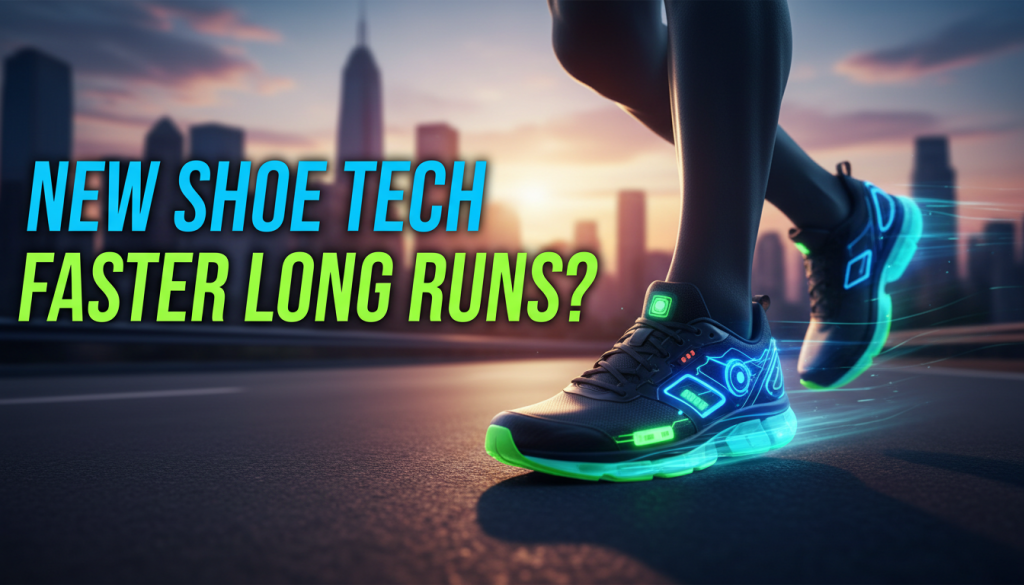
If you’re wondering whether new Shoe Tech Change Your long runs in a meaningful way this year, the answer is yes—and the latest releases show exactly how. From trampoline‑style midsoles to quieter, more adaptive stability, the newest models landing in June and July 2026 are built to keep you fresher deeper into long efforts and race‑pace workouts.
This running news blog pulls together four major equipment stories from the past week and explains what they actually mean for your training and racing—not just for gear‑heads, but for anyone planning their next half marathon, marathon, or big training block.
Table of Contents
- The Big Picture: How Shoe Tech Could Change Your Long Runs
- Asics NovaBlast 6: Trampoline‑Pod Cushioning for Everyday Speed
- Gel‑Kayano 33: A Softer, Smarter Take on Stability
- while on earth Rhythm Runner: Athlete‑Led, Mixed‑Terrain Design
- Release Calendars, Endorphin Elite 3, and Planning Your Season
- How to Choose Which Shoe Tech Should Change Your Rotation
- RunV‑Relevant Tips and Recommendations
- Conclusion & Call‑to‑Action
The Big Picture: How Shoe Tech Could Change Your Long Runs
Over the past five years, shoe innovation has gone far beyond carbon plates. The question now is which Shoe Tech Change Your training the most—midsole geometry, foam blends, or guidance systems?
This week’s news gives clear clues:
- A top‑selling neutral trainer (NovaBlast) is evolving into a more structured trampoline underfoot.
- A legacy stability shoe (Kayano) is abandoning harsh posts for fluid guidance.
- A new brand (while on earth) is targeting real‑world mixed terrain with a single workhorse model.
- Release calendars confirm that high‑end racers like the Endorphin Elite 3 are imminent.
Put together, these stories show how brands are using specific Shoe Tech Change Your experience on long runs: they’re chasing energy return, smoother guidance, and versatility, while trying not to compromise comfort.
Asics NovaBlast 6: Trampoline‑Pod Cushioning for Everyday Speed
What’s New in the NovaBlast 6?
Launching July 1, 2026 in the U.S., the Asics NovaBlast 6 is one of the most significant updates in the daily‑trainer space this year. The headline feature is a re‑engineered midsole: the FF Turbo Squared trampoline‑pod design.
Instead of a flat slab of foam, the midsole cores out the forefoot, creating pod‑like structures designed to compress and rebound more dynamically. This is the kind of Shoe Tech Change Your landing‑to‑toe‑off feel, especially when fatigue sets in.
How the Trampoline‑Pod Midsole Works for Long Runs
The new geometry is built to do three things on your long run:
- Full‑contact cushioning: More of your forefoot stays in contact with foam, spreading impact over a larger area.
- Snappy rebound: The cored‑out pods compress and spring back, adding “pop” without a carbon plate.
- Less bottoming‑out: Under heavy mileage, structured pods resist packing down as quickly.
If you’ve ever felt your shoes turn to “bricks” at mile 18 of a marathon build‑up, this kind of Shoe Tech Change Your mid‑run experience by keeping the ride more consistent over time.
AsicsGrip Rubber: Why Traction Matters More Than You Think
The NovaBlast 6 also gains AsicsGrip rubber on the outsole, a compound previously seen in their trail and performance lines. It’s a subtle tweak, but it can seriously Shoe Tech Change Your confidence in bad weather.
Better traction helps with:
- Cornering on wet roads: Less slipping means more efficient pacing in rain.
- Descending hills: You’ll brake less and run more relaxed on downhills.
- Tempo sections in long runs: You can trust your footstrike when you pick up the pace.
For runners prepping for a fall Marathon that could bring unpredictable weather, this is not just marketing—it’s practical insurance.
What Stays the Same—and Why That’s Good
Asics is keeping the familiar fit and stack height of previous NovaBlast versions. That stability in the spec sheet is crucial. It lets Asics introduce Shoe Tech Change Your ride feel, without forcing you to re‑adapt to a totally new platform.
If you’ve used NovaBlast for:
- Moderate‑to‑long daily runs
- Progression runs that finish fast
- Light tempo work
the NovaBlast 6 should slot into your rotation with minimal break‑in. Expect the same bouncy character, amplified by more structured energy return.
Who Should Consider the NovaBlast 6?
The NovaBlast 6 could be the most meaningful Shoe Tech Change Your training week if you:
- Run mostly on roads and bike paths.
- Like a high‑stack, bouncy neutral shoe.
- Want one shoe that can handle easy days and faster long runs.
It’s less ideal if you’re extremely stability‑needy or prefer a very firm ride. In those cases, the Kayano 33 news below might be more relevant.
Gel‑Kayano 33: A Softer, Smarter Take on Stability
From Hard Posts to Fluid Support
The Asics Gel‑Kayano 33, launched globally on June 1, 2026, represents a major philosophical shift in stability shoes. The new FLUIDSUPPORT system guides the foot rather than forcing it.
Instead of a firm medial post or stiff corrective pieces, the Kayano 33 uses geometry and varied foam densities to nudge you into a smoother path. This is the kind of Shoe Tech Change Your perception of what a “stability shoe” feels like.
Dual‑Layer Foam: FF Blast MAX + FF Blast PLUS
The midsole stacks FF Blast MAX and FF Blast PLUS foams, aiming for a plush yet responsive ride. For long‑distance runners, this dual‑layer setup offers:
- Top‑layer comfort: Softer foam next to the foot for cushioning over 90+ minutes.
- Bottom‑layer resilience: Slightly firmer foam to prevent squishiness at higher mileage.
- More stable transitions: The layered densities help your foot roll forward rather than collapse inward.
That’s precisely where Shoe Tech Change Your long‑run efficiency; better guidance means less micro‑fatigue in feet and calves.
Why FLUIDSUPPORT Matters for Real‑World Training
Traditional stability shoes can feel intrusive, especially when you’re tired. Rigid posts may fight your natural movement, which some runners find fatiguing late in a run.
The Kayano 33’s FLUIDSUPPORT aims to: (Running shoe tech)
- Allow variation: Your stride can adapt across paces and terrain.
- Provide subtle steering: The shoe quietly corrects excessive inward roll.
- Improve comfort on high‑volume weeks: Less harshness under the arch and medial side.
Pro triathlete Lucy Charles‑Barclay has already praised the shoe’s balance during big training blocks. If it can handle pro‑level volume, that’s promising for weekend warriors ramping for a Half Marathon or full marathon.
Who Benefits Most from the Kayano 33?
The Kayano 33 is likely the most impactful Shoe Tech Change Your experience if you:
- Overpronate moderately or have a history of lower leg issues.
- Found traditional Kayano models too firm or “blocky.”
- Want one main shoe for most easy and steady‑state runs.
Even neutral runners who like a planted, controlled feel may find the new Kayano 33 appealing for recovery days and easy long runs.
while on earth Rhythm Runner: Athlete‑Led, Mixed‑Terrain Design
New Brand, First Shoe
Performance apparel brand while on earth™, co‑founded by NFL star Christian McCaffrey and other athletes, has launched its first running shoe: the Rhythm Runner. Pre‑orders opened mid‑May 2026, with shipments expected in late June.
This move matters because it brings a new design voice into the market—all built around how Shoe Tech Change Your feel when you transition between surfaces and types of workouts.
Key Specs and What They Mean
The Rhythm Runner comes in at:
- 36.5 mm stack height
- 10 mm drop
- Approx. 10.5 oz (men), 8.8 oz (women)
- Multi‑terrain tread
- $160 price point with three colorways
This spec package suggests a versatile, slightly more robust trainer, rather than a pure racing shoe. The multi‑terrain tread is exactly the kind of Shoe Tech Change Your planning for routes that mix road, hardpack trails, and gravel.
How Multi‑Terrain Tread Helps Your Long Runs
Many runners don’t live next to a perfect asphalt loop. Long runs may include:
- Pavement miles to reach a trailhead.
- Gravel or dirt sections.
- Uneven sidewalks and light off‑road detours.
A hybrid tread pattern can Shoe Tech Change Your confidence when you leave the smooth bike path. It gives enough lug depth for light off‑road grip, while staying efficient on asphalt.
This means fewer shoe changes, and more flexibility to follow the best routes—rather than the best pavement.
Who Might Like the Rhythm Runner?
Consider the Rhythm Runner if:
- You often run mixed surfaces in a single outing.
- You want one do‑it‑all shoe for easy runs, strides, and moderate‑length long runs.
- You’re curious about athlete‑driven design and a different aesthetic.
The slightly higher weight compared with featherweight trainers may not bother you if your priority is stability and durability on varied terrain. That tradeoff is a classic example of how Shoe Tech Change Your decision‑making: performance versus protection.
Release Calendars, Endorphin Elite 3, and Planning Your Season
Solereview Calendar Confirms Imminent Launches
Solereview’s running shoe release date calendar, updated June 9, 2026, confirms two high‑interest models on the horizon:
- Saucony Endorphin Elite 3 – carbon‑plated marathon racer.
- Asics Kayano 33 – the stability reboot already discussed above.
For runners building toward key races later in 2026, this information shapes how Shoe Tech Change Your timing of gear purchases and break‑in periods.
Endorphin Elite 3: Super Shoe Timing
While detailed specs of the Saucony Endorphin Elite 3 are still emerging, its placement as Saucony’s high‑end marathon racer is clear.
Practical implications:
- If you’re racing a marathon in fall 2026, you can time purchase and testing.
- You’ll want at least 2–3 faster long runs to dial fit and feel.
- You may need to adjust your rotation so the super shoe doesn’t become your daily trainer.
It’s another example of how Shoe Tech Change Your front‑end planning: a carbon racer isn’t just a race‑day tool, it affects how you structure workouts leading in. (Running shoe technology)
If you’re following race‑focused gear news closely, you might also want to track related drops in our coverage of new super shoes and trail gear, since brands tend to cluster big launches.
Using Calendars to Build Your Rotation
Knowing when key shoes launch lets you:
- Schedule long‑run tests in new models before taper.
- Stagger purchases so you’re not breaking in multiple shoes at once.
- Retire older pairs at logical points in your training plan.
This is where Shoe Tech Change Your season strategy, not just comfort; the right shoe at the right week can protect your legs during volume spikes and race‑pace blocks.
How to Choose Which Shoe Tech Should Change Your Rotation
Match Tech to Training Purpose
Each new model announced this week suits a different role. To decide which Shoe Tech Change Your rotation best, start by mapping tech to purpose:
- NovaBlast 6 – energetic daily trainer for easy outings, progression long runs, and some tempo.
- Kayano 33 – comfort‑focused stability for high‑volume easy days and long, steady efforts.
- Rhythm Runner – mixed‑terrain workhorse for runners without pure road routes.
- Endorphin Elite 3 – race‑day and select long‑run workouts at or near marathon pace.
Consider Your Injury History and Surface
Your body and routes should drive your decision more than hype:
- History of shin, knee, or IT band pain? The Kayano 33’s FLUIDSUPPORT could help.
- Mostly smooth asphalt and bike paths? NovaBlast 6’s trampoline‑pod cushioning might shine.
- Gravel, canal paths, or park loops? Rhythm Runner’s tread may be more protective.
If you’re actively managing niggles, pair your shoe choice with smart habits from resources like running injury prevention methods. In many cases, training structure plus the right Shoe Tech Change Your risk profile more than any single gadget.
Budget and Rotation Size
Not everyone needs a four‑shoe quiver. For most recreational runners:
- 1–2 shoes is plenty for balanced training.
- Prioritize a durable, comfortable daily trainer first.
- Add a race shoe or versatile mixed‑terrain option only if your routes or goals demand it.
In that context, being selective about which Shoe Tech Change Your wallet is key. Ask whether a feature helps with your main problem: fatigue, grip, stability, or speed.
RunV‑Relevant Tips and Recommendations
Pairing Shoes With Your Training Phases
Think of shoe tech as an extension of your training plan, not a replacement for it. For example:
- Use a Kayano 33‑style stability shoe in high‑volume base phases.
- Shift to NovaBlast 6 for quality long runs as you approach peak weeks.
- Reserve a racer like the Endorphin Elite 3 for marathon‑pace workouts and race day.
Integrating gear decisions into structured training can amplify the effect of simple principles like safe mileage progression. For more on that, see strategies in how to add distance safely, then overlay the right shoes on those key weeks.
How New Shoes Fit Into Your Race Goals
If you’re targeting a PR, ask how each Shoe Tech Change Your odds:
- Comfort tech (Kayano 33, hybrid Rhythm Runner) may help you survive heavy weeks uninjured.
- Energy‑return tech (NovaBlast 6, Endorphin Elite 3) may help you maintain form late in races.
Align your most advanced shoes with priority sessions—like race‑pace long runs, key tempos, or tune‑up events—so you get maximum benefit when it matters most.
Support When Shoe Tech Doesn’t Fix Everything
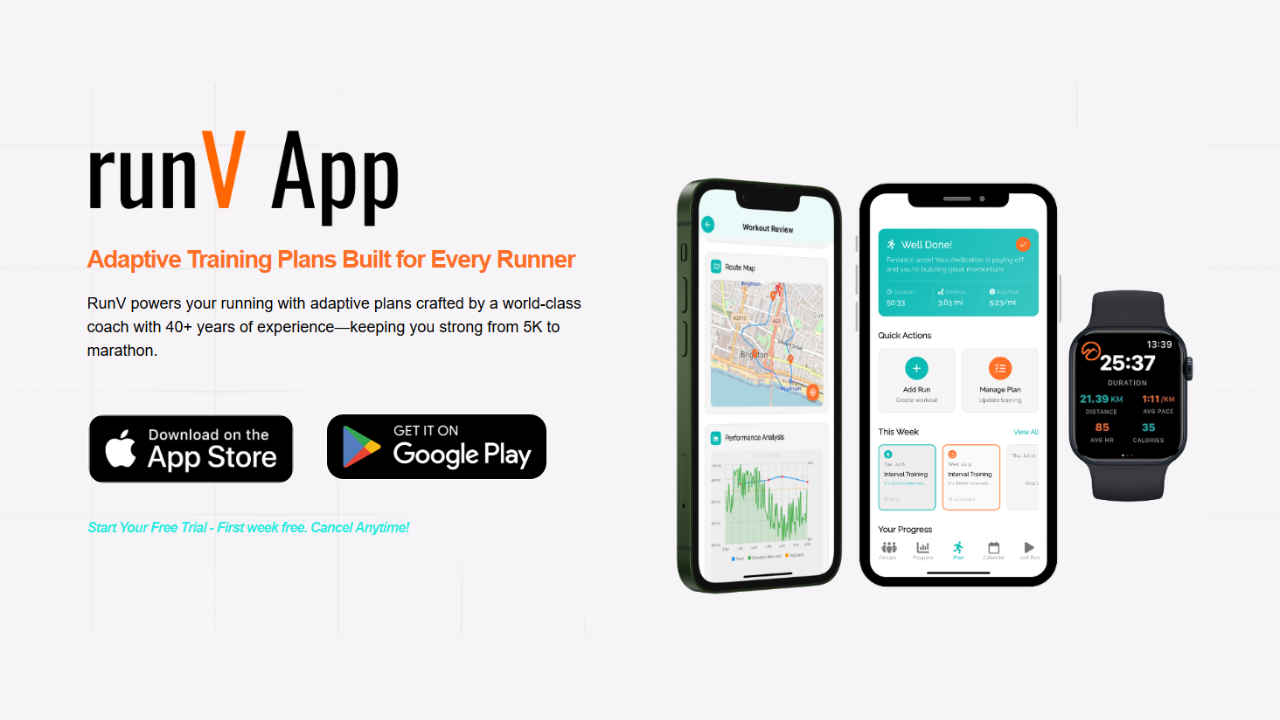
New models can help, but they won’t erase poor pacing, lack of sleep, or inconsistent training. If you’re struggling with the bigger picture—plan design, race‑day execution, or how to balance different shoes across sessions—don’t hesitate to seek guidance, whether from a coach, a club, or resources like RunV’s support channels.
Combined with a realistic plan and clear priorities, the latest Shoe Tech Change Your experience from a minor tweak into a meaningful upgrade.
Conclusion & Call‑to‑Action
The past week’s shoe news underscores where innovation is headed: more nuanced cushioning geometries, softer and smarter stability, and versatile designs for real‑world surfaces. Each development shows a different way Shoe Tech Change Your next long run—whether by adding bounce, calming pronation, or keeping you upright when gravel replaces asphalt.
As you plan your next training block, don’t just ask “What’s new?” Ask, “Which new Shoe Tech Change Your specific problem?” Then:
- Audit your current rotation for gaps in comfort, traction, or support.
- Match one or two of these 2026 releases to your real training needs.
- Test them on lower‑stakes long runs before key race‑pace sessions.
The right shoe won’t run the miles for you, but it can make those miles smoother, safer, and faster. Start by identifying your biggest limiter—fatigue, stability, or surface—and let that guide which new Shoe Tech Change Your running for the better this season.