
Runners love structure: a 12‑week PDF plan, a watch telling you the pace, a calendar marked with long runs. But real life doesn’t care about your spreadsheet. That’s exactly where adaptive training comes in. When used correctly, Adaptive Plans Reduce Shocking breakdowns in performance, motivation, and health by responding to what your body and schedule are actually doing—day by day, week by week.
For runners, fitness enthusiasts, and tech‑curious athletes, adaptive training is rapidly becoming the new normal. Below, we’ll break down how it works, why it’s safer, and how it can protect you from five surprising risks you might not even know you’re taking.
—
Table of Contents
- What Are Adaptive Training Plans?
- Why Adaptive Beats Static Training in the Real World
- Risk 1: Overuse Injury and Breakdown
- Risk 2: Overtraining, Burnout, and Crushing Fatigue
- Risk 3: Plateaued Performance and Race Disappointment
- Risk 4: Motivation Collapse and Quitting the Sport
- Risk 5: Wasted Gear, Tech, and Data (and How to Fix It)
- How Adaptive Plans Work: Data, Feedback, and Smart Adjustments
- Practical Steps: Building Your Own Adaptive System
- Adaptive vs. “Toughing It Out”: Myths You Should Drop Now
- Who Benefits Most from Adaptive Plans?
- Putting It All Together: Safer, Faster, More Enjoyable Running
—
What Are Adaptive Training Plans?
Adaptive plans are training plans that change as you change. Instead of a rigid, pre‑printed schedule, an adaptive plan shifts your workouts based on your:
– Recent performance
– Fatigue and recovery
– Life stress and sleep
– Injury niggles and soreness
– Race goals and timelines
In other words, Adaptive Plans Reduce Shocking mismatches between what’s written on paper and what your body can safely handle today.
Some adaptive systems are built into running apps or wearables, while others are simple frameworks you adjust manually. At their core, they share one key rule: the plan must respond to the runner, not the other way around.
—
Why Adaptive Beats Static Training in the Real World
Traditional training plans assume a perfect world:
– No missed runs
– No surprise illnesses
– No late nights at work
– No kids waking you at 3 a.m.
But your body doesn’t care what the calendar says. It only knows stress and recovery. If you slam a heavy workout on a day when you’re already exhausted, you’re compounding stress without adequate adaptation.
This is why flexible training plans have become so popular—they acknowledge reality. Adaptive plans take flexibility a step further: they systematically adjust volume, intensity, or even your goal race based on live information.
When you understand how these Adaptive Plans Reduce Shocking training errors, you start to see why they’re so effective at keeping runners healthy and improving performance.
—
Risk 1: Overuse Injury and Breakdown
Overuse injuries (shin splints, plantar fasciitis, IT band syndrome, stress fractures) don’t appear out of nowhere. They build quietly from repeated training mistakes:
– Jumping mileage too fast
– Ignoring early niggles
– Stacking hard sessions
– Running long on tired legs week after week
Static plans don’t know you slept 4 hours last night or that your knee has been sore for three days. They just tell you: “8 miles with tempo.”
This is where Adaptive Plans Reduce Shocking injury risk. By constantly re‑evaluating how much stress your body is tolerating, they reduce the conditions that cause breakdown.
How Adaptive Plans Reduce Shocking Injury Risk in Daily Training
An adaptive approach will:
– Cut or replace workouts when a niggle appears
– Decrease volume after a demanding race or long run
– Move intervals to later in the week if you’re clearly not recovered
– Insert extra easy days or cross‑training when soreness lingers
Instead of forcing you to choose between “follow the plan” or “skip everything,” it offers a third option: adjust intelligently.
For more depth on what happens when you push volume too aggressively, see Running Mileage Progression Mistakes: 7 Shocking Proven Risks. Adaptive plans are essentially a direct antidote to those progression errors.
Adjusting Mileage and Intensity Before Pain Becomes Injury
Key adaptive strategies:
– Limit weekly mileage increases (~5–10% maximum, often less)
– Listen to persistent soreness (>3 days in the same spot) as a trigger to scale back
– Downgrade hard days to steady or easy when legs feel heavy on warm‑up
– Use “time on feet” instead of distance when terrain or fatigue is high
The aim is to never let a “grumble” turn into a “limp.” This is one of the biggest ways Adaptive Plans Reduce Shocking interruptions to your training cycle.
—
Risk 2: Overtraining, Burnout, and Crushing Fatigue
Overtraining and burnout aren’t only elite problems. Recreational runners hit this wall all the time:
– You feel tired before the warm‑up ends
– Paces that used to feel easy now feel like a race
– Mood is flat, motivation is low
– Sleep is poor, resting heart rate is elevated
Static plans are blind to these signals. They say “do the work anyway.” Adaptive plans ask: what is your body saying, and how should training respond?
How Adaptive Plans Reduce Shocking Overtraining Risk
Adaptive systems monitor signs of excessive fatigue, such as:
– Drop in performance at the same effort
– Elevated effort (RPE) for normal workouts
– HRV changes, heart rate drift, or unusually high resting heart rate
– Persistent poor sleep and irritability
In response, they might:
– Replace intervals with an easy run or rest
– Cut a long run from 18 miles to 14, or convert it to a run‑walk
– Insert a recovery week with reduced volume and intensity
By doing this early, Adaptive Plans Reduce Shocking long‑term burnout and keep you progressing instead of digging a hole.
Fatigue Management 101: When to Back Off, When to Push
A practical adaptive rule set:
– If you feel “off” two days in a row, downgrade today’s workout.
– If performance drops for more than a week, reduce total load by 20–30% for 7 days.
– If mental fatigue is high (dreading every run), switch to fun, unstructured runs for several sessions.
To understand how deeply fatigue affects your mechanics and injury risk, it’s worth reading How Fatigue Changes Running: 5 Shocking Proven Injury Risks. Adaptive plans are specifically designed to avoid training in those compromised states too often.
—
Risk 3: Plateaued Performance and Race Disappointment
Many runners follow a plan perfectly and still blow up on race day or stop improving. Why?
Because the plan:
– Wasn’t matched to their starting fitness
– Didn’t change when they improved faster than expected
– Didn’t adjust when life stress spiked
– Used paces that were either too hard or too easy
To improve, your training must live in the sweet spot: challenging enough to stimulate adaptation, but not so hard that you can’t recover. Adaptive Plans Reduce Shocking performance plateaus by continuously recalibrating that sweet spot.
Adaptive Plans Reduce Shocking Pace and Goal Errors
Static plans often lock you into goal paces from week one. But what if:
– You get fitter faster than expected? You undertrain.
– You progress slower? You overtrain and fail workouts.
Adaptive systems update your pace zones after key workouts or tune‑up races. For example, a strong 5K might adjust your tempo pace downward and refine your marathon goal. A poor tune‑up might signal that your race goal needs adjusting—early enough to prevent a meltdown.
This is also where good guidance on race‑specific training helps. For club runners, How to Adjust Club Training: 7 Powerful, Proven Race Tips pairs perfectly with adaptive principles, especially when group workouts don’t align perfectly with your current state.
Breaking Through Plateaus with Adaptive Progressions
Adaptive adjustment examples:
– If you comfortably hit all target paces for two weeks, slightly increase quality (more reps, small pace drop).
– If you repeatedly miss target paces, back off pace or volume for 1–2 weeks while maintaining frequency.
– If life stress is high (work, family, travel), protect your “key” workouts and make others easier or optional.
By tuning training in real time, Adaptive Plans Reduce Shocking gaps between your potential and your actual race performances.
—
Risk 4: Motivation Collapse and Quitting the Sport
There’s a hidden cost to rigid plans: psychological damage.
If you see red X’s on your calendar week after week:
– You feel like you’re failing
– You start skipping more runs
– You lose confidence in the upcoming race
– Running shifts from joy to obligation
Over time, many runners simply stop. Not because the sport is wrong for them—but because the plan was.
Adaptive Plans Reduce Shocking Motivation Crashes
Adaptive plans build in:
– Flexible success criteria: The question becomes “Did I make the best choice for today?” rather than “Did I perfectly match the PDF?”
– Plan forgiveness: Miss a key workout? It’s reshuffled, not lost forever.
– Micro‑wins: Each adjusted workout is still a “win” that moves you closer to the goal.
This creates a psychologically sustainable environment. You stay engaged because the plan feels like a partner, not a judge.
Using Adaptive Check‑Ins for Mental Health and Enjoyment
Simple weekly check‑in questions:
– Did I enjoy at least one run this week?
– Do I feel more excited or more drained about training?
– What’s one small change that would make next week more fun or manageable?
Then the plan adjusts: swap a tempo for a trail run, shorten a long run but add strides, or insert a social run. Over months, this mental adaptability is one of the strongest ways Adaptive Plans Reduce Shocking dropout rates among everyday runners.
—
Risk 5: Wasted Gear, Tech, and Data (and How to Fix It)
Runners love gear and technology: GPS watches, footpods, HR straps, next‑gen shoes, adaptive apps. But most runners use a tiny fraction of what this gear can actually do for their training.
Common problems:
– Ignoring recovery metrics
– Never revisiting pace zones
– Collecting data but not changing behavior
– Using complex features once, then abandoning them
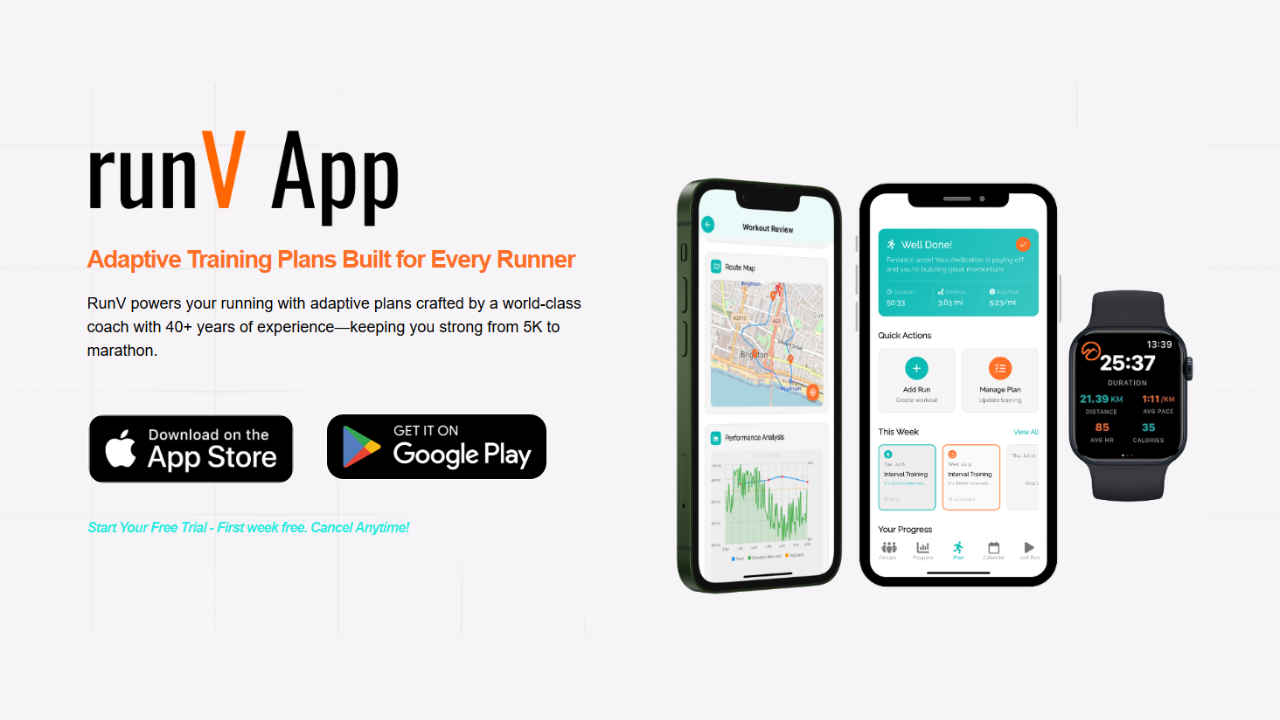
Adaptive plans give your gear a job. They turn raw data into actionable decisions.
Adaptive Plans Reduce Shocking Tech Waste
Examples of tech‑driven adaptation:
– Your watch reports poor sleep and elevated resting heart rate → your long run becomes an easy, shorter run.
– You see heart rate drift 15+ bpm in your easy runs → your “easy” pace slows down in the plan.
– Pace zones update automatically after a strong race → future workouts get slightly faster, right away.
If you’re curious about where this is heading, New Running Tech That Might Finally Replace Your Old Watch shows how fast adaptive technologies are evolving. The smarter your tools, the more naturally Adaptive Plans Reduce Shocking mismatches between data and decisions.
—
How Adaptive Plans Work: Data, Feedback, and Smart Adjustments
Adaptive planning can be powered either by:
– Algorithms (in apps and wearables)
– Human coaches
– A simple framework you apply yourself
Whichever route you use, they rely on similar inputs.
Key Inputs for an Adaptive Running Plan
Core inputs:
– Recent workouts: duration, pace, heart rate, RPE
– Recovery markers: sleep, soreness, HRV, mood
– Injury status: pain scale, location, duration
– Schedule changes: upcoming travel, busy work periods
– Goal race and timeline
The plan interprets these signals and adjusts:
– Volume (total weekly mileage or time)
– Intensity (pace, heart rate zone, or effort)
– Frequency (number of run days vs. cross‑training)
– Structure (which days are quality vs. easy vs. rest)
How Adaptive Plans Reduce Shocking Mismatches Between Stress and Recovery
The central equation:
Training Stress – Recovery Capacity = Adaptation (positive or negative)
If stress exceeds recovery for too long, you get:
– Injury
– Burnout
– Stagnant performance
If recovery always exceeds stress, you get:
– Undertraining
– No improvement
– Frustration
Adaptive systems tighten that gap, keeping you near the optimal stress zone for growth. This is exactly how Adaptive Plans Reduce Shocking deviations from your best training window.
—
Practical Steps: Building Your Own Adaptive System
You don’t need expensive subscriptions to train adaptively. You can create your own adaptive framework using a notebook, a watch, and honest self‑feedback.
Step 1: Start with a Skeleton Plan
Begin with a simple structure based on your race and timeline:
– 3–6 runs per week
– 1 long run
– 1 quality session (intervals, tempo, hills)
– The rest easy or recovery runs
You can borrow a baseline from a proven plan (like 5K or 10K schedules) and then commit to adjusting it as you go rather than treating it as scripture.
Step 2: Set Clear, Flexible Goals
Instead of “Run 4x per week at all costs,” try:
– “Train 3–5 days per week, adjusting based on recovery.”
– “Arrive at race day healthy, then run the best effort I can on the day.”
This framing supports the way Adaptive Plans Reduce Shocking all‑or‑nothing thinking. You’re allowed to flex.
Step 3: Use a Simple Daily Check‑In
Before each run, ask:
– Body: How do my legs feel (1–10)? Any pain?
– Mind: Am I mentally ready for hard work, or would easy feel better?
– Life: Sleep quality and stress level last 24 hours (1–10)?
Then:
– If all 3 are high → consider keeping the planned workout.
– If 1–2 are low → downgrade intensity or shorten duration.
– If all 3 are low → rest or do light cross‑training.
Step 4: Weekly Review and Micro‑Adjust
Every week:
– Look at total volume vs. how you felt.
– Identify the hardest day—did it feel manageable or brutal?
– Adjust next week’s load up, down, or sideways (same volume but different distribution).
This simple review loop is the engine that helps Adaptive Plans Reduce Shocking long‑term drift away from optimal training.
Step 5: Use RPE and Effort Levels, Not Just Pace
Training by effort adds a powerful adaptive layer. For guidance, structured learning resources like “Why Beginners Should Learn 5 Essential, Proven Effort Levels” can help, but the core concept is:
– Easy = 3–4/10 effort
– Steady = 5–6/10
– Tempo = 7–8/10
– Intervals = 8–9/10
If your “easy” keeps feeling like 7/10, slow down. If your “tempo” feels like 5/10 for several weeks, gently progress pace or duration.
—
Adaptive vs. “Toughing It Out”: Myths You Should Drop Now
There are two big myths that stop runners from embracing adaptive training.
Myth 1: Adaptive Plans Are for “Soft” Runners
Reality: adaptive training is actually harder in one sense—it requires honesty and discipline to back off when ego wants you to push.
You’re not opting out of hard work; you’re timing it better. Over a full season, you’ll likely do more high‑quality work because you’re not sidelined by avoidable injuries and exhaustion. This is how Adaptive Plans Reduce Shocking inconsistency compared with “tough it out” training.
Myth 2: If I Miss a Workout, My Whole Plan Is Ruined
Rigid thinking leads to either:
– Piling missed workouts on top of current ones (disaster), or
– Giving up completely (also disaster).
Adaptive thinking says:
– “What’s the most important stimulus this week?”
– “What can I do today that moves me toward the goal without overreaching?”
One missed session folded intelligently into an adaptive plan is almost never a problem. A rigid reaction to that missed session is.
—
Who Benefits Most from Adaptive Plans?
Almost every runner can benefit from adaptive training, but some groups gain the most.
Busy Adults and Parents
If your schedule changes week to week, adaptive planning is your lifeline. You might:
– Shuffle long runs to weekdays when weekends are packed
– Shorten and intensify midweek runs when time‑crunched
– Insert unplanned rest days without guilt, then rebalance later
Injury‑Prone or Returning Runners
If you have a history of stress fractures, tendinopathy, or chronic niggles, Adaptive Plans Reduce Shocking relapse risk. You’ll:
– Increase load more cautiously
– React quickly when symptoms return
– Build more cross‑training and strength into the schedule
Resources like “How Strength Training Protects: 7 Powerful Proven Joint Benefits” (internal link not used here, mention only as concept) complement adaptive running by shifting some stress off vulnerable tissues.
Data‑Loving Tech Users
If you already:
– Track heart rate, HRV, sleep
– Log RPE and mood
– Use advanced features on your watch
Then you’re perfectly positioned to let your data drive adaptation. The more feedback loops you use, the more precisely Adaptive Plans Reduce Shocking mismatches between your metrics and your training choices.
—
Putting It All Together: Safer, Faster, More Enjoyable Running
When you zoom out, adaptive training isn’t a fancy add‑on—it’s just good training, made explicit.
Across all five risks:
1. Injury – Adaptive Plans Reduce Shocking mileage and intensity spikes that break your body.
2. Overtraining – They listen to fatigue and protect you before burnout sets in.
3. Performance Plateaus – They recalibrate pace and volume so you keep progressing.
4. Motivation Loss – They keep you psychologically engaged with flexible success and micro‑wins.
5. Tech Waste – They turn gadgets and data into concrete, smarter decisions.
If you’re using or considering modern training tools, pairing them with an adaptive mindset is key. For an overview of how tech, training structure, and performance fit together, the Complete Guide to Performance: 7 Powerful Secrets for Runners provides a useful big‑picture framework that slots neatly beside everything discussed here.
The bottom line: the more your training responds to the real you—your body, your life, your stress—the more sustainable, enjoyable, and effective your running becomes. That’s how Adaptive Plans Reduce Shocking outcomes: by replacing rigid fantasy with intelligent reality, one smart adjustment at a time.