

For many runners, “rest” sounds like the opposite of progress. If you love the grind of training, you might secretly fear that an easy day or day off will make you slower. The reality is the exact opposite: properly planned recovery days are where your speed is built. When you understand how Recovery Days Actually Deliver five specific, proven performance gains, you stop seeing rest as lost time and start seeing it as a critical training tool.
This article breaks down the physiology, training strategy, gear, and tech behind effective recovery—and shows you how to use it to run faster with fewer injuries.
—
Table of Contents
- Why Recovery Makes You Faster (Not Softer)
- The 5 Proven Speed Gains Recovery Days Actually Deliver
- Types of Recovery Days Actually Deliver Different Benefits
- How to Plan Recovery in Your Weekly and Monthly Training
- How Tech and Wearables Can Optimize Recovery
- Gear That Makes Recovery Days More Effective
- Common Recovery Mistakes That Quietly Kill Your Speed
- Practical Recovery Day Templates (5K to Marathon)
- Key Takeaways: Turning Recovery into Speed
—
Why Recovery Makes You Faster (Not Softer)
Training doesn’t make you faster while you’re doing it. It makes you faster when you recover from it. The stress of a workout is the signal; the adaptation happens afterward. Recovery Days Actually Deliver the time and conditions your body needs to repair damage, rebuild stronger tissues, and upgrade your energy systems.
Without enough recovery, your body gets stuck in a chronic stress state. You feel flat, your pace stagnates, and injuries creep in. With well-planned recovery, every hard session “lands” better, leading to measurable improvements in pace, heart rate, and race performance over weeks and months.
—
5 Proven Speed Gains Recovery Days Actually Deliver
Below are the five specific ways smart recovery makes you faster. These are backed by exercise physiology and observed daily by experienced coaches.
—
1. Gain 1: Faster Muscle Repair and Stronger Fibers
Every hard run creates microscopic damage in your muscle fibers. That’s not a bug—it’s the feature. Tiny tears are the stimulus for growth. The catch: repair requires time and resources. This is where Recovery Days Actually Deliver your first speed gain.
On easy or rest days, several key processes ramp up:
- Protein synthesis: Your body rebuilds damaged muscle fibers, often making them thicker and stronger.
- Collagen repair: Tendons and ligaments repair micro-damage, improving stiffness and force transfer.
- Capillary growth: You develop more small blood vessels around working muscles, boosting oxygen delivery.
All three translate to stronger, more resilient legs that can handle—and generate—higher speeds.
If you never back off, repair lags, and your muscles accumulate damage faster than they can fix it. The result is that heavy-legged feeling, slower paces for the same effort, and a higher risk of muscle strains.
How to use this gain:
- After a hard workout or long run, schedule at least one easy or rest day.
- Boost protein intake (around 20–30g per meal) to support muscle repair.
- Keep easy runs truly easy; you should be able to hold a relaxed conversation.
—
2. Gain 2: More Efficient Neuromuscular Firing
Speed isn’t just about muscles; it’s about how quickly and efficiently your brain can recruit those muscles. Sprinting, fast finishes, and tempo runs all rely on rapid neuromuscular communication. Recovery Days Actually Deliver the reset your nervous system needs so your stride stays snappy rather than sluggish.
Hard sessions temporarily exhaust your:
- Motor units: Groups of muscle fibers controlled by a single nerve.
- Central nervous system: Your brain and spinal cord, which coordinate stride timing, foot placement, and posture.
Without enough recovery, runners often notice:
- Heavy, “wooden” legs.
- Poor coordination, especially at faster paces.
- More tripping or sloppy form late in runs.
By contrast, when you integrate recovery correctly, your nervous system rebounds. Your stride becomes smoother and more economical; you can hit high speeds with less perceived effort because your brain is better at firing the right muscles in the right sequence.
Consider supplementing this with technique work. On your recovery days, you can occasionally include a few short, gentle drills or strides (if you’re not overly fatigued) to keep your nervous system “remembering” fast movement patterns without adding big stress. For more cues, see resources like Simple Form Cues to 7 Proven Ways to Run Comfortably that help refine technique without grinding harder.
—
3. Gain 3: Better Energy System Adaptations
Your speed depends heavily on how efficiently your body produces and uses energy. High-quality workouts stress different energy systems (aerobic, anaerobic, and phosphocreatine). Recovery Days Actually Deliver the integration time for those systems to adapt.
On recovery days, your body:
- Replenishes muscle glycogen (stored carbohydrate) so you can hit faster splits next time.
- Upgrades mitochondrial function, improving aerobic capacity.
- Improves buffering of lactate and hydrogen ions, raising your threshold pace.
If every day feels “medium-hard,” you never fully top off energy stores or allow these deeper adaptations. You just coast in a grey zone: always tired, rarely improving.
Instead, think in contrast:
- Hard days: Stress specific energy systems with intervals, tempo, or long runs.
- Recovery days: Allow supercompensation—your body adapts to a higher level.
When you return to hard training, you get a noticeable pop: lower heart rates at the same pace, more sustainable tempo runs, and better finishing speed.
—
4. Gain 4: Lower Injury Risk and Consistent Training
Nothing kills speed faster than missed weeks from injury. One of the most powerful speed advantages Recovery Days Actually Deliver is simply keeping you healthy enough to train consistently for months and years.
Most running injuries are overuse-related: your tissues get overloaded incrementally until something fails. Runners often ignore early warning signs—tightness, niggles, persistent soreness—until they’re forced to stop. Learning to recognize threats early (see guides like How to Spot Early Shocking Signs: 7 Proven Mileage Risks) and responding with more recovery can prevent downtime.
During recovery days, your body:
- Repairs micro-damage in tendons and joints.
- Reduces systemic inflammation.
- Restores range of motion in key joints (hips, ankles, knees).
Consistent, mostly injury-free training beats sporadic heroic weeks every time. Over 6–12 months, that damage control turns into faster race times because you’re stringing together more quality cycles instead of constantly rebuilding fitness.
Practical ways to cash in this gain:
- Build at least one full rest day into each week, especially if you’re above 40 or ramping volume.
- Use step-back weeks every 3–4 weeks, where total mileage and intensity drop 20–30%.
- When something hurts more than 3–4 runs in a row, swap a workout for a recovery day.
—
5. Gain 5: Sharper Brain, Better Pacing, and Race-Day Execution
Running fast isn’t just physical; it’s a mental performance under fatigue. Recovery Days Actually Deliver the cognitive recharge you need for smart pacing, fueling decisions, and race-day resilience.
Chronic fatigue erodes:
- Focus and reaction time.
- Motivation and enjoyment.
- Perception of effort (everything feels harder than it should).
Well-timed recovery helps restore:
- Mental clarity: You can process pace and effort more accurately.
- Emotional stability: Less anxiety about workouts and races.
- Confidence: Easy, relaxed runs remind you that your base fitness is solid.
This mental freshness pays off hugely in races. You’ll be better able to adapt to conditions, stick to your plan, and kick when it counts—especially if you’ve combined good recovery with strong race strategies like those in resources such as Race Day Decision Making: 7 Proven Secrets for Powerful PRs.
—
Types of Recovery Days Actually Deliver Different Benefits
Not all recovery is the same. Different styles of recovery days deliver distinct benefits to your body and brain. Mixing them gives you the complete package.
—
1. Complete Rest Days
What it is: No running, usually only gentle movement like walking, light stretching, or daily chores.
Best for:
- After very hard interval sessions or races.
- During high-mileage cycles.
- When you’re sick, extremely stressed, or clearly overreached.
Speed gains they support:
- Deep nervous system reset (Gain 2).
- Full muscle and tendon repair (Gain 1, Gain 4).
- Mental decompression (Gain 5).
—
2. Active Recovery Runs
What it is: Short, very easy runs—typically 20–45 minutes at a pace 60–75% of your 5K pace (often 90–120+ seconds slower per mile than 10K pace).
Best for:
- Between two key workouts.
- For maintaining routine without heavy stress.
Active recovery improves:
- Blood flow to muscles to speed waste removal.
- Maintenance of running-specific movement patterns.
- Aerobic base, without extra high-intensity damage.
To ensure these runs stay truly easy, use breathing and talk tests. You should be able to converse in full sentences without gasping.
—
3. Cross-Training Recovery
What it is: Low-impact cardio like cycling, swimming, elliptical, or deep-water running, kept at easy effort.
Best for:
- Runners with joint issues or recent niggles.
- Maintaining aerobic fitness with less pounding.
These days can:
- Reduce loading on overworked tissues (Gain 4).
- Help maintain or build aerobic capacity (Gain 3).
- Give your mind a break from running while still moving (Gain 5).
—
4. Mobility and Strength-Focused Recovery
What it is: Light sessions with mobility work, activation exercises, and low-load strength.
Examples:
- Hip and ankle mobility flows.
- Glute activation (clamshells, bridges).
- Low-weight, high-control strength moves.
These sessions support:
- Better running economy through improved range of motion.
- Stronger stabilizing muscles to prevent form breakdown.
They’re a great way to tune your body without exhausting it.
—
5. “Mental Recovery” Days
You might run or rest on these days, but the priority is psychological rest. You:
- Run without a watch—or ignore pace.
- Leave the training plan at home and run for feel.
- Switch terrain (trail instead of road) just for enjoyment.
“Soft” gains here are powerful:
- Reduced burnout and training anxiety.
- Renewed motivation and enjoyment.
- More sustainable long-term training habits.
—
How to Plan Recovery in Your Weekly and Monthly Training
To feel the five speed gains consistently, you need structure. Recovery Days Actually Deliver the most benefit when they’re deliberately placed in your training cycle, not just added when you hit a wall.
—
Weekly Structure: The Hard/Easy Rhythm
A simple rule: never stack two hard days back-to-back unless you’re doing a carefully controlled “mini-block” and know what you’re doing.
Common weekly layouts:
- Beginner (3–4 runs/week): 2 easy, 1 long, 1 optional moderate/hard. At least 1 full rest day.
- Intermediate (4–6 runs/week): 2 workouts, 1 long, 2–3 easy, 1 rest.
- Advanced (6–7 runs/week): 2–3 quality days, 3–4 easy, 0–1 full rest depending on response.
Example intermediate week (10K or half-marathon focus):
- Mon: Easy or rest.
- Tue: Interval workout.
- Wed: Easy.
- Thu: Tempo run.
- Fri: Easy or cross-training.
- Sat: Long run.
- Sun: Easy or rest.
Notice how Recovery Days Actually Deliver buffers around every quality session.
—
Monthly Structure: Step-Back and Deload Weeks
Every 3–4 weeks, reduce total workload to lock in gains:
- Cut volume by ~20–30%.
- Reduce intensity (shorter intervals, fewer reps, or swap one workout for easy miles).
- Include an extra rest day if needed.
These step-back weeks are like big-picture recovery days—they keep you from gradually sliding into overtraining and allow cumulative adaptation.
—
Seasonal Structure: Tapering for Races
A taper is essentially a structured period where Recovery Days Actually Deliver a peak-performance state.
Key principles for taper:
- Maintain some intensity so your legs stay sharp.
- Reduce volume significantly, especially in the last 7–10 days before your race.
- Increase focus on sleep, nutrition, and mental preparation.
Distance-specific guidelines:
- 5K: 5–7 day taper; slightly reduced mileage, keep interval intensity.
- 10K / Half Marathon: 7–14 day taper; notable volume reduction, moderate workouts.
- Marathon: 2–3 week taper; big mileage drop, shorter but still reasonably brisk sessions.
You can also align your race-specific training with specialized guides like Half Marathon resources to see how coaches structure recovery before peak events.
—
How Tech and Wearables Can Optimize Recovery
Modern gear and apps make it much easier to see when Recovery Days Actually Deliver enough rest—and when you’re pushing too hard.
—
1. Heart Rate and Heart Rate Variability (HRV)
Resting heart rate (RHR): If your RHR is 5–10 bpm above normal for several mornings, you may be under-recovered.
HRV: Lower-than-normal HRV suggests increased stress and reduced readiness. A trend of suppressed HRV is a good sign to adjust training and add recovery.
Many watches aggregate these into a “readiness” score. Don’t worship the number, but use it as a conversation starter with your body: do you feel flat, moody, or unusually sore?
—
2. Training Load Metrics
Watch ecosystems like Garmin, Polar, and Coros estimate your 7-day and 28-day training load. They highlight spikes where risk goes up and periods where you’re underdoing or overdoing it.
Learning how these metrics work—such as in guides like Garmin Training Load Explained: 7 Essential Proven Tips—helps you line up what the watch says with what your body feels.
Where Recovery Days Actually Deliver is in smoothing sharp spikes, not in flattening training completely. Aim for:
- Gradual weekly increases (5–10% for volume).
- Clear highs (hard sessions) and lows (true recovery days).
—
3. Sleep and Stress Tracking
Most smartwatches now track:
- Total sleep time.
- Sleep stages.
- Nighttime heart rate and movement.
Use this signal to protect the most underrated recovery factor: consistent 7–9 hours of quality sleep. If your device flags multiple poor nights in a row, consider:
- Downgrading a workout to an easy run.
- Adding a full rest day.
—
4. Apps and Adaptive Plans
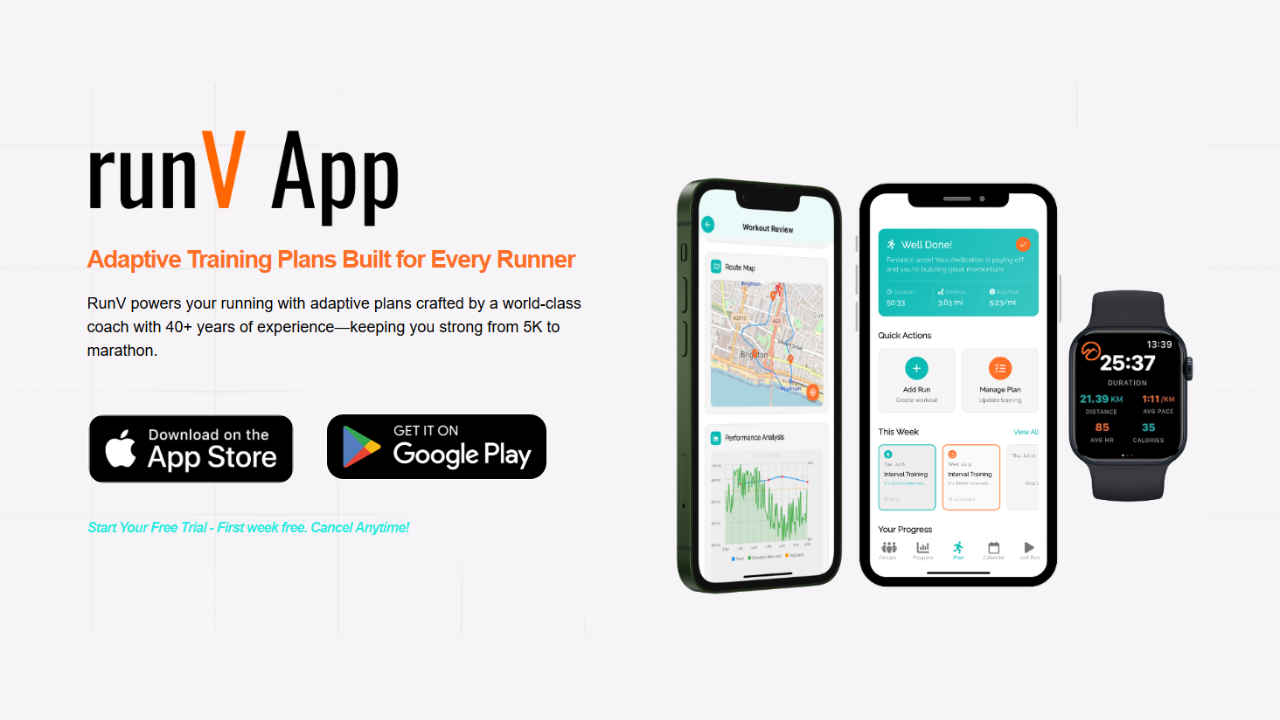
Adaptive training platforms adjust your plan based on recent data and subjective feedback. They help ensure Recovery Days Actually Deliver the right amount of rest by balancing load in near-real time.
When evaluating an app or platform:
- Check how it responds to missed days or flagged fatigue.
- Make sure it doesn’t push volume without considering sleep and stress.
Comparisons like RunV vs Strava for 7 Powerful, Proven Beginner Wins can be helpful to see how different tools treat adaptability and recovery within training plans.
—
Gear That Makes Recovery Days More Effective
Your gear choices can either support recovery or quietly sabotage it. Since the audience here loves running tech and equipment, let’s look at where Recovery Days Actually Deliver better outcomes with the right tools.
—
1. Footwear Choice on Recovery Days
Your recovery shoes should emphasize:
- Cushioning: To reduce impact on joints and tendons.
- Stability (if needed): To control excessive motion when tired.
- Comfort: No hot spots or pressure points.
Save your super-responsive, carbon-plated racers for workouts and races. On recovery days, a cushioned daily trainer often protects your legs better and encourages an easier pace.
New foam and midsole technologies are emerging fast. Following developments like New 2026 Shoe Tech Is Rewriting Your Daily Miles will help you pick shoes that make your recovery runs smoother and gentler on your body.
—
2. Compression and Support Gear
Compression socks and tights may help reduce swelling and promote venous return, particularly after long or intense sessions. While the science is mixed on performance benefits during running, many runners report:
- Reduced soreness the next day.
- Less lower-leg heaviness after races.
Use them:
- Post-race or post-long run.
- On flights or long car rides after big efforts.
—
3. Recovery Tools: Rollers, Massage Guns, and More
These tools don’t replace recovery days, but they can amplify how well Recovery Days Actually Deliver relief:
- Foam roller: Good for quads, IT band area, calves, glutes.
- Massage gun: Target sore spots lightly, not aggressively.
- Massage ball: For feet and deep glute work.
Keep sessions short and gentle. Overdoing it with intense pressure can cause more soreness, not less.
—
4. Hydration and Nutrition Accessories
Simple items like:
- Reusable bottles with volume markings.
- Electrolyte tablets.
- Ready-to-go snacks (nuts, yogurt, recovery shakes).
make it easier to support recovery physiologically. Aim to:
- Hydrate steadily through the day, especially after sweat-heavy sessions.
- Include carbs plus protein in your post-run meal within 2 hours.
That’s when repair and glycogen replenishment are most active.
—
Common Recovery Mistakes That Quietly Kill Your Speed
Now that we know how Recovery Days Actually Deliver speed, it’s important to avoid the traps that neutralize those benefits.
—
1. Running Easy Days Too Fast
This is the number one mistake. If you turn every run into a semi-tempo, you:
- Never allow deep recovery.
- Accumulate fatigue that flattens workouts.
- Increase injury risk from constant moderate stress.
Use objective checks:
- Can you hold a relaxed conversation?
- Does your breathing feel very controlled?
- Are you at least 60–90 seconds slower per mile than 10K pace (for many runners)?
—
2. Skipping Sleep to Fit in More Miles
Sleep is when your body does its best rebuilding work. Sacrificing 90 minutes of sleep to squeeze in a run often gives you less net gain than sleeping and cutting the run short or dropping it.
If your schedule is tight:
- Prioritize key workouts and the long run.
- Allow easy or recovery runs to be flexible or optional.
—
3. Ignoring Early Warning Signs
Runners often see pain as something to be “run through.” While some mild stiffness is normal, escalating pain, sharp sensations, or persistent unilateral soreness are red flags.
Use your recovery days to:
- Check in with how your body feels on easy effort.
- Adjust upcoming workouts if something seems off.
Again, learning to catch and interpret early risk signs can avoid long layoffs and keep you in the consistent training zone where speed is built.
—
4. Overloading “Off” Days with Life Stress
A day with no running isn’t truly a recovery day if you’re:
- Moving heavy furniture.
- Standing for 10 hours straight.
- Sleeping 4–5 hours and living on caffeine.
You can’t perfectly control life, but try to structure key weeks (especially before races) to reduce non-training stress when possible, so Recovery Days Actually Deliver full benefit.
—
5. Inconsistent Recovery Habits
One good recovery day won’t fix three weeks of over-reaching. Aim for consistency:
- One rest or very light day each week.
- Regular sleep schedule.
- Routine mobility and light strength.
Over time, these habits multiply your gains.
—
Practical Recovery Day Templates (5K to Marathon)
To make this actionable, here are simple structures showing how Recovery Days Actually Deliver speed across different race goals.
—
1. 5K-Focused Runner (3–4 Days/Week)
Goal: Build speed with enough recovery to absorb intervals.
Example week:
- Mon: Rest or 20–30 min very easy jog.
- Tue: Interval workout (e.g., 6 × 400m at 5K pace with equal jog rest).
- Wed: 25–35 min easy (active recovery).
- Thu: Rest or cross-training (bike/swim easy).
- Fri: 20–30 min easy + light strides if fresh.
- Sat: Long run (45–60 min at easy pace).
- Sun: Rest.
Note how 3–4 days per week, with at least two real recovery days, can still deliver substantial speed improvement for beginners, especially when paired with a structured program such as a 5k-specific plan.
—
2. 10K or Half-Marathon Runner (4–6 Days/Week)
Goal: Balance tempo, intervals, and long run with enough recovery between.
Example 5-day structure:
- Mon: 30–45 min easy (recovery after weekend long).
- Tue: Tempo or threshold workout.
- Wed: 30–40 min easy + light mobility.
- Thu: Interval session (e.g., 6 × 800m at 10K pace).
- Fri: 30–50 min easy or cross-train.
- Sat: Long run 60–90 min easy.
- Sun: Rest.
This layout shows how Recovery Days Actually Deliver the space needed for two quality workouts and a productive long run.
—
3. Marathon Runner (5–7 Days/Week)
Goal: High enough volume for endurance while preventing breakdown.
Example 6-day structure:
- Mon: Rest or 30–40 min very easy.
- Tue: Marathon-pace or tempo workout.
- Wed: 45–60 min easy (active recovery).
- Thu: Intervals or medium-long run.
- Fri: 30–45 min easy + mobility/strength.
- Sat: 40–60 min easy (mental and physical recovery).
- Sun: Long run (can include some marathon pace segments).
Notice two easy days before the long run and at least one complete rest or very light day after key efforts. For race-specific guidance, pairing a marathon plan with structured advice from a dedicated Marathon resource can help you time recovery perfectly for peak performance.
—
4. Using Recovery to Transition Between Training Blocks
When you finish a big race or training block:
- Take 5–14 days of reduced running (or complete rest if needed).
- Run only by feel, mostly easy, no structured workouts.
This is where Recovery Days Actually Deliver long-term career gains. You reset physically and mentally before building toward the next goal, rather than bouncing directly into another cycle already fatigued.
—
Key Takeaways: Turning Recovery into Speed
To recap how Recovery Days Actually Deliver real, measurable speed gains:
- They rebuild your muscles and tendons stronger than before, supporting higher paces with less risk (Gain 1).
- They reset and sharpen your nervous system, improving stride coordination and quickness (Gain 2).
- They enable deep energy-system adaptations that raise your threshold and boost aerobic power (Gain 3).
- They prevent injuries and overuse breakdowns, allowing consistent training over months and years (Gain 4).
- They restore mental clarity and motivation, leading to smarter pacing and better race execution (Gain 5).
The most successful runners aren’t just the ones who train hard; they’re the ones who recover hard with equal intention. When you start seeing recovery days as active investments in speed—rather than breaks from “real” training—you unlock your next level of performance while staying healthier and enjoying the sport more.
Plan your week so that every hard session has recovery wrapped around it. Use your gear and tech intelligently. Listen to your body early, not only when it’s forced to shout. That’s how Recovery Days Actually Deliver the fastest, most sustainable gains you’ll ever make.