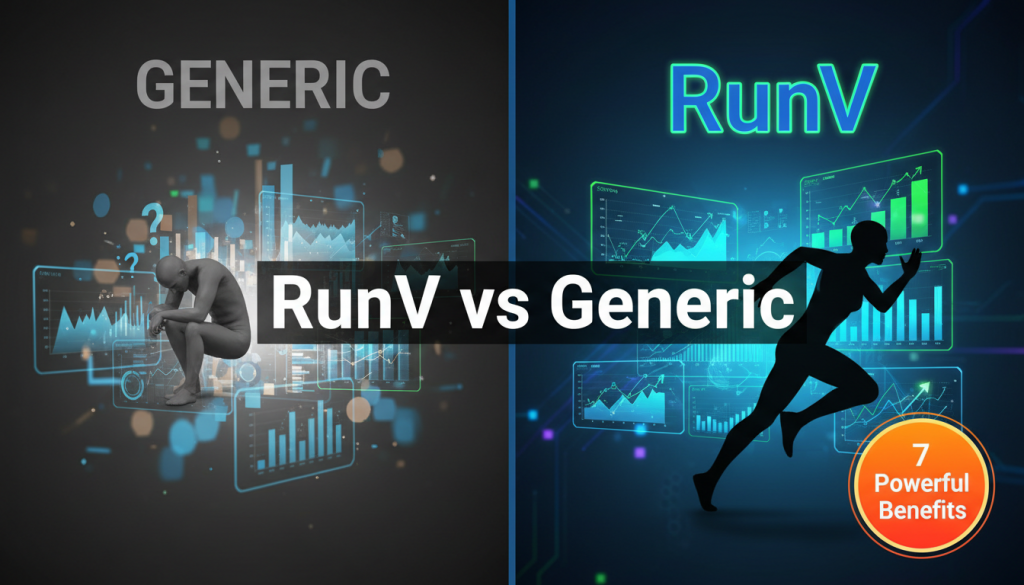
When you compare training tools today, the conversation often comes down to RunV versus a generic app, spreadsheet, or one-size-fits-all plan. In this article, we’ll break down “RunV Compared Generic: Proven,” so you can see exactly how a smarter, adaptive platform can change your training, racing, and everyday runs. Whether you’re chasing a faster 10k, your first marathon, or simply more enjoyable miles, understanding these differences matters.
Table of Contents
- Why Comparing RunV to Generic Plans Actually Matters
- RunV Compared Generic: Proven, Big-Picture Overview
- Benefit 1 – Truly Personalized, Not Just “Customized”
- Benefit 2 – Smarter Progression and Load Management
- Benefit 3 – Data-Driven Insights Instead of Guesswork
- Benefit 4 – Real-Time Adaptation When Life Happens
- Benefit 5 – Integrated Training Structure That Cuts Injury Risk
- Benefit 6 – Performance Mindset, Motivation, and Habit Support
- Benefit 7 – Future-Proof Tech and Gear Integration
- How Different Runners Benefit: 5 Real-World Scenarios
- RunV Compared Generic: Proven, Practical Checklist for Choosing
- FAQ: Common Questions About Switching to RunV
- Final Thoughts: Is RunV Worth It for You?
Why Comparing RunV to Generic Plans Actually Matters
Most runners still use generic tools: free plans from a website, a basic GPS app, or a spreadsheet copied from a friend. They can work—up to a point. The problem is that these tools don’t know you: your history, your injury background, your schedule, or your current fitness.
That’s where “RunV Compared Generic: Proven,” becomes important. When you evaluate a smarter platform against a generic option, you’re really asking a deeper question: “Do I want my running shaped by averages, or by my individual data and goals?” The answer affects your performance, your consistency, and your enjoyment of the sport.
RunV Compared Generic: Proven, Big-Picture Overview
Generic training tools typically offer static plans, basic GPS tracking, and a simple log of your runs. You get distance, pace, maybe heart rate, and a calendar of workouts that never changes once it’s written.
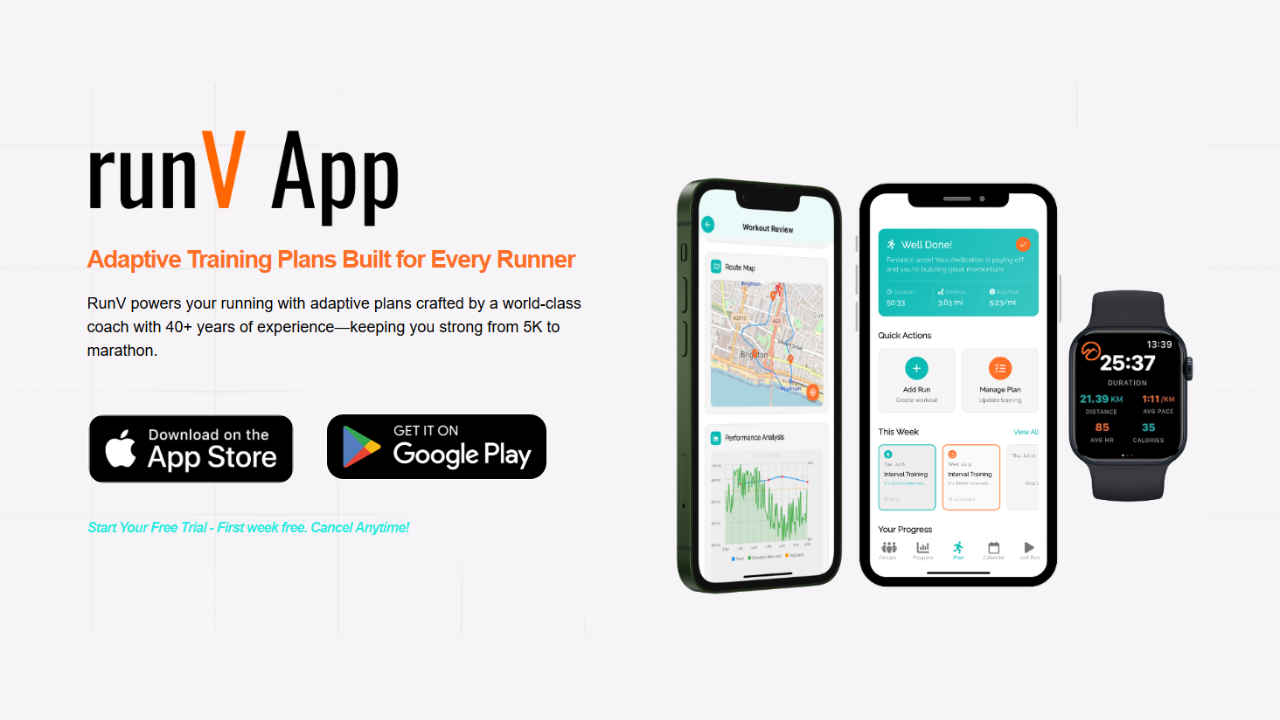
RunV, by contrast, is built around adaptive, data-driven coaching. It uses your training load, paces, heart rate data, and workout feedback to adjust your plan over time. Instead of treating you like a “typical runner,” it constantly recalibrates to how your body is responding.
In “RunV Compared Generic: Proven,” you’ll see seven concrete benefits this approach delivers: more precise training, better recovery, smarter race preparation, and stronger long-term progress with fewer setbacks.
Benefit 1 – Truly Personalized, Not Just “Customized”
RunV Compared Generic: Proven, Depth of Personalization
Most generic plans ask for one or two inputs: maybe your weekly mileage and goal distance. After that, you follow a schedule that could have been written for anyone. The workouts are decent, but they’re not built for your pace, your strengths, or your weaknesses.
RunV starts with your goals—whether it’s a fast 10k, a first half marathon, or general fitness—and then tailors the specifics: paces, workout types, weekly volume, and rest days. Over time, it keeps adjusting based on your actual performance, not just what you planned to run.
Why True Personalization Matters for Progress
Training that’s too easy won’t build fitness; training that’s too hard builds fatigue and risk. Generic plans often misjudge where you sit on that spectrum. If you’re naturally strong at endurance but weak at speed, or vice versa, generic plans can overemphasize what you already do well.
By continuously personalizing, RunV guides you toward sessions that push your specific limit without tipping you over it. That means workouts that feel “appropriately hard” instead of random days of destruction followed by burnout.
Example: Two Runners, Same Goal, Different Paths
Imagine two runners both targeting a sub-2-hour half marathon. A generic plan might give them identical weekly workouts. RunV, however, would quickly notice:
- Runner A struggles at tempo pace but can handle long runs easily.
- Runner B handles tempo well but fades in the last 5 km of long efforts.
The result: RunV fine-tunes workout emphasis for each runner, even with the same goal. That’s the difference when you examine RunV Compared Generic: Proven personalization versus template-based training.
Benefit 2 – Smarter Progression and Load Management
How RunV Builds Fitness Without Breaking You
One of the biggest dangers with generic plans is that their mileage progression is fixed. They might jump from 30 to 40 to 50 kilometers a week without considering how you’re sleeping, recovering, or handling stress at work. Your body doesn’t care what the spreadsheet says; it cares how it feels.
RunV tracks your training load over time and can adapt intensity or volume if the data shows you’re under-recovering. If your easy days are creeping faster, or your heart rate is unusually high for a given pace, the platform can respond by easing back before you crash.
RunV Compared Generic: Proven, Better Control of Training Stress
Generic systems often treat training stress as a one-way ramp upwards: more is always better. Real-world performance doesn’t work that way. Fitness gains come from a cycle of stress and recovery. Too much stress crushes adaptations; too little fails to stimulate them.
With RunV, you get progressive overload that respects your individual response. That means an intelligent pattern of hard workouts, strategic down weeks, and tapered build-ups that sync with your racing calendar.
Load Management and Injury Risk
Most running injuries relate to training errors—too much, too soon, with too little structure. Generic plans don’t know when you’re quietly adding extra miles, cross-training too hard, or skipping recovery days. They just march on.
RunV’s approach fits perfectly with evidence-based coaching principles: gradual increases in load, variety in stimulus, and built-in recovery. If you want to dive deeper into how training structure reduces injury risk, it aligns well with resources like How Proper Training Structure Cuts Injury Risk: 5 Proven Tips.
Benefit 3 – Data-Driven Insights Instead of Guesswork
From Random Numbers to Useful Feedback
Generic GPS apps collect loads of data but rarely interpret it. You might see pace charts, splits, and heart rate, but what should you actually do differently tomorrow because of them?
RunV turns your data into actionable insights. If your tempo runs are getting faster at the same heart rate, it can adjust training paces upward. If your intervals are suddenly slower and your easy pace feels heavy, it can suggest more recovery.
RunV Compared Generic: Proven, Smarter Use of Heart Rate and Pace
Heart rate and pace both matter, but in different ways. Generic systems typically show you a graph and then move on. RunV uses them together to estimate your aerobic fitness, fatigue, and progression.
For example, if your easy runs are at the same pace but heart rate is trending down, that suggests improving efficiency. RunV can then nudge you toward slightly stronger workouts, capitalizing on that progress.
Closing the Loop Between Effort and Adaptation
The real magic is the feedback loop. Instead of one-off data snapshots, RunV builds a picture of your trends: how you respond to volume spikes, how you taper, how you race. This loop doesn’t exist in generic plans, which assume that what’s on the page is what your body did.
Over weeks and months, that means RunV is coaching your response, not just prescribing your activity.
Benefit 4 – Real-Time Adaptation When Life Happens
What Happens When You Miss a Week on a Generic Plan?
Look at a typical cookie-cutter schedule. If you miss a few key workouts because of illness, travel, or family events, you’re forced to improvise: squeeze them in later, skip them, or reshuffle randomly.
This is where many training cycles unravel. You either get behind and panic, or you jam too much hard work into too few days and flirt with injury.
RunV Compared Generic: Proven, Day-to-Day Flexibility
RunV is designed for real lives, not perfect calendars. When you miss a session or log an unexpectedly hard effort, it can automatically adjust what’s next: changing intensity, removing redundancy, or even shifting the week’s focus.
That responsiveness is central to the “RunV Compared Generic: Proven” difference. Instead of forcing your life into the plan, the plan molds itself around your life while still driving you toward your goals.
Example: Pre-Race Chaos and Last-Minute Changes
Consider the week before your race. With a generic plan, if you suddenly have a late night at work or travel delays, your carefully planned taper can go sideways. RunV can adapt your final workouts and taper structure to preserve freshness without panicking. (RunV adaptive training)
For more on managing these critical periods, the philosophy aligns well with the ideas in How to Maintain Fitness: 7 Proven, Powerful Taper Tips, where strategic adjustments make all the difference.
Benefit 5 – Integrated Training Structure That Cuts Injury Risk
Why Random Workouts Aren’t Enough
Many generic tools treat workouts as interchangeable pieces: intervals here, tempo there, long run Sunday. But the sequence, spacing, and total weekly stress of those workouts determine your risk of breakdown.
RunV structures your weeks and cycles based on proven training principles: balance of easy and hard days, careful placement of long runs, and consideration for your historical tolerance. It uses your data to refine this structure over time.
RunV Compared Generic: Proven, Safer Progression Over Months
Generic plans are usually written for an “average” runner who can handle linear progression. Real humans are messier: prior injuries, age, lifestyle stress, and biomechanics all alter how much load they can safely absorb.
RunV’s adaptive approach creates a safer runway for long-term progress. It can also downshift briefly after spikes—like work trips, poor sleep, or accumulated fatigue—to reduce the odds of overuse injuries.
The Long Game: Building Seasons, Not Just Single Races
Most generic schedules focus on one race, then leave you on your own afterward. RunV thinks in seasons, cycles, and years. It can guide you from base-building through sharpening phases, all while monitoring how your body responds.
Over time, that means fewer boom-and-bust cycles—where you’re fit once or twice a year and injured or inconsistent in between—and more steady, sustainable improvement.
Benefit 6 – Performance Mindset, Motivation, and Habit Support
Beyond Numbers: Why Runners Quit Generic Plans
Most runners don’t abandon training because the plan was poorly written; they quit because the plan didn’t fit their life or psychology. Generic tools can’t keep you engaged when motivation dips or when stress outside running ramps up.
RunV integrates behavioral science principles: habit loops, realistic goal-setting, and meaningful feedback. You’re not just told what to do; you’re shown why it matters and how it connects to your larger identity as a runner.
RunV Compared Generic: Proven, Identity and Habit Building
Building a “running identity” is one of the most reliable ways to stay consistent long-term. When your plan reflects who you are and what you’re capable of, it becomes part of your lifestyle rather than an external chore.
That’s exactly where RunV’s adaptive, feedback-driven structure helps. It echoes the mindset principles you’ll find in resources like How to Sustain High Performance: 7 Proven, Powerful Habits, where consistency and smart habits beat brute force.
Staying Engaged Between Big Goals
Generic plans revolve around one big event. When the race is over, there’s a void: no structured guidance, no sense of progression. Runners often drift, lose fitness, then jump back into a hard plan and get hurt.
RunV keeps you engaged between big races by adjusting goals: short speed cycles, strength focus, base-building blocks, or simply maintenance phases. Your training always has a purpose, even when you’re not chasing a PR.
Benefit 7 – Future-Proof Tech and Gear Integration
Connecting to the Rest of Your Running World
Generic tracking apps almost always lag behind hardware innovation. They log data but rarely use it to change your training. When next-generation watches, shoes, or sensors roll out, they can’t do much with the new insights.
RunV’s design anticipates integration with wearable tech and running gear. As devices become better at tracking power, ground contact time, or fatigue markers, that data becomes raw material for improved plans rather than just more graphs.
RunV Compared Generic: Proven, Ready for What’s Next
The running tech landscape is shifting quickly: smarter watches, advanced shoe foams, and more precise sensors. A platform like RunV, built around adaptation and data use, is better positioned to pull those new signals into your training logic.
If you’re interested in where this is heading, that connects nicely with topics like How Next‑Gen Wearables Will Change Your Running in 2026, which explores how tech-driven coaching will keep evolving.
From Gear Shopper to Data-Backed Runner
Many runners buy tech but barely use its capabilities. The watch becomes an expensive stopwatch. RunV closes that gap by translating the extra data into daily decisions: pace targets, rest days, workout difficulty, and race strategy.
That’s the tech payoff in RunV Compared Generic: Proven systems don’t just record information; they weave it directly into your training path.
How Different Runners Benefit: 5 Real-World Scenarios
1. The Time-Crunched Parent
You’re juggling kids, work, and maybe a long commute. Generic plans assume you can run six days a week with predictable long runs. In reality, you get surprise schedule changes constantly.
RunV adapts on the fly. If your long run gets bumped from Sunday to Wednesday, it adjusts the surrounding workouts for proper recovery, rather than just stacking hard days together and hoping for the best.
2. The Injury-Prone Runner
Maybe your shins or Achilles complain every time you raise mileage. Generic templates will push you through standard increments, whether your body likes it or not. (RunV vs generic plans)
RunV, tracking your response, can keep increases smaller or more gradual, adjust intensity distribution, and build more protective easy days. Over time, this can mean finally breaking the cycle of injury-layoff-comeback.
3. The First-Time Distance Runner
If you’re stepping up to your first half marathon or marathon, generic plans can feel intimidating and rigid. They don’t explain why specific workouts matter, nor do they change based on how you’re coping.
RunV guides you progressively, with explanation and adaptation. If a long run leaves you wrecked, the plan can back off slightly and rebuild more conservatively. You’re less likely to bail mid-cycle from overwhelm.
4. The Competitive Age-Grouper
You’ve run several races and want tangible PRs. Generic plans can deliver some early wins, but you quickly hit diminishing returns. There’s no fine-tuning by your past seasons, typical weak spots, or response to tapering.
RunV can track season-over-season trends, modifying your build-ups, sharpening phases, and taper strategies based on what actually worked for you in previous cycles.
5. The Multi-Goal Runner
Maybe you want to improve your 5k, 10k, and half marathon in the same year. A generic plan is usually built around one event distance at a time.
RunV can structure your year so different blocks focus on different systems—speed, threshold, endurance—while balancing fatigue and recovery, allowing you to peak more than once without burning out.
RunV Compared Generic: Proven, Practical Checklist for Choosing
Key Questions to Ask Before You Commit
When deciding between RunV and a generic option, use these questions:
- Does the plan change if I miss workouts or get sick?
- Does it use my past data to make smarter decisions?
- Can it adjust around my life, not just my ideal schedule?
- Does it help me avoid the same injuries I’ve always had?
- Does it keep me engaged between big races, not just before them?
If the answer is “no” on most of these for your current system, you’re living in generic territory.
Matching Your Goals to the Right Tool
Think about your next 6–12 months. Are you aiming for specific race distances? Do you want a structured build to a half marathon, or to stack personal bests across multiple events?
Platforms like RunV shine when you have clear goals, even if they’re modest. Whether it’s finishing comfortably or racing aggressively, clear targets allow adaptive systems to work their magic more effectively.
Cost vs. Value in the Long Run
Free or cheap generic plans are tempting. But consider the cost of repeated injuries, missed goals, and abandoned training blocks. A smarter platform can prevent wasted months, turning more of your effort into actual progress.
When you weigh “RunV Compared Generic: Proven” over a multi-year horizon, the value comes not just from faster times, but from fewer lost seasons and more enjoyable running.
FAQ: Common Questions About Switching to RunV
Will I Lose the Simplicity of a Generic Plan?
Not necessarily. RunV can be as simple or as detailed as you want. You still see a clear schedule of runs, but those runs are smarter and more responsive. You don’t need to understand every data point—just follow the plan and provide honest feedback.
What If I Like Running with a Group That Follows a Generic Plan?
RunV can coexist with group runs. You can log key workouts with your club or group, and the platform can adjust the rest of your week around them. If you often run with others, tools aligned with How to Find a Powerful Running Group: 7 Proven Steps can complement an adaptive plan nicely.
Can RunV Help If I’m Not Training for a Specific Race?
Yes. You can target general fitness, speed development, or base-building. The system will still adapt your training to your current capacity, even without a specific race on the calendar.
Is It Only for Advanced Runners?
No. In many ways, beginners benefit the most from having a plan that keeps them within safe progression limits. Generic plans often jump too fast in volume or intensity; an adaptive system can protect your body while you build foundational strength.
What About Cross-Training or Strength Work?
Cross-training and strength are crucial pieces of a healthy running life. RunV can account for non-running load in how it schedules intensity and rest, rather than pretending those workouts don’t exist.
Final Thoughts: Is RunV Worth It for You?
When you look closely at “RunV Compared Generic: Proven,” the central theme is this: generic plans treat you like a data point; RunV treats you like a dynamic, changing athlete. The seven benefits—personalization, smarter load management, actionable insights, real-time adaptation, safer structure, mindset support, and future-ready tech integration—add up.
If you’re content logging miles and racing occasionally without caring much about performance, a basic generic solution might be enough. But if you’re serious about improving, staying healthy, and enjoying the process, an adaptive platform like RunV shifts the odds dramatically in your favor.
Your training time is limited. Every run is a chance to get slightly better—or slightly more worn down. Choosing a system that knows the difference is what truly separates RunV from generic options, in ways that are not just theoretical but proven over time.