
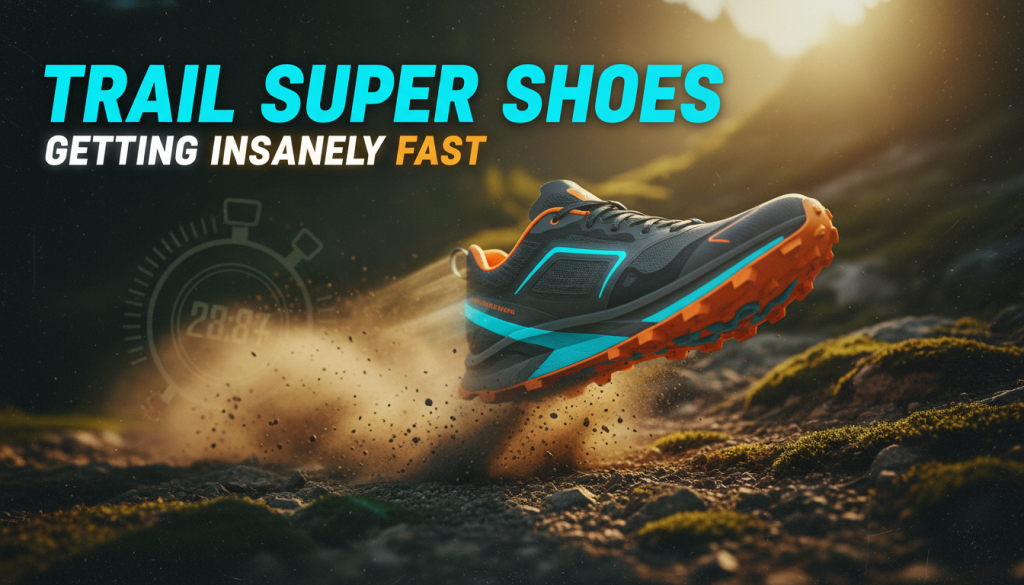
Over the last road‑racing cycle, carbon plates and mega‑stacks grabbed all the headlines. But while everyone argued about marathon shoes, Trail Super Shoes Quietly evolved into serious performance weapons. In just the past week, four launches have shown how fast, cushioned, and specialized off‑road footwear has become—from technical ultramarathon rigs to budget‑friendly plated racers and max‑stack trainers.
This running news blog breaks down what’s new, why it matters, and how everyday runners can actually use this tech without blowing up their legs or their budgets.
Table of Contents
- The Changing Landscape: How Trail Super Shoes Quietly Took Over
- Mizuno Neo Accera: Rebooting Trail with a Nitrogen Super Shoe
- The North Face Vectiv Pro 3: Dual-Plated Speed for Technical Trails
- Decathlon Kiprun Kipstorm Elite: Super Shoe Tech Without Super Prices
- Adidas Hyperboost Edge: The Super Trainer Arms Race Jumps to 45 mm
- How to Choose the Right Super Shoe for Your Running
- RunV Tips: Training Smarter to Match Faster Shoes
- Conclusion & Call to Action
The Changing Landscape: How Trail Super Shoes Quietly Took Over
Road racers have known for years that plates plus bouncy foam equals faster times. Now, Trail Super Shoes Quietly bring that formula to rocks, roots, and 100‑mile ultras. The last seven days of product news show a clear trend:
- Mizuno is rebooting its entire trail line around a nitrogen‑infused super shoe.
- The North Face is doubling down with a dual‑plate trail racer.
- Decathlon is driving prices down while keeping super‑shoe efficiency.
- Adidas is stretching stack heights in plated and plate‑less super trainers.
For runners, this isn’t just gear hype. It changes how you might approach race selection, training, and even injury risk. Max‑stack, high‑rebound foams can let you do more quality work—but only if your plan and strength keep up.
Mizuno Neo Accera: Rebooting Trail with a Nitrogen Super Shoe
High-Stack Protection for Long, Technical Days
The Mizuno Neo Accera marks a major relaunch of the brand’s trail offering. It’s a genuine off‑road super shoe designed for ultra‑distance and technical terrain, not just buffed fire roads.
The key specs read like a modern super‑trail racer:
- Midsole: Nitrogen‑infused Enerzy NXT foam
- Stack height: 41 mm heel / 32.5 mm forefoot
- Protection: Integrated rock plate
- Outsole: Vibram Megagrip for serious grip
That deep stack of responsive foam paired with a rock plate is aimed squarely at long ultras where fatigue and under‑foot bruising can kill your race late. This is where Trail Super Shoes Quietly shift from “gimmick” to “time saver”—helping keep legs fresher at hour eight, not just mile three.
Nitrogen Foam Meets Real-World Trail Needs
Nitrogen‑infused foams promise lower weight and higher energy return than traditional EVA. On the road, we’ve seen that story play out in faster tempos and more forgiving long runs. On trails, the balance is trickier: you need rebound, but also stability and under‑foot feel.
The Neo Accera tries to square that circle with a wide platform and protective plate. For runners, that means:
- More cushioned landings on rocky descents
- Reduced pounding over ultra distances
- Still enough stability for technical traverses—at least on paper
Expect this to suit mid‑to‑rearfoot strikers who like a protective ride, especially for 50K–100K events or big mountain training blocks.
What It Signals for Mizuno’s Trail Future
Mizuno isn’t treating the Neo Accera as a one‑off. It’s the first piece in a larger reboot planned through 2026. That’s good news if you’ve struggled to find Mizuno trail options that keep pace with today’s super‑shoe era.
Runners who already love Mizuno’s road feel could now build a full rotation—plated road racer, daily trainer, and this ultra‑trail tank—within one ecosystem. As Trail Super Shoes Quietly infiltrate more brands, expect similar “halo” trail products to anchor entire off‑road collections.
The North Face Vectiv Pro 3: Dual-Plated Speed for Technical Trails
Dual-Stacked Plate System for Propulsion and Control
The North Face just unveiled its SS26 Summit Series trail collection, with the Vectiv Pro 3 as the star. This third‑generation update leans fully into the super‑shoe concept with a distinctive dual‑plate system:
- Propulsion plate: Full‑length carbon‑fiber for forward drive
- Stability plate: TPU plate to tame torsion and improve control
Underfoot, that’s combined with a revamped DREAM foam midsole, an aggressive rocker, and a redesigned SURFACE CTRL outsole. Altogether, the package is focused on one thing: turning technical trail running into something that feels faster and more fluid.
Who the Vectiv Pro 3 is Really For
With its high‑end construction and dual plates, the Vectiv Pro 3 is built for speed‑oriented trail runners who:
- Race 25K–100K on rugged courses with mixed terrain
- Want road‑shoe propulsion in an off‑road chassis
- Are comfortable handling a taller, rockered platform
Used well, shoes like this can turn rolling singletrack into a continuous “fall forward” experience. But they also amplify whatever your form habits already are. If your cadence is low or your downhill control is shaky, a highly rockered, plated shoe magnifies both strengths and weaknesses.
Before shelling out, it’s worth revisiting your mechanics. Focusing on turnover and efficient form can help you get full value from a shoe like this; resources like The Role of Cadence: 7 Proven Ways for Powerful Racing can be a useful checkpoint as Trail Super Shoes Quietly raise your speed potential.
TNF’s Premium Trail Strategy
The North Face has clearly decided that “premium trail” means more than just fancy uppers. With the Vectiv Pro 3, you’re seeing:
- Cutting‑edge foam plus complex plate architecture
- Race‑specific shape tuned for aggressive running
- Integration into a full Summit Series kit for serious mountain days
Expect this shoe on the feet of sponsored elites at the biggest ultras and skyraces. For everyday runners, it’s a high‑risk, high‑reward option: huge performance upside, but with a learning curve on technical descents and tired legs.
Decathlon Kiprun Kipstorm Elite: Super Shoe Tech Without Super Prices
Making Plated Speed More Accessible
While some brands chase $250+ price tags, Decathlon’s Kiprun division is pushing in the opposite direction. The new Kiprun Kipstorm Elite is pitched as a value‑oriented super shoe that still delivers real performance gains.
Headline claims include: (Carbon plates in trail supershoes)
- About 13% improvement in perceived “dynamism” over its predecessor
- Maintained weight advantage despite added performance
- Price point around £180—still premium, but cheaper than many rivals
This is a reminder that Trail Super Shoes Quietly expanding doesn’t just mean more exotic tech. It also means broader access, whether you’re eyeing a first marathon, a trail half, or simply faster tempo runs on mixed surfaces.
What “13% Dynamism” Might Mean for Your Running
Brand marketing around dynamism usually translates to a mix of:
- More noticeable “snap” from a plate or geometry
- Higher energy return from foam
- A rockered shape that encourages forward roll
In practice, that could mean you can hold a given pace at a slightly lower effort, or progress from threshold to race pace more smoothly. For runners building toward road marathons but training on mixed terrain, a shoe like the Kipstorm Elite can serve double duty: fast long runs on tarmac plus some light‑trail work when needed.
Budget, Training Plans, and Getting the Most from Value Super Shoes
Decathlon’s move reinforces a core reality: the shoe is only part of the performance picture. To really capitalize on super‑shoe economics, you need a smart, structured plan behind your sessions.
If you’re trying to decide between spending more on a shoe or investing in coaching or a better training structure, the best return on investment often comes from the plan. Tools like the RunV All Plans library can help you plug a shoe like the Kipstorm Elite into a progression of workouts that gradually increase load without tipping you into overtraining.
Adidas Hyperboost Edge: The Super Trainer Arms Race Jumps to 45 mm
Max-Stack, No Plate – A Different Kind of “Super”
Also in the news is the Adidas Hyperboost Edge, a shoe that blurs the line between trainer and racer. It’s part of the “super trainer” category: high‑stack, high‑tech shoes meant for everyday mileage, not just race day.
The Hyperboost Edge spec sheet is eye‑catching:
- Stack height: 45 mm of Hyperboost Pro foam
- Plate: None—this is a plate‑free design
- Weight: Only about 255 g
That’s a huge amount of foam underfoot, but without the stiffness of a carbon plate. As Trail Super Shoes Quietly rise, max‑stack, plate‑less shoes give runners another route to comfort and performance: massive cushioning that still feels natural and versatile.
Why Go Plate-Free at 45 mm?
There are several reasons a runner might prefer a max‑stack trainer without a plate:
- Comfort: Softer, more forgiving feel for daily miles and long runs
- Form freedom: Less enforced gait pattern than a carbon plate can impose
- Versatility: Easier to use for easy runs, strides, and mixed workouts
In practical terms, the Hyperboost Edge could be your go‑to for recovery days and high‑volume weeks, while you reserve plated shoes for tempo runs and races. That balance can help you reduce mechanical stress from always running in stiff, aggressive setups.
If you’re curious about this “max‑stack, no plate” direction, it’s part of a broader trend we’ve tracked in more detail in Max-Stack, No Plate: The Next Super-Trainer Era Begins, where shoes like the Hyperboost Edge and other mega‑stack trainers define a new training category.
Super Trainers as Bridges to Trail and Road Racing
Even though the Hyperboost Edge is technically a road shoe, its design philosophy bleeds into trail thinking:
- Huge stack = more fatigue resistance in long training blocks
- Lightweight build = easier pace control on progression runs
- Plate‑less feel = smoother transition back to traditional shoes or trail options
They function as a bridge: you can do much of your weekly work in a forgiving super trainer, then switch into more aggressive Trail Super Shoes Quietly like the Neo Accera or Vectiv Pro 3 for specific sessions or race simulations.
How to Choose the Right Super Shoe for Your Running
1. Match the Shoe to the Terrain
- Technical mountain trails: Look at the Mizuno Neo Accera or TNF Vectiv Pro 3—rock plates, grippy outsoles, stable platforms.
- Mixed road + light trail: A versatile racer like the Kiprun Kipstorm Elite can handle both, depending on lug pattern.
- Primarily road, heavy mileage: The Adidas Hyperboost Edge shines as a cushioned everyday workhorse.
As Trail Super Shoes Quietly multiply, picking the wrong tool for the job is the fastest way to feel disappointed—and potentially unstable.
2. Consider Your Race Distance and Goals
- 5K–10K trail races: Prioritize agility and ground feel; a lighter plate and lower stack may be better.
- Marathon and ultra: Max‑stack foams like Enerzy NXT or Hyperboost Pro can reduce late‑race leg damage.
- Training block for a big road race: A mix of super trainer + race‑day shoe often beats trying to do everything in one model.
If you’re gearing up for a road marathon but want some trail crossover, it’s smart to build your race‑oriented training first, then slot in trails where they support your main goal. For big‑picture strategy, the guide Marathon Majors Are Heating Up: Records, Rivalries & You offers useful context on how pros structure shoe use across training and racing.
3. Don’t Ignore Your Injury History
When super shoes first hit the road scene, many runners got faster—and many quietly got hurt. The same risks apply now that Trail Super Shoes Quietly reach more people: (Trail running super-shoes guide)
- Plates shift load to calves and Achilles
- High stacks can stress ankles on uneven terrain
- Soft foams encourage longer runs in new gear before tissues adapt
If you have a history of Achilles, plantar, or ankle issues, introduce any of these models gradually. Start with short, well‑known routes and build up over several weeks.
4. Think Rotation, Not “One Perfect Shoe”
Instead of hunting for a single do‑everything model, consider building a three‑shoe rotation:
- Daily trainer / super trainer: e.g., Hyperboost Edge for most mileage
- Trail super shoe: Neo Accera or Vectiv Pro 3 for race‑specific workouts
- Traditional trainer: A more stable, lower‑stack shoe for strength and form days
This rotation spreads mechanical load, reduces repetitive stress, and lets you exploit the strengths of Trail Super Shoes Quietly without being trapped by their weaknesses.
RunV Tips: Training Smarter to Match Faster Shoes
Let the Plan, Not the Shoe, Set the Pace
The biggest mistake runners make with new super shoes is letting the shoe dictate the workout. The sensation of flying can make an easy run accidentally drift into tempo territory, or turn a tempo into something unsustainably hard.
Use time‑based zones, RPE (perceived effort), or structured workouts to keep things honest. If you’re not currently on a plan, consider using a structured framework so that your super shoes amplify deliberate training instead of random speed. The RunV team’s Blog explores exactly how tech, plans, and pacing work together in the real world.
Progressive Load for Super Shoe Adoption
When bringing a new model into your lineup:
- First 1–2 runs: 20–30 minutes at easy pace, familiar route
- Next 2–3 runs: Add strides or short pickups at controlled effort
- After 4–6 runs: Introduce full workouts or longer long‑run segments
This gives your calves, ankles, and connective tissues time to adapt to the plate and stack before you start chasing PBs. Remember, Trail Super Shoes Quietly change loading patterns—even if your pace feels easy.
Use Tools to Maintain Consistency
Shoes can boost performance, but the biggest gains still come from consistent, smartly progressed training. If your week‑to‑week mileage is all over the place, foam and carbon won’t save you from overuse injuries.
Focus on sustainable habits first—sleep, recovery, and gradual mileage growth—so that when you lace up a Neo Accera or Kipstorm Elite, your body is ready to convert that tech into meaningful performance. For deeper strategies on building that consistency, see How to Stay Consistent: 7 Powerful, Proven Training Secrets, which pairs well with integrating new shoe tech.
Know When to Keep It Simple
Not every run needs a super shoe. In fact, some workouts are better done in simpler, lower‑stack shoes that:
- Enhance proprioception and foot strength
- Make form flaws more obvious, so you can fix them
- Provide variety in loading patterns
Reserve your highest‑end Trail Super Shoes Quietly for key sessions and races. That way, you’ll feel a distinct performance benefit on important days—and your expensive midsoles will last longer.
Conclusion & Call to Action
In just one week of announcements, the trendline is clear: Trail Super Shoes Quietly moved from a niche experiment to a full‑blown ecosystem.
- Mizuno’s Neo Accera signals a serious return to trail with nitrogen foam and rock‑solid protection.
- The North Face’s Vectiv Pro 3 shows how far dual‑plate engineering can go off‑road.
- Decathlon’s Kiprun Kipstorm Elite proves super‑shoe benefits don’t have to demand super‑elite budgets.
- Adidas’ Hyperboost Edge stretches the idea of what a daily “super trainer” can be, even without a plate.
The opportunity is huge: more comfort, more speed, and more variety for different surfaces and goals. But the responsibility is on you to integrate these tools wisely—matching them with the right sessions, terrain, and long‑term plan.
If you’re ready to take advantage of this new wave of trail and trainer tech, start by clarifying your next big goal, then build (or update) a structured plan around it. That way, when you finally lace up that nitrogen‑infused, dual‑plated, or 45 mm mega‑stack beast, you’ll have the engine to match the chassis.
Now is the time to audit your rotation, your training structure, and your upcoming race calendar. Decide where Trail Super Shoes Quietly fit into your year—and then commit to the consistent, smart work that turns foam and carbon into real‑world results.