

If you want a race-ready 5K in less than two months, a structured Training Plan Amazing 7-Week program can turn casual runs into a confident, fast finish. Whether you’re targeting your first 5K, coming back from a break, or trying to PR with the help of tech and smart gear, seven focused weeks is enough time to build real speed and endurance without overwhelming your life.
This guide lays out a complete 7‑week 5K roadmap, explains the science behind each workout, and shows how to use running technology, data, and gear for smarter training and better results.
—
Table of Contents
1. Why a 7-Week 5K Plan Works So Well
2. Who This Training Plan Amazing 7-Week Is For
3. Key Principles of the Training Plan Amazing 7-Week
4. How to Set Paces and Effort Levels
5. The 5K Training Plan: Amazing 7-Week Schedule
6. Strength, Mobility, and Injury Prevention
7. Recovery Strategies That Keep You Improving
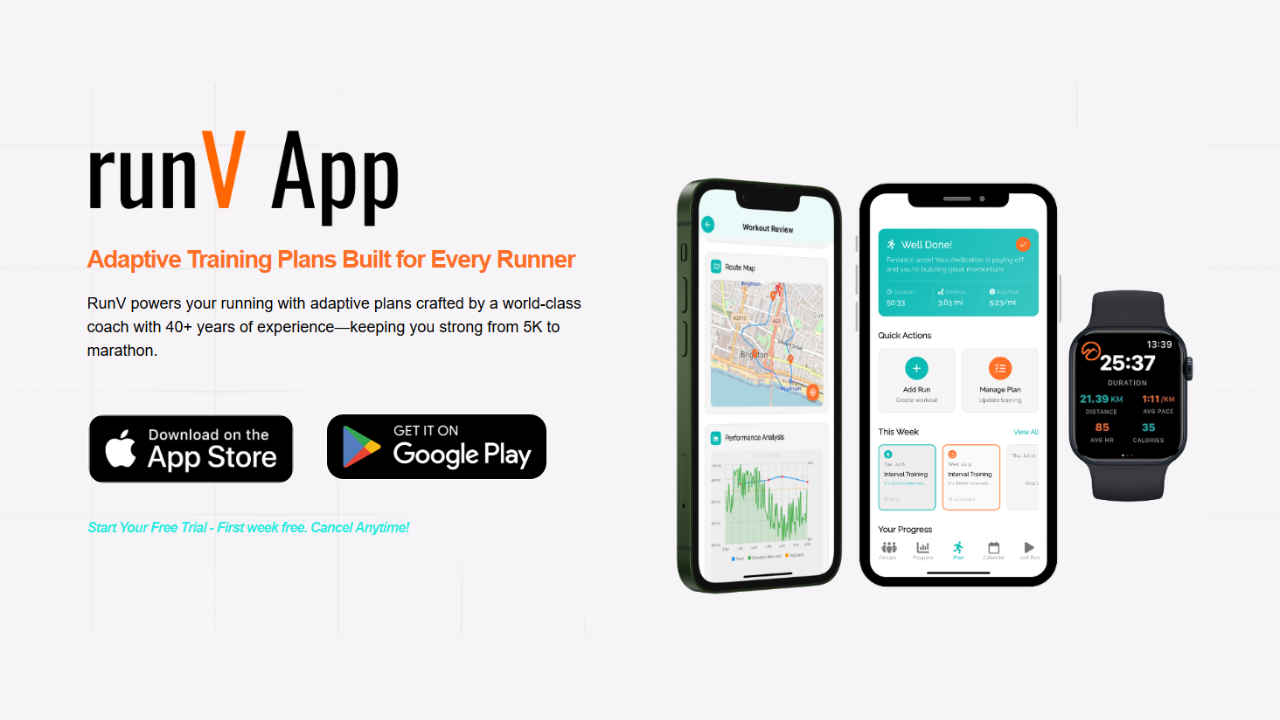
8. Using Running Tech and Apps to Supercharge the Plan
9. Gear Essentials: Shoes, Apparel, and Accessories
10. Race-Week Strategy and Taper
11. Race-Day Execution: From Warm-Up to Finish Line
12. After the 5K: What’s Next?
—
Why a 7-Week 5K Plan Works So Well
Seven weeks is long enough to trigger meaningful aerobic and neuromuscular adaptations, yet short enough to stay focused and motivated.
Across a 7‑week block, your body can:
– Improve aerobic capacity and running economy
– Develop basic speed and race-specific pacing
– Strengthen connective tissues just enough to tolerate faster running
– Build habits of consistency and recovery
A well-designed Training Plan Amazing 7-Week approach balances stress and rest so you arrive on the start line tapered, confident, and not burned out. Random runs won’t give you that; a framework will.
—
Who This Training Plan Amazing 7-Week Is For
This guide is tailored for:
– Newer runners who can comfortably run or run/walk 1–2 miles
– Returning runners who need structure after time off
– Fitness enthusiasts from other sports building running capacity
– Intermediate runners chasing a new 5K PR
You don’t need to be fast. You do need to commit to 3–5 days per week, 30–60 minutes per session, and follow the Training Plan Amazing 7-Week structure with honesty about effort and recovery.
If you’re a complete beginner who prefers run‑walk, you can still use this framework and adjust many “easy runs” into run‑walk intervals.
—
Key Principles of the Training Plan Amazing 7-Week
1. Consistency Beats Hero Workouts
Progress comes from stacking many solid, sustainable sessions, not occasional all-out efforts. The plan uses frequent easy running, short bouts of faster work, and steady progression by small steps.
Missing the odd workout is fine; trying to “make up” training with a huge session usually backfires.
2. Polarized Effort: Mostly Easy, Sometimes Hard
Most 5K runners train too hard on easy days and too easy on hard days. This plan fixes that:
– About 70–80% of your weekly time is easy
– 20–30% is quality (intervals, tempo, or race-pace work)
That split maximizes adaptation while minimizing injury risk.
3. Gradual Overload, Then Taper
Weeks 1–5 gradually increase volume and quality. Week 6 stabilizes and sharpens. Week 7 tapers you into race day. The small weekly increases are designed to challenge you while respecting recovery needs.
—
How to Set Paces and Effort Levels
If you don’t know your current 5K pace, use feel-based effort. Think in “zones” rather than obsessing over exact numbers.
Effort Levels for the Plan
– Easy (E): Conversational pace. You can speak in full sentences. RPE 3–4/10.
– Steady / Moderate (M): Comfortable but purposeful. Talking in short phrases. RPE 5/10.
– Tempo (T): “Comfortably hard.” You can say a few words at a time. RPE 7/10.
– Interval / Speed (I): Hard efforts for 1–3 minutes. Speech in single words. RPE 8–9/10.
– Strides: Short 15–25 second accelerations at fast-but-controlled speed, with full recovery.
You can align these with heart rate zones if you wear a watch. If you’re into data and structured sessions, tools like an AI Dynamic Plan can adapt paces automatically as your fitness improves.
—
The 5K Training Plan: Amazing 7-Week Schedule
Here’s the full seven-week structure. You can shift days slightly to fit your life, but keep the pattern of easy days between hard efforts.
- Key:
E = Easy run
M = Moderate / steady run
T = Tempo effort
I = Interval / speed
XT = Cross-training (bike, swim, etc.)
S&C = Strength and conditioning
R = Rest or active recovery
—
Week 1 – Foundation and Routine
Training Plan Amazing 7-Week: Building Your Base
Goal: Establish consistency and comfortable easy running.
– Day 1: 20–25 min E + 4 x 20 sec strides, full walk/jog recovery
– Day 2: S&C (20–30 min) + light mobility
– Day 3: 25–30 min E
– Day 4: XT 30–40 min (bike, elliptical, or brisk walk)
– Day 5: 20 min E + 4 x 1 min M (1 min E between)
– Day 6: 30–35 min E on soft terrain if possible
– Day 7: R or 20–30 min gentle walk and stretching
If you’re newer, run/walk the easy days: for example 3 minutes run, 1–2 minutes walk, repeated.
—
Week 2 – Adding Structure
Goal: Introduce controlled speed and a slightly longer run.
– Day 1: 25 min E + 4 x 20 sec strides
– Day 2: S&C 25–30 min
– Day 3 (Quality):
– Warm-up: 10 min E + drills (leg swings, high knees)
– Main: 6 x 1 min I (2 min E between)
– Cooldown: 10 min E
– Day 4: XT 30–40 min or R if very tired
– Day 5: 30–35 min E
– Day 6 (Long-ish): 35–40 min E, finish feeling like you could do a bit more
– Day 7: R and light mobility
The intervals should feel challenging but controlled. You should be tired at the end, not destroyed.
—
Week 3 – Tempo and Endurance
Training Plan Amazing 7-Week: Blending Speed and Stamina
Goal: Add tempo work to prepare for race pace.
– Day 1: 25–30 min E + 4 x 20 sec strides
– Day 2: S&C 25–35 min
– Day 3 (Tempo):
– Warm-up: 10 min E
– Main: 2 x 6–8 min T with 3 min E between
– Cooldown: 10 min E
– Day 4: XT 30–45 min easy
– Day 5: 30 min E
– Day 6 (Long-ish): 40–45 min E on rolling terrain if available
– Day 7: R or gentle walk/yoga
Tempo blocks should feel sustainable but focused. You’re teaching your body to stay relaxed at faster paces.
—
Week 4 – Sharpening Speed
Goal: Slight bump in volume and more specific interval work.
– Day 1: 30 min E + 4–6 x 20 sec strides
– Day 2: S&C (emphasize single-leg strength)
– Day 3 (Interval):
– Warm-up: 10–12 min E + drills
– Main: 5–6 x 2 min I with 2 min E recovery
– Cooldown: 10 min E
– Day 4: XT 35–45 min or R if needed
– Day 5 (Steady): 10 min E + 20 min M + 5 min E
– Day 6 (Long-ish): 45–50 min E
– Day 7: R, mobility and foam rolling
This week’s workouts train your 5K “top gear” and prepare your legs for sustained race intensity.
—
Week 5 – Peak Workload
Training Plan Amazing 7-Week: Race-Specific Focus
Goal: Maximum, but still manageable, training stress.
– Day 1: 30–35 min E + 4 x 20 sec strides
– Day 2: S&C 25–35 min (slightly lighter than Week 4)
– Day 3 (Race-Pace Reps):
– Warm-up: 12 min E
– Main: 4–5 x 800 m at goal 5K pace, 2–3 min E between
– Cooldown: 10–12 min E
– Day 4: XT 35–45 min, easy
– Day 5 (Tempo):
– 10 min E
– 12–15 min T continuous
– 5–10 min E
– Day 6 (Long-ish): 45–50 min E, relaxed
– Day 7: Full R
This is the toughest week, so sleep and nutrition matter. If you’re struggling, cut one rep from the interval session rather than forcing it.
—
Week 6 – Maintain and Freshen Up
Goal: Maintain sharpness while easing overall load slightly.
– Day 1: 30 min E + 4 x 20 sec strides
– Day 2: S&C 20–25 min, low to moderate load
– Day 3 (Mixed Intervals):
– Warm-up: 10 min E + drills
– Main: 3 x (3 min T + 2 min E + 1 min I + 2 min E)
– Cooldown: 8–10 min E
– Day 4: XT 30–40 min or R
– Day 5 (Steady): 10 min E + 15–20 min M + 5–10 min E
– Day 6: 40–45 min E
– Day 7: R
You should feel fitter than in Week 3, not more exhausted. If fatigue is high, drop one quality block.
—
Week 7 – Taper and Race
Goal: Reduce volume, keep a touch of intensity, and arrive fresh.
- Day 1 (Mon): 25–30 min E + 4 x 20 sec strides
- Day 2 (Tue): 20–25 min E + light mobility
- Day 3 (Wed – Sharpen):
– 10 min E
– 3 x 2 min at 5K pace with 2–3 min E
– 8–10 min E - Day 4 (Thu): 20 min E or R
- Day 5 (Fri): 15–20 min E, include 4 x 10–15 sec relaxed strides
- Day 6 (Sat): R, short walk and light stretching only
- Day 7 (Sun): Race day 5K!
Keep your Thursday and Friday runs extremely relaxed. By Saturday evening you should feel almost restless to run.
—
Strength, Mobility, and Injury Prevention
A 5K might be short, but the forces on your muscles and joints are high. A bit of strength work goes a long way.
Essential Strength Exercises (2x per week)
Focus on 2–3 sets of 8–12 reps each:
– Squats or goblet squats
– Reverse lunges or split squats
– Romanian deadlifts or hip hinges
– Calf raises (bent and straight knee)
– Glute bridges or hip thrusts
– Core: planks, side planks, dead bugs
Use body weight at first, then add light weights. Strength supports form, improves running economy, and reduces injury risk.
Mobility and Activation
Before runs, 5–8 minutes is enough:
– Leg swings (front-back and side-to-side)
– Ankle circles and calf rocks
– Hip circles
– Light “A-skips” or marching drills
After runs, do short static stretches for calves, hamstrings, hip flexors, and glutes, 20–30 seconds each.
—
Recovery Strategies That Keep You Improving
Recovery is when you actually get fitter. Many runners sabotage progress by treating recovery as optional. Over seven weeks, ignoring it will catch up with you.
Prioritize:
– 7–9 hours of sleep most nights
– Hydration before and after runs
– Post-run carbs and protein within 1–2 hours
– 1–2 true rest or very light days weekly
If you tend to push nonstop, it’s worth reading about how inadequate rest slows gains; for a deeper dive into the science and risk, see How Skipping Recovery Slows 5 Powerful Proven Gains.
Pay attention to early warning signs: persistent soreness, nagging aches that worsen, irritability, or a sudden drop in motivation. Adjust by reducing intensity or swapping a run for cross-training.
—
Using Running Tech and Apps to Supercharge the Plan
Modern running technology can turn this Training Plan Amazing 7-Week framework into a finely tuned, data-driven journey, even if you’re not a data geek.
GPS Watches and Wearables
A GPS watch (or phone app) helps you:
– Track distance, pace, and elevation
– Monitor heart rate to keep easy runs truly easy
– Program intervals so you can run by beeps, not constant clock-checking
Newer watches add training load estimates, recovery suggestions, and wrist-based HRV. If your watch is several generations old, you may be missing useful features; see New Running Tech That Might Finally Replace Your Old Watch for an overview of modern options.
Running Apps and Training Platforms
Apps can:
– Log and analyze your Training Plan Amazing 7-Week sessions
– Provide audio cues for intervals
– Sync with wearables for automatic data upload
If you’re comparing ecosystems or looking for app-based plans and metrics, check out Best Running Apps for 7 Essential, Proven Race Plans for guidance on what to look for and how to pick the right platform.
Using Data Without Overthinking
Use data as feedback, not judgment. Helpful metrics include:
– Weekly mileage and time on feet
– Resting heart rate and sleep trends
– Pace distribution (how much time in easy vs hard zones)
If your numbers show rising fatigue or dropping pace at the same effort, that’s a sign to back off slightly—not a reason to panic.
—
Gear Essentials: Shoes, Apparel, and Accessories
Your training will feel dramatically better with decent gear. You don’t need top-shelf everything, but a few smart choices matter.
Running Shoes
Look for:
– A comfortable, secure fit with thumb-width space at the toes
– Cushioning and support that match your body and terrain
– A pair reserved mainly for running to track mileage
Typical shoes last 300–500 miles. Rotating two pairs can reduce injury risk and allow foam to rebound between sessions.
Racers chasing seconds might add a plated “super shoe” for race day, but it’s not mandatory for an impressive 5K finish.
Apparel and Socks
Choose:
– Technical, moisture-wicking shirts and shorts/tights
– Seamless or flatlock seams to reduce chafing
– Performance socks that manage moisture and reduce blisters
If you’re doing early morning or evening runs, prioritize visibility with reflective accents or a lightweight vest.
Accessories and Safety
Helpful additions:
– A running belt or vest for phone, keys, and gels
– A soft-flask or handheld bottle for hotter days
– A running cap or visor and quality sunglasses
– Safety items: ID, small cash/card, and a light if dark
Comfort and safety reduce friction and excuses, which is critical when sticking to a seven-week schedule.
—
Race-Week Strategy and Taper
The final week can make or break how you feel on the start line. The goal is to freshen up without losing sharpness.
What to Do During Taper Week
– Cut volume by ~30–40% compared to peak weeks
– Keep at least one short interval session and some strides
– Maintain strength work but reduce load and sets
– Slightly favor carbs in your meals (whole grains, fruits, potatoes)
– Increase hydration and moderate caffeine and alcohol
Avoid last-minute experiments with shoes, insoles, or training methods. Stick to the plan.
Logistics and Mental Prep
– Confirm race time, location, and transportation
– Lay out race kit the night before
– Decide on pacing and whether you’ll follow watch pace, effort, or a pacer
– Visualize the first kilometer, mid-race grind, and a strong finish
Pre-planning removes race-morning decision fatigue, helping you stay calm.
—
Race-Day Execution: From Warm-Up to Finish Line
Your seven weeks of work set the stage; race-day execution delivers the result.
Race-Morning Warm-Up
Around 35–45 minutes before the start:
– 8–12 min E jog
– A few dynamic drills (leg swings, hip circles, light skips)
– 3–4 x 20 sec strides at a bit faster than race pace, with full recovery
Finish the last stride 5–10 minutes before the gun, then head to your corral.
Pacing Strategy
Aim for:
– 0–1 km: Slightly conservative, settling into rhythm
– 1–3 km: Lock into goal pace, focus on form and relaxed breathing
– 3–4 km: Expect discomfort; hold steady, don’t panic
– Final km: Gradually squeeze the pace; last 400–600 m is your all-out push
Avoid blasting the first kilometer just because others do. That’s the most common pacing mistake.
Using Tech on Race Day
Set your watch for:
– Auto-lap every kilometer or half-mile
– Data screen showing current pace, lap pace, and distance
Glance at it, but don’t stare. Pay attention to your body: efficient stride, tall posture, quick cadence, and controlled breathing.
—
After the 5K: What’s Next?
Crossing the finish line is both a reward and a starting point. How you handle the days and weeks after can either lock in your gains or waste them.
Immediate Post-Race
– Walk 5–10 minutes instead of stopping abruptly
– Rehydrate and get a carbohydrate-rich snack with some protein
– Gentle stretching and, later in the day, light walking
Expect some soreness for 24–72 hours, especially if it was your first hard race.
The First 1–2 Weeks After
– Keep most runs easy and short
– Include at least one full rest day per week
– Avoid racing again at full intensity right away
This is also the perfect time to reflect: what worked in your Training Plan Amazing 7-Week cycle, and what could be improved? Did you need more tempo work, more rest, or better pacing?
Building on Your 5K Fitness
Once you’ve recovered, you can:
– Repeat a similar 7‑week block aiming for a faster 5K
– Extend your distance and move toward a 10K
– Shift focus to speed or hills while maintaining a 5K-ready base
If you’re curious about stretching your new fitness to longer races, a great next step is learning how to scale volume and intensity safely; see How to Transition From 5K to 10K: 7 Proven, Powerful Tips for a structured approach.
—
Putting It All Together
Across seven weeks, this Training Plan Amazing 7-Week framework helps you:
– Build a sustainable running habit
– Develop speed, endurance, and race-specific fitness
– Use technology and gear intelligently instead of obsessively
– Arrive at the start line rested, confident, and ready to push
You don’t need perfect execution; you need consistency, honest pacing, and respect for recovery. With that combination, a strong 5K finish in seven weeks is entirely achievable—and it can be the foundation for years of faster, smarter, and more enjoyable running.