

If you want your next marathon to feel strong instead of like a survival march, learning how to Structure Long Runs: Proven methods is non‑negotiable. Long runs are where you build the engine, test your gear, train your gut, and sharpen your mind. But just “going long” isn’t enough—how you design, pace, fuel, and recover from these sessions can be the difference between a breakthrough race and a DNF.
This guide walks you step‑by‑step through a complete long‑run system you can plug into almost any marathon plan—whether you’re training with a club, using an app, or building your own schedule.
—
Table of Contents
- Why Long Runs Matter More Than You Think
- Overview: 7-Step Framework to Structure Long Runs
- Step 1 – Set a Clear Purpose for Each Long Run
- Step 2 – Structure Long Runs: Proven Weekly Progression Rules
- Step 3 – Structure Long Runs: Proven Pacing and Heart Rate Zones
- Step 4 – Fueling, Hydration, and Gut Training on Long Runs
- Step 5 – Structure Long Runs: Proven Workout Formats That Actually Work
- Step 6 – Gear, Tech, and Wearables for Smarter Long Runs
- Step 7 – Recovery, Adaptation, and When to Back Off
- Sample 12-Week Long-Run Progression for a Marathon
- Common Long-Run Mistakes (and How to Fix Them)
- Final Tips: Turning Long Runs into Marathon-Day Confidence
—
Why Long Runs Matter More Than You Think
Long runs do far more than just “get you used to the distance.” They drive almost every marathon‑critical adaptation:
– Boost mitochondrial density and capillaries so you can use oxygen more efficiently.
– Improve fat utilization so you don’t burn through glycogen too early.
– Strengthen muscles, tendons, and ligaments to tolerate 3–5 hours of pounding.
– Train your brain to stay focused and calm as fatigue builds.
– Provide the perfect lab to test shoes, fueling, and tech before race day.
But to extract all of this, you need a systematic way to structure long runs: proven over thousands of successful marathons: clear purpose, progressive load, deliberate pacing, and consistent recovery.
—
Overview: 7-Step Framework to Structure Long Runs
Here’s the marathon‑focused 7‑step system we’ll unpack:
1. Define a purpose for each long run (not every week should feel the same)
2. Build volume with smart progression rules
3. Use zone‑based pacing for control and safety
4. Practice fueling, hydration, and gut training
5. Use specific long‑run formats that match your race goals
6. Leverage gear and technology without becoming a data zombie
7. Recover correctly so adaptations stick and injuries stay away
Each step connects; skip one and the entire structure becomes fragile.
—
Step 1 – Set a Clear Purpose for Each Long Run
Many runners treat every long run as a generic “get the miles in” day. That’s a missed opportunity. The first way to Structure Long Runs: Proven for marathon gains is to give each week a specific objective.
Common long‑run purposes include:
– Pure endurance: staying on your feet for a long time at easy effort
– Marathon rehearsal: testing race shoes, pace, and fueling
– Strength endurance: hills or rolling terrain at steady effort
– Tempo‑finish: running strong in the final 20–40 minutes
– Mental toughness: solo runs with minimal distractions
Write the purpose in your training log: “Today’s long run goal is aerobic endurance only—no pace heroics.” That line alone can save your race three months from now.
—
Match Long-Run Purpose to Marathon Phase
Your marathon training usually moves through phases: base, build, peak, and taper. Long runs should evolve with these phases.
– Base (weeks 1–4): focus on comfortable endurance and routine building.
– Build (weeks 5–8): introduce structured segments near marathon pace.
– Peak (weeks 9–12): emphasis on race rehearsal and long tempo sections.
– Taper (last 2–3 weeks): reduced duration but maintain some quality.
Thinking this way keeps you from doing race‑pace hero workouts too early when your body isn’t ready.
—
How Many Long Runs Do You Really Need?
For a marathon, most runners thrive with:
– 8–12 true long runs (16 km / 10 miles or more)
– 3–5 “key” long runs of 29–35 km / 18–22 miles
– A longest single run of 29–35 km for most non‑elites
Ultra‑long runs of 36–40 km are rarely necessary for recreational runners and often add risk without extra benefit. They also take longer to recover from, eating into the quality of next week’s sessions.
—
Step 2 – Structure Long Runs: Proven Weekly Progression Rules
Your second pillar is progression—how you increase distance (or time) over the weeks. A reckless ramp‑up is the fastest way to overtraining or injury. To structure long runs: proven to be safe and productive, use conservative, repeatable rules.
—
Use the “10–15% or Less” Rule—But Apply It Smartly
Common advice says not to increase weekly mileage more than 10%. That’s a useful upper boundary, but applied rigidly it can become messy. Instead:
– Think in 2–3 week “waves”: increase for 2 weeks, then slightly back off.
– Let the long run grow by 1–3 km (0.5–2 miles) most weeks, not more.
– Base increases on how you felt—if soreness or fatigue lingers, hold steady.
Combine this with an occasional “down week” every 3–4 weeks where your long run is 20–30% shorter. This unlocks more consistent training over the whole cycle.
For more on common progression pitfalls, see Running Mileage Progression Mistakes: 7 Shocking Proven Risks.
—
Plan by Time, Not Only by Distance
Beginners and slower runners benefit from planning long runs using duration instead of pure distance. For example:
– Aim for 2 hours, not “at least 20 km”
– Extend to 2:30–3:00 as peak long runs, depending on finish‑time goals
Time‑based planning helps ensure you don’t stay on your feet much longer than your predicted marathon time, which can crush recovery and spike injury risk.
—
Sample Long-Run Growth Pattern (Intermediate Runner)
Here’s a typical 10‑week long‑run sequence leading into marathon peak:
– Week 1: 16 km (10 miles)
– Week 2: 18 km (11 miles)
– Week 3: 21 km (13 miles)
– Week 4: 17 km (cutback)
– Week 5: 24 km (15 miles)
– Week 6: 26 km (16 miles)
– Week 7: 29 km (18 miles)
– Week 8: 32 km (20 miles)
– Week 9: 24 km (cutback, with some quality)
– Week 10: 29–32 km (18–20 miles, final big rehearsal)
Use these as templates, not gospel—your training history and injury background may require more caution.
—
Step 3 – Structure Long Runs: Proven Pacing and Heart Rate Zones
Pacing is where long runs are most often sabotaged. Too fast early and you’re just racing tired; too slow always and you never learn to link endurance with goal pace. To Structure Long Runs: Proven ways for success, use zones instead of guessing by feel only.
—
Define Your Training Zones
At minimum, know your easy, marathon pace, and threshold zones. Approximate using race times:
– Easy / long‑run pace: about 45–75 seconds per km slower than 5K pace, or 60–90 seconds per mile slower than your 5K pace.
– Marathon pace (MP): the pace you could sustain for your marathon goal; often ~30–45 seconds per km slower than 10K pace for recreational runners.
– Threshold pace: roughly the pace you could hold for a 50–60 minute race.
Heart rate guidelines:
– Easy / long: 65–78% of max HR
– Marathon: 80–88% of max HR
– Threshold: 88–92% of max HR (not your main long‑run zone)
Use HR only as a guide; conditions, heat, and fatigue change the numbers. Perceived effort (RPE) remains powerful: most of your long run should feel like 6–7/10.
—
Typical Long-Run Pacing Distribution
For most weeks:
– 70–90% of the long run at easy pace
– 10–30% near marathon pace or slightly faster, depending on phase
As you approach race day, a few key long runs should include extensive marathon‑pace work, but not weekly. This ensures you build both your easy‑effort stamina and your race‑specific durability.
—
How Tech and Apps Help Control Pacing
Modern apps and GPS watches can:
– Alert if you drift too fast early in the run
– Keep segments within your target pace or HR zone
– Record splits so you can see if you faded in the final third
If you’re evaluating training tools, guides like How to Choose the 5 Best Running Apps for Ultimate Results can help you pick tech that supports, rather than distracts from, your pacing strategy.
—
Step 4 – Fueling, Hydration, and Gut Training on Long Runs
Even the best‑structured long run will collapse without adequate fueling. Your muscles can store enough glycogen for about 90–120 minutes at moderate intensity. Past that, your pace nosedives unless you replace carbohydrates and stay hydrated.
Long runs are the perfect platform to train your gut and refine your race‑day nutrition.
—
Pre-Run Fueling
Aim for a carbohydrate‑rich meal 2–4 hours before your long run:
– 1.5–3 g of carbohydrate per kg of body weight (varies by tolerance)
– Low fat, low fiber, modest protein to minimize GI distress
– Examples: oatmeal with banana and honey; toast with jam; rice and eggs
Take 200–500 ml of water or a light sports drink in the hour before starting, especially if it’s warm.
—
During-Run Fueling Strategy
For runs over 90 minutes, plan to take in 30–60 g of carbs per hour. For faster, experienced runners or very long runs, 60–90 g may be beneficial with careful gut training.
Practical approach:
– Start fueling 30–45 minutes into the run, not when you feel “empty.”
– Take one gel (~20–25 g carbs) every 25–35 minutes or small sips of a carb drink every 10–15 minutes.
– Practice the exact gels, chews, or drinks you’ll use on race day.
If your stomach rebels initially, start lower and gradually increase. This adaptation takes weeks, not days.
—
Hydration and Electrolytes
Hydration needs vary widely, but a starting point is:
– 400–800 ml of fluid per hour (about 13–27 oz), adjusted for sweat rate and heat.
– Include electrolytes (especially sodium) on hot days or if you sweat heavily.
Signs you’re under‑hydrating: very dark urine post‑run, dizziness, unusual fatigue, rapid HR for a given pace. Experiment with handheld bottles, belts, or hydration vests until you find what’s sustainable for marathon distance.
—
Post-Run Recovery Nutrition
Within 1–2 hours after your long run:
– 1–1.2 g carbs per kg body weight to replenish glycogen
– 20–30 g of protein for muscle repair
– Fluids and electrolytes to restore balance
Simple options: a recovery shake plus a normal meal, or yogurt with fruit and granola followed by a balanced lunch.
—
Step 5 – Structure Long Runs: Proven Workout Formats That Actually Work
Here’s where training gets interesting. You can Structure Long Runs: Proven ways by carefully mixing easy days with specific workout designs that mirror race demands.
Below are reliable formats used by successful marathoners—recreational through elite.
—
1. Classic Easy Long Run (Base of the Pyramid)
– Purpose: Aerobic endurance and musculoskeletal conditioning.
– Structure: 100% easy pace, relaxed effort, conversational.
– Duration: 90–150 minutes, depending on phase and level.
Key guidelines:
– If you can’t say a full sentence, you’re too fast.
– Use this format heavily early in the cycle and on cutback weeks.
– Don’t add sneaky tempo segments “because you feel good.”
—
2. Long Run with Steady Middle (Progressive Build)
– Purpose: Teach your body to hold a slightly quicker pace while already a bit fatigued.
– Structure:
– First 30–40% of time at easy pace
– Middle 30–40% at moderate pace (between easy and marathon pace)
– Final 20–30% back to easy pace
Example: 2:30 long run
– 50 minutes easy
– 60 minutes moderate
– 40 minutes easy
This format bridges the gap between purely easy long runs and true marathon‑pace workouts.
—
3. Marathon Pace Sandwiched Long Run
– Purpose: Race-specific rehearsal without fully simulating marathon fatigue.
– Structure:
– 30–45 minutes easy
– 40–80 minutes at or slightly slower than marathon pace
– 20–40 minutes easy cool‑down
Example: 30 km long run
– 8 km easy
– 14 km at marathon pace
– 8 km easy
This is mentally demanding; schedule it only when fresh and not more than once every 2–3 weeks in peak phase.
—
4. Progressive “Fast Finish” Long Run
– Purpose: Train your body and mind to run strong when already tired.
– Structure:
– First 60–70% at easy pace
– Final 30–40% at moderate to marathon pace
Example: 28 km long run
– 18 km easy
– 10 km gradually building to marathon pace
This format is powerful but stressful. Use sparingly and ensure recovery days afterward are truly easy. For more on balancing stimulus and safety, see Why Safer Training Produces 5 Proven, Powerful Running Gains.
—
5. Long Hill Endurance Run
– Purpose: Strength endurance, form under fatigue, and mental grit.
– Structure: Choose a rolling or hilly route. Keep intensity mostly easy, but let effort rise slightly on climbs.
– Duration: Similar to other long runs, but accept slower overall pace.
Focus on:
– Shortening your stride on uphills
– Staying tall through your torso
– Using downhills to practice controlled, light foot strikes
—
6. Structured Long-Run Intervals (Advanced)
– Purpose: Blend marathon‑specific pacing with controlled intensity.
– Structure (example for advanced runner):
– 20 minutes easy
– 5 × 3 km at marathon pace, 1 km easy jog between
– 10–20 minutes easy cool‑down
This format requires experience and strong base fitness. Beginners can adapt by using shorter marathon‑pace intervals and fewer repetitions.
—
How Often Should Long Runs Include Quality?
General guideline:
– Beginners: 1 out of 3–4 long runs includes structured pace work.
– Intermediate: 1 out of 2–3 long runs with marathon‑related segments.
– Advanced: Up to half of long runs include pace structure, but never all.
If you’re constantly trashed for days after a long run, either the volume, intensity, or both are too aggressive.
—
Step 6 – Gear, Tech, and Wearables for Smarter Long Runs
Today’s runners have an arsenal of tools: carbon shoes, GPS watches, heart‑rate straps, power meters, and adaptive apps. Used well, they can make your long runs more efficient and safer. Used poorly, they become noise.
—
Shoes for Long-Run Comfort and Efficiency
You don’t need your fastest super shoes for every long run, but you do need models that:
– Match your foot type and stride
– Provide enough cushioning for 2–3 hours
– Don’t cause hotspots or blisters at longer distances
Alternate between daily trainers and, occasionally, your race shoes to ensure your race pair is broken in (but not worn out) by marathon day. Articles like Supercharged Trail and Road Shoes Are Redefining Your Run can help you understand how modern designs influence comfort and fatigue.
—
Wearables and Metrics that Actually Matter
On long runs, prioritize data that directly supports your pacing and effort:
– Pace and lap pace (especially for marathon‑pace segments)
– Heart rate or power (to stay within target zone)
– Distance and time
– Cadence, if you’re actively working on running form
Don’t chase daily VO2max estimates or race‑time predictions; they fluctuate and aren’t the point of a single workout.
—
Using Apps and Dynamic Plans
Smart training apps can:
– Automatically adjust future long runs based on your performance and fatigue
– Suggest when to schedule cutback weeks
– Help you plan routes with desired elevation or distance
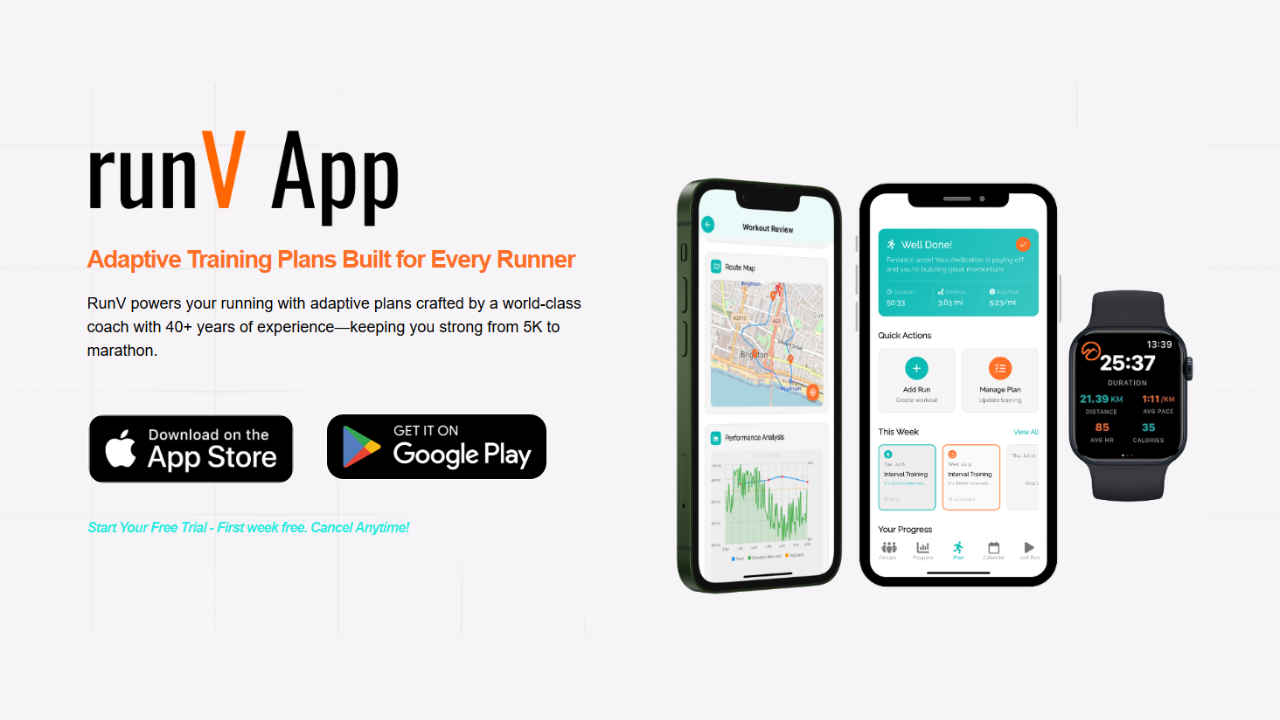
Some platforms even use adaptive algorithms to tweak long‑run volume and intensity in real time. To understand how this can benefit your training, check out How Adaptive Running Apps Deliver 5 Powerful, Proven Gains.
—
Safety Tech for Long Runs
Long runs often take you far from home, sometimes alone. Consider:
– Watches or phones with live tracking or SOS features
– ID bracelets with medical information
– Headphones that allow ambient sound so you can hear traffic or other runners
Always let someone know your planned route and time window, especially on remote trails.
—
Step 7 – Recovery, Adaptation, and When to Back Off
The real benefit of solid long‑run structure only appears if your body can absorb the training. Recovery is not laziness; it’s the phase when muscles rebuild, the nervous system resets, and your aerobic engine upgrades.
—
Post-Long-Run Recovery Ritual
Within a few hours after finishing:
– Rehydrate: drink until urine is light in color.
– Refuel: mix carbs and protein as discussed earlier.
– Cool down: a few easy walking minutes, light stretching if helpful.
– Elevate or compress legs if swelling or heaviness is an issue.
Later in the day:
– Gentle mobility work (hips, calves, ankles)
– Light walking to maintain circulation
– Avoid standing for hours on hard surfaces if possible
—
The Importance of Easy Days and Recovery Weeks
If your long run is Sunday, Monday should almost always be easy or off. Signs you’re doing it right:
– Slight heaviness is fine, but no sharp pains.
– By Wednesday, you feel able to do a quality workout.
– You’re not relying on painkillers to function.
Plan a recovery week every 3–4 weeks:
– Reduce long‑run length by 20–30%.
– Cut overall weekly volume slightly.
– Maintain one light quality session so you don’t feel “flat.”
—
When to Cut or Skip a Long Run
Certain red flags mean modifying the plan is the smart, not weak, choice:
– Persistent pain that alters your stride
– Illness with fever or chest symptoms
– Deep fatigue where easy pace feels like a sprint
Options:
– Shorten the long run by 30–50%.
– Swap it with an easy shorter run or cross‑training.
– Skip and resume with a slightly reduced plan next week.
Remember: one missed long run rarely ruins a marathon; running through injury can.
—
Sample 12-Week Long-Run Progression for a Marathon
Here’s a template for an intermediate runner targeting a 3:45–4:30 marathon. Adjust volumes if you’re new or more advanced.
– Week 1: 14 km easy
– Week 2: 16 km easy
– Week 3: 18 km easy + 4 km moderate at end
– Week 4: 14 km easy (cutback)
– Week 5: 21 km (13 mi): 8 easy + 8 moderate + 5 easy
– Week 6: 24 km: 6 easy + 10 at MP + 8 easy
– Week 7: 26 km easy on rolling hills
– Week 8: 29 km: 18 easy + 11 progressive to MP
– Week 9: 21 km easy (with last 5 km moderate)
– Week 10: 32 km: 8 easy + 14 at MP + 10 easy
– Week 11: 22 km relaxed (start of taper)
– Week 12: 14–18 km easy (10–14 days out from race)
This framework lets you steadily structure long runs: proven to build endurance while carefully layering in race‑specific intensity.
—
Common Long-Run Mistakes (and How to Fix Them)
Even smart runners fall into predictable traps. Watch for these patterns and correct them early.
—
Mistake 1: Racing Every Long Run
If your long runs are consistently close to your half‑marathon pace, you’re drifting into a gray zone: too hard for endurance, too easy for quality. Fix it:
– Use heart rate caps for most of the run.
– Break the workout into segments to keep you honest (e.g., 90 minutes easy, 30 minutes moderate).
– Run with slower partners if you’re chronically “pulled along” too fast.
—
Mistake 2: Jumping Distance Too Quickly
Adding 5–8 km in one jump because you “felt good last week” is asking for trouble. Instead:
– Cap increases at 2–3 km per week.
– Include a cutback week after 2–3 increases.
– If you already overshot, hold distance steady or step down for 1–2 weeks.
—
Mistake 3: Ignoring Fueling Until Race Day
GI issues and bonks are rarely random; they’re predictable outcomes of under‑practiced fueling. Every long run over 90 minutes is an opportunity:
– Test timing: 25 vs 35 minutes between gels.
– Test content: different brands, caffeine vs no caffeine.
– Test texture: gels vs chews vs drinks.
Log what worked and what didn’t so race‑day nutrition is boringly familiar.
—
Mistake 4: Wearing New Gear for a Big Long Run
Breaking in shoes, shorts, or vests during a 30 km run invites blisters, chafing, or worse. Instead:
– Trial new gear on shorter runs first (5–10 km).
– For race shoes, start with 5–8 km, then a few 15–20 km sessions.
– Use anti‑chafing products on likely hot spots from the very beginning of your cycle.
—
Mistake 5: Skipping Recovery Because You “Don’t Feel Sore”
Lack of soreness does not equal full recovery. Cardiac and hormonal systems often lag behind muscle sensations. Build routines, not reactions:
– Set fixed easy days after long runs in your template plan.
– Prioritize sleep, even if you feel “fine.”
– Avoid stacking additional hard workouts too close to long‑run days.
—
Final Tips: Turning Long Runs into Marathon-Day Confidence
By now you’ve seen that to Structure Long Runs: Proven marathon success isn’t about one magic workout. It’s about layering smart decisions week after week:
– Every long run has a clear purpose.
– Progression is gradual and wave‑like, not a straight line up.
– Pacing is mostly easy, with targeted race‑pace segments.
– Fueling and hydration are rehearsed, not improvised.
– Gear and tech support your strategy, not your ego.
– Recovery is planned, not optional.
Combine this 7‑step structure with consistent weekday training and you’ll arrive at the start line not just hoping to finish but prepared to execute.
If you want your long‑run structure to integrate seamlessly with your weekly schedule, club sessions, and lifestyle, adaptive plans and modern running tech can be your ally. Continual refinement of habits—like those in long‑run prep and recovery—is also where big lifetime gains come from, as explored in resources such as How to Stay Consistent: 7 Powerful, Proven Running Habits.
Use these principles as your framework, then customize based on your body’s feedback. Over one cycle you’ll notice improvement; over several, you’ll build a marathon engine that feels almost unbreakable.