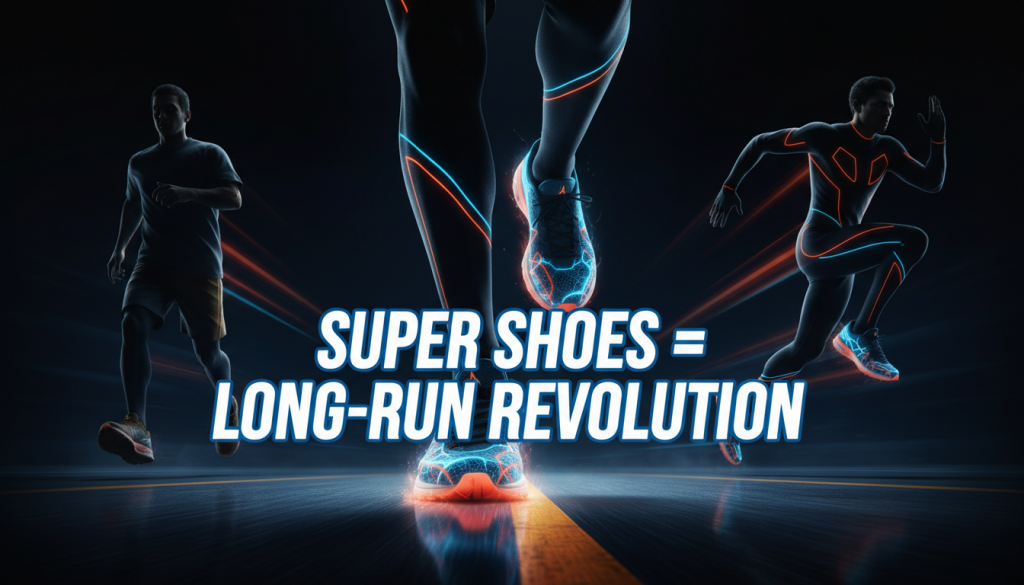
Super Shoes Just Changed how we think about long runs, stability, and even who gets to participate in performance running. In the last week alone, three major stories from ASICS, Adidas, Hoka, Li‑Ning, and more have quietly redrawn the map of what’s possible underfoot.
From geometry‑driven stability to ultra‑distance carbon rockets and the first truly adaptive performance shoe, the gear landscape you race and train in is shifting fast. Here’s what matters—and how you can use it without getting lost in the hype.
Table of Contents
- ASICS Gel‑Kayano 33: Stability Without the Straps
- New April Super Shoes: Prime X Evo, Skyward X2, Feidian 6 Ultra
- Adidas Supernova Rise 3Adaptive: Super Shoes Meet Adaptive Sport
- Who Actually Benefits from These Super Shoes?
- How to Choose the Right Long‑Run Shoe in 2026
- RunV‑Relevant Tips: Training, Injury Risk & Gear Strategy
- Conclusion & Call‑to‑Action
ASICS Gel‑Kayano 33: Stability Without the Straps
From Medial Posts to Geometry: A New Stability Era
Stability shoes used to mean hard medial posts and heavy, rigid platforms. The ASICS Gel‑Kayano 33, launching globally on June 1, 2026, shows that Super Shoes Just Changed that definition for good.
Instead of a block of firm foam on the inside edge, ASICS is using what it calls “FLUIDSUPPORT” technology. Think strategic shaping, sidewalls, and varied foam densities that guide your foot through the stride rather than forcing it into position.
This matters because most runners don’t need aggressive correction; they need gentle steering. For many who used to hate “stability” but still over‑pronate when tired, the Gel‑Kayano 33 could be the middle ground.
Foam Stack: FF BLAST MAX + FF BLAST PLUS
ASICS is pairing FF BLAST MAX and FF BLAST PLUS in the midsole. The combo aims for a tall, soft, but still controlled ride—very much in line with how Super Shoes Just Changed expectations for everyday trainers.
- FF BLAST MAX: Higher stack, more cushioning, vibration dampening.
- FF BLAST PLUS: Livelier rebound, keeping the shoe from feeling mushy.
Endorsed by pro triathlete Lucy Charles‑Barclay for high‑volume training, the signal is clear: this isn’t a clunky pronation‑control shoe. It’s a high‑cushion, long‑run workhorse that also keeps wobbly ankles in check deep into the run.
Why the Gel‑Kayano 33 Matters for Long Runs
For marathoners and half marathoners, fatigue‑driven form breakdown is one of the biggest injury triggers. A shoe that stabilizes your stride without locking you into a rigid path can reduce stress on knees and hips over 90–120 minutes of running.
If you’re prone to late‑run collapse, pair a geometry‑driven shoe like this with better mechanics. Start by addressing basic faults with Common Running Form Mistakes: 7 Essential, Proven Fixes before expecting any trainer to solve them.
Bottom line: stability has caught up to the super‑shoe era. Super Shoes Just Changed the assumption that “support” must feel like a brace; the Kayano 33 proves it can ride like a premium neutral shoe while quietly guiding your stride.
New April Super Shoes: Prime X Evo, Skyward X2, Feidian 6 Ultra
A recent Supwell roundup of April 2026 performance models showed just how far the arms race has escalated. These releases are the clearest examples of how Super Shoes Just Changed your options for both racing and high‑mileage training.
Adidas Adizero Prime X Evo: Ultra‑Distance Race Weapon
The Adidas Adizero Prime X Evo is no longer just a curiosity tied to ultra‑records—it’s now a $280 retail reality. Built as a boutique “super‑shoe” for extreme distances (including a 100 km world record), it pushes past traditional marathon thinking.
Key themes from early testing and reviews:
- Stack height beyond standard road‑racing limits.
- Highly energetic foam with a stiff, aggressive plate.
- An underfoot feel tuned to reduce pounding over hours, not just 2–3 hours.
Unlike many plated racers that peak over 10K to marathon, this shoe is designed to keep you efficient at 50K, 50 miles, or 100K. Super Shoes Just Changed the idea that “racing” tech is only for 26.2 miles or shorter.
Hoka Skyward X2: Max‑Stack Super Trainer, Not Just Racer
Hoka’s Skyward X2 steps into the “super trainer” space: a carbon‑plated, max‑stack shoe intended more for everyday long runs than race‑only use. It blends a thick, soft midsole with plate‑driven efficiency so you can log big mileage without wrecking your legs.
This is significant because it shifts plate tech from race‑day exclusives to weekly staples. For runners stacking 60–100 km per week, Super Shoes Just Changed the economics: one shoe can now serve as both your cushioned long‑run platform and a tempo‑friendly tool.
Expect:
- Plush cushioning that tames long‑run impact.
- A rocker and plate that keep turnover smooth.
- More durability than a featherweight racer, at the cost of a few extra grams.
Li‑Ning Feidian 6 Ultra: Over‑50 mm Stack for Elites
The Li‑Ning Feidian 6 Ultra aims squarely at top tiers of road racing. With a stack height exceeding 50 mm, a propulsive plate, and a lively midsole, it pushes performance boundaries even further.
This is a trend: Super Shoes Just Changed accepted limits. World Athletics regulations cap stack heights in sanctioned elite races, but brands are still innovating beyond those limits for training, non‑WA events, or to influence future rule changes.
For most everyday runners, the Feidian 6 Ultra is a proof‑of‑concept that the ceiling on foam thickness, rebound, and plate tuning hasn’t been reached. Expect more ultra‑high stacks and more polarized “feel” as brands differentiate rides.
What These April Shoes Mean for Your Training
Three key implications emerge from these launches:
- Long‑run efficiency is now mainstream. Super trainers like the Skyward X2 and ultra‑focused racers like the Prime X Evo mean you can protect your legs in ways that weren’t possible five years ago.
- Race‑distance specificity is blurring. A shoe designed for 100K may still work brilliantly for your marathon or half marathon, depending on your pace and form.
- Price is rising with tech. At $280 and beyond, you need to be strategic—own fewer, smarter pairs and match them to specific workouts.
If you’re eyeing any of these super shoes, pair the investment with a focused plan. A structured approach like the Complete Guide to Choosing 7 Proven Race Training Plans helps ensure you’re actually using the tech in workouts that translate to real performance gains. (Super shoes changed records)
Adidas Supernova Rise 3Adaptive: Super Shoes Meet Adaptive Sport
First Performance Shoe Built for Adaptive Athletes
In its Q1 2026 results, Adidas revealed the Supernova Rise 3Adaptive—the first performance running shoe specifically designed for adaptive athletes. In an era when Super Shoes Just Changed expectations for every serious runner, this fills a glaring gap.
Until now, adaptive athletes often had to modify mainstream shoes, compromise on fit, or choose between comfort and performance. Adidas is explicitly targeting people with disabilities and mobility impairments with a performance‑grade platform.
What “Adaptive” Likely Means in Practice
While full technical specs are still emerging, “adaptive” in this context likely covers:
- Wider and more accommodating entry for prosthetics or orthoses.
- Adjustable or asymmetrical lacing/closure systems.
- More stable, supportive platform with cushioning tuned for varied gait patterns.
The message is bigger than any single feature: super‑shoe‑level thinking is finally being applied to runners who have historically been an afterthought in performance footwear design.
Why This Matters Beyond Adaptive Athletes
By investing at the brand level in adaptive performance footwear, Adidas nudges the entire market forward. Super Shoes Just Changed the baseline of inclusion—tech once reserved for able‑bodied elites is now being re‑imagined for a broader spectrum of runners.
Expect knock‑on effects:
- More inclusive size runs and width options in future models.
- Better compatibility with orthotics across brands.
- Design languages that prioritize adjustability and accessibility.
For coaches and training platforms, this also raises the bar: plans, recommendations, and tools must increasingly account for adaptive needs, not just “average” runners.
Who Actually Benefits from These Super Shoes?
High‑Mileage Runners & Marathoners
If you’re training for a marathon or Half Marathon with weekly long runs, you’re at the center of this shift. Super Shoes Just Changed the calculus of fatigue and recovery:
- Max‑stack trainers reduce mechanical load over 90–180 minutes.
- Plated designs return energy and stabilize form late in the run.
- Geometry‑based stability (like in the Gel‑Kayano 33) helps as your gait deteriorates.
The payoff: you can often train at higher quality for longer without the same soreness, as long as your strength and mechanics keep up.
Time‑Crushed but Performance‑Driven Runners
For runners balancing jobs, families, and training, Super Shoes Just Changed how much you can get out of limited sessions. A highly efficient shoe lets you:
- Turn one weekly long run into a higher‑quality, progressive effort without extra wear and tear.
- Stack back‑to‑back workouts more safely when the schedule demands it.
This efficiency must still sit on a foundation of smart recovery. Use tools like How Recovery Days Actually Deliver 5 Proven Speed Gains to avoid turning “easier on the legs” into “I can do too much.”
Adaptive Athletes and Runners with Mobility Challenges
For adaptive athletes, the Supernova Rise 3Adaptive is more than a new shoe; it’s recognition. Super Shoes Just Changed access to serious, high‑performance gear.
Better stability, adjustability, and fit out of the box can translate into:
- Lower risk of hotspots and pressure sores.
- More natural gait mechanics and improved efficiency.
- Confidence to push pace or distance without fighting your footwear.
Who Should Be Cautious
Not everyone will thrive in today’s most aggressive designs:
- New runners may find very tall, bouncy shoes unstable.
- Injury‑prone athletes with weak hips or feet might overload tissues if they increase volume or intensity too quickly.
- Trail‑only runners may be better off in lower stacks and more stable platforms than road super shoes.
In all cases, remember: Super Shoes Just Changed the tools, not your physiology. Use them to amplify smart training, not replace it.
How to Choose the Right Long‑Run Shoe in 2026
Step 1: Define Your Primary Use Case
Ask one simple question: “What is this shoe mainly for?” Typical answers: (How super shoes changed marathons)
- Long‑run trainer (2+ hours, mostly easy).
- Marathon/ultra race‑day shoe.
- Speed sessions and tempo work.
- Daily do‑everything mileage.
Super Shoes Just Changed versatility, but a single shoe rarely excels at everything. Decide where you need it to shine most.
Step 2: Match Shoe Category to Your Needs
- Geometry‑driven stability (e.g., Gel‑Kayano 33): Best for mild‑to‑moderate pronators, or neutral runners who get sloppy late in long runs.
- Max‑stack super trainers (e.g., Skyward X2): High‑mileage marathoners wanting a cushioned, plated workhorse.
- Ultra‑distance racers (e.g., Prime X Evo, Feidian 6 Ultra): Competitive racers at 50K–100K, or marathoners wanting the softest possible landing.
- Adaptive‑specific (Supernova Rise 3Adaptive): Runners using prosthetics, braces, or with unique fit/entry needs.
Step 3: Consider Your Biomechanics and History
Look at your injury track record and gait:
- Prone to shin splints? You may benefit from more forgiving foam and a stable, not overly soft, midsole.
- Past IT band or knee pain? A geometry‑stabilized platform could help reduce valgus collapse when tired.
- History of ankle sprains? Be cautious with very tall stacks and narrow bases.
Use footwear as one part of an evidence‑based strategy to stay healthy. Pair any upgrade with Running Injury Prevention Strategies: 7 Proven, Powerful Tips so Super Shoes Just Changed more than just your splits—they change your durability.
Step 4: Plan a Gradual Transition
Moving into high‑stack, plated shoes from minimal or traditional trainers can load tissues differently. Transition over 3–6 weeks:
- Start with one short, easy run per week in the new shoe.
- Gradually add longer runs or workouts as your calves and feet adapt.
- Monitor any new aches—especially Achilles, calves, and forefoot.
Listen to your body. Super Shoes Just Changed the forces going through your legs; those forces still need time to be absorbed productively.
RunV‑Relevant Tips: Training, Injury Risk & Gear Strategy
Use Super Shoes to Enhance, Not Replace, Good Training
To extract real performance, pair your gear with targeted work. For example:
- Use a max‑stack trainer on your weekly long run to preserve legs.
- Switch to your race‑day super shoe for tempo runs to dial in pace.
- Rotate in a simpler, more stable trainer for easy recovery days.
Super Shoes Just Changed how much training your legs can tolerate; your plan should adapt too, not just your gear drawer.
Integrate Strength & Form Work
High‑rebound midsoles and plates can multiply both good and bad mechanics. Commit to:
- 2–3 short strength sessions per week focusing on hips, glutes, and calves.
- Form drills, strides, and cues that encourage midline stability and efficient turnover.
The better your movement quality, the more efficiently you turn shoe tech into speed and resilience.
Think Seasonally About Your Shoe Rotation
Instead of buying randomly “when something wears out,” treat your shoes like part of your season plan:
- Base phase: durable, stable trainers (maybe a Kayano‑type shoe).
- Build phase: introduce super trainers (Skyward X2, etc.) for long runs and quality days.
- Peak/race phase: deploy your most aggressive racer (Prime X Evo, Feidian 6 Ultra) sparingly but strategically.
Super Shoes Just Changed season planning—they make timing and rotation as important as mileage targets.
Use Data and Feedback, Not Just Hype
Track how you feel in each shoe:
- Recovery time after key workouts.
- Perceived effort at race pace.
- Emerging niggles or hotspots.
Combine subjective feedback with pace and heart‑rate data to see whether a shoe is genuinely helping, not just feeling “fast” for a few fun runs.
Conclusion & Call‑to‑Action
The last week of gear news proves it clearly: Super Shoes Just Changed the long‑run game. ASICS’ Gel‑Kayano 33 shows stability can be soft, smooth, and modern. Adidas, Hoka, and Li‑Ning are pushing ultra‑distance and super‑trainer tech to new extremes. Adidas’ Supernova Rise 3Adaptive finally puts adaptive athletes into the performance conversation where they belong.
Your job now is to turn this tech wave into real‑world progress. Be intentional about which category you choose, how quickly you transition, and how each shoe fits into your season plan. Let the shoes amplify the fundamentals—consistent training, good form, smart recovery—rather than distract you from them.
If you’re ready to align your gear with a clear road map, explore a structured approach through the Complete Guide to Performance: 7 Powerful Secrets for Runners. Super Shoes Just Changed what’s possible; the next move is yours. Lace up, choose wisely, and let your long runs show you what this new era can really do.