
Adaptive Running Plans Deliver more than just smarter workouts; they connect your effort, your data, and your goals into a living training system that changes with you. For runners, fitness enthusiasts, and gear and tech fans, this shift from static plans to adaptive ones is transforming how we train, recover, and perform.
Table of Contents
- What Are Adaptive Running Plans?
- Why Static Plans Fall Short in a Dynamic Life
- 3 Proven Powerful Gains Adaptive Running Plans Deliver
- How Adaptive Running Plans Deliver These Gains (Under the Hood)
- The Role of Wearables, Apps, and Data
- How Adaptive Running Plans Deliver Gains Across Different Race Distances
- Gear and Technology That Make Adaptive Plans Even Better
- How to Choose an Adaptive Running System
- Common Mistakes When Starting Adaptive Training
- Who Benefits the Most From Adaptive Running Plans?
- Step-by-Step: Your First 4 Weeks on an Adaptive Plan
- Final Thoughts: The Future of Running Is Adaptive
What Are Adaptive Running Plans?
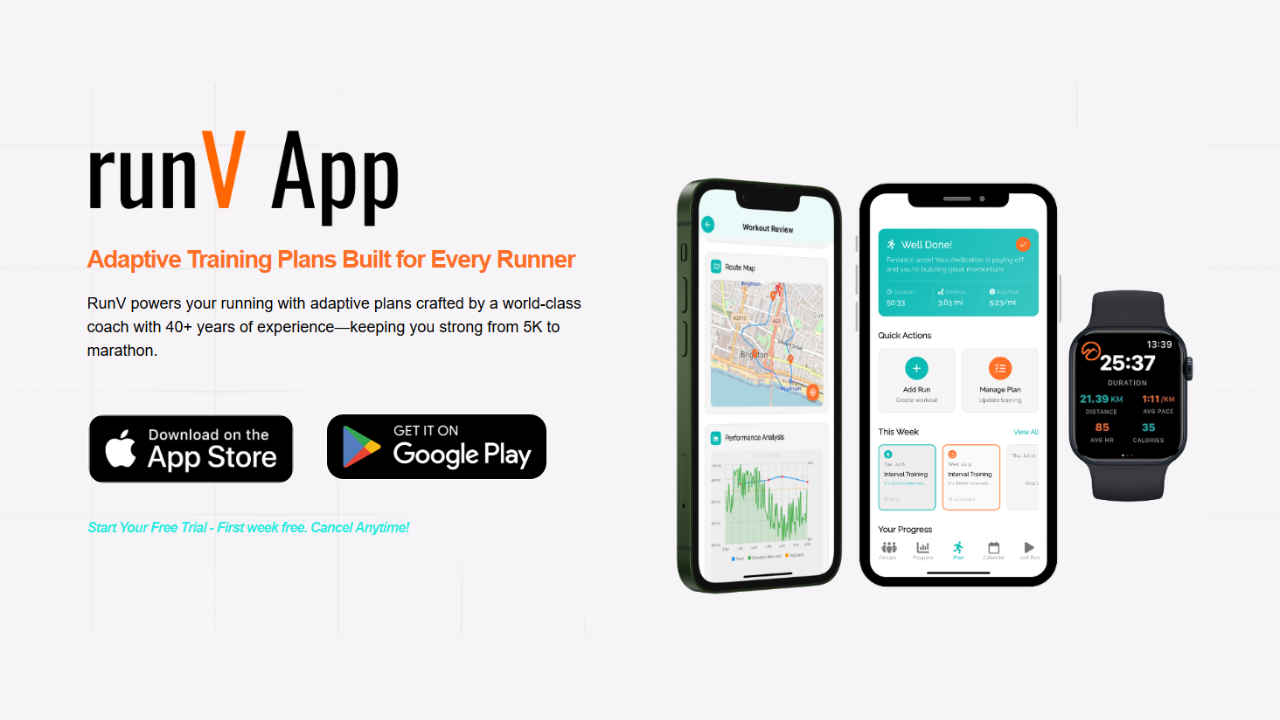
At the simplest level, an adaptive running plan is a training schedule that changes based on what you actually do, how your body responds, and how your life evolves from day to day and week to week.
Instead of a fixed 12- or 16-week calendar printed off the internet, adaptive plans behave more like a navigation app. You tell it your destination (a 5K, half marathon, or marathon), your starting point, and it constantly re-routes when your “traffic” changes—fatigue, missed runs, extra stress, or unexpectedly strong performances.
Modern systems use data from GPS watches, heart rate sensors, and even advanced metrics like VO2 max estimates or blood oxygen saturation to tweak workouts. Others rely primarily on feedback you give them: perceived effort, sleep quality, soreness, and mood.
In all cases, the promise is the same: Adaptive Running Plans Deliver higher performance, fewer injuries, and more motivation because the training you see on your schedule is always relevant to who you are today, not who you were six weeks ago.
Why Static Plans Fall Short in a Dynamic Life
Traditional plans assume you are a robot. They assume you will never get sick, never have an all-nighter with a crying baby, never have a brutal work week, and never wake up with a sore Achilles after an ambitious long run.
They also assume linear progress. You run X volume at Y pace in week one; by week eight you should magically be faster and fitter, exactly as predicted. Real life rarely cooperates. Weather, work stress, travel, sleep, and your own unique adaptation curve constantly change the training equation.
That mismatch between plan and reality creates three classic problems: overtraining when you stubbornly follow the plan regardless of how you feel, undertraining when you skip key workouts and never adjust, and confusion when your performance stalls and you have no idea what to change.
This is exactly where adaptive running plans deliver their biggest advantages—by actively monitoring those variables and adjusting in real time.
3 Proven Powerful Gains Adaptive Running Plans Deliver
Gain #1: Performance Gains That Match Your Real Fitness
Every runner has a story about training for weeks at paces that were too easy or too hard. Adaptive Running Plans Deliver more precise workout targets by constantly recalibrating your training zones based on performance, not guesswork.
For example, after a strong tempo run or race effort, an adaptive system may detect that your threshold pace has improved. It will then nudge your future interval paces and tempo runs slightly faster, aligning training stress with what your body can truly handle.
Conversely, if your long runs are drifting slower at the same heart rate, or if your heart rate is higher than usual at easy paces, the system reads that as fatigue or loss of fitness and eases up. This avoids the common trap of clinging to outdated pace goals that your body can’t currently support.
Over time, the cumulative effect is powerful: every session is targeted to your current capacity. You’re not training for the runner you wish you were; you’re training for the runner you actually are, which is the fastest way to become the runner you want to be.
Gain #2: Reduced Injury Risk and Smarter Recovery
Most running injuries come from some combination of “too much, too soon, too often.” Static plans can’t see that your stride has shortened, your cadence has changed, or your resting heart rate is elevated. Adaptive Running Plans Deliver protection by modulating training stress based on early warning signs.
Consider a week where your watch shows poor sleep, higher resting heart rate, and reduced HRV (heart rate variability). An adaptive system might automatically turn that scheduled interval session into an easy aerobic run, or reduce volume altogether.
Many runners resist backing off. An adaptive plan creates an objective buffer between your ego and your legs. You can still override suggestions, but the default is safer. Over months and years, these micro-adjustments reduce the repeated overload that leads to knee pain, shin splints, plantar fasciitis, and IT band issues.
This safety net becomes even more valuable if you run in groups. Social pressure can push you into overreaching. Combined with the insights from Running Group Dynamics That Cause 7 Shocking Overtraining Mistakes, adaptive systems help you play the long game instead of chasing every hard workout.
Gain #3: Motivation, Confidence, and Long-Term Consistency
Motivation follows progress. But progress is rarely linear. There will be weeks where life gets messy or training plateaus. Adaptive Running Plans Deliver psychological support by making your plan feel alive, not broken, when you miss a workout or slow down.
Miss a long run because of travel? Instead of feeling like your entire 12-week schedule is ruined, the adaptive plan re-times your peak weeks or subtly shifts upcoming sessions. The system recalculates your path to the goal, just like a GPS reroutes after a wrong turn.
This creates a sense of partnership with your training. You’re not “failing the plan”; the plan is helping you navigate realities. That mindset shift significantly improves adherence. When you believe every run still “counts,” you’re more likely to stay consistent.
Consistency is where meaningful progress lives. For more on that long-term approach, it’s worth reading Consistency Based Training for 7 Powerful Proven Gains, which aligns beautifully with the philosophy behind adaptive training systems.
How Adaptive Running Plans Deliver These Gains (Under the Hood)
There’s no single algorithm everyone uses, but most adaptive systems rely on a similar stack: baseline assessment, input tracking, fitness modeling, and decision logic.
Step 1: Baseline Assessment
To adapt intelligently, the system needs an honest starting point. That usually means collecting:
- Recent race results or time trials (5K, 10K, etc.)
- Current weekly mileage and longest recent run
- History of injuries and training breaks
- Preferred training days and constraints (e.g., long run only on weekends)
Some apps will estimate your VO2 max or threshold pace based on a test workout or your existing GPS data. Others will ask for perceived effort scales or simple questions like, “How hard did that last run feel?”
Step 2: Continuous Data Collection
Once the plan starts, Adaptive Running Plans Deliver value through feedback loops. They ingest:
- Workout metrics (distance, time, pace, heart rate)
- GPS data (elevation, terrain, weather conditions)
- Optional advanced metrics (HRV, blood oxygen, cadence)
- Self-reported feedback (fatigue, pain, sleep quality)
The more accurate and consistent your data, the better the adaptation. But you don’t need every sensor on the market to benefit. Even simple distance and effort reports can drive useful adjustments.
Step 3: Fitness and Fatigue Modeling
Most plans use some form of training load model. They estimate your short-term fatigue (recent hard work) and long-term fitness (accumulated training). When short-term fatigue is too high relative to fitness, your risk rises; when it’s too low, you’re under-challenged.
By tracking how pace, heart rate, and effort move together, the system refines your zones. For example, if the same pace suddenly costs more heartbeats and feels harder, that’s a clue that something is off—stress, heat, illness, or lack of sleep.
Step 4: Decision Logic and Plan Updates
This is where Adaptive Running Plans Deliver their unique “feel.” Some are conservative, prioritizing injury reduction; others push more aggressively to maximize race performance.
Typical adjustments include: (Garmin adaptive plans)
- Shifting hard sessions when you’re clearly fatigued
- Increasing or decreasing weekly mileage by small, safe increments
- Changing the type of session (e.g., intervals to tempo, or tempo to easy)
- Recalculating target paces based on recent breakthroughs
Many modern solutions, including options like an AI Dynamic Plan, use machine learning to refine these decisions across thousands of users, not just your data alone.
The Role of Wearables, Apps, and Data
Adaptive systems and modern running tech are tightly connected. What your watch and phone collect becomes the raw material for adaptation. But quality matters more than quantity.
Core Metrics That Matter Most
At minimum, Adaptive Running Plans Deliver great results from these basics:
- Distance and time (for volume and pace)
- Heart rate (for internal load)
- Frequency of runs (for consistency)
- RPE – rate of perceived exertion (your subjective view)
Adding cadence, HRV, and sleep tracking can refine decisions, but they are not mandatory to benefit from adaptive training.
Advanced Metrics: Blood Oxygen and Beyond
Some modern watches measure blood oxygen saturation (SpO2). Used correctly, these metrics can provide clues about recovery, altitude adaptation, and overall cardiovascular status.
Integrating these into adaptive logic means the system can spot deeper fatigue or poor recovery even when pace looks fine. This is especially helpful at altitude or in hot, humid climates. To dive deeper into how this specific metric helps, see How Apple Watch Blood Oxygen Tracking Can Boost Your Runs, which explains practical use cases for endurance training.
How Adaptive Running Plans Deliver Gains Across Different Race Distances
One of the overlooked advantages of adaptive systems is how well they transfer across race types and distances. Whether you’re aiming for a 5K or stepping up to a marathon, the principles remain the same, but the emphasis shifts.
5K and 10K: Sharper Speed and Efficient Recovery
Shorter races demand a blend of aerobic capacity, speed, and tolerance for discomfort. Adaptive Running Plans Deliver:
- Fine-tuned interval paces based on your latest efforts
- Smarter spacing between hard days to avoid burnout
- Gradual volume increases to support speed work safely
These races are also where many runners layer frequent group runs and tempo sessions. Adaptive logic helps keep that overall load in check so your hard days are truly hard and your easy days stay easy.
Half Marathon and Marathon: Managing Load and Life
For the half marathon and marathon, the stakes rise. You must manage months of training, building endurance without tipping into overuse. Adaptive Running Plans Deliver steady progression by:
- Adjusting long-run length and pace based on your weekly response
- Rebalancing tempo and easy volume when you hit fatigue patches
- Shifting peak weeks when you miss key sessions or face illness
This is crucial if you’re juggling work, kids, or frequent travel. Static marathon schedules rarely survive contact with real life. Adaptive logic ensures your marathon or Half Marathon ambitions stay realistic yet challenging all the way to race day.
Gear and Technology That Make Adaptive Plans Even Better
While tech isn’t mandatory, certain tools help Adaptive Running Plans Deliver their full potential.
GPS Watch With Accurate Heart Rate
A reliable GPS watch with optical heart rate is a baseline. If you frequently run intervals or care about precision, consider pairing a chest strap or high-quality optical sensor. Reliable heart rate data makes it easier to detect overreaching or fitness improvements.
Comfortable Daily Trainers and Race Shoes
Your shoes still matter more than your watch. Adaptive Running Plans Deliver smart training loads, but poor footwear can still cause problems. Many runners now use:
- A cushioned daily trainer for most miles
- A lightweight tempo or speed shoe for quality sessions
- A plated “super shoe” for key workouts and races
Make sure your rotation matches your mileage and surfaces. Trail runners should consider lug depth, rock plates, and weather protection. Tech-driven adaptation won’t save you from blisters and lost toenails if your gear is wrong.
Apps That Integrate Seamlessly
The best experience comes when your watch, phone, and training platform talk to each other smoothly. This minimizes manual logging and ensures your Adaptive Running Plans Deliver timely adjustments instead of waiting on missing data.
As app ecosystems evolve quickly, it’s smart to stay current with reviews and feature comparisons. Resources like Best Running Apps for 2025: 9 Essential, Proven Picks can help you decide which platforms are worth your time.
How to Choose an Adaptive Running System
Not all adaptive plans are equal. Some are glorified static schedules with minor tweaks; others are deeply dynamic.
Key Features to Look For
- True day-to-day adaptation: Does it change workouts when you miss or modify runs?
- Multi-metric input: Does it use more than just distance and pace (e.g., heart rate, RPE)?
- Clear feedback: Do you understand why the plan changed a session?
- Customization: Can you lock in certain days or workouts (e.g., group runs)?
- Safety constraints: Does it limit weekly mileage jumps and intensity spikes?
Questions to Ask Yourself
Before choosing, ask:
- Am I comfortable wearing a watch and sharing my data?
- How often do I race, and at what distances?
- Do I want the plan to push me aggressively or protect me more conservatively?
- How much manual control vs automation do I prefer?
The right answer depends on your history, motivation, and tolerance for risk. If you’re often injured, choose a more conservative system. If you’ve been under-challenged for years, give the algorithm permission to nudge you harder.
Common Mistakes When Starting Adaptive Training
Adaptive Running Plans Deliver a powerful framework, but they’re not magic. You can still sabotage them with a few predictable missteps.
Mistake 1: Lying to the System
If you label every run as “easy” when it felt hard, or under-report pain and fatigue, the algorithm will draw the wrong conclusions. Be honest in effort ratings and feedback, especially in the first few weeks. (MapMyFitness dynamic plans)
Mistake 2: Ignoring Easy Days
Some runners treat every adaptive suggestion as a challenge to beat. If the plan calls for easy pace, and you always run faster, the system may interpret that as you being fitter than you are, and ramp up intensity prematurely.
Respect the prescription. Let the plan see the full spectrum of efforts—from recovery jogs to race efforts—so it can tune your training accurately.
Mistake 3: Constantly Overriding the Plan
Adaptive Running Plans Deliver their best when you follow them most of the time. Occasional overrides are fine: moving a workout for travel, attending a social group run, or adjusting for weather.
If you override every suggested change, though, you’re effectively back on a static plan—a static plan that doesn’t even match what you’re doing. Trust the system enough to experiment; you can always recalibrate later.
Mistake 4: Expecting Perfection
No algorithm perfectly predicts human adaptation. There will be weeks where a workout feels harder or easier than expected. Use those experiences to feed back better data, not to dismiss the entire system.
Who Benefits the Most From Adaptive Running Plans?
While almost any runner can gain something, certain profiles see particularly strong results when Adaptive Running Plans Deliver tailored training.
Busy Adults With Unpredictable Schedules
If your job, family, or travel routine changes weekly, static plans are almost guaranteed to break. Adaptive systems flex around your life, ensuring that missing a key run doesn’t derail your entire buildup.
Injury-Prone Runners
If you’ve cycled through multiple injuries, you likely need tighter control of load progression. Adaptive Running Plans Deliver micro-adjustments that keep your mileage and intensity in a safer window, especially when stress or fatigue spikes.
Data and Tech Enthusiasts
If you love analyzing numbers, charts, and trends, adaptive training gives you a rich playground. Each run becomes not just a workout, but new information that refines your future schedule.
Intermediate Runners Stuck at a Plateau
Many runners improve quickly from beginner to intermediate, then stall. Often it’s not effort but structure that’s the problem. Adaptive systems gradually introduce smarter interval design, tempo work, and long-run structuring so your training stress remains progressive, not repetitive.
Step-by-Step: Your First 4 Weeks on an Adaptive Plan
To make this concrete, here’s how a typical runner might experience their first month.
Week 1: Baseline and Gentle On-Ramp
You input your recent 5K time, current weekly mileage, and past injuries. The plan assigns mostly easy runs, a short tempo, and a moderate long run. It watches how your heart rate responds and asks for effort ratings.
You feel surprisingly fresh, so you rate most runs as “moderate” instead of “hard.” The system notes that your current paces are below your estimated limits and prepares to increase intensity gradually.
Week 2: First Adjustments
A busy work week forces you to skip a midweek run. Instead of keeping the original schedule, Adaptive Running Plans Deliver a rearranged week: slightly longer easy run on the weekend, and the planned tempo is shortened but kept in place to maintain stimulus.
Your long run heart rate drifts higher than expected in the last few kilometers, suggesting some fatigue. The next week’s mileage bump is scaled down to respect that signal.
Week 3: Early Progress and Fine-Tuning
You nail a tempo run that feels easier than before at the same pace. The system quietly recalibrates your threshold pace upward and adds a few seconds per kilometer speed to your next tempo.
One day you log poor sleep and a “tired” rating. The planned interval session is converted into a steady aerobic run. You feel better the next day, and the harder workout is rescheduled.
Week 4: Building Confidence
By now, you trust that Adaptive Running Plans Deliver better structure than your old “wing it” approach. You see your weekly mileage creeping up safely, your easy pace slowly improving, and your perceived effort on key workouts dropping.
You still adjust occasionally—for social runs or weather—but you’re no longer guessing what to do after a missed session. The plan reroutes, and you just follow the new path.
Final Thoughts: The Future of Running Is Adaptive
Running will always be simple at its core: one foot in front of the other, consistently, over time. But how we organize that simplicity is changing fast. Static plans had their era. Today, Adaptive Running Plans Deliver three powerful, proven gains: performance that tracks your real fitness, reduced injury risk through smarter load management, and a massive boost in motivation and consistency.
For runners who care about both experience and outcome, this shift is more than a tech trend. It’s a fundamental upgrade to how we think about training. When your plan listens, learns, and responds, you’re free to focus on what matters most: enjoying the run, trusting the process, and arriving on race day ready for your best possible performance.
The longer you run, the more this matters. Over years, not just weeks, those small adaptive adjustments compound into fewer setbacks, more breakthroughs, and a training history that reflects who you truly are as an athlete—dynamic, evolving, and capable of more than any static spreadsheet can predict.