Training 5 min
How to warm up properly before a hard running session

A proper warm-up gradually raises your heart rate, mobilises your joints, and primes your nervous system for effort—reducing injury risk and sharpening your pace. Hard sessions without adequate preparation waste fitness gains and invite preventable injury. This guide covers the evidence-based approach that works.
Why warm-ups matter before hard running
Your muscles, tendons and ligaments need time to transition from rest to high intensity. A warm-up increases blood flow to working muscles, elevates core temperature, and lubricates joints. It also mentally prepares you for effort. Without one, you're asking your body to accelerate from zero to maximum effort instantly—a recipe for strains and mediocre pacing.
How long should a warm-up last?
Most hard sessions benefit from 15–20 minutes of graduated warm-up. This includes easy running, dynamic movement, and optional strides. Shorter efforts (5K pace work) may need only 10–12 minutes; longer threshold runs warrant the full 20. Listen to conditions: cold weather and early morning sessions need longer preparation than warm afternoons.
The structure of an effective warm-up
- 5–8 minutes easy running at conversational pace
- 2–3 minutes of dynamic stretches and mobility
- 4–6 minutes of building pace (fartlek-style or short pickups)
- 2–4 x 80–100m strides at 85–90% effort, with full recovery between each
Dynamic stretches and mobility for runners
- Leg swings (forward-back and side-to-side, 8 each leg)
- Walking lunges with rotation (8–10 per leg)
- Glute bridges (10–15 reps)
- Inchworms (8–10 reps)
- Lateral band walks (10 per direction, if you have a band)
- Hip circles and arm circles (5–8 each direction)
These movements prepare your hips, hamstrings and glutes—the power generators for hard running. Avoid static stretching before hard work; save that for cool-down.
Building pace before your main set
After easy running and mobility, gradually increase your effort over 4–6 minutes. This might mean running at lactate-threshold pace for short bursts, or simply building from easy to moderate over the run-in. The goal is to raise your heart rate closer to working pace, so the hard set doesn't feel like a shock to your system.
Strides: the final primer
Strides are 80–100m efforts at 85–90% of maximum speed, done with full recovery between. They wake up your nervous system and teach your legs to move fast under control. Do 2–4 in your warm-up, spaced 60–90 seconds apart. They're short enough to improve your session without creating fatigue.
Warm-up adjustments for different session types
- Interval work (400m–1600m repeats): full 15–20 minute warm-up with strides; your body needs to be race-ready
- Tempo or threshold: 15–18 minutes; less emphasis on strides, more on building pace gradually
- Long, steady-state hard run: 12–15 minutes; easier warm-up than shorter, sharper work
- Hill repeats: 12–15 minutes plus extra mobility for glutes and hamstrings
Adapting your warm-up with feedback and data
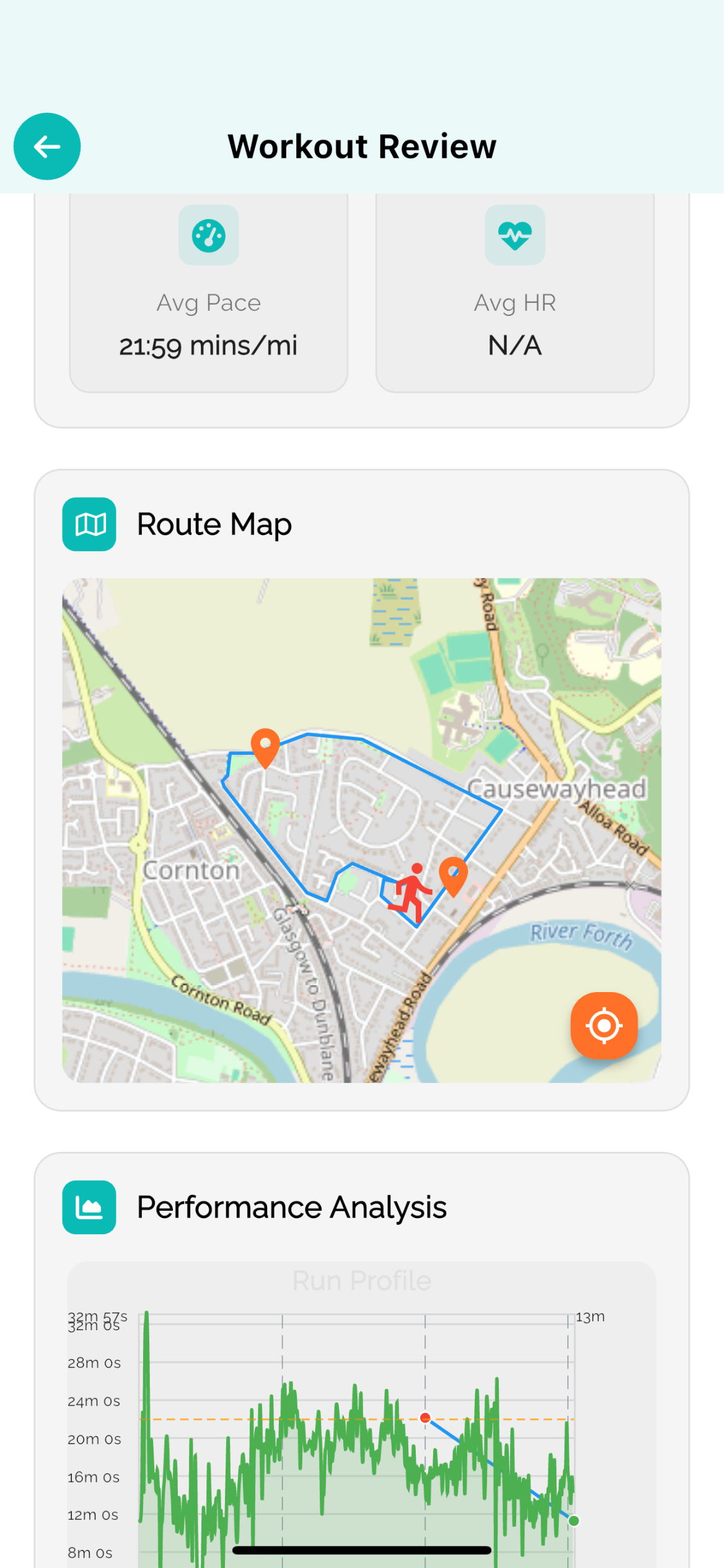
RunV tracks your session data—pace, heart rate, effort ratings. If you consistently feel flat or sluggish in the first 5–10 minutes of your main set, your warm-up may be too short or too easy. Conversely, if you're fatigued by the end, your warm-up may have been too hard. Use these signals to refine your routine; a data-informed approach means you'll warm up smarter each week, not just harder.
FAQ
- Can I skip the warm-up if I'm short on time?
- Not for hard sessions. A shortened warm-up is better than none, but aim for at least 10 minutes. A proper warm-up prevents injury and improves performance; it's not wasted time. If time is tight, shorten the session itself, not the preparation.
- Should I warm up the same way in summer and winter?
- Winter and early morning sessions need longer, more thorough warm-ups. Cold muscles are stiffer and less elastic. Add 2–3 extra minutes to your winter routine, and consider an extra 1–2 strides. Summer warm-ups can be slightly shorter, but never skip them entirely.
- What's the difference between a warm-up and a cool-down?
- A warm-up preps your body for effort; a cool-down eases your heart rate down and aids recovery. After a hard session, spend 5–10 minutes running easy, followed by static stretching. This clears metabolic waste and reduces soreness.
Train smarter
RunV turns this thinking into your plan — adaptive coaching that rebuilds after every run.
Keep reading