
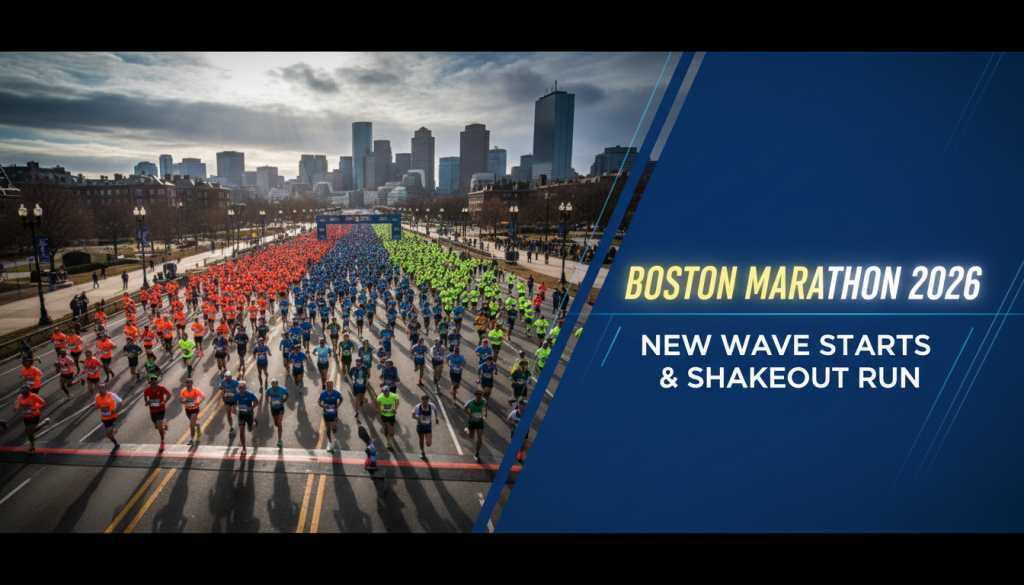
Boston Marathon 2026 Unveils a slate of changes that reshape what runners can expect on race weekend—both on the start line in Hopkinton and on the paths of Boston Common. With expanded start waves and a major new community shakeout run, the “event experience” is becoming just as important as race-day splits. At the same time, New York and London are rolling out branding and fundraising updates that will influence how runners train, race, and give back.
Table of Contents
- Boston Marathon 2026: What’s New This Year
- Six Start Waves: How Boston’s New Format Works
- Endorphins Boston 2026 Shakeout Run: Community Before Competition
- NYC: NYRR’s New Brand and What It Means for Runners
- NYC Marathon Charity Expansion and $100M Goal
- London Marathon & Enthuse: A Decade of Fundraising Support
- Training & Tech Tips to Make the Most of These Changes
- Conclusion: How to Prepare for the New Era of Major Marathons
Boston Marathon 2026: What’s New This Year
When Boston Marathon 2026 Unveils changes, the entire running world pays attention. The 130th running, set for April 21, 2026, introduces six start waves and a refreshed weekend schedule that puts community front and center. Nearly 30,000 runners from 137 countries will line up, chasing PRs, Boston Qualifiers, and personal milestones across one of the most storied courses in the sport.
The Boston Athletic Association (BAA) is pairing tradition with innovation: more waves for smoother logistics, expanded prize money totaling $1.5 million across open, wheelchair, and para divisions, and a more curated event ecosystem that includes official shakeouts and partner runs.
For everyday participants, these changes translate into less stress on race morning, clearer pacing, and more options for how to spend the critical 48 hours before the gun.
Six Start Waves: How Boston’s New Format Works
From Four Waves to Six: Why the Change Matters
Boston Marathon 2026 Unveils a six-wave structure, up from the traditional four, as confirmed by NBC10 Boston’s recent report. The goal: reduce congestion, improve course flow, and enhance safety. Anyone who has battled early-race bottlenecks on the rolling roads through Hopkinton, Ashland, and Framingham knows how decisive those first miles can be.
By spreading nearly 30,000 runners across more, smaller groups, the BAA is aiming for:
- Shorter porta-potty and corral lines in the Athletes’ Village
- Less weaving in the first 5K and more accurate pacing from the gun
- Cleaner aid-station access, with fewer elbows and spills
- Improved response times and space for medical and support teams
What Six Waves Mean for Your Race-Day Strategy
With Boston Marathon 2026 Unveils a more segmented start, your wave placement becomes a key part of your strategy. Expect wave assignments to be tightly matched to qualifying times and verified performance. That means you’re more likely to be surrounded by runners targeting similar finish times.
How this helps:
- More consistent pacing: Less early-race surging and braking.
- Better heat and weather management: Later waves may face warmer conditions; earlier waves may get cooler but potentially windier air.
- Reduced mental fatigue: Fewer obstacles and fast/slow clashes in the first 10K help you focus on form and fueling.
This is where data-driven training pays off. Using tools that let you simulate race-day pacing, monitor fatigue, and refine goals—such as the platforms compared in RunV vs Strava Which 5 Proven Powerful Tips Are Best—can help you match your training targets to your likely Boston wave.
Course Dynamics: Hills, Crowds, and Aid Stations
Boston’s net-downhill profile hides its complexity. From the quad-pounding descent out of Hopkinton to the Newton Hills, crowd pressure and pack dynamics are huge performance drivers. Boston Marathon 2026 Unveils a start format designed to spread runners more evenly across the full 26.2 miles.
Expected benefits:
- More predictable hill traffic: Climbing the Newton series with runners at similar speeds can reduce stutter steps that waste energy.
- Smoother Wellesley and Brookline sections: Less zigzagging through denser clusters as you approach Boston College.
- Improved hydration: With six waves, aid stations should experience steadier, less overwhelming surges.
That consistency can be the difference between cruising through Heartbreak Hill and walking it. Plan your fueling around where you expect to be in your wave and aim to practice similar crowd conditions in training races or group long runs.
Endorphins Boston 2026 Shakeout Run: Community Before Competition
Shakeout Details: Where, When, and Who
Alongside the new wave system, Boston Marathon 2026 Unveils a marquee community highlight: the Endorphins Boston 2026 Shakeout Run. On April 19, the day before the race, runners will gather at Parkman Bandstand on Boston Common for a free, three-mile shakeout hosted by Endorphins Running with New Balance, SiS, and Shokz.
Key details:
- Date: April 19, 2026 (Sunday before race day)
- Location: Parkman Bandstand, Boston Common
- Distance: ~3 miles, easy pace
- Perks: Free t-shirts while supplies last, sponsor activations, and crew meetups
Why a Shakeout Run Matters the Day Before Boston
Boston Marathon 2026 Unveils not just structural changes but a clear emphasis on community. A pre-race shakeout of this kind offers several practical benefits:
- Loosen up the legs: Light movement promotes blood flow after travel and expo time.
- Reduce anxiety: Sharing the pre-race jitters with others can calm nerves.
- Course familiarity: While it’s not on the official route, running in downtown Boston helps you orient to logistics and landmarks.
For many, this run doubles as a social event. If you train mostly solo, this is an easy way to tap into the energy of crews from around the world and feel like part of something bigger than your own race.
How to Approach the Shakeout Without Sabotaging Race Day
The temptation is to get caught up in the fun and push too hard. Treat the shakeout strictly as active recovery. Keep the pace conversational, limit the total time on your feet, and prioritize hydration and nutrition afterward.
Simple guidelines:
- Cap total running to 20–30 minutes.
- Skip any fast strides if you’re feeling overly fatigued.
- Use the run to test race-day gear (shoes, socks, earbuds) for comfort, not performance.
If you’re experimenting with new tech—like the wearables and platforms reviewed in Best Data Platform for 7 Powerful, Proven Runner Setups—this is a perfect time to confirm GPS lock, audio cues, and data screens you’ll rely on during 26.2.
Community, Crew Culture, and Mental Fuel
Beyond the physical benefits, Boston Marathon 2026 Unveils an intentional focus on pre-race camaraderie. The Endorphins shakeout is built around running crews, sponsors, and social connection. For runners who train with clubs or online communities, this is a chance to meet teammates in person, swap race plans, and build confidence.
If you’re not attached to a specific group, don’t hesitate to introduce yourself. Informal pace groups will form organically, and you may find a partner with similar wave and finish-time goals for race day. That shared commitment can help you stay patient in the early miles when adrenaline is highest.
(2026 honorees unveiled)
NYC: NYRR’s New Brand and What It Means for Runners
“Believe in Every Step”: A New Identity for NYRR
While Boston Marathon 2026 Unveils operational updates, New York Road Runners is reshaping how its races look and feel. NYRR has launched its first major rebrand in 15 years, anchored by the tagline “Believe in Every Step.” The new visual identity features a logo inspired by the Statue of Liberty’s torch—symbolizing guidance, hope, and the city’s iconic skyline.
The refreshed logo and design language will roll out fully starting with the 2026 United Airlines NYC Half and extend to the TCS New York City Marathon, local races, and digital properties.
How Branding Shapes the Runner Experience
A rebrand is more than just a new logo on the finisher medal. For runners, it can reshape:
- Event atmosphere: Consistent, modern visuals make the race feel current and cohesive from expo to finish chute.
- Inclusivity signals: Messaging like “Believe in Every Step” emphasizes participation over pure performance.
- Merch and memorabilia: Limited-run apparel with the updated branding may become highly sought-after souvenirs.
This shift aligns with broader trends in the sport: big-city marathons are increasingly positioning themselves as experiences for all abilities, not just sub-elite racers chasing PBs.
Training and Motivation in a “Believe in Every Step” Era
A motivational brand platform has practical implications for training. Many runners thrive when their plan recognizes life constraints and fluctuating energy, not just raw mileage goals. NYRR’s message mirrors what adaptive training platforms already practice: adjusting sessions to keep you progressing even when life interferes.
If you’re building toward New York, consider using an adaptive or flexible plan like the ones discussed in How Adaptive Plans Reduce 5 Shocking Risks, Proven Effective to align your daily training with your own “every step” philosophy—balancing ambition with sustainability.
NYC Marathon Charity Expansion and $100M Goal
The Retreat Named Official Charity Partner
Boston Marathon 2026 Unveils new logistics; New York is expanding its heart. NYRR has named The Retreat—an organization supporting survivors of domestic violence and human trafficking—as an Official Charity Partner for the 2026 TCS New York City Marathon on November 1.
The Retreat joins a record slate of over 670 charity partners, reflecting the race’s evolution into a global fundraising powerhouse.
670+ Charity Partners, $100M Fundraising Target
NYRR is aiming for an ambitious fundraising total of more than $100 million in 2026, building on the record $80 million raised by charity runners in 2025. For participants, this expansion is significant:
- More guaranteed entry routes: Charity bibs provide access even if you miss the time qualifier or lottery.
- Broader cause selection: With 670+ partners, runners can align their race with causes that reflect personal values.
- Structured support: Many charities offer training plans, coaching, and community support in exchange for fundraising commitments.
For first-time marathoners, charity programs often provide extra accountability and coaching structure—helpful if you’re not sure how to build up safely to 26.2.
Implications for Runners: Training, Community, and Purpose
Running with a charity transforms the marathon from a personal test into a shared mission. Knowing your miles fund critical services—like those offered by The Retreat—can help you push through tough weather or a rough patch in Brooklyn or the Bronx.
From a training perspective, charity teams frequently offer coach-led group runs, educational webinars, and race-weekend logistics support. That added scaffolding can greatly reduce the cognitive load of marathon prep, especially for those juggling work and family.
London Marathon & Enthuse: A Decade of Fundraising Support
Ten More Years: London Marathon Events and Enthuse
Across the Atlantic, London Marathon Events (LME) is doubling down on its digital fundraising backbone. LME has extended its partnership with Enthuse for another ten years. Since 2022, the platform has powered more than £60 million raised for charities, including over £30 million from this year’s share of the record £73.5 million total at the TCS London Marathon.
The renewed agreement means Enthuse will continue to support all existing and future LME events.
Why a Stable Fundraising Platform Matters
For runners, the London–Enthuse partnership offers several practical advantages:
(2026 Boston Marathon guide)
- Consistent fundraising tools: Familiar donation pages and dashboards reduce setup time.
- Better donor experience: Streamlined checkouts and mobile-friendly pages encourage more giving.
- Data continuity: Multi-year fundraisers can track impact over time on a single platform.
This continuity also benefits international runners using London as part of a global majors quest, providing a predictable digital experience across cycles.
Training for London in a Changing Landscape
While Boston Marathon 2026 Unveils new wave strategies and London leans into tech, the training fundamentals remain the same: build endurance steadily, manage injury risk, and tailor your plan to the course. London’s flat, fast profile demands slightly different prep than Boston’s rolling hills.
If you’re gearing up for London specifically, it’s worth studying how event changes affect pacing and crowding. For a deeper dive into course-specific preparation, see Why the New London Marathon Changes How You Should Train, which breaks down how to align your build-up with London’s unique demands.
Training & Tech Tips to Make the Most of These Changes
Adapting Your Build-Up to Boston’s Six Waves
Boston Marathon 2026 Unveils a start format that rewards precision. To optimize your performance:
- Train at realistic wave paces: Once you have a projected wave, mimic that target pace in long runs and tempo sessions.
- Practice downhill running: Include controlled descents to condition your quads for Boston’s early miles.
- Rehearse aid-station etiquette: On group runs, simulate moving through crowded water stops without stopping dead.
If you belong to a local club, coordinate workouts with runners targeting similar Boston times. This simulates the pack dynamics you’ll experience in your assigned wave.
Leveraging Community Shakeouts for Performance and Enjoyment
With Boston Marathon 2026 Unveils a signature shakeout run, more runners are treating social events as part of their performance plan. Used wisely, these runs can sharpen both body and mind. The key: keep your ego in check and treat community time as a confidence booster, not a secret fitness test.
Consider:
- Scheduling your final race-pace session 3–4 days before the marathon, not at the shakeout.
- Using the shakeout to finalize logistics—where you’ll stash gear, meet family, and navigate public transit.
- Connecting with others who share your goals for mutual pacing and encouragement on race day.
Injury Prevention in a Big-Marathon Training Cycle
Crowded courses, travel, and high mileage create the perfect storm for overuse injuries. Integrating two to three short strength sessions per week can fortify your joints and connective tissue against the pounding of Boston’s downhills or New York’s bridges.
Focus on:
- Single-leg stability (lunges, step-downs)
- Hip and glute strength (bridges, clamshells)
- Core stability (planks, dead bugs)
To understand how and why this matters, see the evidence-backed breakdown in How Strength Training Protects: 7 Powerful Proven Joint Benefits, which explains exactly how strength work keeps marathoners healthier across long training blocks.
Tech, Apps, and Data: Making Event Changes Work for You
As Boston Marathon 2026 Unveils more structured waves and New York and London refine branding and fundraising tech, the role of data and apps only grows. Consider:
- Race-simulation workouts: Use your watch to lock in a target pace for your assigned wave.
- Fatigue tracking: Use HRV, sleep, and RPE trends to decide when to push and when to back off.
- Route planning: Map training runs that mimic your goal course profile—hilly for Boston, bridge-like climbs for NYC, flat and tempo-focused for London.
The best tools are the ones you’ll actually use consistently. Whether you prefer minimalist tracking or deep analytics, make sure your tech setup serves your goals instead of distracting from them.
Conclusion: Preparing for the New Era of Major Marathons
Boston Marathon 2026 Unveils a more finely tuned race experience—six waves, a major shakeout run, and a renewed focus on community and safety. In parallel, New York is redefining its identity and charity ecosystem, while London locks in digital fundraising infrastructure for the next decade.
For runners, these aren’t abstract organizational tweaks. They shape how you train, how you experience race weekend, and what your marathon means—to you, your community, and the causes you support. The smartest response is to treat these changes as tools: use smaller waves to pace smarter, shakeouts to steady your nerves, and evolving charity and tech ecosystems to give your race a deeper purpose.
If you’re targeting Boston, New York, London, or all three, start now: dial in your training plan, strengthen your body, and choose the tech and support systems that will carry you from the start mat to the finish line. Boston Marathon 2026 Unveils a new chapter in major marathon racing; it’s on you to write your best possible story within it.