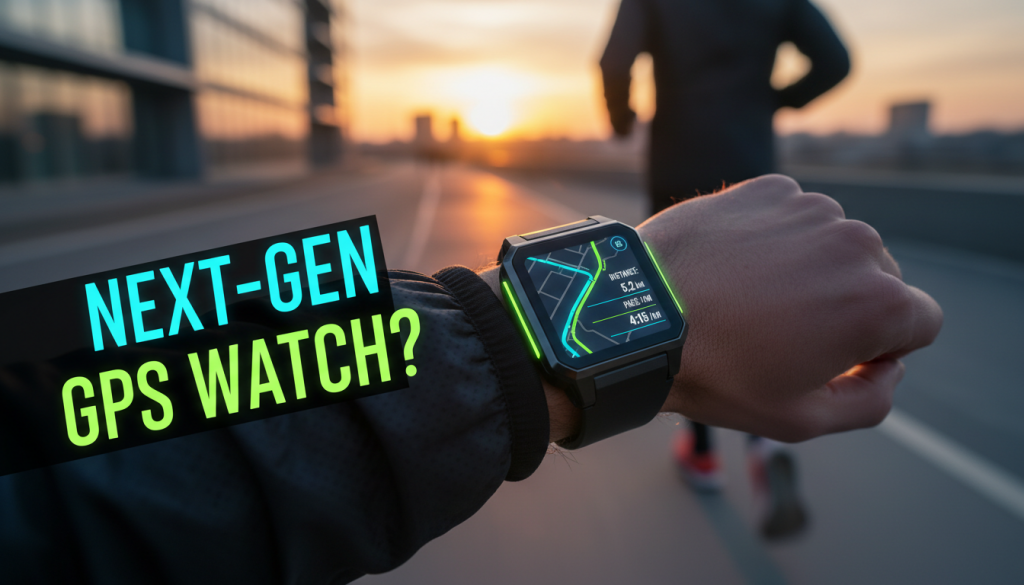
If you’re trying to Choose Right Next‑Gen Watch for your training in 2026, this is a particularly important week to pay attention. In just a few days, Amazfit has launched a serious Garmin rival, Coros has added voice controls, Garmin has refreshed its entry‑level Forerunner line, and new details have leaked about the Apple Watch Ultra 4. Together, these moves reshape what runners should expect from their next GPS watch.
This running news blog breaks down the latest announcements and shows how to turn that information into a smart, future‑proof buying decision for your own training.
Table of Contents
- Why Now Is the Time to Re‑Evaluate Your GPS Watch
- Key Factors to Consider When You Choose Right Next‑Gen Watch
- Amazfit Cheetah 2 Ultra: A New Ultra‑Running Powerhouse
- Coros’ Big Voice‑Control Update: When Software Beats Hardware
- Garmin Forerunner 70 & 170: Entry‑Level Watches, Serious Brains
- Apple Watch Ultra 4 Rumors: How to Plan Around What’s Coming
- Matching the Right Next‑Gen Watch to Your Running Profile
- RunV‑Relevant Tips: Getting Faster With the Tech You Own
- Conclusion & Call‑to‑Action
Why Now Is the Time to Re‑Evaluate Your GPS Watch
To Choose Right Next‑Gen Watch, timing matters as much as specs. The past seven days have delivered:
- A rugged ultra‑running watch that finally pressures Garmin’s dominance (Amazfit Cheetah 2 Ultra).
- A free software update that gives Coros users voice control and smarter data displays.
- New entry‑level Garmins that push advanced training tools down to lower prices.
- Credible leaks that Apple Watch Ultra 4 won’t be a minor refresh, but a real redesign.
If your current watch is 3–5 years old, this wave of news is a strong signal: the baseline has shifted. Even mid‑range watches now offer dual‑band GPS, AMOLED screens, adaptive training suggestions, and on‑wrist coaching features that used to be “pro level.”
Key Factors to Consider When You Choose Right Next‑Gen Watch
Before diving into the specific news stories, it helps to clarify the main criteria that should guide how you Choose Right Next‑Gen Watch for your needs.
1. GPS Accuracy and Signal Tech
Modern watches increasingly use dual‑band GPS and multi‑satellite systems (GPS, Galileo, GLONASS, BeiDou, etc.). This matters most if you:
- Run in dense cities with tall buildings.
- Train on trails under heavy tree cover or in canyons.
- Race marathons where tight turns and tunnels can wreck distance accuracy.
Look for dual‑band or “multi‑band” GNSS with support for multiple satellite constellations if precision is a priority.
2. Screen Type and Readability
To Choose Right Next‑Gen Watch, you must balance AMOLED versus transflective displays:
- AMOLED: Bright, colorful, great for maps and everyday use, but can impact battery life.
- Transflective MIP (memory‑in‑pixel): Excellent outdoors in sunlight, battery‑friendly, but less flashy.
Your choice depends on whether you value long battery life for ultras or rich visuals for navigation and everyday wear.
3. Battery Life and Use Case
Ask yourself:
- Do you mostly run 30–90 minutes on roads?
- Are you training for marathons or back‑to‑back long runs?
- Do you race trail ultras where 20–40 hours of GPS is essential?
The way you Choose Right Next‑Gen Watch must reflect your longest, hardest days—not just your daily 5 km loop.
4. Training Features vs. Smart Features
Running‑first brands (Garmin, Coros, Amazfit’s performance line) emphasize training readiness, structured workouts, VO₂ max, and recovery data. Apple and Google‑based watches integrate deeply with your smartphone, apps, and general lifestyle.
Your decision should balance “run‑coach on your wrist” against “mini‑smartphone on your wrist.”
5. Ecosystem and Data
When you Choose Right Next‑Gen Watch, you’re also choosing an ecosystem: app interfaces, training history, VO₂ max calculations, and how easily you can export data to services like RunV, Strava, or TrainingPeaks.
Think about where you want your data to live long‑term—and whether you’ll eventually outgrow simple step counts in favor of structured, adaptive plans like an AI Dynamic Plan.
Amazfit Cheetah 2 Ultra: A New Ultra‑Running Powerhouse
What Amazfit Announced
On May 15, 2026, Amazfit introduced the Cheetah 2 Ultra, a premium, endurance‑focused GPS watch aimed squarely at trail and ultra runners. With a Grade 5 titanium bezel, sapphire‑glass lens, and a large 1.5‑inch AMOLED display that hits up to 3,000 nits of brightness, this device is positioned as a true rugged flagship.
The Cheetah 2 Ultra supports dual‑band GPS with six‑satellite tracking, packs 64 GB of storage for offline maps and music, and offers improved contour map rendering and route navigation—key for remote terrain.
Why It Matters for Trail and Ultra Runners
If you want to Choose Right Next‑Gen Watch for mountain races, this launch is a big deal. Garmin has long dominated the high‑end trail segment with its Fenix and Enduro lines. Amazfit is now offering:
- Rugged build with titanium and sapphire, raising durability.
- High‑brightness AMOLED that stays legible under harsh sun or in dim forests.
- Offline topographic maps with contour lines and route navigation.
- Large storage for gpx routes, music, and map data.
For athletes who spend hours away from cell coverage, this combination of hardware and mapping can reduce dependence on a phone and make you more self‑reliant.
How It Influences Your Buying Decision
When you Choose Right Next‑Gen Watch, the Cheetah 2 Ultra broadens your options beyond Garmin and Coros. Consider it seriously if:
- You need topo maps but don’t want to pay Fenix‑level prices.
- You value brilliant screens for night navigation and fast map glances.
- You prioritize music and maps stored directly on your wrist.
The main trade‑offs are ecosystem maturity and training analytics. Garmin still leads in detailed long‑term training load and recovery metrics. If you already rely on those to plan your weeks, think about whether Amazfit’s analytics—combined with an external app like RunV—will meet your needs.
Coros’ Big Voice‑Control Update: When Software Beats Hardware
What Coros Rolled Out
Coros’ May Feature Update, currently in beta, brings voice control to compatible watches such as the Pace 4 and Apex 4. Runners can now start workouts, change treadmill speed settings, or alter workout types simply by speaking.
The update also introduces a new multidata watch face that surfaces weekly mileage and other key metrics, giving you a richer overview of your current load at a glance.
Practical Benefits for Runners
Software updates like this can change what it means to Choose Right Next‑Gen Watch. With voice commands, you can:
- Begin an interval session without digging through menus.
- Adjust treadmill pace mid‑run without fumbling for buttons.
- Switch sport modes in transitions during duathlons or brick workouts.
Combined with a clear weekly mileage display, this makes it easier to respect training volume caps and avoid overtraining, especially when used with guidance from tools that highlight the dangers of rigid schedules—see why static plans push runners into overtraining for context.
What It Means If You Already Own a Coros Watch
If you purchased a Pace 4 or Apex 4 recently, this reinforces an important point about how to Choose Right Next‑Gen Watch: longevity isn’t just hardware; it’s the company’s update philosophy.
Coros is showing it can keep older devices relevant through meaningful updates. For many runners, that might delay the need for a hardware upgrade—and that’s a good thing for your wallet.
What It Means If You’re Shopping Now
Voice control may not be a make‑or‑break feature, but it signals Coros’ ambition to blend performance focus with more mainstream smartwatch convenience. If your priorities are: (Best running watches guide)
- Strong battery life and good GPS accuracy.
- Frequent training‑focused updates.
- No desire for a full‑blown app store on your wrist.
Then Coros becomes a stronger candidate as you Choose Right Next‑Gen Watch, especially if you prefer training analytics over full lifestyle integration.
Garmin Forerunner 70 & 170: Entry‑Level Watches, Serious Brains
The New Forerunner Lineup
Garmin has refreshed its entry line with the Forerunner 70, Forerunner 170, and Forerunner 170 Music. All models feature bright AMOLED displays, built‑in GPS, wrist‑based heart rate, and a suite of advanced training tools previously reserved for higher tiers.
Key features include:
- Training Readiness and Training Status.
- Adaptive Daily Suggested Workouts.
- The Garmin Coach system for structured plans.
- Onboard music in the 170 Music model.
Pricing starts at $249.99 for the FR 70, $299.99 for the FR 170, and $349.99 for the FR 170 Music, with availability beginning May 15, 2026.
Why This Is Huge for New Runners
For runners stepping up from a phone app or a basic fitness tracker, these watches compress a lot of high‑end capability into an approachable price. To Choose Right Next‑Gen Watch as a beginner or intermediate runner, you now have:
- AMOLED clarity for easy mid‑run glances at pace and heart rate.
- Personalized workout suggestions that adapt to your fatigue and history.
- Guided training plans that integrate directly with your watch.
This means your first “real” running watch can double as a basic coach, nudging you toward better load management and variety in your training.
Forerunner vs. High‑End Alternatives
The biggest question when you Choose Right Next‑Gen Watch in Garmin’s lineup is: How much do you need maps, multi‑band GPS, and niche endurance features?
Pick the FR 70/170 if:
- You mainly run roads or light trails.
- You train for 5K to marathon distances, not multi‑day ultras.
- You want strong training metrics and a friendly app experience.
Consider higher‑end Garmin models or the Amazfit Cheetah 2 Ultra if your priority is advanced mapping, huge battery life, and multi‑band GNSS for challenging terrain.
Pairing Entry‑Level Garmins With Smarter Training
These new Forerunners become even more powerful when combined with flexible plans. Instead of relying exclusively on static 16‑week templates, you can sync data to platforms that adjust around your real‑world schedule, fatigue, and race goals—similar in spirit to an adaptive custom plan.
When you Choose Right Next‑Gen Watch, think about how your device can feed richer data into those systems, making every mile more targeted.
Apple Watch Ultra 4 Rumors: How to Plan Around What’s Coming
What the Latest Reports Say
Spanish outlet Cinco Días reports that the upcoming Apple Watch Ultra 4 will get a significant redesign and substantially improved sensor package. That suggests a more ambitious leap than the incremental updates of some previous Apple Watch generations.
While specifics are still under wraps, “more advanced sensors” usually points to better health tracking and potentially more precise exercise metrics.
What This Means for Runners in 2026
The current Ultra line is already popular with endurance athletes for its robust build, bright screen, and decent battery life compared with standard Apple Watches. If the Ultra 4 delivers:
- More accurate health and performance metrics.
- Improved GPS and motion sensing.
- Better battery life or more efficient power modes.
Then the Apple ecosystem becomes even more compelling for runners who live inside iOS and want one device for daily life and training.
Buy Now or Wait?
When you Choose Right Next‑Gen Watch and Apple is on your shortlist, you face the age‑old dilemma: buy the current Ultra or wait for the Ultra 4?
Consider waiting if:
- Your current watch is fine for another 6–12 months.
- You care deeply about cutting‑edge health metrics and battery.
- You want a watch that will feel “current” for as long as possible.
Buy now if:
- You have a fall marathon or ultra and your existing watch is unreliable.
- You specifically need Apple‑only features (e.g., certain apps, deep iOS integration).
- You can live with potentially missing out on the latest redesign in exchange for training continuity.
Either way, if you lean Apple, you’ll get strong health tracking. To see how existing Apple sensors already impact performance training, check out insights like how Apple Watch blood oxygen tracking can boost your runs.
Matching the Right Next‑Gen Watch to Your Running Profile
News is only useful if it helps you Choose Right Next‑Gen Watch that fits your reality. Here’s how the four key developments map to different runner types. (Smartwatch buying guide)
1. The New Runner or Comeback Runner
If you’re new to running or returning after time off, you probably don’t need a titanium beast with 60‑hour GPS. You need:
- Easy‑to‑read stats (pace, distance, HR).
- Simple, adaptive workouts.
- Motivation to train consistently.
The Garmin Forerunner 70 or 170 is likely the best fit as you Choose Right Next‑Gen Watch in this scenario. Combine it with a focus on habit‑based progress—see principles like those in “Consistency Based Training for 7 Powerful Proven Gains”—and you’ll gain far more than an expensive watch alone could give you.
2. The Marathon‑Focused Road Runner
For runners targeting 10K to marathon PRs, you want:
- Reliable GPS and HR for pacing.
- Sturdy battery for long training blocks and race day.
- Training load, recovery, and performance metrics.
The Forerunner 170 (with or without Music) and current Apple Watch Ultra are both strong choices as you Choose Right Next‑Gen Watch. Your decision likely rests on whether you prefer Garmin’s training metrics or Apple’s broader smartwatch capabilities.
Whichever you pick, the watch should support structured workouts and flexible plans so you can refine race prep—similar to the thinking behind “How to Modify a Marathon Plan: 7 Proven, Powerful Steps.”
3. The Trail and Ultra Enthusiast
If your weekends revolve around long singletrack and big vert, your checklist changes:
- Extended GPS battery life.
- Rugged build and water resistance.
- Offline maps and precise navigation.
- Comfort over many hours of wear.
The Amazfit Cheetah 2 Ultra becomes a serious contender as you Choose Right Next‑Gen Watch. Consider it against high‑end Garmin Fenix/Epix and Coros Apex/Vertix watches. Multiband GPS, topo maps, and durability should override whether the interface feels slightly more or less polished.
4. The Data‑Obsessed, Tech‑Loving Runner
Some runners care as much about tech specs as about tempos. If that’s you:
- Coros’ voice‑control update makes its watches more futuristic without new hardware.
- The upcoming Apple Watch Ultra 4 promises cutting‑edge sensors and a major redesign.
- Garmin’s new Forerunners give you advanced metrics at a lower buy‑in.
Here, how you Choose Right Next‑Gen Watch may come down to ecosystem preferences. Garmin and Coros excel at training analytics; Apple balances solid training features with a rich general‑app environment.
RunV‑Relevant Tips: Getting Faster With the Tech You Own
Use Metrics to Shape, Not Dictate, Your Training
Modern watches can estimate VO₂ max, recovery time, and training load, but they’re not infallible. Use them as signals rather than strict rules. If your watch says “unproductive” but you’re sleeping well and feeling strong, reconsider your broader training pattern instead of reacting to a single label.
The art of getting faster lies in coordinating objective data with subjective feedback—something explored more deeply in guides like “How to Choose Running Tech That Actually Makes You Faster.”
Pair Your Watch With Smarter Planning
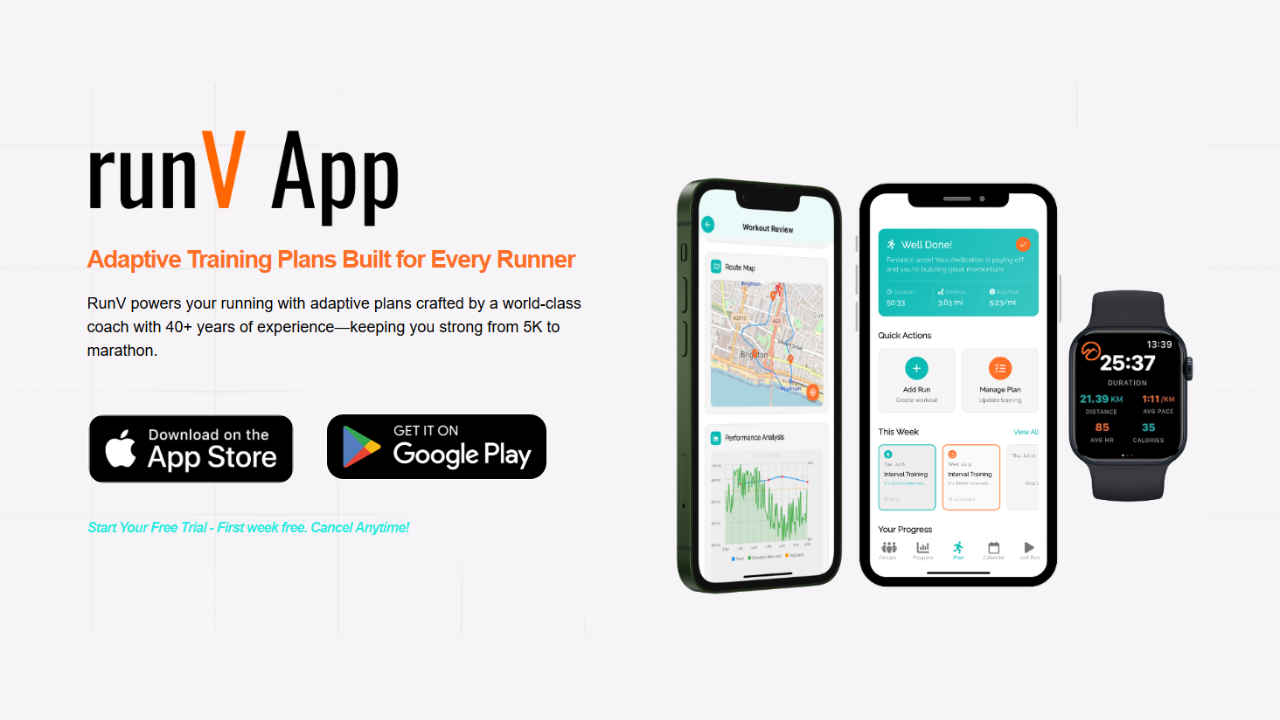
To truly Choose Right Next‑Gen Watch, think beyond the device to how it plugs into adaptive training. Your watch should be the data collector that fuels smarter decision‑making—whether that’s via an AI‑driven plan, a coach, or a hybrid approach.
Key principles:
- Plan backwards from race day, but allow flexibility for life events.
- Let heart rate and pace feedback adjust intensity on tired days.
- Respect signs of fatigue the watch can’t see, like stress and soreness.
Don’t Ignore the Fundamentals
No matter which device you select when you Choose Right Next‑Gen Watch, it won’t fix poor form, bad pacing, or chronic under‑recovery. Continue to invest in:
- Strength and mobility.
- Good sleep and nutrition.
- Efficient form and smart pacing strategies.
Use watch metrics to support, not replace, these fundamentals. Even the most advanced sensors can’t correct a heel‑striking, overstriding mess by themselves.
Conclusion & Call‑to‑Action
This week’s news cycle underscores a simple truth: choosing a running watch in 2026 is no longer just about distance and pace. To Choose Right Next‑Gen Watch, you need to think about GPS sophistication, screen technology, training analytics, ecosystem fit, and how long your device will stay relevant through software updates.
In the last seven days alone, we’ve seen:
- Amazfit challenge Garmin with the rugged, map‑heavy Cheetah 2 Ultra.
- Coros extend the life of its watches via voice‑control and better data views.
- Garmin put pro‑level training tools into affordable Forerunner 70 and 170 models.
- Apple Watch Ultra 4 leaks hint at a big leap in design and sensor tech.
The right choice is the watch that aligns with your terrain, race goals, budget, and preferred ecosystem—and then feeds clean, reliable data into a training approach that adapts with you.
Take stock of where you want your running to be 12–24 months from now, then use the developments from this week to narrow your shortlist. From there, your next steps are simple: pick your device, sync it with your favorite training platform, and let consistent, intelligent work—not just shiny tech—drive your next breakthrough.
If you’re ready to move from reading about tech to actually leveraging it in smarter training, explore how dynamic plans and modern GPS watches can work together to support your next big goal—and make this the season where your gear and your training finally pull in the same direction.