
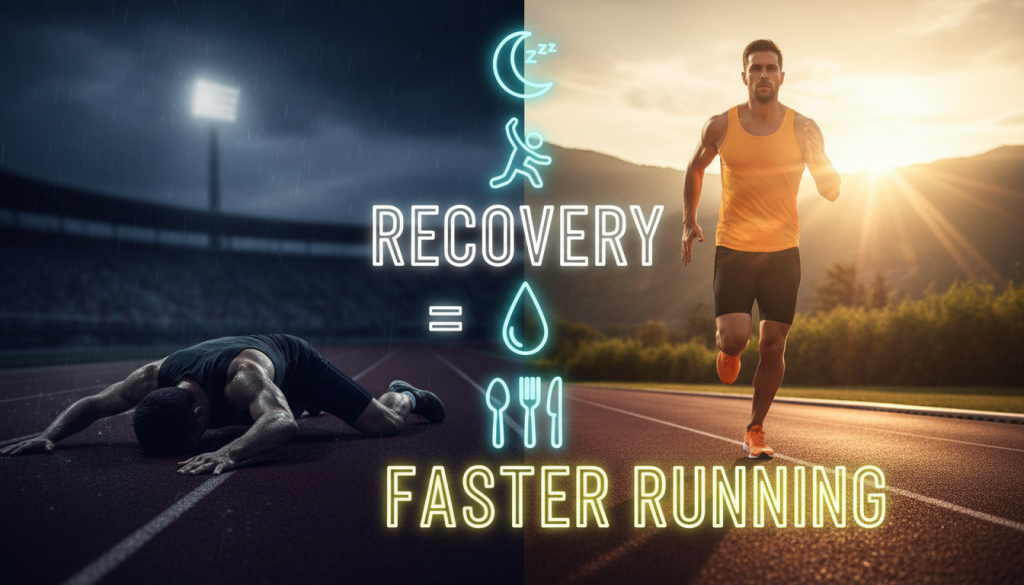
The Link Between Recovery: Proven science and everyday running reality is tighter than most runners realize. We obsess over mileage, paces, and gear, yet the biggest performance boost often comes from what we do between workouts—not during them. Recovery isn’t a soft bonus; it’s the process that actually converts training stress into speed, endurance, and long‑term progress.
In this article, we’ll break down the Link Between Recovery: Proven methods you can use today to run faster, feel better, and stay injury‑free—backed by physiology, practical experience, and modern running tech.
Table of Contents
- Why Recovery Matters More Than You Think
- Understanding the Link Between Recovery: Proven Physiology
- Way 1 – Sleep: The Ultimate Recovery Multiplier
- Way 2 – Smarter Training Load and Easy Days
- Way 3 – Recovery Nutrition and Hydration
- Way 4 – Active Recovery, Mobility, and Strength
- Way 5 – Using Tech and Data to Personalize Recovery
- Gear That Supports Better Recovery
- Recovery Across Distances: 5K to Marathon
- Putting It All Together: A Practical Weekly Framework
- Signs You’re Under‑Recovered (and What to Do)
- Final Thoughts: Train Hard, Recover Harder
Why Recovery Matters More Than You Think
Every run is a stress. Improvement doesn’t happen during your tempo or intervals; it happens after, when your body repairs and adapts. The Link Between Recovery: Proven performance gains is straightforward: better recovery equals more quality sessions, fewer injuries, and more consistent training weeks.
When you chronically under‑recover, three things usually happen:
- Performance plateaus despite hard work
- Injury risk quietly climbs
- Motivation and enjoyment drop
Flip the script and make recovery as intentional as your workouts, and you’ll train harder, more often, with less risk. This is the foundation for any plan, whether you’re targeting a 5k PR or building toward your first marathon.
Understanding the Link Between Recovery: Proven Physiology
To use the Link Between Recovery: Proven strategies effectively, it helps to know what’s actually happening under the hood during and after a run.
Microdamage and Supercompensation
Running creates microdamage in muscles, connective tissue, and even bone. That sounds bad, but it’s exactly what we want—within reason. During recovery, your body repairs that damage and slightly overbuilds. This is called supercompensation.
If you train hard again before the repair is complete, you interrupt the cycle and stack more damage on top of incomplete recovery. Performance drops, and aches start to feel permanent instead of temporary.
Hormones, Nervous System, and Fatigue
Hard training affects more than muscles. It stresses your nervous system and hormones such as cortisol, growth hormone, and testosterone.
Good recovery restores hormonal balance, lets your nervous system reset, and improves sleep quality. Poor recovery keeps you in a chronically “wired but tired” state—restless nights, mid‑day crashes, and sluggish runs.
Inflammation Isn’t the Enemy—Chronic Inflammation Is
Acute inflammation after a workout is a normal signal to repair. The goal of recovery isn’t to eliminate all inflammation immediately; it’s to prevent low‑grade, chronic inflammation from lingering for days or weeks.
That’s why smart recovery isn’t just about ice baths; it’s about sleep, nutrition, and load management, which create a sustainable balance between stress and repair.
Link Between Recovery: Proven Way 1 – Sleep, the Ultimate Recovery Multiplier
If you only fix one thing, fix your sleep. Sleep is where the most important recovery magic happens, and it’s the most abused tool in endurance training.
Why Sleep Is Non‑Negotiable for Runners
During deep and REM sleep, the body releases growth hormone, consolidates motor learning, and restores the nervous system. This has direct impact on:
- Muscle repair and adaptation
- Glycogen (carbohydrate) replenishment
- Pain perception and injury risk
- Reaction time and running form
- Mood and motivation to train
Research consistently shows that even modest sleep loss reduces time to exhaustion, slows reaction times, and increases perceived effort. You may be “getting through” workouts, but you’re not getting full benefit.
How Much Sleep Runners Really Need
Most adults do best on 7–9 hours, but endurance athletes often need more, especially during heavy training blocks. A practical rule of thumb:
- Base phase or light weeks: 7–8 hours per night
- Peak or high‑volume blocks: 8–9 hours, with short naps if needed
Think of extra sleep as low‑cost performance enhancement with zero side effects.
Proven Sleep Habits for Better Recovery
To tighten the Link Between Recovery: Proven performance gains, dial in simple sleep hygiene habits:
- Keep a consistent bedtime and wake time, even on weekends
- Aim to finish hard workouts at least 3–4 hours before bed
- Limit bright screens for 60 minutes before sleep
- Keep the bedroom dark, cool, and quiet
- Use a wind‑down ritual: light stretching, reading, or breathing
Track how your runs feel after a week of protected sleep. Most runners are surprised by how quickly paces feel easier at the same effort.
Link Between Recovery: Proven Way 2 – Smarter Training Load and Easy Days
The next Link Between Recovery: Proven gains comes from how you structure your training itself. You can’t “out‑sleep” bad programming. If the load is wrong, you’ll always chase recovery and never quite catch it.
Why Easy Days Need to Be Truly Easy
Many runners spend too much time in a “gray zone”—not hard enough to drive big adaptations, not easy enough to allow real recovery. Your easy days should feel almost suspiciously easy.
On a 1–10 effort scale, most easy runs should sit around 3–4. You should be able to hold a conversation in full sentences. If you’re huffing through chat, you’re too fast.
When you slow easy runs down, you free up more capacity for quality intervals, tempo runs, and long runs that actually push your fitness.
Using Heart Rate and Tech to Control Effort
Heart‑rate based training helps prevent “creep” on easy days. Zones calibrated to your own physiology stop you from accidentally racing your recovery days. If you’re new to this, explore Training by Heart Rate: 5 Proven Benefits for Beginner Runners for a deeper dive into zones and setup.
Modern GPS watches and adaptive running apps make it easier than ever to balance intensity and volume intelligently, adjusting for fatigue signals and recent performance.
Deload Weeks and Periodization
A key element in the Link Between Recovery: Proven long‑term success is structured cycles of loading and unloading. Most runners benefit from:
- 3 weeks of gradually increasing volume and intensity
- 1 week of reduced load (20–40% less)
This pattern helps you bank fitness without hitting chronic fatigue. Similarly, your year should have phases: base, build, peak, and recovery. For specific guidance on integrating recovery into your goal planning, see How to Plan a Powerful Season: 7 Proven Goal Strategies.
Link Between Recovery: Proven Way 3 – Recovery Nutrition and Hydration
Even perfect training and sleep can be undermined by poor fueling. Nutrition is where many runners weaken the Link Between Recovery: Proven adaptation without realizing it.
The Recovery Nutrition Window: How Critical Is It?
The old idea of a strict “30‑minute anabolic window” is oversimplified, but the first 1–2 hours after hard or long runs are still prime time for:
- Replenishing muscle glycogen (carbs)
- Providing amino acids for repair (protein)
- Starting rehydration and electrolyte replacement
For moderate to hard efforts over 60 minutes, aim for a snack or meal soon after finishing.
Carbs and Protein: Evidence‑Based Targets
For post‑run recovery, a practical guide is: (Rest and recovery guide)
- Carbs: about 1.0–1.2 grams per kilogram of body weight within the first hour after hard/long runs
- Protein: about 20–30 grams of high‑quality protein within 2 hours post‑run
This combination supports muscle repair and restores glycogen so you’re ready for the next key session. Think yogurt with granola, a smoothie with fruit and protein powder, or rice and eggs.
Day‑Long Nutrition Matters More Than One Shake
Recovery isn’t just the post‑run snack. Your overall daily intake determines how well you bounce back. Warning signs you’re under‑fueling include:
- Persistent fatigue despite rest days
- Feeling cold often
- Plateauing or declining performance
- Loss of menstrual cycle in women (RED‑S risk)
Endurance runners often underestimate their true energy needs, especially during heavy training. Think in terms of fueling your training, not “earning” food.
Hydration and Electrolytes
Even mild dehydration (around 2% of body weight) can increase heart rate and perceived effort. For most runners:
- Start runs hydrated; sip water regularly through the day
- For runs under 60 minutes in cool conditions, water is usually enough
- For longer or hotter runs, add electrolytes and carbs during and after
Weighing yourself before and after long runs (naked, towel dry) helps you estimate sweat loss. Each kilogram (2.2 lbs) roughly equals 1 liter of fluid to replace over the next few hours.
Link Between Recovery: Proven Way 4 – Active Recovery, Mobility, and Strength
Recovery doesn’t always mean lying on the couch, though there’s a time for that too. Active recovery and strength work, used well, can deepen the Link Between Recovery: Proven performance and injury resistance.
Active Recovery: Easy Movement to Speed Repair
Gentle movement increases blood flow, delivering nutrients and carrying away metabolic waste. On days after hard workouts, good active recovery options include:
- Very easy 20–40 minute jogs or walks
- Easy cycling or swimming
- Light mobility and core work
The key is intensity: if you’re breathing hard or your legs feel worse after, it isn’t active recovery—it’s another workout.
Mobility and Stretching: What Actually Helps?
Static stretching right before speedwork can blunt power, but mobility and stretching have a place around recovery:
- Dynamic warm‑ups before runs: leg swings, lunges, hip circles
- Gentle static stretches after runs or in separate sessions
- Short mobility routines on rest days: hips, hamstrings, calves, ankles
Keep sessions short (10–20 minutes) and consistent. The value comes from repetition, not intensity.
Strength Training as Long‑Term Recovery Insurance
Strength work might feel like extra stress, but it’s one of the most powerful tools to support recovery and durability over time. Strong muscles and tendons distribute load more efficiently, leaving you less trashed after hard sessions.
Key movement patterns for runners:
- Squats and lunges (quads, glutes)
- Deadlifts or hip hinges (hamstrings, posterior chain)
- Calf raises (soleus and gastrocnemius)
- Core stability (planks, side planks, anti‑rotation)
2 short sessions per week (20–30 minutes each) are enough for most recreational runners. Place them away from your heaviest speed days to protect the Link Between Recovery: Proven adaptation and performance.
Link Between Recovery: Proven Way 5 – Using Tech and Data to Personalize Recovery
Not all runners recover at the same rate. Age, training history, stress, and sleep all affect how much recovery you need. Modern tech gives you tools to watch the Link Between Recovery: Proven fitness changes in real time.
Heart Rate Variability (HRV) and Resting Heart Rate
HRV measures the variation in time between heartbeats. Higher HRV generally signals a more recovered, adaptable nervous system; lower HRV suggests fatigue or stress.
Trends matter more than single readings. If your HRV is consistently dropping, and your resting heart rate is creeping up, that’s a warning your recovery is lagging behind your training.
Training Load Metrics on GPS Watches
Most modern watches estimate training load based on heart rate, pace, and sometimes power. Features such as “Training Load,” “Training Effect,” and “Recovery Time” offer clues about how each session fits into your bigger picture.
To understand how to use these numbers to balance effort and recovery, see Garmin Training Load Explained: 7 Essential Proven Tips. Even if you’re not on Garmin, the principles still apply.
Adaptive Apps and Customization
Adaptive running apps now adjust your plan on the fly based on performance, missed sessions, and fatigue data. This can refine the Link Between Recovery: Proven improvements by preventing chronic overreaching.
Look for apps that:
- Respond to your actual paces, not just target paces
- Consider sleep or subjective fatigue inputs
- Modify or postpone hard workouts when you’re not ready
Used thoughtfully, tech doesn’t replace body awareness; it reinforces it with objective trends.
Gear That Supports Better Recovery
Gear won’t fix bad habits, but the right tools can support the Link Between Recovery: Proven methods you’re already using.
Footwear and Surfaces
Your shoes are the first line of mechanical recovery support. Worn‑out cushioning or unstable shoes increase impact forces and loading on joints, which increases your recovery demands. (Improve running recovery)
Rotating between at least two pairs—such as a cushioned daily trainer and a lighter tempo shoe—can vary loading patterns and extend the life of each pair. For race‑day or speed‑oriented shoes on trails, explore how modern designs are evolving in Trail Super Shoes Are Quietly Getting Seriously Fast.
Whenever possible, mix in softer surfaces like trails, grass, or well‑maintained tracks. They reduce repetitive impact and give your body a slightly different stimulus, which can help long‑term resilience.
Compression, Massage Guns, and Recovery Gadgets
Compression socks, massage guns, foam rollers, and pneumatic boots can all feel helpful, and many runners swear by them. Evidence suggests they can:
- Reduce perceived soreness
- Increase short‑term blood flow
- Improve comfort between sessions
However, they’re adjuncts, not core tools. No gadget replaces sleep, smart load, and good fueling. Use them as “icing on the cake” once the basics are in place.
Monitoring Wearables
Recovery‑focused wearables can track HRV, sleep stages, and overnight resting heart rate. Their absolute numbers may not be perfect, but consistent usage can highlight trends—especially useful during heavy training blocks or taper weeks when you’re fine‑tuning the Link Between Recovery: Proven race performance.
Recovery Across Distances: 5K to Marathon
The basics of recovery are universal, but the details shift with distance and intensity. How you manage the Link Between Recovery: Proven returns will differ for a 5K versus a marathon training cycle.
5K and 10K Training
Shorter races often mean more intensity in training: intervals, VO₂max work, and fast tempos. These strain the nervous system and muscles heavily, even if weekly mileage is moderate.
Key points:
- Protect at least 48 hours between major speed sessions
- Keep easy runs genuinely easy to offset high‑intensity days
- Prioritize sleep before and after interval blocks
If you’re moving from casual running into structured speed work, resources like How to Train for 7 Powerful, Proven Speed and Endurance Gains can help you balance harder workouts with adequate recovery.
Half Marathon and Marathon Training
For longer distances, the main stress is cumulative load: high mileage, long runs, and extended tempo efforts. Recovery must account for muscular damage, glycogen depletion, and mental fatigue.
Key strategies:
- Plan lighter weeks after your biggest long runs
- Fuel aggressively before, during, and after long efforts
- Use rest days strategically instead of running “streaks” at all costs
As you build toward a Half Marathon or full marathon, consider spreading your hardest sessions (long runs, marathon‑pace work, or medium‑long tempos) across the week so they’re not bunched together.
Putting It All Together: A Practical Weekly Framework
It’s one thing to understand the Link Between Recovery: Proven concepts, and another to live them. Here’s how a balanced week might look for an intermediate runner targeting a race, with recovery intentionally woven in.
Sample Week with Integrated Recovery
This example assumes a runner doing 4–5 runs per week:
- Monday: Rest or 30 minutes easy cross‑training + short mobility
- Tuesday: Quality workout (intervals or tempo) + 10–15 minutes light strength
- Wednesday: Easy run (30–50 minutes) + optional gentle stretching
- Thursday: Medium‑long easy run or steady run, no intensity
- Friday: Strength training (20–30 minutes) + light cross‑training or rest
- Saturday: Long run with some race‑pace work if appropriate
- Sunday: Active recovery (walk, short very easy jog) or full rest, depending on fatigue
Across this week, recovery tools are deliberate: low‑intensity days, a true rest or very light day, and strength placed away from the hardest runs.
Adapting on the Fly
No plan should be rigid. If you wake up with unusually heavy legs, irritability, or poor sleep, adjust:
- Swap a hard session for an easy run
- Shorten your planned distance
- Take an extra rest day if fatigue persists
The Link Between Recovery: Proven long‑term progression depends more on months and years of consistent training than on any single workout. Adjustments are a strength, not a weakness.
Signs You’re Under‑Recovered (and What to Do)
Sometimes the best way to respect the Link Between Recovery: Proven improvement is to recognize early warning signs before they become injuries or burnout.
Common Red Flags of Inadequate Recovery
- Morning resting heart rate consistently higher than normal
- HRV trending downward for several days
- Sleep that feels unrefreshing, even when long enough
- Persistent soreness that doesn’t fade between easy days
- Loss of appetite or cravings for highly processed foods only
- Drop in motivation—dreading runs that used to excite you
- Frequent minor illnesses or nagging colds
Step‑By‑Step Response Plan
If you notice several of these at once, act early:
- Cut intensity first. Keep moving, but make everything easy for a few days.
- Increase sleep opportunity. Add 30–60 minutes in bed nightly.
- Review fueling. Make sure you’re eating enough, especially carbs.
- Downshift life stress where possible for a few days.
- Rebuild gradually. When you feel better, reintroduce one hard session at a time.
Runners often fear that easing back will ruin their progress, but the opposite is usually true. Strategic downshifts protect the Link Between Recovery: Proven gains you’ve already earned and set you up for the next block.
Final Thoughts: Train Hard, Recover Harder
The Link Between Recovery: Proven performance gains is as real as the link between training and fatigue. Recovery isn’t laziness; it’s the quiet half of training that makes the loud half work.
To recap the five proven ways to boost your running through better recovery:
- Prioritize high‑quality sleep and protect it like a key workout.
- Use smart training load with truly easy days and periodic deload weeks.
- Fuel and hydrate to support both performance and adaptation.
- Leverage active recovery, mobility, and strength to build resilience.
- Use tech and data to personalize recovery and catch fatigue early.
Build these into your daily habits, and you’ll not only run faster—you’ll enjoy the sport more, stay healthier, and extend your running life. For help turning these ideas into a sustainable routine, explore habit‑focused guidance like How to Stay Consistent: 7 Powerful, Proven Running Habits, and align your recovery with the runner you want to become.