

Runners love simple rules: “Just follow this plan,” “wear this shoe,” “run this pace.” But when it comes to training, gear, and tech, “one size fits all” thinking almost always backfires. Size Fits Terrible Idea: that mindset can stall progress, cause injuries, and turn running into a constant struggle instead of a source of energy and confidence.
This guide breaks down why generic solutions fail—and gives you 7 practical, proven fixes you can apply immediately to your training, footwear, and technology choices.
—
Table of Contents
- Why “One Size Fits All” Fails in Running
- Fix 1: Personalize Your Training Load (Not Your Ego)
- Fix 2: Choose Shoes for Your Body, Not the Hype
- Fix 3: Build Paces from the Inside Out (Effort First, Numbers Second)
- Fix 4: Use Tech As a Coach, Not a Dictator
- Fix 5: Fuel and Hydrate for Your Physiology
- Fix 6: Adapt Your Plan to Your Life, Not the Other Way Around
- Fix 7: Make Recovery as Individual as Your Workouts
- Size Fits Terrible Idea: Gear & Tech Edition
- Real‑World Examples: From Frustrated to Flow
- How to Start Individualizing Your Running This Week
- Final Thoughts: Customize or Plateau
—
Why “One Size Fits All” Fails in Running
Running looks simple from the outside: lace up, step out the door, repeat. But under the surface it’s a complex mix of physiology, biomechanics, psychology, and lifestyle.
That’s exactly why “Size Fits Terrible Idea:” any approach that assumes two runners can follow the same plan, wear the same shoes, and get the same results is fundamentally broken.
Two runners with the same 10k time might:
– Have totally different injury histories
– Work wildly different jobs and schedules
– Handle volume and intensity at opposite ends of the spectrum
– Respond very differently to heat, cold, and stress
Yet traditional plans, generic shoe “types”, and even some apps treat them as if they’re interchangeable.
—
Fix 1: Personalize Your Training Load (Not Your Ego)
Why the Classic 5-Day Template Is a Size Fits Terrible Idea:
The classic setup—speed day, tempo day, long run, a couple easy days—looks tidy on paper. It also assumes:
– You recover at the same rate as the “average” runner
– Your stress outside running is minimal or constant
– Your body doesn’t change week to week
None of that is true for most runners. Training load is not just mileage and pace. It’s mileage, pace, intensity, sleep, work, emotional stress, and even what you did in the gym yesterday.
Ignoring this is why so many runners plateau, burn out, or get stuck in a cycle of niggles and injuries.
How to Individualize Training Load
Start with three simple levers: volume, intensity, and frequency.
1. Volume (total weekly distance)
– If you frequently feel exhausted or sore, reduce weekly volume by 10–20% for 2–3 weeks.
– If you’re consistently fresh and improving, a gentle 5–10% increase may be appropriate.
2. Intensity (how hard you run)
– Most runners run “medium hard” too often.
– Keep true hard sessions to 1–2 per week.
– The rest should be genuinely easy—conversation pace where you could recite your phone number without gasping.
3. Frequency (days per week)
– 3–4 days is plenty for most recreational runners.
– If you’re stacking 6–7 days and chronically tired, fewer but better-quality runs often work better.
For a deeper dive into the low-intensity pillar, read What an Easy Run Really Is: 5 Essential Proven Benefits. It’s one of the simplest, highest-impact ways to move away from one-size-fits-all training.
—
Fix 2: Choose Shoes for Your Body, Not the Hype
Size Fits Terrible Idea: in Shoe Design and Marketing
Shoe companies love one big story:
– “This is the stability shoe for overpronators.”
– “This is the max-cushion shoe for everyone who wants comfort.”
– “This is the super-shoe that will make you faster.”
The problem is that your foot shape, weight, strength, and stride mechanics don’t care about marketing categories. A shoe that works beautifully for a 55 kg forefoot striker may be a disaster for an 85 kg heel striker with a history of plantar fasciitis.
How to Select Shoes Based on Your Reality
Use these steps instead of relying on generic labels:
1. Start with your history
– What shoes have worked well for you in the past?
– What model or characteristics were you wearing when pain started?
2. Consider your primary surfaces and distances
– Lots of concrete and long runs: cushion and stability might matter more.
– Trails and mixed terrain: grip and protection take priority.
3. Match shoe purpose to workout type
– Easy and long runs: comfort and protection first.
– Speed work and racing: lighter, more responsive options.
4. Test for function, not just feel
– Short jog in-store or on a treadmill.
– Check if you’re subtly fighting the shoe, especially around the ankles or hips.
If you’re trying to decide between popular daily trainers, guides like How to Pick Your Next Daily Trainer: Ghost 18 vs Gel‑Kayano 33 are useful not because they name a “winner,” but because they show how different shoes fit different runners and use cases.
—
Fix 3: Build Paces from the Inside Out (Effort First, Numbers Second)
Why Copying Someone Else’s Pace Is a Size Fits Terrible Idea:
Borrowing paces from a friend, influencer, or random online plan ignores differences in:
– VO₂ max and lactate threshold
– Running economy
– Heat tolerance
– Training background
Two runners can both aim for a 2:00 Half Marathon and have very different training paces. Copying the faster responder’s workouts is a shortcut to overtraining.
Effort-Based Training: A Smarter Baseline
Anchor your training with effort first, then attach paces to those effort levels based on how your body responds.
Basic effort zones:
– Zone 1–2 (easy / aerobic): Can speak in full sentences, breathing steady.
– Zone 3 (steady): Conversation is broken into phrases, still under control.
– Zone 4 (threshold): Short sentences, breathing noticeably hard, sustainable for 20–40 minutes.
– Zone 5 (interval): Few words at a time, very hard, used in short intervals.
Once you’ve dialed in how these feel, cross-check with heart rate and pace:
– On cool days, easy effort might be 6:00/km.
– On hot, humid days, the same easy effort might be 6:30–6:45/km.
Chasing the “original” 6:00/km in bad conditions is how a comfortable easy run turns into an unplanned tempo session.
Recalibrate Regularly
Every 4–6 weeks:
– Use a short time trial (e.g., 3k–5k) or race (e.g., 10k) to update your realistic paces.
– Ask: do my “easy” runs feel too hard or too sleepy?
– Adjust pace bands by feel, not just by formula.
—
Fix 4: Use Tech As a Coach, Not a Dictator
Size Fits Terrible Idea: in Running Apps and Plans
Many training plans—even those in apps—are really just static PDFs with notifications. Week 1 looks the same whether you’re:
– Coming off an injury
– Logging 60 km per week already
– Totally new to structured running
That’s why “beginner,” “intermediate,” and “advanced” labels are often just different levels of the same one-size-fits-all model. Your life doesn’t match a PDF template, and neither should your training.
What Good Tech Should Actually Do
A smart system should:
– Adjust when you miss workouts, not just push them forward mechanically
– React to performance (e.g., if your threshold pace improves)
– Respect current fatigue (sleep, stress, soreness)
Think “conversation with a coach,” not “plan carved in stone.”
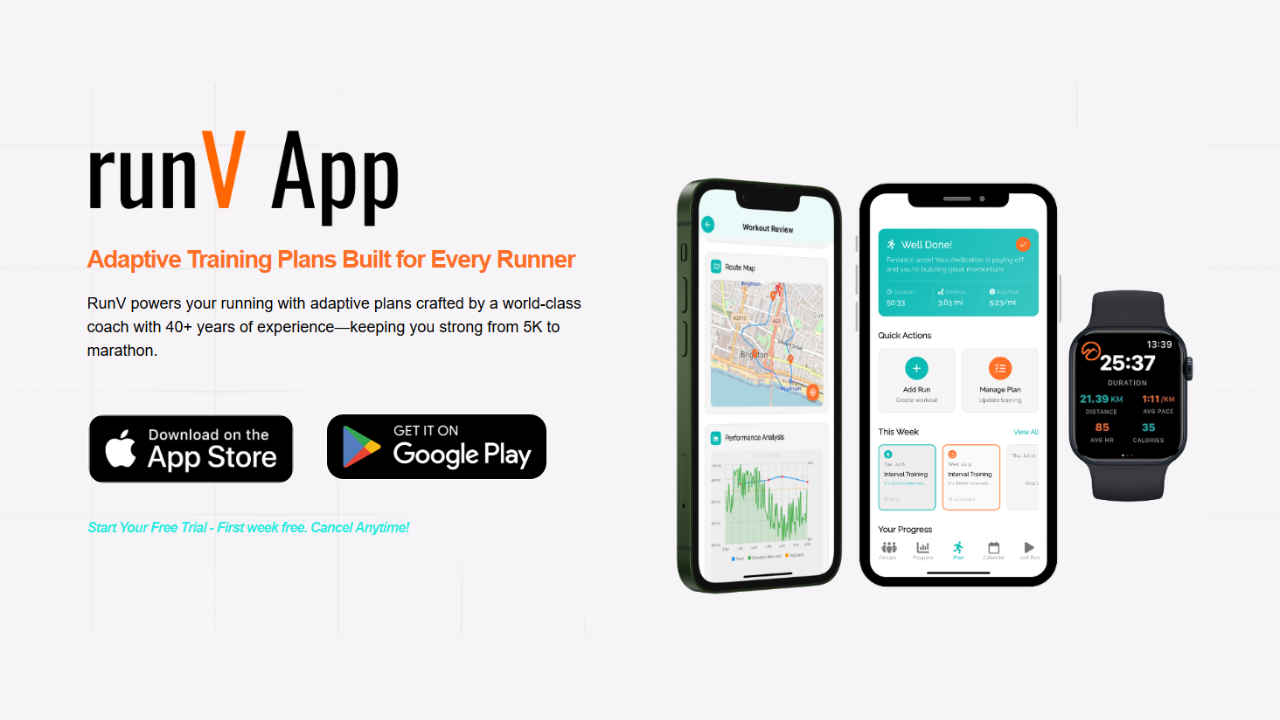
Dynamic systems—like an AI Dynamic Plan that adjusts based on your data—are one answer to the Size Fits Terrible Idea: approach. The goal isn’t complexity; it’s responsiveness.
How to Use Your Watch and App More Intelligently
Try these practices:
– Check your watch less during easy runs; use it after the run for feedback.
– Compare how a run felt vs. what the numbers say and note discrepancies.
– Override “recommended” sessions when you’re clearly exhausted, ill, or unusually stressed.
When your subjective data (how you feel) and objective data (pace, HR, HRV, sleep metrics) disagree, favor your body—not the algorithm.
—
Fix 5: Fuel and Hydrate for Your Physiology
Why Generic Fueling Advice Is a Size Fits Terrible Idea:
You’ve probably heard advice like:
– “Take 60g of carbs per hour.”
– “One gel every 30–40 minutes.”
– “Just drink to thirst.”
These are averages, not prescriptions. Your carbohydrate absorption, sweat rate, and sodium loss can be dramatically different from another runner’s, even if you’re the same weight and pace.
Individualizing Your Fueling Strategy
Start with a simple framework for runs over 75–90 minutes, then fine-tune:
1. Carbs
– Begin with 30–45g per hour.
– If you feel strong near the end, experiment with 45–60g.
– If you feel bloated or nauseous, drop by 10–15g and try a different delivery format (gel, chew, drink mix).
2. Fluids
– Weigh yourself before and after a 60–90 minute run.
– Each 1% bodyweight loss suggests more fluid intake is needed.
– Aim to avoid >2% loss during long runs.
3. Sodium
– If you have very salty sweat marks or frequent cramps, you may be a heavy sodium loser.
– Try 300–500 mg sodium per hour on long, sweaty efforts and see how you feel.
If you’re chasing a marathon PR, nuanced fueling strategies become even more critical. Resources like Advanced Fuel Timing for 7 Proven, Powerful Marathon PRs go deeper into timing and practice so race day isn’t an experiment.
—
Fix 6: Adapt Your Plan to Your Life, Not the Other Way Around
Size Fits Terrible Idea: in Weekly Training Structure
Many plans assume:
– Weekends are always free for a long run.
– You can handle the same weekly pattern for 12–16 weeks.
– Your work, family, and travel never get in the way.
Reality is messier. You’ll have:
– Weeks with late nights and early meetings
– Travel days where running is impossible
– Family events that override long-run schedules
Clinging rigidly to a template is another version of the Size Fits Terrible Idea: mindset.
Principles for Flexible Structure
Think in priorities, not specific days:
1. Non-negotiables (highest value)
– 1 long run (or the closest thing you can manage)
– 1 quality session (tempo, intervals, or hill work)
2. Support runs
– 2–3 easy runs that keep volume and aerobic base intact.
3. If life explodes
– Keep the long run if possible, drop the intensity.
– If you must miss something, skip a quality day before an easy one.
Micro-Cycles vs. Weekly Cycles
Instead of thinking “Monday to Sunday,” try “8–10 day” training blocks where you:
– Fit one long run
– Fit one hard session
– Fill the rest with easy running and rest as life allows
This approach is especially helpful for shift workers, parents of young kids, and anyone with unpredictable schedules.
—
Fix 7: Make Recovery as Individual as Your Workouts
Why Standard Recovery Rules Are a Size Fits Terrible Idea:
Common advice:
– “Hard day, easy day.”
– “Take one rest day per week.”
– “Sleep 7–9 hours.”
These are decent defaults, but your optimal recovery depends on:
– Age
– Training history
– Non-running stress load
– Injury history
– Sleep quality, not just quantity
Some runners thrive on a hard-easy-hard pattern; others break down fast if they stack more than one demanding session per week.
Signs You Need More Recovery Than a Generic Plan Allows
Watch for:
– Persistently elevated resting heart rate
– Mood changes: irritability, lack of motivation
– Stagnant or declining performance despite training
– Heavy, dead-leg feeling most days
– Sleep disturbances or waking up unrefreshed
These are signals your plan—or your life—is outpacing your recovery capacity.
Customizing Recovery
Practical adjustments:
– Insert an extra easy or rest day after particularly stressful workdays, not just hard workouts.
– Convert planned tempos to steady runs if heart rate is unusually high at easy pace.
– Use active recovery (short, very easy runs) instead of always total rest if you feel stiff and sluggish.
Consistency over months and years matters far more than perfectly executing any single week. For that big-picture view, frameworks like Why Long Term Running Needs 7 Essential Proven Habits show how individualized recovery supports sustainable growth.
—
Size Fits Terrible Idea: Gear & Tech Edition
Head-to-Toe: Where Generic Choices Go Wrong
One-size thinking doesn’t stop at shoes. It shows up everywhere:
– Socks: “This thickness works for everyone.” But blister-prone runners and heavy sweaters may need different fabrics than light, cool-weather runners.
– Shorts and tops: Fit and seam placement can make or break comfort over 90+ minutes. A chafe-free design for one body type can be torture for another.
– Sports bras: Treating support needs as a simple S/M/L problem completely ignores impact level, band fit, and cup requirements.
– Hydration systems: Belts, handhelds, and vests aren’t interchangeable. Torso length, arm swing, and personal preference all matter.
Running Watches: Size Fits Terrible Idea: in Features
Watch marketing often assumes:
– Every runner needs advanced training load metrics.
– Everyone benefits from huge, feature-packed devices.
– AMOLED screens and multi-band GPS are universally essential.
In reality:
– New runners might be best served by a simple watch that just tracks time, distance, and heart rate.
– Trail runners may value navigation more than music or payment features.
– Some runners prioritize battery; others prioritize display quality and health metrics.
When considering an upgrade, think about your actual use cases, not just new features. Resources like Should You Upgrade Your Running Watch for AMOLED and Smarter GPS? help frame that decision in terms of your running style and needs instead of pure tech lust.
—
Real‑World Examples: From Frustrated to Flow
Case 1: The “Plan Follower” Stuck at the Same Pace
Alex followed a popular 16‑week plan for a Half Marathon, exactly as written:
– 6 days per week
– Two speed sessions each week
– A long run that peaked at 21 km
Result: He finished—but felt shattered, missed two weeks after the race with a calf strain, and his time barely improved.
What changed when Alex ditched the Size Fits Terrible Idea: mindset?
– Dropped to 4 days per week
– Kept just one quality session
– Focused heavily on truly easy running and better sleep
Six months later, with similar total weekly volume but better distribution and recovery, he comfortably ran a 6‑minute PB and felt ready to train again within days.
Case 2: The Shoe Switch That Fixed “Chronic” Knee Pain
Priya, a mid-pack runner, always bought “stability” shoes because of mild overpronation. A shop assistant once said, “You’re an overpronator; this category is for you.”
After three years of knee niggles, a gait-aware physio suggested:
– Her overpronation was mild and not necessarily the cause
– Her hips were weak, and the rigid post in her shoes might be interfering with a more natural stride
She switched to a neutral, slightly lower-drop shoe and added basic strength work. Knee symptoms eased within weeks. It wasn’t the category label that mattered; it was finding a shoe that worked with her body, not against it.
Case 3: The Overachiever and the Burnout Loop
Marco loved data and copied the training of faster club runners:
– High mileage right away
– Multiple weekly workouts
– Little attention to sleep or stress
He made rapid progress for a few months, then hit a wall: frequent colds, heavy legs, and a growing dread of workouts.
By pulling back:
– Reduced volume by 20%
– Focused on one hard session and one long run
– Protected 7–8 hours of sleep and a weekly rest day
He found a sustainable groove. Over 12 months, his improvements surpassed anything he’d achieved in his “copy the fast guys” phase, with far fewer setbacks.
—
How to Start Individualizing Your Running This Week
You don’t need a complete overhaul to escape the Size Fits Terrible Idea: trap. Start with a few targeted changes.
Step 1: Audit Your Current Approach
Ask yourself:
– Which parts of my training or gear are I doing because “that’s what runners do”?
– Where am I ignoring signs from my body?
– What’s consistently causing frustration or discomfort?
Write down your answers—seeing them clearly is the first step toward change.
Step 2: Tweak Just One Variable at a Time
Overhauling everything makes it impossible to know what helped. Instead:
– Week 1–2: Make easy runs genuinely easy; keep everything else the same.
– Week 3–4: Adjust shoe choice for one type of run (e.g., long run) if comfort is an issue.
– Week 5–6: Modify one weekly session to be effort-based rather than pace-based.
Track perceived effort, enjoyment, and any niggles as you go.
Step 3: Align Your Tools With Your Goals
Before signing up for a race, program, or app, ask:
– Does this adapt when I miss a workout or have a tough week?
– Does it let me adjust based on my feedback, not just numbers?
– Is there flexibility for my schedule, or is it rigid?
If you’re exploring adaptive tools, pay attention to how easily they incorporate real-time feedback, missed sessions, or life changes. That’s the opposite of a one-size-fits-all PDF.
—
Final Thoughts: Customize or Plateau
Running rewards patience, consistency, and smart adjustments. The Size Fits Terrible Idea: mindset—assuming what works “on average” will work perfectly for you—stands directly in the way of all three.
The more you:
– Listen to your body
– Adjust training load to your actual life
– Choose shoes and gear for function, not fashion
– Use tech as a responsive guide, not a rigid boss
– Personalize fueling and recovery
…the more you’ll experience the version of running that feels powerful, sustainable, and genuinely enjoyable.
You don’t need to be an elite athlete to deserve a customized approach. Your time, energy, and body are valuable. One-size-fits-all thinking treats them as disposable; an individualized approach treats them as worth protecting and optimizing.
Start small: change one thing this week. Notice the difference. Then change the next. Over months and seasons, those decisions compound into fewer injuries, stronger performances, and a deeper love for the sport.
Running isn’t about fitting into someone else’s mold. It’s about shaping a path that fits you.