

Why Static Running Plans Fail: 5 Shocking Proven Reasons
If you’ve ever downloaded a PDF schedule, taped it to your fridge, and tried to follow it line-by-line, you already know the painful truth: Static Running Plans Fail: they often collapse the moment real life, real fatigue, or real data shows up. For modern runners using GPS watches, heart-rate monitors, apps, and carbon-plated super shoes, that old “run X miles on Tuesday, Y miles on Thursday” calendar is not just outdated—it can quietly stall your fitness, increase injury risk, and kill your motivation.
This article will break down exactly why static running plans don’t work well for today’s runners, what the science says, and how to replace them with smarter, adaptive strategies that use your gear and data to your advantage.
Table of Contents
- What Are Static Running Plans?
- Reason #1 – Static Running Plans Fail: They Ignore Individual Differences
- Reason #2 – Static Running Plans Fail: Real Life Never Matches the Calendar
- Reason #3 – Static Running Plans Fail: They Mismanage Fatigue and Training Load
- Reason #4 – Static Running Plans Fail: They Waste Your Running Data and Tech
- Reason #5 – Static Running Plans Fail: They Kill Motivation and Confidence
- How to Build a Dynamic, Data-Driven Plan That Actually Works
- Using Tech and Gear Smartly: From Apps to Super Shoes
- Sample Dynamic Week vs Static Week
- When Static Plans Are Okay (and How to Tweak Them)
- Final Thoughts: Upgrade Your Plan, Not Just Your Shoes
What Are Static Running Plans?
A “static” running plan is a fixed schedule designed in advance with no built-in mechanism to adjust based on how you respond. It typically says what to run, how far, and sometimes what pace, on each specific day for several weeks.
Examples include generic 5K or half marathon PDFs, pre-printed calendars from magazines, or rigid app plans that don’t adapt when you miss sessions. Once set, the plan stays the same whether you’re thriving or exhausted.
On the surface, this looks neat and organized. But as we’ll explore, Static Running Plans Fail: because your body, your life, and your performance are anything but static.
Reason #1 – Static Running Plans Fail: They Ignore Individual Differences
The first shocking reason static plans fall apart is simple: they treat every runner like a clone. Two runners can both run 25 miles per week and respond completely differently. One gets stronger, the other breaks down.
Different Bodies, Same Plan = Trouble
Static plans usually assume an “average” athlete. But in reality, you vary in age, injury history, biomechanics, recovery capacity, and stress levels. A 25-year-old with no kids and perfect sleep can handle more stress than a 45-year-old juggling a demanding job and family.
Yet many plans give them identical weekly mileage, identical long runs, and identical progression. That’s a recipe for plateaus or injury, not peak performance.
Genetics and Training Response
Sports science shows people respond differently to the same training load. Some are “high responders” who get fast gains, others progress slowly. A static plan can’t see how your body is reacting, so it can’t dial the load up or down.
That’s why a seasoned runner might breeze through a schedule designed for “intermediate” runners, while another runner following the same plan struggles and needs extra rest days to avoid overuse injuries.
Experience Level Mismatch
Static plans usually target broad categories like “beginner,” “intermediate,” and “advanced.” But those labels are vague. A “beginner” who’s already fit from cycling is different from someone completely new to exercise.
If you’re relatively new and grab a generic “intermediate” 10K PDF, you might jump your weekly mileage too fast. Conversely, a fit runner might choose a cautious “beginner” plan and spend eight weeks under-challenged, leaving potential gains on the table.
The Case for Individualized Progression
Individualized planning adapts based on your recent training, recovery, and goals. Instead of a rigid calendar, you follow principles: gradually increasing volume, mixing intensities, and adjusting for how your body feels.
Dynamic tools like an AI Dynamic Plan use your actual runs and responses to fine-tune what comes next. This quickly exposes how blunt a one-size-fits-all schedule really is.
Reason #2 – Static Running Plans Fail: Real Life Never Matches the Calendar
Even if a plan fits your current fitness, there’s another huge problem: life doesn’t care about your training schedule. Work deadlines, kids’ events, illness, travel, and weather all collide with your perfectly plotted weeks.
Missed Workouts Break the Logic of the Plan
Most static plans depend on gradual progression: week after week builds on the last. Miss two critical sessions, and that progression is broken. But the plan doesn’t adjust. It just marches on, assuming nothing went wrong.
You’re then facing a choice: jump back in where the plan says and risk a huge jump in load, or repeat those missed sessions and fall “behind schedule.” Both can be demotivating. Many runners simply give up at this stage.
Rigid Days Don’t Match Real Schedules
Static plans often assign specific workouts to specific weekdays, like “intervals Tuesday, tempo Thursday, long run Sunday.” That might work in theory, but what happens when your longest workday is Tuesday, or you travel Thursday–Friday?
Without flexibility, you might cram hard sessions too close together or skip key workouts entirely. Either choice undermines the thoughtful progression the plan originally intended.
Weather and Seasonal Challenges
Heat waves, snow, icy sidewalks, smoke from wildfires—it’s increasingly rare to have 8–16 uninterrupted perfect weeks. A static schedule doesn’t know that your “easy 8 miles” turned into a brutal death march in 95°F heat.
Dynamic planning, in contrast, can reduce volume or intensity when conditions are extreme and add back quality work once conditions normalize, keeping you safe and consistent.
Real Life Demands Dynamic Plans
The modern runner needs flexibility and structure at the same time. You want clear goals and progressive workouts, but also the ability to shuffle days, lower intensity, or insert extra rest without ruining the whole plan.
This is why so many runners now look for adaptable tools or a Custom Plan that they can adjust weekly rather than mindlessly following a fixed PDF schedule.
Reason #3 – Static Running Plans Fail: They Mismanage Fatigue and Training Load
The third major failure is invisible but crucial: static plans are bad at managing fatigue. Training works by stressing your body, allowing it to recover, and then supercompensate—coming back stronger and fitter.
When that balance is off, you either get injured or stagnate.
Planned Load ≠ Actual Load
A static plan can only estimate how hard a workout will be. But how hard it actually feels depends on sleep, nutrition, stress, terrain, and temperature. An “easy” run after a brutal work week might induce more fatigue than a tempo run done fully rested.
Static plans don’t adjust for this mismatch. They assume that if you “completed” the workout, the intended training effect happened. In reality, you may be digging a deeper fatigue hole than the plan ever intended.
No Feedback Loop for Overreaching
Training needs to be challenging, but not overwhelming. When you push too hard for too long, performance drops, sleep worsens, and motivation crashes. This is classic overreaching and, in extreme cases, overtraining syndrome.
Because static plans can’t read your performance trends, heart rate, or perceived exertion, there’s no built-in feedback loop to say “back off.” You often only notice a problem when you’re injured or burnout has already set in.
Recovery Is Where the Magic Happens
It’s during recovery—not during the workout—that your body adapts. But static schedules often underemphasize easy days and true rest. You see “rest” or “easy run” on paper, but feel guilty if you don’t push. The plan doesn’t adjust when you turn every day into a medium-hard grind.
Modern evidence-based training emphasizes periodization: planned cycles of building and backing off. Yet static hobby-runner plans frequently linearize load, making every week similar until a short taper. That’s not how elite programs operate.
Why Dynamic Load Management Works Better
Dynamic systems account for how hard your recent runs actually were, not just how hard they were supposed to be. They respond when loads spike and build in extra recovery when needed.
Resources like Running Consistency Strategies for 7 Powerful, Proven Wins highlight how consistent, well-managed stress—not heroic singular workouts—produces the biggest long-term gains.
Reason #4 – Static Running Plans Fail: They Waste Your Running Data and Tech
You’re likely already running with a GPS watch, heart-rate monitor, or a phone app. You might be tracking cadence, pace, vertical oscillation, and VO₂max estimates. Yet static plans behave as if none of that exists.
This is one of the most shocking gaps: Static Running Plans Fail: to use any of the powerful feedback your devices collect every single run. (flexible training plans)
Your Watch Knows More Than Your PDF
Modern wearables can show:
- Heart rate relative to pace (cardio efficiency)
- Heart rate variability (recovery status)
- Sleep duration and quality
- Training load and acute vs chronic stress
Static plans ignore all of it. They say “8 x 400m at 5K pace” even if your recent HR and pace data show you’re unusually stressed and should be doing a lighter tempo or even cross-training.
Data Can Refine Paces and Zones
The more you run, the more your true thresholds and sustainable paces emerge. A smart system can automatically refine your tempo, interval, and long run pace targets based on recent data.
A static plan, by contrast, locks paces in at the start, often based on a single test or old race time. If you get fitter or hit a plateau, the plan doesn’t know. It can’t speed you up when you’re ready—or slow you down when needed.
Apps Are Becoming Smarter Than Static Schedules
Training apps and platforms are increasingly built to adapt. Some use machine learning, others use rule-based systems grounded in sports science. They can:
- Modify workouts after missed days
- Downgrade intensity after poor sleep or high HRV stress
- Upgrade sessions when you’re clearly under-challenged
If you’re curious which tools pair best with your watch and goals, check out the roundup of modern platforms in Best Running Apps for 2025: 9 Essential, Proven Picks. You’ll quickly see why a static list of runs typed on paper looks archaic by comparison.
Tech Without Adaptation Is Wasted Potential
The tech on your wrist is incredibly powerful, but only if your training adjusts based on what it measures. Otherwise, you’re just collecting data for fun while still training like it’s 1995.
The future—and increasingly the present—is adaptive, data-informed planning that looks at your performance trends and reshapes upcoming runs accordingly.
Reason #5 – Static Running Plans Fail: They Kill Motivation and Confidence
The fifth reason is psychological, but just as important: Static Running Plans Fail: to support your motivation when life and performance don’t line up with the calendar.
Falling “Behind” the Plan Feels Like Failure
Static schedules are linear. Week 4 comes after Week 3, no matter what. Miss two runs in Week 3, and you instantly feel behind. Many runners react by trying to “make up” workouts, stacking hard sessions dangerously close together.
When that predictably feels awful, you start doubting yourself: “If I can’t even follow this plan, maybe I’m not cut out for this race.” A training calendar designed to guide you becomes a scoreboard reminding you of every miss.
No Space for Good and Bad Days
Every runner has days where they feel super strong and others where every step is heavy. Static plans don’t leverage good days or protect you from bad ones. They simply prescribe.
When you crush a workout, your plan doesn’t respond with more challenge. When you drag through intervals, the plan doesn’t shorten the next hard session. Over time, that mismatch can erode your trust in the process.
Static Plans Don’t Teach You to Think
Another subtle downside: rigid calendars discourage learning. Instead of asking, “Why did this workout feel so hard?” or “Should I swap tomorrow’s run for an easy day?” you just obey what’s written.
Dynamic plans encourage active engagement. You observe how your body responds and make adjustments, turning you into a smarter, more self-aware athlete. That mindset sustains motivation far beyond a single race cycle.
Adaptive Success Builds Confidence
When your training flexes with your reality—still getting you to race day prepared—you start believing in your ability to adapt. Confidence doesn’t come from never missing a run; it comes from handling setbacks intelligently and still showing up ready.
This is where dynamic tools, guidance, and even personalized programs shine. They help you see training as a flexible journey, not a brittle checklist where one missed box ruins the whole project.
How to Build a Dynamic, Data-Driven Plan That Actually Works
If static running plans fail so often, what’s the alternative? The answer isn’t chaos. You still need structure, progression, and goal-oriented training. But that structure should be dynamic and responsive.
Principle 1: Start From Your Real Baseline
Instead of guessing, look at your past four to six weeks:
- Average weekly mileage
- Longest recent run
- Typical easy pace and heart rate
- Any niggles or injuries
Base your starting week on what you’re already doing, not on what the plan says a “beginner” or “intermediate” should do. If you’re running 15 miles per week, don’t jump to 30. Start at 16–18 and grow gradually.
Principle 2: Use Progression, Not Perfection
Dynamic planning still uses progressive overload: a general trend of increasing load over time, but with built-in flexibility. Aim for roughly:
- 5–10% increases in weekly mileage most weeks
- A cutback week every 3–4 weeks where mileage drops 15–25%
- Two to three quality sessions weekly (including long run) depending on your level
If you miss days, adjust the trend, not the exact workouts. Let the trajectory guide you, not the specific Tuesday interval session.
Principle 3: Anchor Around Key Sessions, Then Adapt
Most good plans revolve around a few types of key workouts:
- Long run for endurance
- Tempo or threshold work for sustained speed
- Intervals or hill repeats for power and VO₂max
Each week, decide which of these are essential based on your goal and schedule. Protect those sessions, then flex your easy runs around them. If life explodes, you might keep just the long run and one tempo, dropping the rest.
Principle 4: Listen to Recovery Signals
Use both subjective and objective measures:
- How you feel on waking
- Motivation to run
- Resting heart rate and HRV trends
- Persistent soreness or niggles
If several signals scream “tired,” reduce volume or intensity for a few days. If everything looks great, consider modestly increasing the challenge. Think of recovery as a variable, not a fixed number of days per week.
Principle 5: Use Events as Feedback Points, Not Finish Lines
Static plans often treat race day as the end of the road. Dynamic approaches see it as one feedback point in a longer journey. After each race or time trial, you ask: (sustainable flexible plans)
- Did my pacing match my training paces?
- Where did I struggle—distance, hills, final 2K?
- Did my taper feel right or did I feel flat?
Then you adjust the next training block accordingly. This iterative approach is how advanced athletes continually improve across seasons, not just one cycle.
Using Tech and Gear Smartly: From Apps to Super Shoes
For runners interested in gear and technology, here’s where things get exciting. Your watch, app, and shoes can all support dynamic training—if you let them.
Let Apps Guide, Don’t Dictate
Many training apps now offer adaptive plans that adjust based on completed workouts and your feedback. The key is to interact with the app, not just passively follow it. Rate your effort honestly, tag injuries, and don’t be afraid to move or modify sessions.
Explore recommendations from resources like Best Running Apps for 2025: 9 Essential, Proven Picks to find platforms that match your level of control and desired flexibility.
Wearables: More Than Just Distance and Pace
Modern watches track:
- Heart rate and HRV
- Training load (acute and chronic)
- Sleep metrics
- Recovery recommendations
Instead of ignoring these, let them help you fine-tune. If your watch suggests “recovery day” after a heavy block and you also feel wrecked, that’s valuable alignment. If the suggestion doesn’t fit how you truly feel, use that mismatch to learn how your body personally responds.
Shoes and Surfaces: Part of the Load Equation
Carbon-plated super shoes, trail super shoes, and softer midsoles can change how stress distributes in your legs. They can help you run faster at lower perceived effort, but they also alter biomechanics.
This means your plan should consider not just distance and pace, but also what you’re wearing and where you’re running. Rotating shoes, mixing surfaces, and adjusting load when you introduce a new model can prevent overuse issues that static plans rarely acknowledge.
AI and Dynamic Planning Tools
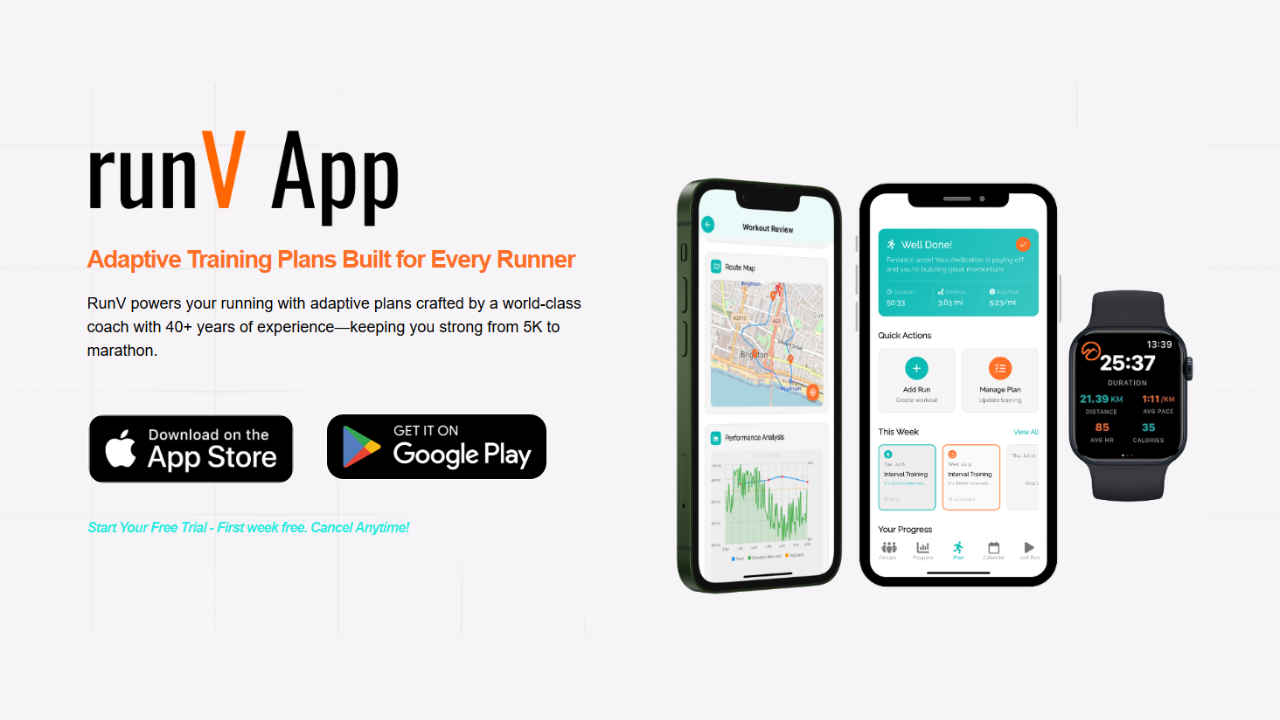
AI-driven systems can automatically integrate your history, current fitness, and day-to-day metrics to generate and adapt a plan that changes with you. An AI Dynamic Plan can:
- Read your recent pace and heart-rate trends
- Change workouts when you miss days
- Adapt to your race timeline and target pace
This doesn’t replace your judgment, but it dramatically upgrades the starting point compared to a manual static schedule.
Sample Dynamic Week vs Static Week
To make this concrete, let’s compare a static week and a dynamic week for a runner aiming for a 10K in eight weeks.
Static Week Example
- Mon: Rest
- Tue: 6 x 800m at 10K pace
- Wed: 5 miles easy
- Thu: 4 miles easy
- Fri: 3 miles tempo
- Sat: Rest
- Sun: 7-mile long run
No matter how you feel, that’s the schedule. If you sleep four hours Wednesday, your plan doesn’t care. If you crush Tuesday’s intervals easily, your plan doesn’t respond with a slightly harder progression.
Dynamic Week Example (Same Goal)
Start with a similar template, but adjust as the week unfolds.
- Mon: Planned easy 4 miles, but you slept terribly the night before, so you do 3 very easy miles instead.
- Tue: Planned 6 x 800m. You feel good and complete 5 reps strong, but cut the last one short when HR drifts high; you log this info.
- Wed: Watch shows elevated resting heart rate and poor sleep. You switch 5 easy miles to 3 easy + mobility instead.
- Thu: Feeling better, you run 4 easy miles with 4 x 20-second strides.
- Fri: Tempo planned at 3 miles becomes 2 miles at slightly slower than target pace because legs are heavy.
- Sat: Short easy run or cross-training depending on how you feel.
- Sun: Long run of 7 miles only if the week’s total load is reasonable; otherwise you cap at 6 and push 7 to next week.
Both weeks aim for similar outcomes—building speed and endurance—but the dynamic week protects you from compounding fatigue, while still nudging you forward. Over months, that difference becomes enormous.
When Static Plans Are Okay (and How to Tweak Them)
Static schedules aren’t evil. They’re just incomplete. There are situations where they can still be useful—if you use them as a flexible framework rather than a rigid rulebook.
Static Plans as Educational Tools
If you’re new to structured training, a static plan can show you:
- How many days per week runners typically train
- What a long run, tempo, or interval session looks like
- How mileage might ramp up toward an event
For example, a structured resource like a 5K Training Plan for an Amazing 7-Week Proven Finish can provide a clear outline of how to progress. You just need to remember that the real world will require adjustments.
How to “Dynamic-ify” a Static Plan
Take any static plan and intentionally add flexibility:
- Allow yourself to move workouts within the week as long as hard sessions aren’t on back-to-back days.
- Use effort or heart-rate zones instead of fixed paces, especially in heat or hills.
- Reduce volume by 20–30% during particularly stressful non-running weeks.
- Insert extra easy days if persistent soreness or fatigue lingers.
This transforms a rigid schedule into a adaptable guide that respects how you’re actually feeling.
Short-Term Plans for Short-Term Goals
Static plans of 4–6 weeks can work decently for short goals, especially if you already know your body well. They’re less risky because they don’t assume long-term consistency you might not realistically maintain.
Still, even in short blocks, the same principles apply: listen, adapt, and don’t be afraid to scale back or shift workouts when necessary.
Final Thoughts: Upgrade Your Plan, Not Just Your Shoes
Many runners happily spend hundreds on super shoes, GPS watches, and premium apps—but still rely on a static training calendar that ignores almost everything those tools reveal. That mismatch is a massive lost opportunity.
Static Running Plans Fail: because they assume you are predictable, your life is predictable, and your response to training is predictable. None of that is true. Your body and schedule are dynamic, so your training must be too.
By embracing flexible structure, using your data intelligently, and allowing plans to adapt instead of break when life intervenes, you can train more consistently, avoid unnecessary injuries, and arrive at your start lines fitter and more confident.
If you enjoy structure but want it to flex with your reality, exploring a dynamic system like an AI Dynamic Plan is often the missing step. Combine that with thoughtful resources on progression—like How to Build Endurance: 7 Proven, Powerful 10K Secrets—and your training will stop feeling like a fragile checklist and start feeling like a resilient, evolving journey.
In the end, the goal isn’t to “follow the plan perfectly.” It’s to use the plan intelligently so you can keep running, keep improving, and keep enjoying the sport—no matter what your watch, your life, or the weather throws at you.