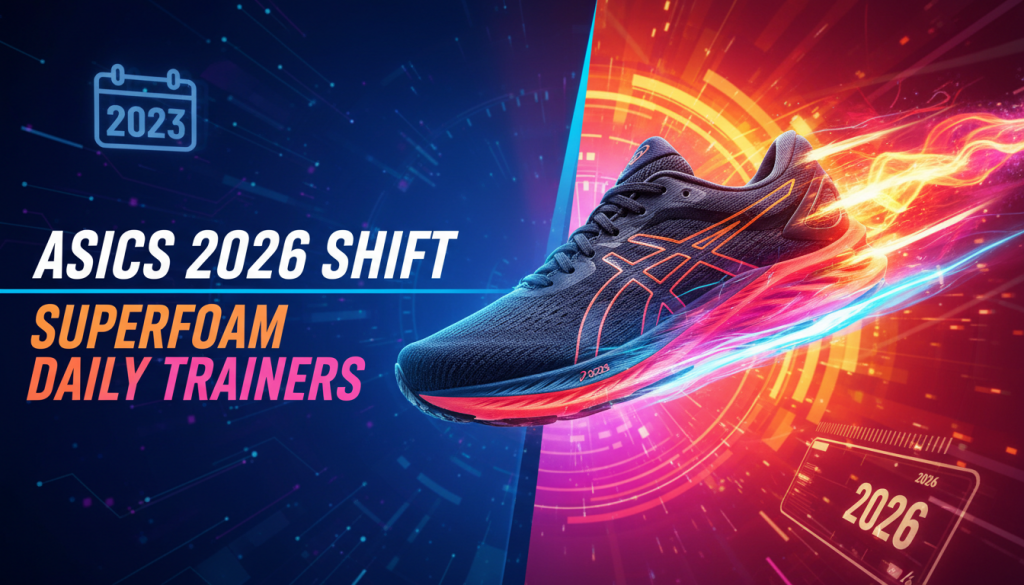
Superfoam Daily Trainers: Inside the latest wave of running shoe launches, ASICS is making one of the boldest pivots we’ve seen in years. By pushing race‑grade foams into mainstream daily trainers and softening their approach to stability, the brand is redrawing the line between “super shoe” and “everyday workhorse.”
In the past week alone, we’ve seen a flurry of announcements that signal where everyday running gear is headed—from ASICS’ Novablast 6 and Gel‑Kayano 33 to Salomon’s gravel super‑shoe, a new athlete‑backed startup, and New Balance’s comfort‑first Ellipse. Together, they reveal a simple truth: your easy‑day trainers are about to feel a lot more like race shoes.
Table of Contents
- The Shift: Superfoam Daily Trainers Inside Everyday Lineups
- ASICS Novablast 6: Super-Shoe Foam for Daily Miles
- Gel-Kayano 33: Guided Stability, Not Forced Control
- Salomon GRVL Concept: The Gravel Super-Shoe Arrives
- while on earth™ Rhythm Runner: Athlete-Led Design
- New Balance Ellipse: Comfort-First Daily Trainer
- How to Choose: Matching These Shoes to Your Runs
- Conclusion & Call to Action
The Shift: Superfoam Daily Trainers Inside Everyday Lineups
Until recently, the phrase “super shoe” meant carbon plates, exotic PEBA foams, and price tags north of $250—reserved for race day. Now we’re seeing superfoam daily trainers inside almost every major brand’s lineup, and 2026 is accelerating that trend.
Across the latest launches, the pattern is clear:
- ASICS is moving FF Turbo Squared race foam into the Novablast 6.
- The Gel‑Kayano 33 softens stability with plush FF Blast Max and Plus.
- Salomon is taking super‑shoe concepts off-road with a gravel racer.
- while on earth™ is banking on athlete‑driven design over legacy models.
- New Balance’s Ellipse reframes daily training around comfort and calm.
This isn’t just tech for tech’s sake. It reshapes how you might structure your shoe rotation: softer, more energetic trainers for daily miles, nimble stability for high‑volume weeks, and highly specialized models for gravel or mindfulness‑focused runs.
ASICS Novablast 6: Super-Shoe Foam for Daily Miles
Race Foam in a Fan-Favourite Trainer
The Novablast series has long been ASICS’ fun, springy daily trainer. With the Novablast 6 (launching globally July 1, 2026), ASICS is pushing it closer than ever to super‑shoe territory.
According to T3’s coverage and ASICS’ press release (May 29, 2026), the big story is the integration of FF Turbo Squared foam—ASICS’ premium supercritical race foam—into a “forefoot trampoline pod.” It’s paired with a full bed of FF Blast Max, a softer, highly cushioned EVA blend.
Geometry, Grip, and Upper: What’s New?
The Novablast 6 doesn’t just swap foam; the entire platform is tuned for livelier daily running:
- Forefoot trampoline pod with FF Turbo Squared for noticeable pop at toe‑off.
- FF Blast Max midsole for a thicker, more cushioned underfoot feel.
- Geometry tweaks to improve stability and transition—likely a refined rocker and a broader base.
- ASICSGrip outsole for better traction on wet roads and light gravel.
- Refined engineered mesh upper to increase breathability and midfoot lockdown.
This is a classic example of superfoam daily trainers inside a mainstream category: you get a hint of race‑day snap without sacrificing the durability and comfort you need for easy runs and tempos.
Who Should Consider the Novablast 6?
The Novablast 6 slots in as a versatile workhorse for:
- Neutral runners who want a responsive yet cushioned shoe.
- Tempo and progression runs where a bit of extra pop helps late in the workout.
- Half marathon and marathon plans where you alternate big long‑run shoes with a lighter, bouncier trainer.
If you’re building toward a race, pairing a Novablast‑style trainer with a carbon racer can help you preserve your legs. Combine a forgiving daily trainer with a smart plan—like those described in this guide to half marathon training—and you’ll get more out of your key sessions without accumulating as much fatigue.
Gel-Kayano 33: Guided Stability, Not Forced Control
From Medial Posts to FLUIDSUPPORT
The Kayano has been a pillar of stability shoes for three decades. With the Gel‑Kayano 33 (launching June 1, 2026), ASICS is reinventing that stability story again.
Per T3, the headliner is FLUIDSUPPORT, a more adaptive system that “guides” your foot rather than forcing it. Instead of a rigid medial post or heavy rails, the midsole and geometry gently encourage a neutral path through the stride.
This aligns with a broader industry move away from harsh corrections and toward support that feels almost invisible when you’re moving well.
Softer, Dual-Foam Cushioning
Underfoot, the Gel‑Kayano 33 uses a dual‑layer stack of:
- FF Blast Max for deep, plush cushioning.
- FF Blast Plus for a slightly firmer, more responsive layer.
This combination aims to deliver a soft initial step-in and landing, with enough rebound to keep the shoe from feeling mushy. A lighter engineered mesh upper rounds out the package, indicating a shift toward comfort and reduced weight.
Who Benefits from “Guided” Stability?
The new Kayano will appeal to:
- Mild overpronators who dislike stiff posting or intrusive arch elements.
- High-mileage runners needing subtle support on back‑to‑back days.
- Runners with fatigue‑induced form breakdown late in long runs.
Think of it as a safety net rather than a straightjacket. For runners battling inconsistency and burnout, a more forgiving stability shoe can reduce niggles that derail training. Combined with smarter load management—like avoiding the pitfalls described in this breakdown of consistency mistakes—the Kayano 33 could be a key piece of a sustainable training puzzle.
Salomon GRVL Concept: The Gravel Super-Shoe Arrives
Super-Shoe Tech Leaves the Road
Salomon has been a trail powerhouse for years, but the GRVL Concept, revealed on May 27, 2026, pushes into a new niche: gravel running. As covered by T3, this shoe packs what you’d expect from a road marathon super shoe—PEBA‑based supercritical foam and not one, but two full‑length carbon blades. (Adidas Adizero SL2 daily trainer)
Where road super shoes maximize forward propulsion on predictable surfaces, the GRVL Concept aims to deliver similar efficiency on a mix of hardpack dirt, light gravel, and variable terrain.
Dual Blades and Mixed-Terrain Propulsion
The dual‑blade design is particularly intriguing. Rather than a single plate, Salomon appears to be layering or separating the carbon elements to handle uneven footing better:
- Enhanced torsional control on cambered or rutted surfaces.
- Improved energy return by tuning how the midsole compresses and rebounds.
- More stable landings compared to overly soft, road‑only super shoes.
For gravel runners, this could mean holding pace more easily on rolling, mixed terrain courses where traditional road racers feel sketchy and standard trail shoes feel sluggish.
Who Is the GRVL Concept For?
This is a specialized shoe aimed at:
- Runners targeting fast gravel or mixed-terrain races.
- Trail athletes who need a lightweight, efficient option for less technical routes.
- Road runners branching into gravel who still crave race‑style propulsion.
If your training mixes roads, bike paths, and farm tracks, pairing a shoe like this with a more forgiving daily trainer (Novablast 6, Ellipse, or Kayano 33) lets you keep superfoam daily trainers inside your weekly schedule without overdoing aggressive plates on easy days.
while on earth™ Rhythm Runner: Athlete-Led Design
A New Player with NFL Star Cred
while on earth™ is a new performance brand co‑founded by Todd Meleney and NFL star Christian McCaffrey. As reported by Fitt Insider in mid‑May 2026, they’ve opened pre‑orders for their first running shoe, the Rhythm Runner, at $160, with shipping slated for late June 2026.
While technical specifics are still limited, the pitch is clear: a performance trainer shaped directly by athlete feedback, not legacy category assumptions.
Why Athlete-First Design Matters
Elite athletes see the gaps in the market before consumers do. When they help create a shoe, they often push for:
- Balanced cushioning that works from easy jogs to uptempo strides.
- Upper lockdown that can handle sudden direction changes.
- Durability for high‑volume, multi‑session days.
That makes the Rhythm Runner potentially appealing as a do‑it‑all trainer for runners who want one shoe to cover most of their weekly mileage. Think of it as an emerging competitor in the same broad category as the Novablast or Ellipse—superfoam daily trainers inside a simpler, single‑shoe rotation.
Is It Worth a Look for Everyday Runners?
If you like being an early adopter and value athlete‑driven design, the Rhythm Runner is worth watching. For now, consider it if:
- You prefer one primary trainer for varied runs.
- You’re curious how cross‑sport insights (from football and strength training) translate into running shoes.
- You’re open to trying a new brand rather than sticking only with legacy names.
As performance data and reviews emerge, we’ll see whether this model leans more toward superfoam bounce, plush comfort, or a blend of both.
New Balance Ellipse: Comfort-First Daily Trainer
A New Franchise, Not About Speed
New Balance has introduced an entirely new lineup with the Ellipse, launched March 5, 2026 and previewed by T3. Unlike some of its racier cousins, this shoe is explicitly “not about speed.”
Instead, it’s about being approachable and calming for runners at every level—from new runners to seasoned athletes who want an easy‑day sanctuary.
Fresh Foam X and Rockered Comfort
Key design elements include: (ASICS Superblast 2 superfoam trainer)
- Fresh Foam X cushioning for a soft, protective ride.
- 8 mm drop, which strikes a middle ground between low and traditional heights.
- Rockered geometry to promote smooth heel‑to‑toe transitions.
- Breathable mesh upper to manage heat on longer runs.
- Stretch laces for a more relaxed, slip‑on feel.
The Ellipse isn’t a superfoam bouncer; it’s a comfort specialist. Yet it still embodies the broader trend: tech and geometry once reserved for performance shoes now live squarely in daily trainers built for recovery and mindfulness.
Who Should Reach for the Ellipse?
The Ellipse is tailor‑made for:
- Beginners building up from walking to running.
- Experienced runners seeking a shoe for recovery and de‑stressing.
- Anyone who values a serene, easy ride over aggressive responsiveness.
Pairing a comfort‑first trainer like the Ellipse with a more responsive shoe—for example, a Novablast or your chosen racer—fits well with gradual, sustainable training progressions such as those in this guide to how many days beginners should run. Use it to cap busy weeks with low‑stress miles that still feel good.
How to Choose: Matching These Shoes to Your Runs
Defining Your “Jobs to Be Done”
To decide which of these shoes fits your rotation, start by asking what “jobs” your footwear must handle:
- Daily mileage and easy runs
- Tempo or interval work
- Long runs or race‑specific efforts
- Stability and support needs
- Terrain preferences (road, gravel, light trail)
Then map each new launch to those roles.
Where Each Model Fits in a Real-World Rotation
- ASICS Novablast 6: Versatile daily and tempo trainer. Great for runners who want “superfoam flavor” without a full‑on race plate. Ideal as your main mileage shoe if you’re neutral and like bounce.
- Gel‑Kayano 33: Daily trainer with light‑touch stability. Best for mild overpronators or anyone who tends to collapse inward late in long runs.
- Salomon GRVL Concept: Race‑day or key‑workout shoe for gravel and mixed terrain. You’ll probably pair this with a more forgiving daily trainer.
- Rhythm Runner: Emerging all‑rounder with athlete DNA. Potential one‑shoe quiver for runners who split time between gym, strides, and road miles.
- New Balance Ellipse: Comfort and recovery specialist. Excellent for easy days, mental reset runs, and new runners building confidence.
Practical Tips for Trying Superfoam Daily Trainers Inside Your Week
As these technologies filter into everyday trainers, a few guidelines can help you adapt safely:
- Rotate models: Alternate a highly responsive shoe (Novablast 6, GRVL Concept) with a softer, more neutral option (Ellipse, Kayano 33) to vary loading on your muscles and tendons.
- Introduce gradually: If you’re moving from firm traditional trainers to superfoam daily trainers inside your routine, begin with shorter runs (20–30 minutes) to let your calves and feet adjust.
- Match shoe to intent: Use your bouncier shoes when you plan to push the pace; reserve plush, stable models for easy days.
- Watch for fatigue signs: Elevated calf tightness or arch soreness can signal you’re overdoing it in aggressive foams or plates.
Think of these shoes as tools that must work in sync with your training plan. Adaptive scheduling—where intensity, terrain, and footwear choices adjust based on fatigue—can dramatically reduce guesswork, as outlined in this explanation of adaptive training benefits.
How This Affects Group Runs and Social Miles
For many runners, the weekly group run is a testing ground for new shoes. With superfoam daily trainers inside that social context, the temptation is to turn every meetup into an impromptu tempo.
Instead, decide your goal before you lace up: is today a chatty easy run in the Ellipse or Kayano 33, or a progression session where the Novablast 6 or GRVL Concept makes sense? Knowing what to expect from group runs—pace, terrain, and purpose—helps you choose the right shoe and avoid over‑cooking efforts, as discussed in this guide to group runs.
Conclusion & Call to Action
Superfoam Daily Trainers: Inside this week’s equipment news, that phrase isn’t just a marketing hook—it describes a genuine shift in how brands think about everyday running. ASICS is infusing race‑level energy into the Novablast 6 and softening stability with the Gel‑Kayano 33. Salomon is staking out gravel super‑shoes, while on earth™ is betting on athlete‑first design, and New Balance is giving us a comfort‑centric Ellipse for mindful miles.
For you, the runner, the takeaway is clear: your daily trainers can be lighter, livelier, and more tailored to your specific needs than ever. The key is choosing the right combination of bounce, stability, and comfort—and slotting each shoe into a smart, sustainable training structure.
Audit your current rotation: where are the gaps—tempo pop, stability, or easy‑day comfort? Then decide whether a Novablast 6, Kayano 33, GRVL Concept, Rhythm Runner, or Ellipse best fills that slot. Combine thoughtful shoe choices with a clear plan for building durability—like the progression principles in this endurance‑building guide—and you’ll get more out of every mile.
The 2026 gear wave is underway. Now is the time to decide how you’ll bring superfoam daily trainers inside your own running story.