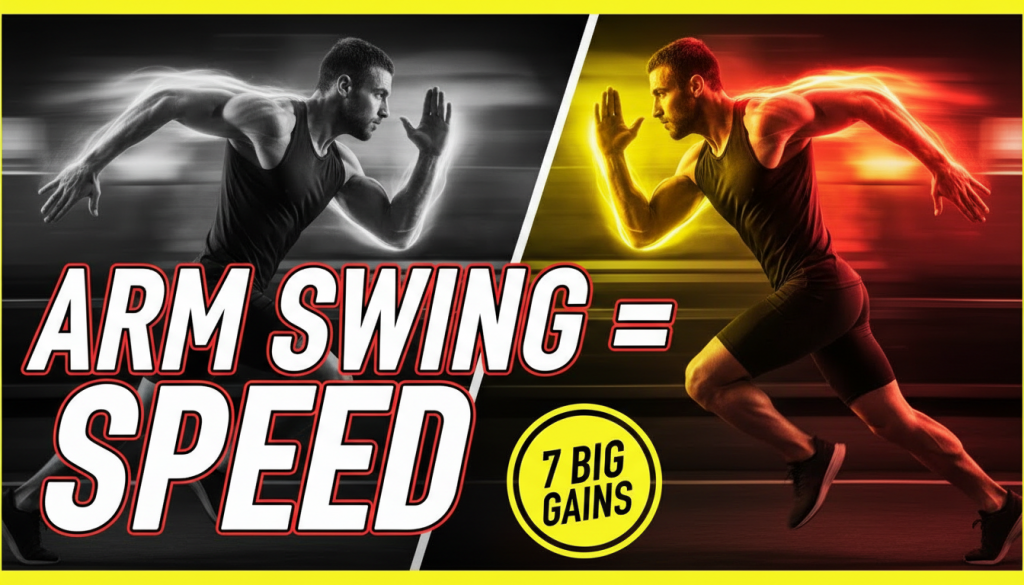
Most runners obsess over cadence, shoes, and training plans, but overlook one of the easiest performance upgrades available: your arm swing. When you understand how arm Swing Affects Powerful, Proven changes in form and efficiency, you unlock a surprisingly big set of gains—from speed and endurance to injury prevention and even mental focus.
This guide breaks down exactly how arm swing works, why it matters, and how to adjust it using practical, science-backed drills you can apply on your very next run.
Table of Contents
- Why Arm Swing Matters More Than You Think
- The Mechanics of Efficient Arm Swing
- Gain #1 – Faster Pace Without Extra Effort
- Gain #2 – Better Running Economy and Energy Efficiency
- Gain #3 – Stronger Posture and Alignment
- Gain #4 – Fewer Injuries and Less Overuse Stress
- Gain #5 – Smoother Cadence and Rhythm
- Gain #6 – Mental Focus, Relaxation, and Race Composure
- Gain #7 – How Tech and Wearables Supercharge Arm Swing Training
- Arm Swing Drills: A Practical 10–15 Minute Routine
- Common Arm Swing Mistakes (And Quick Fixes)
- How to Integrate Arm Swing Work Into Your Training Plan
- FAQs About Arm Swing and Running Form
Why Arm Swing Matters More Than You Think
Arm swing looks like a side effect of running, but biomechanically it’s a core driver of balance, rhythm, and power. Your arms counterbalance your legs, stabilize your trunk, and help control rotation through the hips and torso.
That means the way your Swing Affects Powerful, Proven performance outcomes, including speed, energy use, and even injury risk. Research shows that constraining arm movement increases oxygen cost, and altering swing changes stride length and cadence. Your arms are not passengers—they’re active contributors.
For fitness enthusiasts focused on marginal gains, this is huge. You can’t instantly change your VO₂ max, but you can change how you move. Tweaking arm mechanics is one of the highest-return, lowest-risk upgrades you can make, no matter your pace or distance.
The Mechanics of Efficient Arm Swing
Neutral Posture: The Foundation
Effective arm swing starts with posture. Your torso is the anchor; your arms move from your shoulders, not from your neck or lower back. Aim for:
- Tall but relaxed spine, slight forward lean from the ankles
- Shoulders down and back, not shrugged toward your ears
- Head neutral, eyes looking 10–20 meters ahead
If your posture collapses, your arm swing compensates—often in inefficient, twisting ways that waste energy.
Arm Position and Angle
Most efficient runners keep elbows bent roughly 80–100 degrees. The exact angle varies by speed, but this range keeps your arms compact and quick.
Key details:
- Hands travel from roughly hip area to lower chest line, not far above.
- Elbows drive back; the hand’s backward motion matters more than the forward swing.
- Arms swing mostly forward and back, not across your body.
This simple pattern lets your arm Swing Affects Powerful, Proven improvements in forward momentum instead of side-to-side wobble.
Relaxed but Purposeful Hands
Clenched fists signal tension up the chain into your forearms, shoulders, and neck. Completely floppy hands, on the other hand, can throw off rhythm.
Try this cue: hold your hands as if you’re gently carrying a potato chip you don’t want to crush or drop. Thumb can rest lightly on index finger; wrists stay neutral, not bent.
Rhythm and Symmetry
Your right arm works diagonally with your left leg, and vice versa. That cross-body pattern stabilizes your core and reduces rotational forces. When your arms work in sync, your stride feels smoother and more rhythmic—key to the gains below.
Gain #1 – How Arm Swing Affects Powerful, Proven Speed Gains
Speed isn’t just about stronger legs; it’s about how efficiently you direct that strength. Here’s how arm Swing Affects Powerful, Proven speed gains you can feel in your next tempo or interval workout.
Driving Back = Driving Forward
Think of your arms as pistons. The more decisively you drive your elbow backward, the more naturally your opposite leg drives forward. The backward motion of the arm helps initiate hip extension, which directly translates to propulsion.
To run faster:
- Focus on a crisp “elbows back” cue, especially during strides or intervals.
- Avoid overreaching your hands forward; that often causes overstriding.
- Increase arm speed slightly to raise cadence without forcing your legs.
Arm Speed as a Cadence Controller
When you want to surge in a race or finish strong, it’s easier to consciously move your arms faster than to think, “Turn the legs over more.” The legs follow the rhythm set by the upper body.
Next time you do 200–400 meter repeats, use the final 50 meters to practice: accelerate primarily by increasing arm turnover while keeping your stride compact.
Short Sprints and Hill Repeats
Watch elite sprinters: arms pump aggressively, elbows driving straight back, hands relaxed but quick. Distance runners don’t need that extreme, but can borrow the principle during short efforts or hill sprints.
On steep hills, your arm swing adds literal climbing assistance. Stronger backward arm drive helps fight gravity and keeps you from leaning too far forward at the waist.
Gain #2 – Swing Affects Powerful, Proven Running Economy
Running economy—how much oxygen and energy you use at a given pace—is a major predictor of performance. Small efficiency gains, multiplied over thousands of strides, can mean dramatic differences on race day.
Energy Cost and Constrained Arms
Studies that restrict runners’ arm swing consistently show higher oxygen consumption at the same speed. Your arms help balance the rotational forces created by your legs; without them, your core and hip muscles must work much harder.
In other words, efficient arm swing is an energy-saving mechanism. You may not feel it in a 400-meter effort, but you’ll absolutely feel it at mile 20 of a marathon.
Minimizing Side-to-Side Motion
Every degree your arms swing across your body increases rotational torque in your trunk and hips. That twisting doesn’t help you move forward—it just drains energy.
To improve running economy:
- Imagine a narrow lane from shoulder to hip; keep hands tracing that line.
- Use video from the front to check if your hands cross your midline.
- Relax shoulders—tense shoulders pull arms inward and across.
Sustainability Over Long Distances
Marathoners and ultrarunners especially benefit when arm Swing Affects Powerful, Proven efficiency improvements. Over long distances, subtle form flaws accumulate into substantial fatigue.
Practicing relaxed yet purposeful arm movement during easy and long runs can help you finish feeling smoother, with less upper-body tension and fewer late-race form collapses.
Gain #3 – Posture: How Arm Swing Affects Powerful, Proven Alignment Gains
Arm swing and posture are a loop: posture influences how your arms move, and arm swing can help correct or worsen posture. Strong, stable posture helps you breathe better, land more safely, and maintain speed under fatigue.
Preventing the “Desk Hunch” on the Run
Many runners bring desk posture to their workouts—rounded shoulders, head forward, slack upper back. This posture shortens your hip flexors and disrupts efficient arm mechanics.
Good arm swing cues can reverse this:
- Think “chest proud” and “elbows brushing your sides” as you run.
- Let your arms swing close to your torso, not flared wide.
- Keep shoulders down and slightly back, as if broadening your collarbones.
Breathing and Upper-Body Freedom
Tight shoulders and restricted arm motion compress your ribcage, making deep, efficient breathing harder. Relaxed arms allow your thoracic spine and ribs to expand more easily with each breath.
This is especially important for tempo runs or races where you’re right below your redline. Free arm movement means you’re not suffocating your own lungs.
Stability on Uneven Terrain
On trails or technical surfaces, your arms act like balance bars. A responsive arm Swing Affects Powerful, Proven stability gains: quick arm adjustments help you stay upright when footing is unpredictable.
If you’re transitioning to trails, pair efficient arm mechanics with the right footwear—modern designs can amplify your form improvements. For more on that synergy, see Supercharged Trail and Road Shoes Are Redefining Your Run.
Gain #4 – Reduced Injury Risk: How Swing Affects Powerful, Proven Protection
Injury prevention often focuses on shoes, surfaces, and mileage. But arm swing can either distribute forces efficiently or funnel extra stress into your lower body.
Rotational Stress and the IT Band, Knees, and Hips
Excessive cross-body arm movement increases rotation in your trunk and pelvis. That rotation can travel down the chain, increasing strain on:
- IT bands, which may rub more over the femur
- Knees, which prefer tracking straight ahead
- Hip stabilizers, which must fight extra twisting
Cleaning up your arm swing often reduces lower-body wobble, making your stride path more consistent and joint-friendly.
Overstriding and Braking Forces
Overreaching your arms forward tends to pair with overstriding: your foot lands too far ahead of your center of mass, increasing impact and braking. By shifting focus to driving elbows back instead, you help cue a shorter, quicker stride.
This seemingly small adjustment can reduce peak impact forces, helping protect shins, knees, and hips over time.
Upper-Body Overuse and Tension Injuries
Neck stiffness, shoulder pain, and tension headaches can all be amplified by poor arm swing—especially if you run high volume. Common culprits include: (Running arm swing power)
- Shoulders constantly shrugged near your ears
- Locked, straight elbows instead of a soft bend
- White-knuckle fists increasing tension up the arm
Relaxed, rhythmic arm motion distributes muscular work instead of letting one area (like the upper traps) bear the entire load.
Gain #5 – Cadence, Rhythm, and How Swing Affects Powerful, Proven Stride Gains
Cadence—the number of steps you take per minute—is a major piece of running form. While there is no universal “perfect” number, most efficient runners fall in a moderate cadence range appropriate to pace. Arm swing is an underused tool for dialing cadence in.
Using Arms to Nudge Cadence Upward
If your cadence is very low relative to your speed, you may be overstriding. Instead of forcing your feet to move faster, think:
- “Quicker hands” or “faster elbows back, but shorter swing.”
- Shorten the distance your hands travel while slightly increasing turnover.
- Maintain relaxed shoulders to avoid tension spikes.
The legs tend to sync with the “metronome” of your arms, making cadence changes feel more natural and less forced.
Maintaining Rhythm Under Fatigue
Late in races, when stride mechanics start to fall apart, focusing on arm swing can help rescue your rhythm. Rather than obsessing about your feet, tune into:
- Symmetrical arm movement
- Steady tempo in your arms, even if stride length shortens
- Relaxed, repeatable motion pattern
This simple mental switch can stabilize your form and keep you from decelerating as sharply in the final kilometers.
Music, Metronomes, and Arm-Led Timing
If you use a metronome or cadence-focused running app, let your arms be what syncs to the beat. Your legs will naturally fall in line with that established rhythm, reducing overthinking and cognitive load.
Gain #6 – Mental Focus: How Swing Affects Powerful, Proven Mindset and Flow Gains
Arm swing isn’t just mechanical—it’s also a surprisingly powerful mental tool. During hard or long runs, it can become a focal point that calms anxiety and organizes your effort.
A Simple Mental Cue Under Stress
In races or tough workouts, your thoughts can spiral: pace, splits, competitors, discomfort. Focusing on “smooth arms” creates a stable, controllable anchor.
Try these mantras:
- “Relaxed hands, strong elbows.”
- “Drive back, float forward.”
- “Smooth arms, smooth stride.”
This keeps your focus in the present stride rather than worrying about miles ahead.
Arm Swing and Confidence
Intentionally strong, rhythmic arm movement can make you feel more powerful, particularly when you’re surging or passing. Your body language feeds back into your perception of effort and confidence.
Pairing this with good race strategy and decision-making can be a major performance unlock; if you’re working on race execution as well, see Race Day Decision Making: 7 Proven Secrets for Powerful PRs.
Group Runs and Social Accountability
On group runs, shared cues like “Let’s keep our arms relaxed this last mile” can synchronize effort and encourage smoother pacing. Coordinated focus on arm swing can help a group avoid the late-run “death shuffle.”
If you train with others, integrating these cues into your sessions can magnify how your collective Swing Affects Powerful, Proven mental and physical gains over time.
Gain #7 – Tech, Wearables, and How Swing Affects Powerful, Proven Data-Driven Gains
Modern running tech doesn’t just track distance and pace; it increasingly measures form-related metrics that capture how your arm swing influences your stride.
What Your Watch Is Telling You
Many GPS watches and sensors now report:
- Cadence
- Vertical oscillation (how much you bounce)
- Ground contact time
- Left-right balance
While they don’t directly show “arm swing quality,” changes in these values often reflect adjustments in your upper-body mechanics. For example, cleaning up cross-body arm motion may reduce lateral wasted motion and subtly improve cadence and contact symmetry.
Video and Slow Motion Feedback
Simple phone video, shot from the front, back, and side, is one of the best ways to assess how your Swing Affects Powerful, Proven form changes.
Look for:
- Hands crossing the midline excessively
- Shoulders riding high or rotating a lot
- Uneven arm motion (one side swinging more or higher)
Record before and after doing focused drills to see if your changes hold under fatigue.
Pairing Apps and Adaptive Plans
If you use coaching or training apps, incorporate arm swing cues into your workouts the same way you would pace or interval targets. Some plans explicitly build in drills and form cues during warm-ups or strides, which is ideal for making these changes stick.
For a broader framework on integrating technique and training structure, see the Complete Guide to Performance: 7 Powerful Secrets for Runners, which complements the arm swing work you’re doing here.
Arm Swing Drills: A Practical 10–15 Minute Routine
Concepts are helpful, but drills make change real. Here’s a short, repeatable session you can plug into your routine 1–3 times per week. You can do most of this before easy runs or as part of form-focused sessions.
1. Standing Posture and Arm Check (2–3 minutes)
- Stand tall, feet hip-width apart.
- Gently roll shoulders back and down; imagine length between ears and shoulders.
- Bend elbows to about 90 degrees, hands relaxed.
- Swing arms forward and back naturally, keeping them close to your torso.
- Look sideways in a mirror, watching that elbows move back more than hands reach forward.
Focus on relaxed shoulders and smooth rhythm.
2. Seated Arm Swing Isolation (2–3 minutes)
- Sit on the edge of a bench or chair, feet flat.
- Lean forward slightly from the hips, as in running posture.
- Swing arms as if running, but keep legs still.
- Check that your torso doesn’t twist excessively; arms go mostly front-to-back.
- Alternate between slower and faster arm swings, feeling how easily you can change rhythm.
This helps you feel how your Swing Affects Powerful, Proven cadence control independent of leg motion.
3. 20–30 Meter Arm-Focused Strides (5–7 minutes)
- After a light warm-up jog, pick a flat stretch.
- Run 20–30 meters at about 70–80% effort.
- During each stride, focus on one cue:
- Stride 1–2: “Elbows back.”
- Stride 3–4: “Relaxed hands, quiet shoulders.”
- Stride 5–6: “Arms set the rhythm.”
- Walk back between repetitions and reset posture.
Keep the total volume low; the goal is quality, not fatigue.
4. Hill Sprints With Strong Arm Drive (Optional, 5 minutes)
- Find a short hill (20–40 meters).
- Run up at strong but controlled effort.
- Focus on “power elbows” driving back with each step.
- Walk down and fully recover.
- Repeat 3–6 times depending on fitness.
Hills amplify how your arm Swing Affects Powerful, Proven power transfer to the legs, making form cues more obvious.
Common Arm Swing Mistakes (And How to Fix Them)
Mistake #1: Cross-Body Swing
What it looks like: Hands repeatedly crossing the center line of your torso; elbows pointing outward.
Why it’s a problem: Increases rotational forces, wastes energy, and can contribute to lower-body alignment issues. (Arm swing research)
Fixes:
- Imagine zipping up a jacket straight down the center; keep hands on either side.
- Practice seated arm swings focusing on a straight “track” for each hand.
- Strengthen upper back and core to support better alignment.
Mistake #2: Locked or Very Open Elbows
What it looks like: Arms nearly straight or flapping with a wide swing.
Why it’s a problem: Slower arm turnover, extra muscular effort, awkward timing with legs.
Fixes:
- Think “L-shape” in your arms (about 90 degrees).
- Do short strides focusing on compact, quick arm motion.
- Avoid tensing your biceps; keep the bend easy and natural.
Mistake #3: Shrugged Shoulders
What it looks like: Shoulders creeping toward your ears as the run progresses.
Why it’s a problem: Increases tension, restricts breathing, and can cause neck and shoulder pain.
Fixes:
- Every few minutes, exhale and intentionally drop your shoulders.
- Shake out arms briefly during easy stretches.
- Include upper-back mobility and strengthening in your routine.
Mistake #4: Clenched Fists
What it looks like: White knuckles, tight forearms, rigid wrists.
Why it’s a problem: Tension travels up the chain, disrupting smooth motion and increasing perceived effort.
Fixes:
- Use the “chip or leaf” cue—gently hold something imaginary without crushing it.
- Consciously check hand tension every kilometer or every few minutes.
- Practice relaxing hands on easy runs while maintaining arm rhythm.
Mistake #5: Asymmetrical Arm Swing
What it looks like: One arm swings higher, wider, or faster than the other.
Why it’s a problem: Creates imbalances that can show up as uneven wear, recurring injuries, or lopsided fatigue.
Fixes:
- Use video to identify differences clearly.
- On runs, occasionally exaggerate the weaker or smaller swing to match the other side.
- Address any underlying shoulder or back mobility issues.
Integrating Arm Swing Work Into Your Training Plan
You don’t need a separate “arm swing program.” The goal is to weave these elements into what you already do, making your Swing Affects Powerful, Proven improvements part of your daily running habit.
Easy Runs: Awareness and Relaxation
During easy runs:
- Pick one simple cue for the whole run (e.g., “relaxed hands”).
- Do a 10–20 second “form check” every 5–10 minutes.
- Stay relaxed; never force big changes during recovery days.
Easy days are ideal for low-stress habit building without fatigue muddling your form.
Workouts: Specific, Short Focus Blocks
In intervals or tempo runs:
- Use the first rep or first minutes to lock in posture and arm rhythm.
- During later reps, when fatigue sets in, refocus on arms to stabilize form.
- For speed sessions, intentionally use arms to drive cadence in the final 50–100 meters.
Think of your arms as your “form lever” when workouts start to bite.
Long Runs: Late-Stage Form Practice
Long runs are where arm swing habits pay off most:
- In the final 20–30% of the run, check in on shoulders and hands regularly.
- Practice using arms to maintain rhythm rather than forcing pace with your legs.
- Visualize strong, controlled arm motion carrying you through the last miles of a race.
For runners following structured race plans, incorporating these cues alongside mileage, pacing, and recovery principles can significantly boost outcomes. To see how comprehensive planning and technique work together, explore How to Build Endurance: 7 Proven, Powerful 10K Secrets, which pairs well with the arm swing strategies in this article.
FAQs About Arm Swing and Running
Do I really need to change my arm swing if I’m not injured?
If you’re running comfortably and meeting your goals, you don’t need a radical overhaul. But small refinements—like relaxing shoulders or minimizing cross-body movement—can still yield benefits in efficiency, fatigue resistance, and long-term joint health. Think of it as fine-tuning rather than reinventing your stride.
Is there a “perfect” arm swing for everyone?
No single technique fits all bodies and speeds. The goal is to stay within efficient ranges: modest elbow bend, mostly front-to-back motion, relaxed shoulders and hands, and symmetry. Within that framework, small individual variations are normal and often appropriate.
How fast can I expect to see results?
Some runners feel an immediate difference in rhythm and comfort once they focus on arm cues. For lasting, automatic changes, expect 4–8 weeks of consistent practice—similar to building any movement skill. Integrating drills 2–3 times weekly and reinforcing cues on regular runs accelerates this process.
Can I overdo arm swing work?
Yes, if you force big, unnatural changes or obsess on every stride. Overthinking form can increase tension and actually worsen mechanics. Keep cues simple, and make adjustments gradually. Prioritize relaxation and rhythm over “perfect” form.
Should I train my upper body specifically to improve arm swing?
Some strength helps, but you don’t need a bodybuilder’s upper body. Focus on:
- Postural strength: mid-back, shoulders, and deep core.
- Mobility: thoracic spine, shoulders, and chest.
- Endurance: the ability to maintain relaxed posture over time.
Even 10–15 minutes of targeted strength work 2–3 times a week is enough to support better arm mechanics.
How does arm swing interact with group or coached training?
Arm swing cues are easy to integrate into group warm-ups, strides, and cooldowns. Coaches often use them as quick, actionable reminders during races or sessions. If you train in groups or with social accountability, aligning on simple cues like “shoulders down” or “elbows back” can help everyone maintain stronger form together. For broader context on combining community and performance, see Running Group Training Explained: 7 Powerful Essential Tips.
When you step back, it’s striking how much arm Swing Affects Powerful, Proven running gains: faster pace without extra strain, better energy economy, improved posture, fewer injuries, smoother cadence, stronger mental focus, and richer insight from your training tech.
You don’t need special gear or huge time investment—only consistent, mindful practice. Start with one or two cues on your next easy run, add a few drills weekly, and let your arms quietly reshape the way you move. Over thousands of strides, those small changes compound into exactly the kind of powerful, proven progress most runners are chasing.