Training 5 min
Best running apps

The best running app depends on what you need: Strava for community and social features, Garmin Coach for structured workouts, Runkeeper for simplicity, or Nike Run Club for motivation. Most serious runners use a combination of a GPS tracker, a coaching app, and a log.
What makes a good running app?
A solid running app tracks distance, pace and heart rate accurately, syncs with wearables, offers workout variety, and integrates with other platforms. It should also be intuitive—clunky interfaces waste mental energy before a run.
- Accurate GPS and pace tracking
- Customisable workouts and training plans
- Integration with smartwatches and fitness trackers
- Clear post-run analytics and progression data
- Reliable offline functionality
Top apps for structured training
If you want a coach in your pocket, structured training apps assign daily workouts and adjust difficulty based on your fitness. Garmin Coach, Couch to 5K, and Nike Run Club all offer progressive, science-backed plans tailored to common race distances.
Best apps for tracking and community
Strava dominates social running. It logs every run, segments your route, and lets you compete on leaderboards. Runkeeper offers similar tracking with fewer social features but cleaner analytics. Both sync with most wearables.
Running apps for beginners
Couch to 5K remains the gold standard for new runners. It uses walk-run intervals and simple audio cues. Nike Run Club and Strava also work well for beginners, though they assume some baseline fitness.
Apps that work offline
Most modern apps cache maps and routes, but Garmin Connect and Suunto are built for offline use from the start. If you run in areas with poor signal, download routes in advance on Strava or your watch's own app.
How to choose the right app for you
Start by defining your goal: are you training for a race, building consistency, or chasing social motivation? Then check compatibility with your watch or phone, and whether the app's interface suits you. Many runners eventually use two or three apps in tandem—one for coaching, one for logging, one for social accountability.
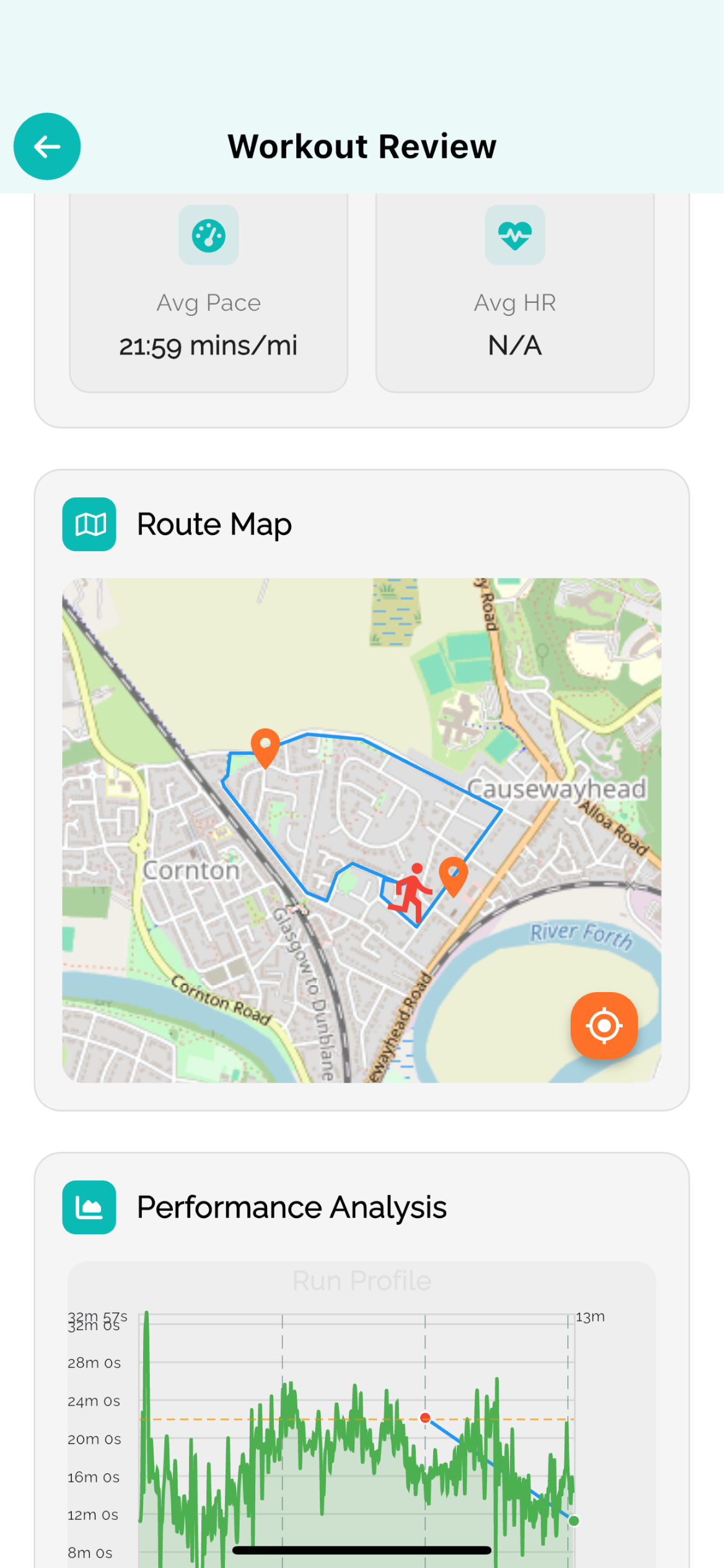
The most effective training approach combines habit tracking, performance data, and adaptive feedback. Apps like RunV use your run history and effort levels to personalise future sessions, adjusting intensity and recovery based on what actually works for you, not generic programmes. That kind of responsive, data-driven coaching is where running apps are heading.
Common running app features compared
- Structured plans: Garmin Coach, Nike Run Club, Couch to 5K, Runkeeper
- Social features: Strava, Nike Run Club
- Wearable integration: Garmin Connect, Suunto, Strava, Runkeeper
- Beginner-friendly: Couch to 5K, Nike Run Club
- Offline maps: Garmin Connect, Suunto
FAQ
- Can I use a running app without a smartwatch?
- Yes. All major apps work with just a smartphone. GPS and sensors in your phone are sufficient for distance and pace. A smartwatch adds convenience and wrist-based metrics like heart rate, but it is not essential.
- Should I pay for a premium running app?
- Most apps offer a free tier that covers basic tracking. Premium versions typically unlock structured plans, advanced analytics, and ad removal. If you are training seriously, a £5–10 monthly subscription is usually worth it.
- Which app is best for marathon training?
- Garmin Coach and Nike Run Club both offer structured 16–20 week marathon plans. Strava is best for logging and community. Many runners use Garmin or Nike for workouts and Strava for social tracking and storage.
Train smarter
RunV turns this thinking into your plan — adaptive coaching that rebuilds after every run.
Keep reading