Training 5 min
How long should my longest run be before a marathon

For most runners, the longest run before a marathon should be 18–22 miles (29–35 km), completed about three weeks before race day. This distance is long enough to build aerobic fitness and mental confidence without risking injury or over-fatiguing your legs before the race. Most runners benefit from stopping short of the full 42 km to allow proper recovery and taper.
Why not run the full marathon distance in training?
Running 42 km in training leaves your body depleted and vulnerable to injury in the final weeks. The physiological gains plateau well before that distance; what matters most is consistency over weeks and months, not one single long run. A 20-mile (32 km) effort safely stresses your aerobic system and teaches your body to run efficiently on tired legs—both key to race day success.
The 18–22 mile sweet spot
This range lets you practise fuelling, pacing, and mental resilience without excessive recovery demands. At 18–22 miles (29–35 km), you'll spend roughly 2.5–3.5 hours on your feet (depending on your pace) — many coaches cap it at about 3.5 hours for slower runners — which is enough to experience the fatigue you'll face around kilometre 30–35 on race day, but not so much that you compromise the next week's training or your taper.
When to do your longest run
- Complete it about three weeks before your marathon to allow a proper taper
- Build towards it gradually: in a 16–18 week block, long runs typically climb by 1–2 miles at a time, with easier cut-back weeks in between
- Avoid long runs in the final 2 weeks; shorter efforts and recovery dominate the taper
How to structure your longest run
- Start conservatively—begin at a pace 30–45 seconds per km slower than your goal marathon pace
- If you're experienced, include a block at your intended race pace in the second half (for example, 8–16 km of it); first-timers can keep the whole run easy
- Include a realistic fuelling and hydration strategy: practise gels, energy drinks, or food you'll use on race day
- Finish the last 3–5 km at a controlled, manageable effort—not fast, just steady
Recovery matters as much as the run itself
After your longest run, prioritise refuelling within 30 minutes, rehydration over 24 hours, and active recovery. Take 3–5 easy days afterward; this is not the week to add a second hard session. Soreness and fatigue are normal, but persistent pain or injury signals you've either done too much or made a form error—both worth investigating before race day.
Adapting the distance to your experience
- First-time marathoners: 18–20 miles (29–32 km) is plenty; arriving fresh matters more than covering every mile in training
- Experienced runners targeting a fast time: 20–22 miles (32–35 km) is justified, as your aerobic base is stronger
- Runners returning after injury: cap at about 18 miles (29 km) and err on the side of a longer taper
Data-driven training with RunV
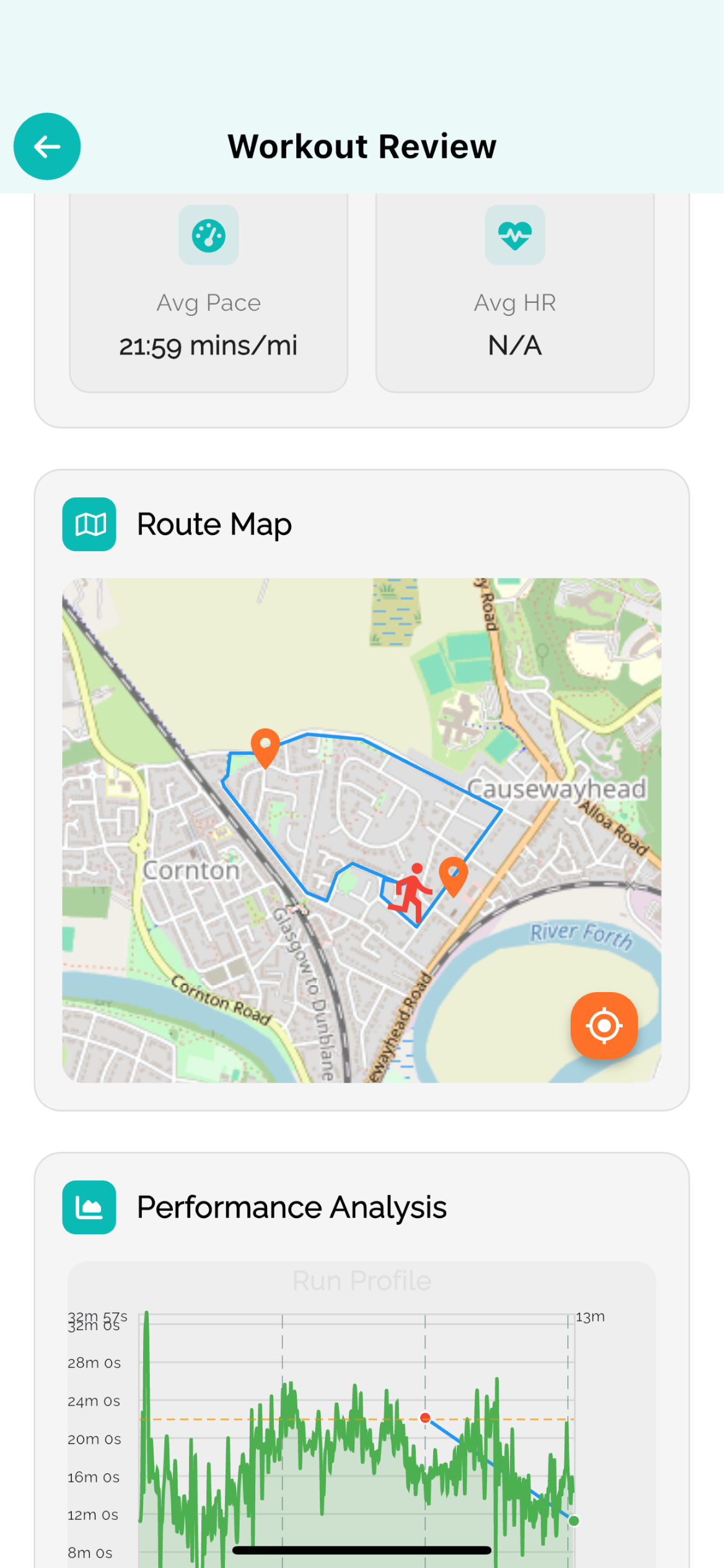
Your longest run is not a fixed rule—it's a data point. Tracking your pace, heart rate, and how you feel during and after long runs lets you identify the distance and intensity that build fitness without breaking you down. RunV's adaptive coaching learns from each run you log, adjusting your taper and final preparation to match your individual recovery profile. The goal is arriving at the start line fresh, confident, and ready to execute your race plan.
FAQ
- Can I run more than 22 miles before a marathon?
- You can, but gains are minimal and risk of overtraining or injury rises sharply. Unless you're training for a sub-3-hour marathon and have significant experience, 18–22 miles (29–35 km) is sufficient and safer.
- What if I haven't run my longest distance yet?
- Adjust your goal or extend your training block, but don't skip the taper. A slightly shorter longest run (16–18 miles, 26–29 km) with a proper taper is better than rushing to 22 miles and racing fatigued.
- How do I know if my longest run went well?
- You finished feeling tired but not destroyed, your pace held steady in the second half, you fuelled and hydrated without gut issues, and you recovered well within 3–5 days. Any of those failing suggests the effort was too aggressive for your current fitness.
Train smarter
RunV turns this thinking into your plan — adaptive coaching that rebuilds after every run.
Keep reading