Racing 6 min
How to choose a goal race time you can actually hit

Choose a goal race time by measuring your current fitness honestly, using recent race times as a baseline, and applying a conservative safety margin of 5–10%. A target that's too ambitious demoralises; one that's too safe wastes potential. The sweet spot sits between stretch and reachable.
Know your current fitness level
Before picking a target, run a 5K time trial on a measured route in race-like conditions—flat, well-rested, morning start. This single data point matters more than weeks of easy-run data. If you don't have a recent 5K, use your last genuine race effort at any distance as your benchmark. Software can estimate VO2 max from that, but raw numbers are more honest than calculations.
Use the 5K rule to project longer distances
A reliable shortcut: take your 5K time and multiply by these factors to estimate potential at other distances. These are approximations based on typical aerobic capacity, not guarantees, but they give you a realistic range.
- 5K to 10K: multiply by 2.05–2.15
- 5K to half-marathon: multiply by 4.5–4.8
- 5K to marathon: multiply by 9–9.5
If your 5K is 25 minutes, a half-marathon projection would be roughly 112–120 minutes (1:52–2:00). That band is where you should hunt for your goal.
Apply the safety margin
Add 5–10% to your projected time. This accounts for race-day variables: fuelling gaps, heat, wind, navigational errors, and the simple fact that fitness forecasts are rarely perfect. For the fast end of that band, 1:52, a 5% margin means aiming for about 1:58 instead. That feels conservative, but it's the difference between crossing the line proud and crossing it disappointed.
Build in the impact of training load
A goal time only works if your training plan gets you there. Check whether your schedule includes enough tempo work, long runs, and speed sessions to support the pace you're targeting. If you're aiming for a 1:56 half-marathon but averaging only 25 miles per week with no structured speed, that's a red flag. Either adjust the goal downward or extend your preparation window.
Account for the distance factor
Longer races expose weaknesses that shorter ones hide. Your 5K fitness might be sharp, but marathon fitness demands base-building that takes months. If you've never run the target distance before, be especially conservative. A first marathon goal should sit comfortably within your capability, not at the edge of it.
Test your goal pace in training
In the six to eight weeks before race day, run a hard session at or just below goal pace. A 90-minute run with the middle 40 minutes at race pace, or a tempo effort at goal marathon pace, tells you whether the number is real or fantasy. If you struggle at that pace in training, revise the goal. If it feels controlled, you're in the zone.
Adjust for course profile and conditions
A goal time on a pancake-flat course is quicker than the same time on a hilly route. Wind, altitude, heat, and terrain all shift what's realistic. If you're chasing a specific time on an undulating course, add 30–60 seconds per mile to your flat-ground projection. Check the course profile early and adjust accordingly.
Data-driven goal-setting with adaptive coaching
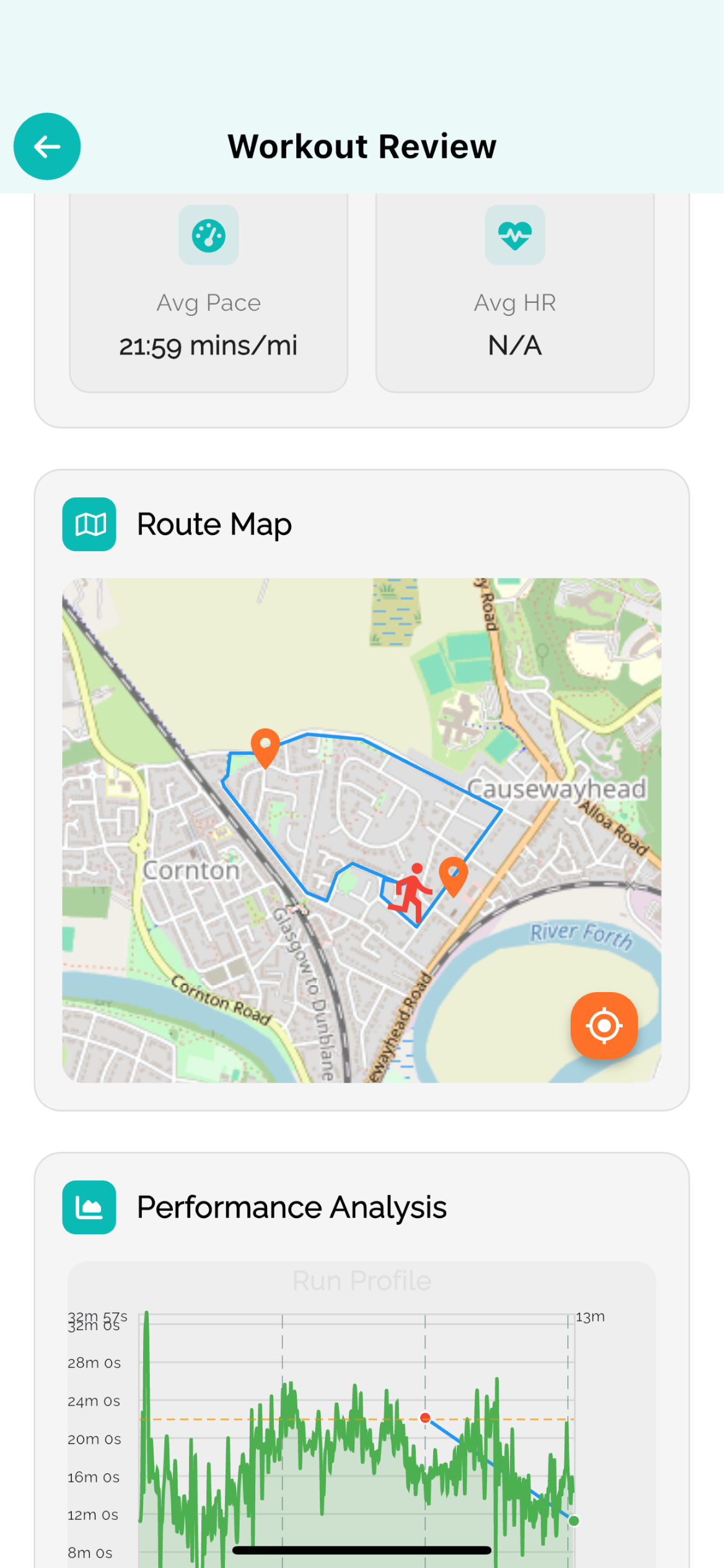
The most effective approach merges your baseline fitness data—5K time, recent race results, weekly mileage—with a clear-eyed training plan. Apps that track your workout paces, heart rate, and progression help you spot whether you're on track or drifting. Rather than guessing, you can refine your goal as training unfolds: if six weeks in you're consistently hitting paces ahead of projection, you can raise the bar. If you're falling short, you lower it without shame. Adaptive coaching that responds to real data beats rigid targets set months in advance.
Write your goal down and stick to it
Once chosen, commit to it in writing. Vague aspirations don't focus training. A specific number—'1:56 for the half-marathon on 15 June'—channels every session. You'll train differently knowing exactly what you're chasing. And on race day, that clarity becomes your anchor when doubt creeps in.
FAQ
- Can I choose a goal time without a recent race?
- Yes, but it's less reliable. Run a 5K time trial in race-like conditions to establish a baseline. Without that anchor, you're estimating blindly. A single controlled effort beats months of guesswork.
- What if I miss my goal race time?
- Analyse why. Did your training load drop? Did you go out too fast? Were conditions unusually hard? Use the lesson to set a more realistic target or stronger plan next time. One race is data; patterns across races reveal what's truly achievable.
- Should I pick a goal time or a goal place?
- A goal time is more useful because it's entirely within your control. Place depends on other runners. Pick a time that excites you and challenges your fitness, then let placement follow naturally.
Train smarter
RunV turns this thinking into your plan — adaptive coaching that rebuilds after every run.
Keep reading