Training 7 min
How to train for your first 10K

Training for your first 10K requires a structured 8–12 week plan that balances easy runs, one weekly tempo or threshold session, a gradual long run, and proper recovery. Most beginners can cross the line safely by running three to four times per week and letting your body adapt progressively rather than chasing pace early.
Establish your baseline fitness
Before committing to a plan, run 1–2 miles at a steady effort and note how you feel. This isn't a test; it's a reference point. If you're currently running fewer than 10 miles a week, spend 2–3 weeks building to a comfortable base of 12–15 miles before starting formal 10K training. Jumping straight into high mileage courts injury.
Build your weekly structure
A sustainable 10K week includes four runs: one easy run, one tempo or threshold run, one long run, and one shorter easy or recovery run. Beginners often make the mistake of running every session hard. Easy runs should feel conversational; you should be able to speak in short sentences. This teaches your aerobic system efficiency without breaking down muscle.
- Easy run: 20–40 minutes at conversational pace, 2–3 times per week
- Tempo run: 5–10 minutes at 'comfortably hard' effort, once weekly
- Long run: start at 3–4 miles, add 0.5 mile every 1–2 weeks, peak near 6–7 miles
- Rest or cross-train: at least one full day off or low-impact activity
Develop your tempo-run foundation
A tempo run teaches your body to sustain a harder pace without going all-out. Week 1–2: warm up 10 minutes easy, run 5 minutes at a pace you could hold for roughly an hour continuously, cool down 10 minutes easy. Weeks 3–6: extend the tempo block to 8–10 minutes. By week 7–8, you're building lactate-clearing capacity—the ability to absorb and clear metabolic stress. This is where 10K pace improvement lives.
Increase your long run gradually
The long run is your confidence builder and teaches your body to sustain effort. Start at 3–4 miles and add roughly 0.5 mile every 1–2 weeks, keeping the pace easy (2–3 minutes slower than your target 10K pace). Peak at 6–7 miles 2–3 weeks before race day. Two weeks out, begin a taper: reduce volume by 20–30% but keep the intensity of your tempo runs.
Avoid the common pitfalls
- Running every session at the same moderate pace—this builds nothing
- Jumping mileage more than 10% per week
- Ignoring easy days in pursuit of speed
- Skipping a warm-up and cool-down on every run
- Training through pain rather than soreness
Taper and race strategy
Two weeks before race day, cut total mileage by 20–30% but keep one tempo or short threshold session to maintain sharpness. One week out, drop to 60–70% normal mileage and mostly easy running. For the race itself, go out at 10–15 seconds slower than you think you can hold; most first-timers fade because they start too fast. Miles 1–3 should feel easy, miles 4–5 honest, and mile 6 the true test of your training.
Data and adaptation in your training
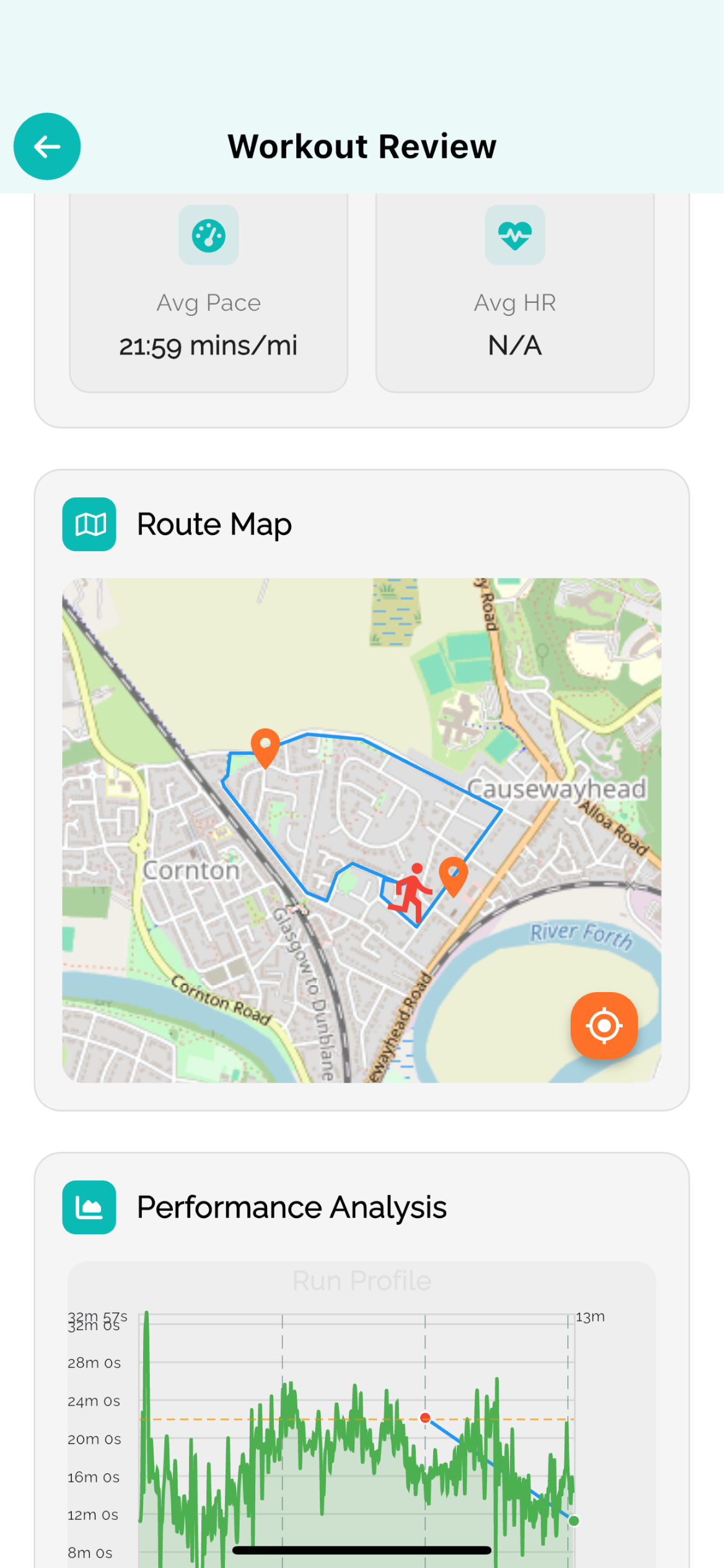
Tracking your runs—pace, effort, how you felt, sleep the night before—reveals patterns that generic plans miss. Apps that log your weekly effort and recovery score help you spot when you're under-recovered or when an easy run should actually be easier. Adaptive coaching platforms adjust your sessions in real time based on this data, letting you train smarter rather than just harder. Your first 10K plan should learn from you, not the other way around.
Race week checklist
- Confirm the course route and elevation profile
- Test your race outfit and shoes on a run
- Eat normally; don't experiment with new foods
- Sleep 8–9 hours nightly from Monday onward
- Three days before: easy 20–30 minute run only
- Two days before: 15 minutes easy plus 3–4 short strides
- One day before: rest completely or 15 minutes very easy
FAQ
- How long should I train before attempting my first 10K?
- Eight to twelve weeks is the standard window, assuming you're already running 10–15 miles per week comfortably. If you're starting from scratch, add 2–3 weeks of base-building before beginning formal 10K training.
- Should I do strength or cross-training alongside 10K training?
- Yes. Two sessions per week of bodyweight strength (squats, lunges, planks) or 20–30 minutes of cycling or swimming on your easy days improves resilience and reduces injury risk. Don't add this on top of your four runs; it replaces one easy run or fills a rest day.
- What pace should I aim for on race day?
- Start by running a recent 5K at your best effort, then add 15–30 seconds per mile to estimate your 10K pace. In training, your tempo runs should sit at or slightly slower than your goal 10K pace. Most first-timers finish between 50–70 minutes; focus on finishing strong rather than a specific time.
Train smarter
RunV turns this thinking into your plan — adaptive coaching that rebuilds after every run.
Keep reading