Training Updated 6 min
An adaptive 10K training plan that updates from your runs

An adaptive 10K plan adjusts every week based on what you actually run, not what a template predicted. When you hit your targets, the next week gets harder; when you struggle, it eases back. This eight-week block builds around your current fitness rather than forcing you into a fixed schedule.
What 'updates from your runs' means
A static 10K plan is the same eight weeks whether you sailed through week three or missed it. An adaptive plan treats every run as feedback. It reads your pace, heart rate and how the session landed, then adjusts what's ahead — raising the challenge when you're clearly fitter, backing off when you're fatigued, and rebuilding after a gap. The plan tracks your actual progress instead of an assumed one.
The 8-week shape
From a base of running 5K comfortably, a 10K block builds endurance and adds a weekly dose of speed. Three to four runs a week is plenty.
- Weeks 1–2: settle in — easy runs plus a long run extending past 5K; light strides for leg speed.
- Weeks 3–5: add one weekly quality session (intervals or tempo); long run builds toward 8–10K.
- Weeks 6–7: peak — sharpen with 10K-pace intervals; longest easy run around 10–12K.
- Week 8: mini-taper — cut volume, keep a couple of short race-pace touches, race fresh.
The sessions that build a 10K
The 10K rewards both endurance and speed, so two sessions matter most: intervals (repeats at or faster than goal pace, to lift your top end) and a tempo (sustained effort to raise the pace you can hold). The rest should be easy running that builds your aerobic base — and an adaptive plan makes sure 'easy' stays easy by watching your effort, not just the clock.
Why adaptation helps at 10K distance
Eight weeks is short enough that one badly judged week can cost you the goal. Push too hard and you arrive stale; miss too much and you're underdone. An adaptive plan threads that needle continuously — nudging load up only as fast as you're actually adapting, and re-ramping cleanly after a missed run so a busy week doesn't unravel the block.
How RunV does it
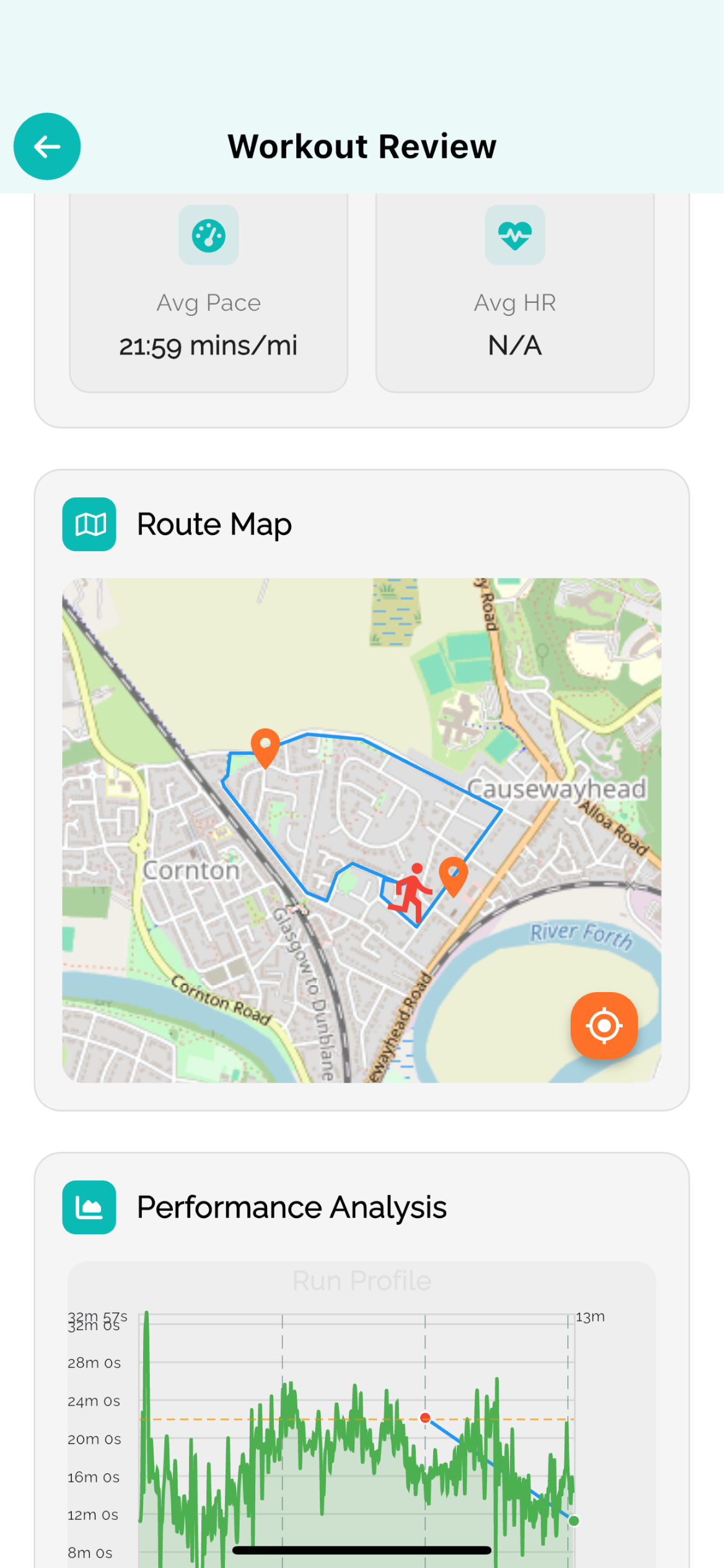
RunV takes your 10K goal and date, sets your paces, and rebuilds the plan overnight from your real runs synced off Garmin, Apple Watch or Wear OS. Strong sessions raise tomorrow's targets; missed ones re-ramp safely. A predicted finish updates as you train, so you can see your 10K goal getting closer week by week rather than hoping it's on track.
FAQ
- How long does it take to train for a 10K?
- About eight weeks from a base of running 5K comfortably. If you're starting further back, build to a continuous 5K first, then follow the 10K block.
- What makes a 10K plan 'adaptive'?
- It updates from your actual runs — reading pace, heart rate and how each session landed, then adjusting the next. Strong runs push the targets up; missed ones re-ramp, rather than the plan staying fixed regardless of how training goes.
- How many days a week should I run for a 10K?
- Three to four is plenty for most runners: a couple of easy runs, one quality session (intervals or tempo), and a long run that builds past 5K.
Train smarter
RunV turns this thinking into your plan — adaptive coaching that rebuilds after every run.
Keep reading