Training 5 min
How to break through a running plateau

A running plateau happens when your body adapts to your current training and progress stops—and the fix is almost always a deliberate change to stimulus, intensity or structure. Whether you've stalled on pace, distance or race times, breaking through requires specific tactical shifts rather than just running more.
What causes a running plateau
Your body is efficient at adaptation. When you repeat the same workouts at the same effort for weeks, your aerobic system, muscles and nervous system learn the stimulus and stop improving. Plateaus are not failures—they're signals that your training needs progression.
Introduce structured speed work
Many runners plateau because their weekly mileage is steady but lacks varied intensity. Adding 1–2 sessions of interval training, tempo runs or fartlek sessions each week forces your cardiovascular system to work at new thresholds.
- Interval training (400m or 800m repeats at 5K pace)
- Tempo runs (sustained effort at lactate threshold for 20–40 minutes)
- Long-run pickups (3–4 accelerations during your long run)
- Fartlek (unstructured speed play to break monotony)
Progress your weekly mileage carefully
If you've been at the same weekly distance for months, a modest increase can trigger adaptation. Raise total mileage by no more than 10% per week, and do it for 2–3 weeks before easing back.
Build running-specific strength
Weak glutes, core or calf muscles limit your stride efficiency and power. Two sessions per week of strength work targeting your hips, lower back and legs often unlock speed gains that running alone cannot.
- Single-leg squats and lunges
- Dead bugs and planks for core stability
- Calf raises and step-ups
- Glute bridges and single-leg hops
Allow more recovery between hard sessions
A plateau can also mean you're fatigued. Easy-paced runs should be genuinely easy, and you need 48 hours between hard workouts. Quality recovery—sleep, nutrition and rest days—is where adaptation actually happens.
Vary your running environment and pace distribution
Running the same route at the same pace becomes neurologically stale. Trail running, hill repeats, a new course or even a shift to 80/20 training (80% easy, 20% hard) can re-engage your system and reset progress.
Track data to identify your weak point
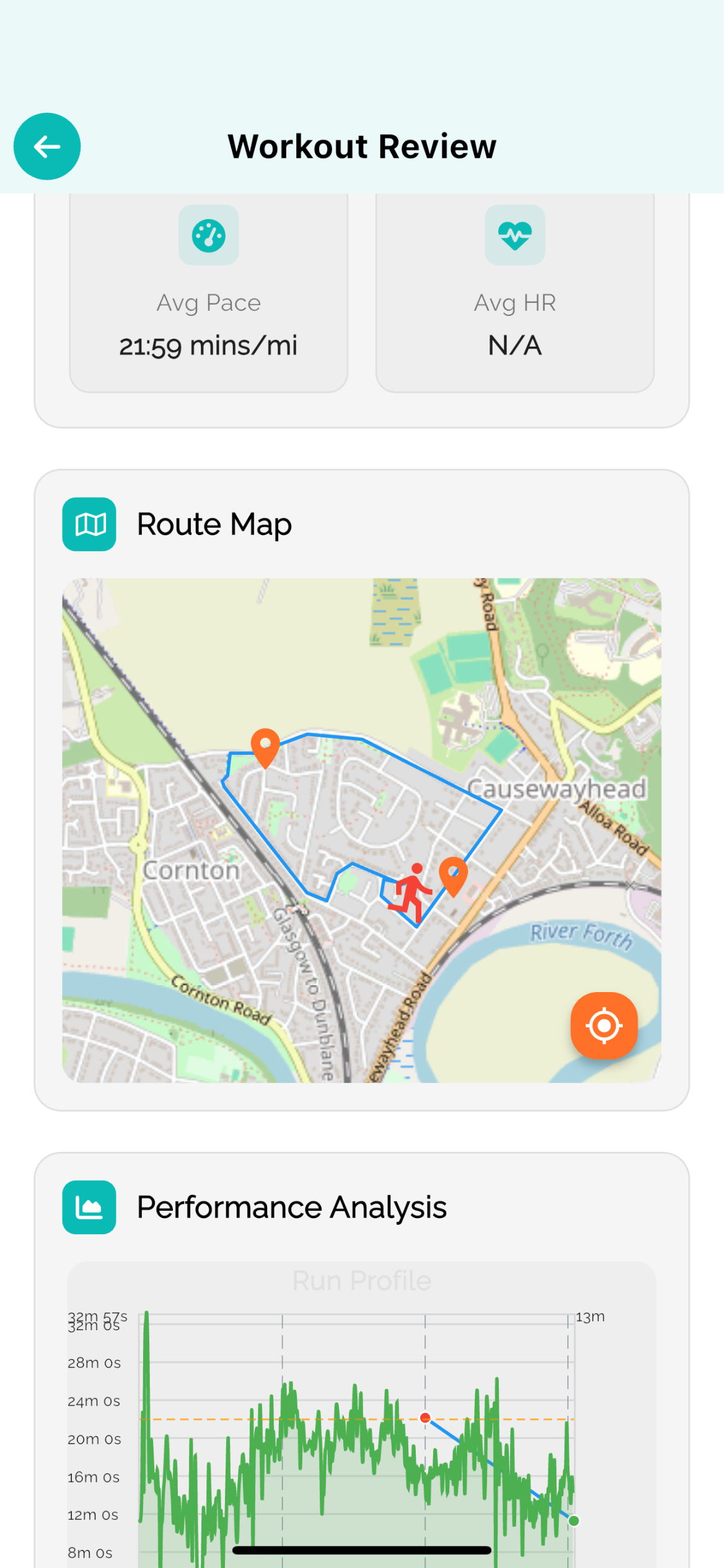
Modern coaching uses running metrics—pace, heart rate, cadence, power—to pinpoint exactly where you're stuck. If your lactate threshold hasn't shifted, focus there. If easy runs are too fast, dial them back. If long-run pace is the ceiling, extend those runs or add targeted hill work. Tools that log and analyze your sessions reveal patterns you'll miss by feel alone, letting you adjust with precision rather than guesswork.
Give any change 3–4 weeks
Plateaus don't break overnight. Commit to a single change—new speed work, extra strength, higher mileage—for at least 3 weeks before assessing. Switching variables too often masks what actually works.
FAQ
- How do I know if I'm in a plateau or just having a bad week?
- A true plateau lasts 3–4 weeks or longer across multiple runs and efforts. A bad week is usually fatigue, poor sleep or life stress. If your easy runs and hard efforts both feel sluggish for longer than 10 days, suspect a plateau.
- Should I take a complete break from running to break a plateau?
- A full deload week (running 40–50% of normal mileage at easy pace) every 4–6 weeks can help, but it's not always needed. Often a strategic shift in structure (adding speed work or strength) works faster. Experiment with both approaches.
- Can I break a plateau by just running harder every day?
- No. Running hard every day leads to overtraining, not breakthrough. Adaptation requires varied stimulus—easy, moderate and hard efforts—plus genuine rest. Plateaus usually break through smart variation and recovery, not more volume or intensity.
Train smarter
RunV turns this thinking into your plan — adaptive coaching that rebuilds after every run.
Keep reading