Training 5 min
How to get back into running after time off

Getting back into running after time off means starting slower than you think, mixing walking with running in the first weeks, and accepting that your fitness will return faster than your confidence. The key is consistency over speed—your aerobic base bounces back quicker than your mind believes it will.
Start with a walk-run approach
Your first week back should feel embarrassingly easy. Begin with a 20–30 minute session mixing 1–2 minute run intervals with 1–2 minute walk breaks. This protects your tendons and joints while your body remembers the impact, and it keeps the mental barrier low. You're not trying to rebuild fitness yet; you're rebuilding the habit and the structural adaptation to running.
How long your break affects your return
- Two weeks off: expect a small, quickly recovered dip in aerobic fitness. Three to four weeks: a more noticeable loss. Two months or more: substantial loss, but your neuromuscular system adapts faster than you'd expect.
The longer the break, the more you'll feel deconditioned initially, but your body will respond to training more enthusiastically than it did before. Use this to your advantage: a structured return builds momentum quickly.
Build frequency before intensity
Run three times a week for the first 2–3 weeks, even if each session is just 20 minutes with walk breaks. This consistency matters far more than the distance or pace. Your aerobic system and your joints adapt fastest when exposed to regular, low-stress stimulus. Once you can run 20–25 minutes continuously without stopping, add one longer run (steady, conversational effort) and keep the other sessions easy.
Avoid the comeback injury trap
- Don't jump back to your pre-break volume in week one.
- Resist the urge to test your fitness with a tempo run or fast interval session until you've built four to six weeks of easy, consistent running.
- Pain is a stop signal; soreness (muscle ache, not joint pain) is normal adaptation. If it hurts to walk the next day, you did too much.
Use a gradual progression framework
Weeks 1–3: walk-run sessions, 3× weekly. Weeks 4–6: mostly running, 3–4× weekly, with one longer easy run. Week 7 onwards: add structured sessions (tempo, intervals, hill work) only after you've logged 4–6 weeks back. This matches how your connective tissues adapt—they lag behind aerobic fitness by weeks, which is why many returners get injured in week 5 thinking they're ready.
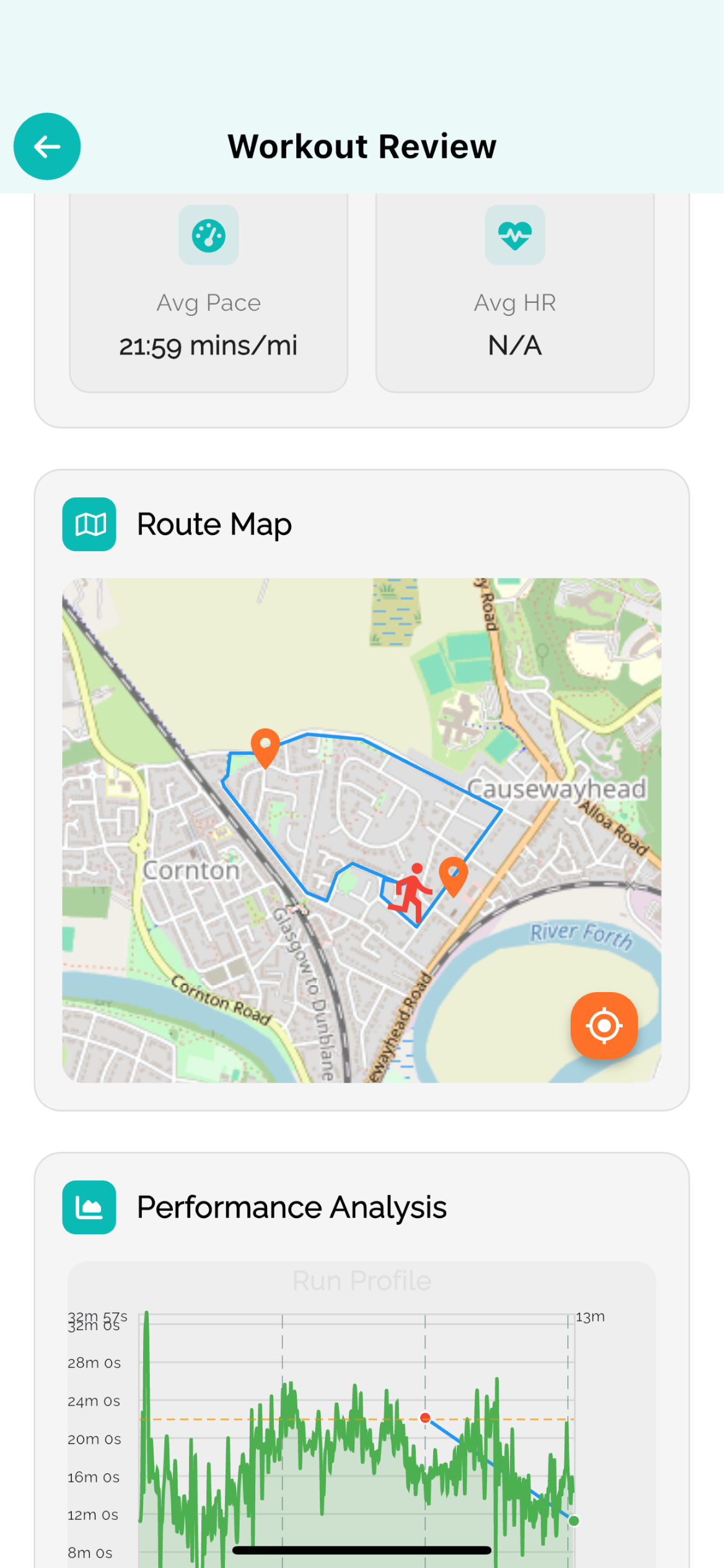
Track your return with RunV
Data-driven coaching thrives on honest baseline data. Log your effort honestly in those early weeks—your easy runs should feel genuinely easy—so the app can calibrate your fitness accurately and suggest appropriate paces for each session. This removes guesswork and prevents the classic mistake of running all comebacks too hard. When your training is logged consistently, you'll spot the optimal return curve and know exactly when you're ready to add intensity.
Key milestones to expect
- Week 2: running should feel less laboured; walk breaks feel optional but use them anyway.
- Week 4: you can sustain 30–40 minutes of continuous easy running.
- Week 6: you're ready to introduce one steady or tempo effort per week.
- Week 8–12: full return to pre-break training shape, assuming no setbacks.
Common mistakes when returning
The biggest error is running your easy runs too fast because you feel stronger than you did in week one. Easy usually means a pace where you can speak full sentences. Run that slow for the first month. The second mistake is skipping the walk breaks out of ego; use them as a tool, not a crutch, and drop them only when you truly don't need them.
FAQ
- How long until I'm back to my old fitness?
- Aerobic fitness returns in 4–8 weeks of consistent training, depending on the length of your break. Structural adaptations (tendons, joints) take longer. Your pace will return faster than your confidence; trust the process.
- Can I jump straight into my old training plan?
- No. Starting at your previous volume risks injury because your connective tissues haven't adapted yet, even if your cardiovascular system feels ready. Follow a 6–8 week rebuild phase first.
- What if I get injured coming back?
- Stop the session, ice if needed, and rest for 2–3 days. If pain persists or worsens, seek medical advice. Most minor setbacks resolve quickly if addressed early; pushing through joint pain will set you back further.
Train smarter
RunV turns this thinking into your plan — adaptive coaching that rebuilds after every run.
Keep reading