Racing 5 min
How to pace a 5K for a personal best

The difference between a personal best and a slow 5K often comes down to pacing—running too hard early and fading, or too conservatively throughout. Your best 5K pace strategy depends on your fitness, the course, and deliberate practice with race-effort running.
Determine your goal 5K pace
Start with recent race data or a recent hard 5K effort. If you don't have one, run a 2–3 mile time trial at race effort and estimate your 5K pace from that. Use an online pace calculator or the rule of thumb: take your mile pace and add roughly 15–20 seconds per kilometre. This gives you a realistic target, not wishful thinking.
Understand negative splits versus even pacing
Even splits—running each kilometre at the same pace—feel harder mentally but are often fastest because you avoid the early build-up of fatigue that comes from starting too hard. Negative splits (running the second half faster) suit experienced racers with good fitness and strong finishing legs. For most runners chasing a PB, aim for even or slightly negative splits: stay disciplined in kilometres one and two, then push the last two if you have legs left.
What to do in the first kilometre
The opening kilometre is where most runners blow themselves apart. You'll feel fresh and the crowd will push you; resist it. Run your goal pace or even 5–10 seconds slower to settle your breathing and heart rate. This costs almost nothing over 5K but saves you from fading badly at 3K.
How to manage the middle 2K
- Hold your goal pace firmly. Don't surge or slow; this is your anchor.
- Check your breathing: if you can speak only single words, you're at the right effort.
- Stay aware of splits at 1K and 2K. If you're on pace, keep the faith.
- Don't look at faster runners ahead; run your race, not theirs.
The final 2K: where you earn the PB
If you've run evenly and feel strong at 3K, this is where you push. Increase your pace by 5–10 seconds per kilometre if you have the legs. The mental trick: break it into two 1K chunks. Focus on the next kilometre only, not the finish line.
Practise pacing in training
Pacing discipline is a skill, not luck. Build it in workouts: do intervals at goal 5K pace, or run 3 × 1.5K at race effort with short recovery. Run at least one 5K time trial or parkrun at race pace before your target race. This teaches your body and mind what goal pace actually feels like, removing the guesswork on race day.
Use data to refine your strategy
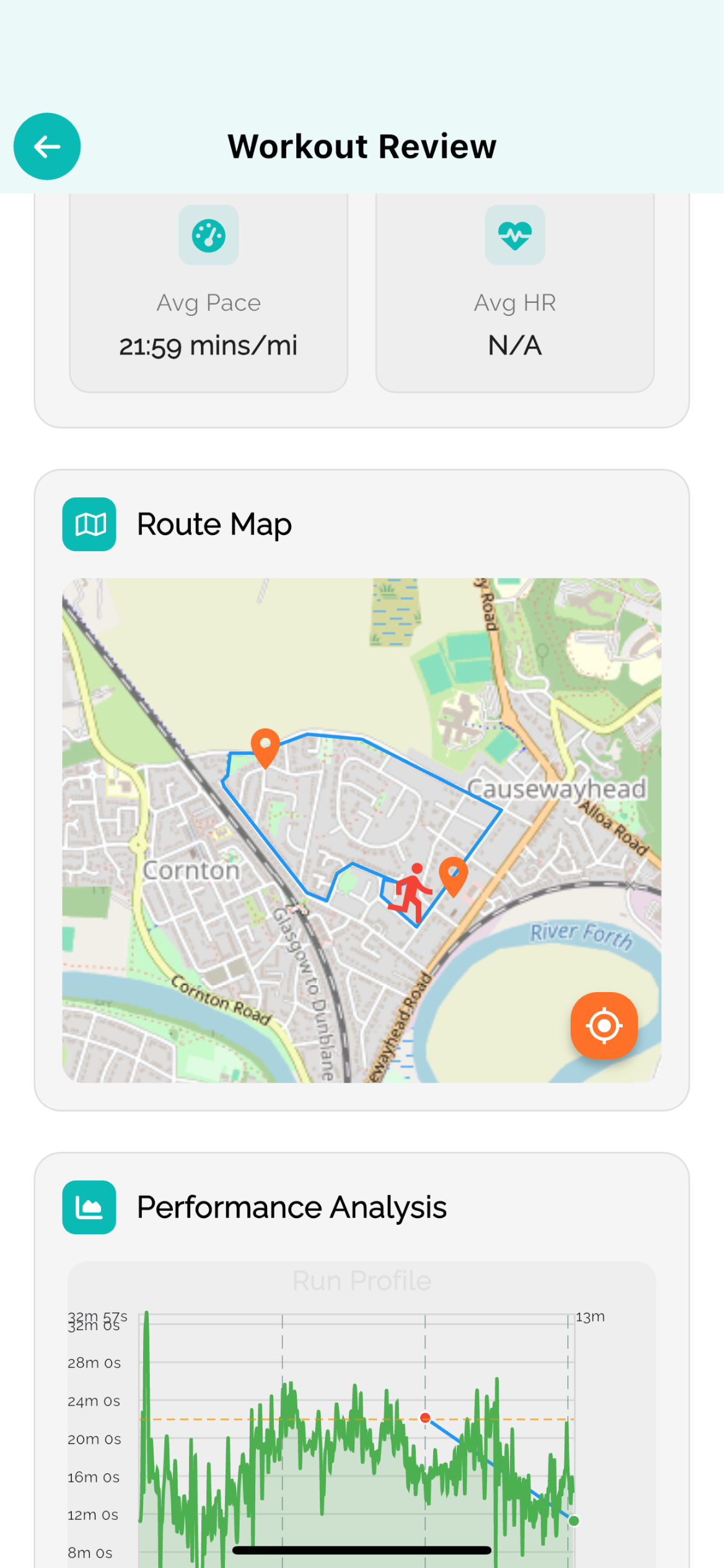
Track your split times and heart rate across training 5Ks and races. You'll notice patterns: do you fade in the final kilometre? Do you run the first K too fast? A coach or app that logs this data helps you spot weaknesses and adjust. RunV-style adaptive coaching uses your actual pacing history and fitness trends to suggest a realistic goal pace and adjust it if your recent form suggests you're stronger—or fresher—than your previous attempt. This beats guessing.
FAQ
- Should I run the same pace for every 5K?
- No. Course terrain, weather, and your fitness on the day matter. A hilly 5K may suit a negative split approach; a flat, fast course allows for even pacing. Use your experience from training to adjust, but don't abandon your plan mid-race.
- What if I start too fast?
- Don't panic and slow dramatically—you'll feel worse. Back off by 5–10 seconds per kilometre, focus on steady breathing, and try to catch up in the final 1K if you recover. Next race, start slower.
- How do I know if my goal pace is realistic?
- If you can hold it for 3 × 1.5K with short recovery in training, it's realistic. If you blow up after 2K in a time trial, your goal is too ambitious. Be honest with data, not ego.
Train smarter
RunV turns this thinking into your plan — adaptive coaching that rebuilds after every run.
Keep reading