Gear & tech 5 min
What running cadence should you aim for?

Most runners should aim for a cadence of 170–180 steps per minute, though your ideal range depends on your height, experience and running pace. A higher cadence typically reduces impact and injury risk, but forcing an unnatural rhythm can waste energy and feel uncomfortable.
Why cadence matters for runners
Cadence—the number of steps you take per minute—directly affects how efficiently you run and how much force your joints absorb. A faster cadence means shorter strides, which reduces the braking force when your foot lands. This lighter, quicker footfall pattern is associated with lower injury rates and better running economy at steady paces.
What's the optimal cadence range?
The 170–180 steps-per-minute benchmark holds for most recreational runners. Elite distance runners often operate at 180–190 spm, whilst taller runners and those at easier paces may naturally sit at 160–175 spm. Your optimal cadence depends on your leg length, running speed and biomechanics—not a single universal number.
How cadence relates to your running pace
Cadence naturally increases as you run faster. An easy run might feel comfortable at 160–170 spm, whilst a tempo run or 5K effort typically sits at 175–185 spm. Don't artificially raise your cadence on easy runs; let your body settle into its sustainable rhythm first.
How to measure your cadence
- Use a running watch or fitness tracker with cadence data—most modern devices display it automatically.
- Count your steps manually: run for 15 seconds, multiply by 4. Count only one foot (left or right) and multiply by 2.
- Use a metronome app set to your target cadence as an audio cue during runs.
- Some foot pods and smart treadmills can also display cadence.
How to improve your cadence safely
If your natural cadence is below 170 spm and you want to increase it, do so gradually. A sudden jump strains your calves, shins and feet. Increase by 5–10 spm at a time, allowing 4–8 weeks to adapt to each increase, using a metronome app or music with a steady beat to guide your feet.
Work on cadence drills during the second half of an easy run, when your body is warm. Short strides, quick feet and a slight forward lean will feel awkward at first—that's normal. Consistency over weeks, not days, allows your nervous system to adapt.
Common cadence mistakes
- Forcing a high cadence on every run: let easy runs stay easy at your natural rhythm.
- Ignoring your natural stride: not all runners thrive at 180 spm—some run stronger at 165 spm.
- Changing cadence without time for adaptation: forcing change too fast increases injury risk.
- Assuming cadence alone fixes injuries: poor footwear, weak hips and sudden training increases matter too.
Using data to refine your running
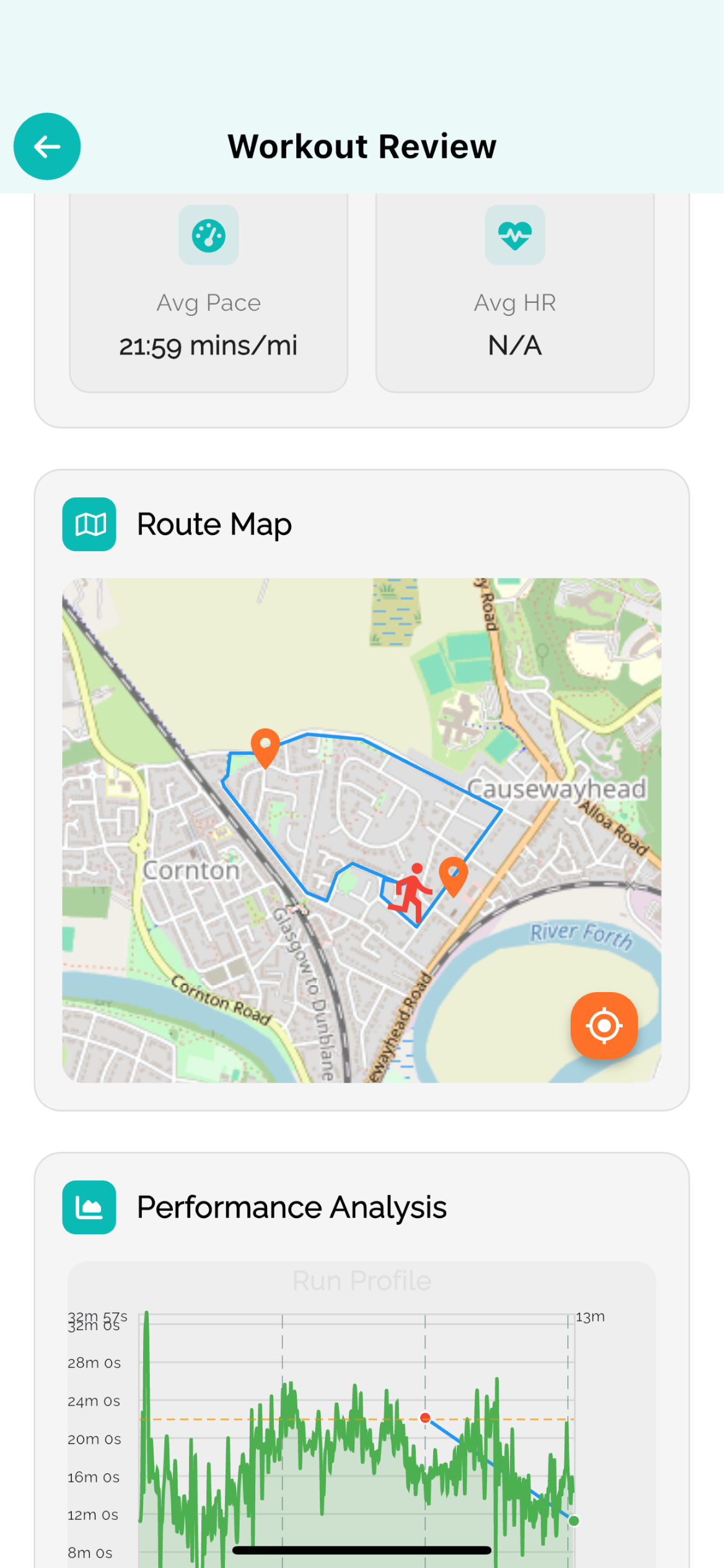
RunV and similar coaching apps track your cadence over time, revealing patterns between your spm, pace, effort and how you feel. By logging these metrics consistently, you'll see whether a slight cadence increase genuinely improves your economy and reduces fatigue, or whether your naturally lower rhythm suits you better. Data-driven coaching removes guesswork; you adjust only what your own numbers show will help.
FAQ
- Is 160 steps per minute too slow?
- Not necessarily. Taller runners, walkers transitioning to running, and those with longer natural strides may feel strong and efficient at 160–170 spm. If you're injury-free and your pace matches your goals, there's no urgent need to change. Only increase cadence if you're experiencing impact-related injuries or feel your efficiency stalling.
- Can I run too fast a cadence?
- Yes. Cadence above 190 spm becomes inefficient for most runners—you're taking tiny steps that demand constant energy without covering ground faster. Elite sprinters use very high cadence, but distance runners rarely need it. Find your sweet spot where you feel relaxed and in control.
- How long does it take to increase cadence?
- Expect 4–8 weeks to comfortably adapt to a 5–10 spm increase. Your calves, shins and proprioceptive system need time to adjust. Rushing the process often triggers shin splints or calf strains. Small, patient increases yield lasting changes without injury.
Train smarter
RunV turns this thinking into your plan — adaptive coaching that rebuilds after every run.
Keep reading