Training 5 min
Back-to-back long runs and what they prepare you for

Back-to-back long runs—two substantial efforts on consecutive days—train your body to sustain effort when partially fatigued, building the aerobic base and mental toughness needed for ultra-distance racing, tough marathons, and multi-day events. They're a specific adaptation tool, not a standard training stimulus for most runners.
What are back-to-back long runs?
Back-to-back long runs mean running a long distance on day one (typically 16–22 miles for marathon training, or proportionally longer for ultramarathon prep) and repeating a substantial effort on day two (usually 10–16 miles). The second run happens when glycogen stores and central nervous system fatigue are still present, simulating race-day conditions where you must perform on compromised resources.
What do they specifically prepare you for?
- Ultramarathon racing: essential for 50K, 50-mile and longer distances where running on tired legs for many hours is non-negotiable
- Multi-day fell races or stage races where back-to-back efforts are the actual race format
- Marathon racing in hilly or tough terrain where a large single volume block isn't enough
- Running strong in the final miles of a road marathon after Saturday long runs, if you run socially on Friday or Sunday
- Building psychological confidence that you can keep moving when fatigued
Who should do back-to-back long runs?
They're most valuable for runners targeting ultras, stage races, or very demanding marathons (particularly trail marathons). Recreational marathoners training on a standard 16–18 week cycle usually don't need them; a single well-structured long run per week is sufficient. Introduction should be gradual—no more than one or two back-to-back pairs every 3–4 weeks, and only after you've built a solid base of 12+ weeks of regular training.
How should you fuel and recover between efforts?
- Eat and drink within 30 minutes after the first run: aim for 60–80g carbohydrate and 15–20g protein to begin glycogen repletion
- Hydrate thoroughly that evening; drink to thirst and monitor urine colour
- Sleep as well as you can; fatigue from poor sleep will amplify the stress of day two
- On day two morning, eat a familiar breakfast 2–3 hours before running
- During the day-two run, take on easy carbohydrate (sports drink, gels) to sustain pace—don't expect to run fast
Pacing and effort level matter
The first run should feel manageable, not maximal. Aim for conversational pace or just below your easy-run threshold. The second run should be noticeably easier: focus on time on feet and feel, not splits. Many runners make the mistake of racing the second effort; it's a conditioning stimulus, not a race simulation. If you're running 12-minute miles on day one, aim for 13–14 minutes on day two.
Integration with your training week
Back-to-back long runs work best when placed strategically. Run them Friday–Saturday or Saturday–Sunday to allow full recovery midweek. Avoid stacking them with other hard sessions (tempos, intervals) in the same week. A typical week might be: easy run Monday, tempo or hill session Tuesday, easy Wednesday, back-to-back long runs Saturday–Sunday, recovery run Thursday or a rest day.
How RunV helps you structure back-to-back efforts
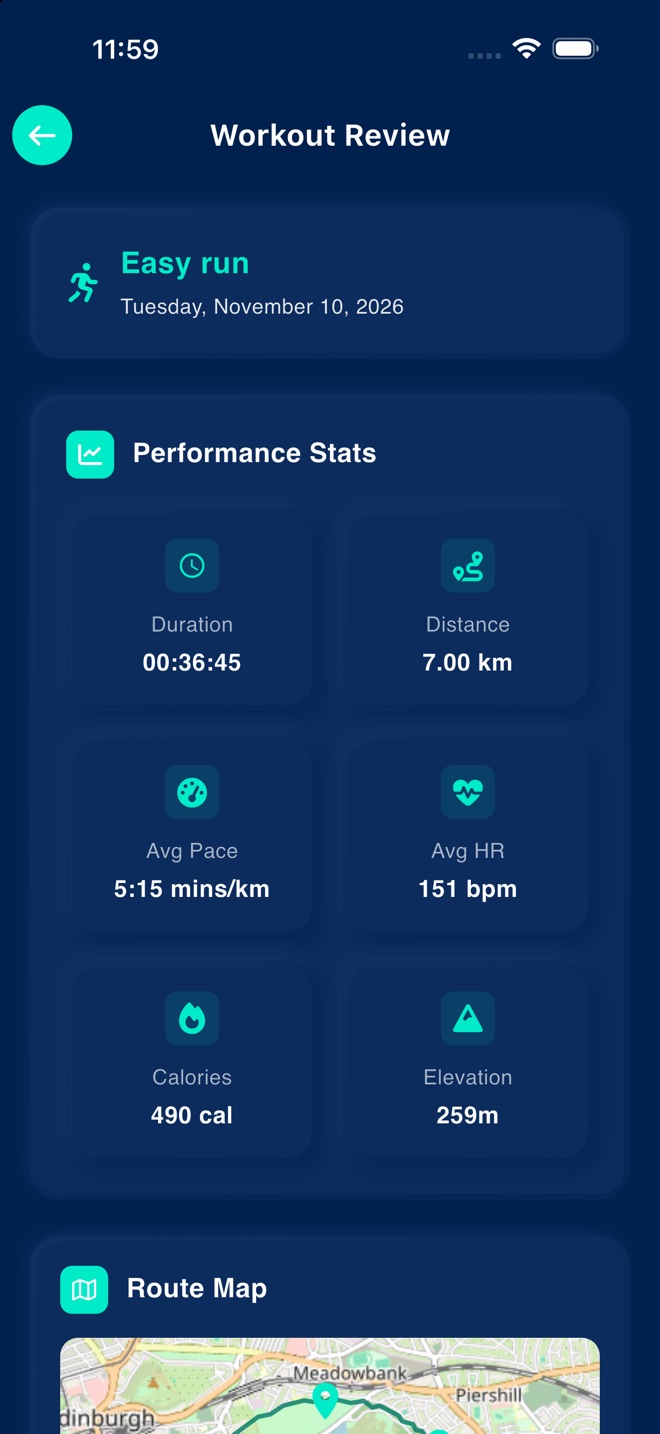
Adaptive coaching apps track your weekly structure, recent fatigue levels, and race goals to flag when back-to-back long runs are appropriate and when to hold back. Data from your recent efforts—heart rate, pace, perceived effort—informs safe pacing and timing. Individualised feedback on recovery metrics helps you fine-tune nutrition and sleep between efforts, reducing injury risk and maximising adaptation.
Common mistakes to avoid
- Attempting them too early in training or without adequate base fitness
- Running the second effort too fast or with too much volume
- Neglecting nutrition, hydration or sleep between days
- Including back-to-back efforts every week rather than as occasional, strategic blocks
- Doing them during peak marathon taper, when fatigue and injury risk are highest
FAQ
- How often should I do back-to-back long runs?
- Once every 3–4 weeks during an ultramarathon or challenging marathon build phase. For most runners, 2–4 pairs over a 16-week cycle is sufficient. Never do them more than once per week, and always include full recovery weeks between blocks.
- Can back-to-back long runs cause injury?
- Yes, if done too frequently, too hard, or without adequate recovery. Start conservatively with modest mileage, ensure your base fitness is solid, listen to your body, and prioritise sleep and nutrition. If any pain emerges, skip the second run and reassess.
- Do I need back-to-back long runs for a standard marathon?
- No. A single long run per week plus consistent midweek tempo and easy running is the proven blueprint for most marathon finishers. Back-to-backs are most valuable for ultras, fell races, trail marathons, or runners pursuing a specific high-performance goal on a tough course.
Train smarter
RunV turns this thinking into your plan — adaptive coaching that rebuilds after every run.
Keep reading