Gear & tech 5 min
How to prevent shin splints when increasing mileage

Shin splints happen when you increase running volume too fast; prevent them by raising weekly mileage no more than 10%, strengthening your tibialis anterior, and ensuring adequate recovery between hard sessions. Most cases resolve with gradual progression and targeted exercises rather than complete rest.
What causes shin splints when building mileage
Shin splints—medial tibial stress syndrome—occur when muscles, tendons and bone tissue around your shin experience repetitive stress faster than they can adapt. Running more kilometres than your body has trained for overloads the anterior tibialis and surrounding structures. The injury usually develops gradually over days or weeks, not suddenly from a single run.
Follow the 10% rule strictly
The most reliable way to avoid shin splints is limiting weekly mileage increases to 10% from one week to the next. If you run 50 km per week, the next week should not exceed 55 km. This threshold gives bone, muscle and connective tissue time to strengthen and adapt to the new load. Jumping from 40 km to 50 km in a week is a common trigger.
Back off if you notice shin discomfort before it becomes pain. A minor ache during a run that worsens afterwards is an early warning sign.
Build strength in your shins and calf
- Single-leg calf raises: 3 sets of 12–15 repetitions per leg, three times per week
- Tibialis anterior lifts: sit with feet flat, lift your toes towards your shins against light resistance, 2 sets of 15 reps
- Heel walks: walk on your heels for 30–60 seconds, 3 sets
- Banded dorsiflexion: loop resistance band around your forefoot, pull toes towards shin against resistance, 3 sets of 12 reps
Weak anterior tibialis and calf muscles cannot stabilise your lower leg during the impact phase of running. Spend 10–15 minutes twice a week on targeted strength work to build resilience before increasing mileage.
Check your running shoes and form
Worn-out trainers or shoes with inadequate support accelerate shin stress. If your current shoes have 500+ km logged or show visible heel wear, replace them. Consider gait analysis at a specialist running shop to check for overpronation, which increases inward stress on the shin.
Overstriding—landing with your foot in front of your body—increases impact force through the shin. Aim for a cadence of 170–180 steps per minute and land with your foot beneath your hips rather than ahead of it.
Prioritise recovery between hard sessions
Your training plan should include at least one full rest day per week and easy-paced runs on most other days. Consecutive hard efforts—speed work, hill repeats, long runs—without adequate easy running between them prevent your shins from recovering. Separate hard sessions by at least 48 hours.
Use data-driven progression to stay safe
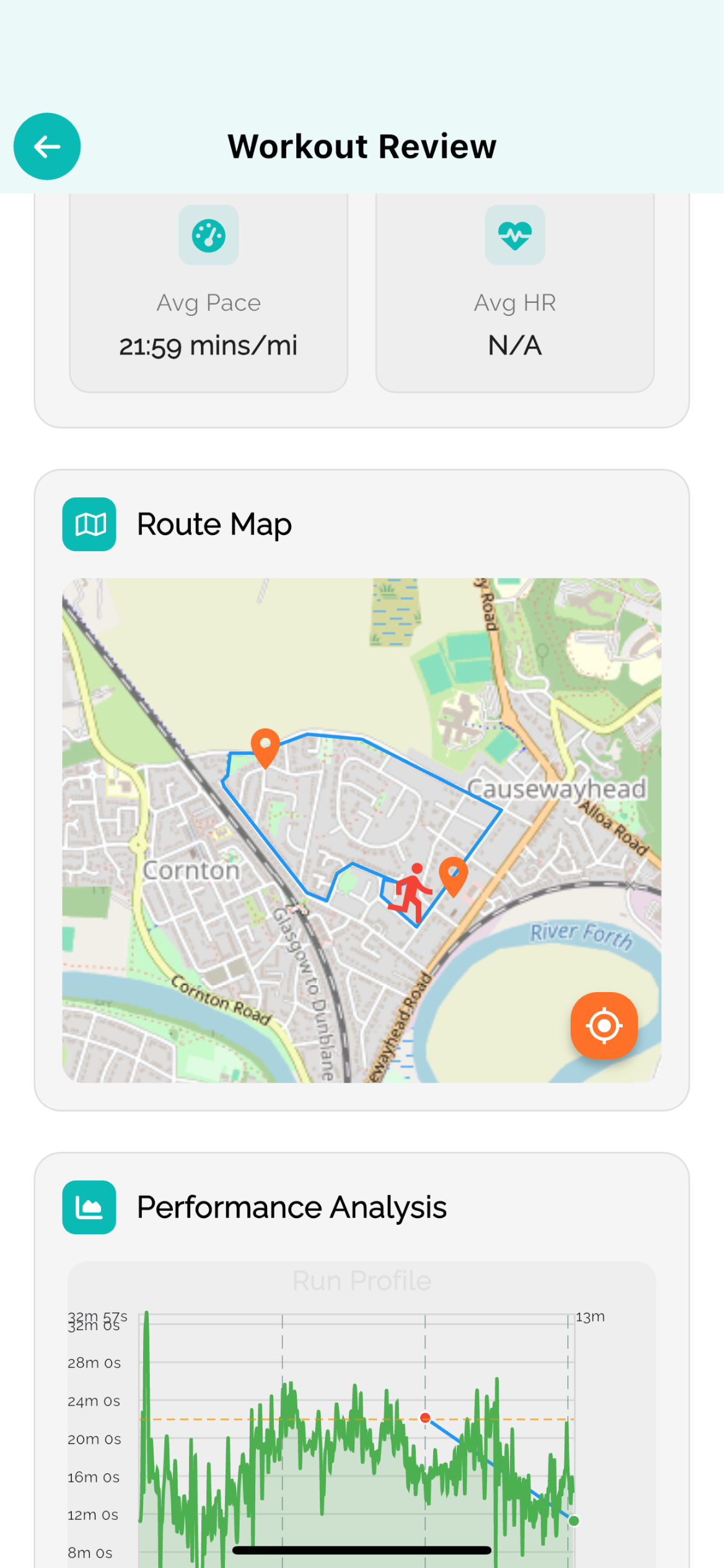
Training apps that track weekly mileage, pace distribution and recovery markers help you spot risky patterns before injury develops. RunV's adaptive coaching adjusts your plan based on how your body responds to load; if your data shows fatigue accumulating or pace dropping during easy runs, the system can recommend a recovery week rather than pushing forward. Logging perceived shin discomfort alongside your runs creates a personal baseline you can reference as you build mileage.
When to seek professional help
If shin pain persists beyond two weeks despite following these steps, or if it worsens during a run and lingers for hours afterwards, consult a physiotherapist or sports doctor. Some cases involve stress fractures or compartment syndrome, which require specialist assessment and cannot be trained through.
FAQ
- How long does it take to recover from shin splints?
- Mild shin splints usually resolve within 2–4 weeks with reduced mileage, strength work and adequate rest. Severe cases can take 6–8 weeks. Recovery speed depends on how quickly you caught it and how strictly you've reduced training load.
- Can I run through mild shin pain?
- No. Pain is a signal that tissue is stressed beyond its current capacity. Running through it typically prolongs the injury. Scale back to pain-free distances and focus on strength and recovery for 1–2 weeks, then build back gradually.
- Do I need new shoes to prevent shin splints?
- Not always, but worn shoes are a common contributing factor. If your shoes have 500+ km on them or show obvious heel wear, replacement is sensible. Before buying new shoes, have a gait analysis to identify any form issues that shoes alone won't fix.
Train smarter
RunV turns this thinking into your plan — adaptive coaching that rebuilds after every run.
Keep reading